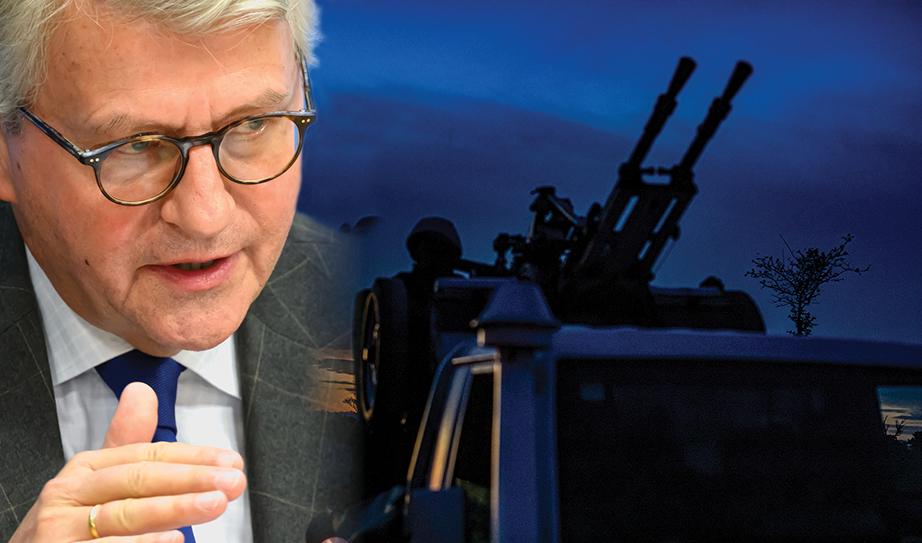
After nearly a decade leading UN peace operations, Jean-Pierre Lacroix is looking back at a period in which peacekeeping has become smaller, more dangerous, and more politically constrained.
Over the course of his term, the number of uniformed personnel in the field was cut in half, falling from more than 100,000 in 2017 to around 50,000 today. In an exclusive interview with Envoy, Lacroix said the decrease in field operations is due to several factors, including budget cuts and politicization, as well as the success of some missions.
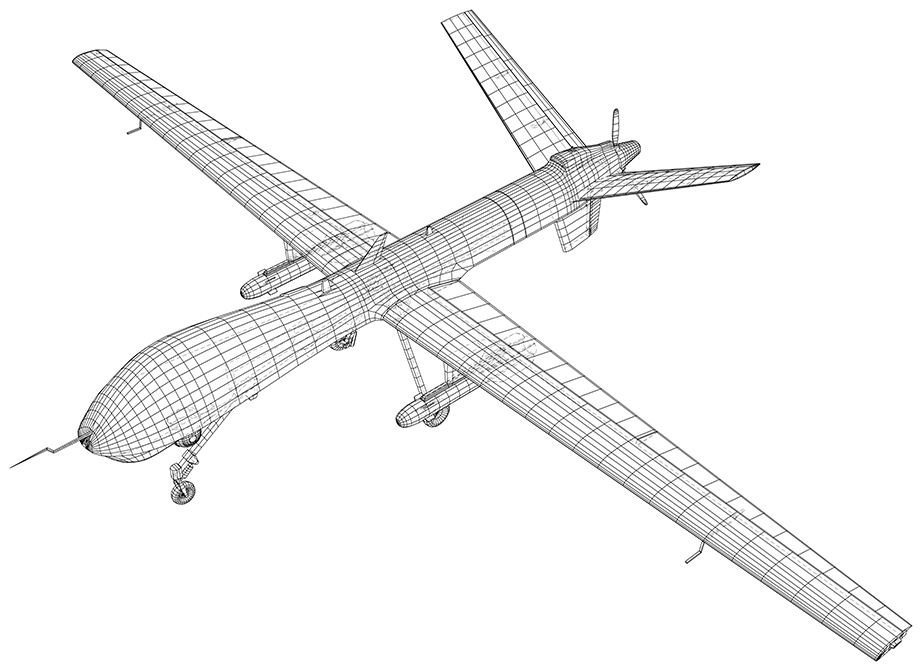
But he warned that shrinking missions do not mean shrinking risks. Recent attacks in Sudan and Lebanon, including the first deadly drone strike on a UN peacekeeping facility, show how rapidly the threat environment is changing.
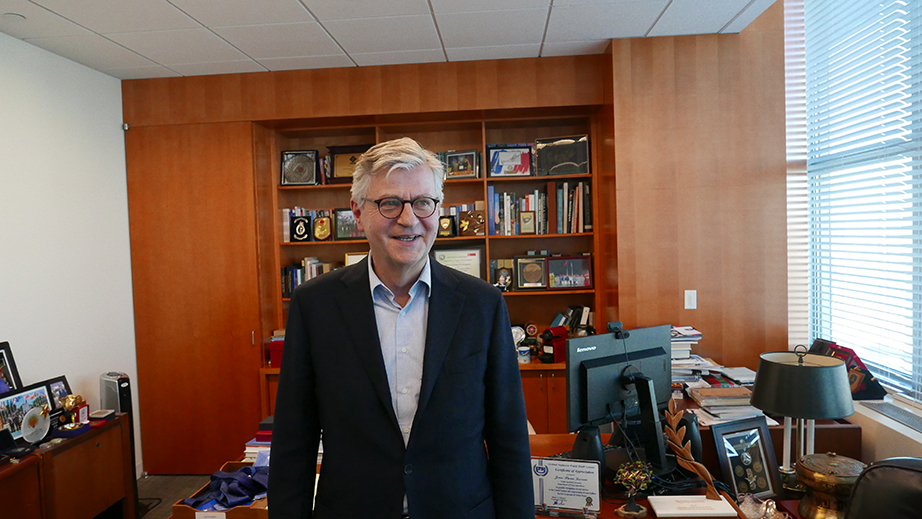
“We have this digital technology that is now creating much more dangerous menaces from drones, from IEDs, mines, and all that kind of thing,” he said. “So it’s our responsibility to see to it that we mitigate those risks, and of course it’s also a responsibility from the troop- and police-contributing countries to make sure that they prepare their people, their military, their police as best as possible to be able to also deal with those threats as effectively as possible.”
Lacroix also believes the UN needs to stay committed to its work in the field.
“I think that it’s important for the organization to remain a field-based organization or, to put it differently, an organization where the world that watches us sees UN people working in the field directly in those environments where you have people to save, people to protect,” he said.
Lacroix declined to say whether France, whose nationals have held the UN’s top peacekeeping post for more than two decades, should continue to do so.
“I leave it to the member states,” he said.
Lacroix spoke to Envoy on May 1. His remarks have been condensed and edited for clarity.
In the past 10 years, the number of peacekeeping personnel was basically cut in half. Is it a sign, for you, of reform, retreat, or decline for the United Nations system?
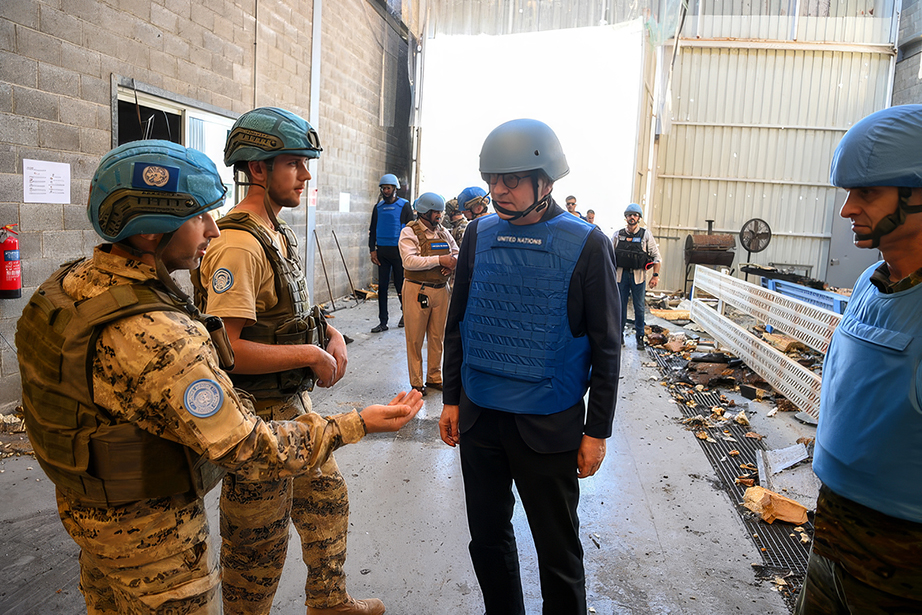
Lacroix: Well, I think that you can look at it from different perspectives. One is that when I arrived in 2017, a few missions closed. And the first one, which closed really within a few months after I started with that job, was Liberia, and then Côte d’Ivoire. Those missions were successful. I think it’s important to emphasize. They added to the long list of successes of peacekeeping, and what I mean by success with peacekeeping is countries that were durably returned to stability with the support of the peacekeeping operation.
I think support is important because the peacekeeping operation played an important role, but it was an important supportive role ultimately. Return to stability is a responsibility of the country itself, of the parties to an agreement, and frankly, it’s a responsibility of the international community, which may or may not play a positive, and unified, and committed role in supporting all these efforts toward a durable solution.
So that’s number one. Then we had a number of other missions which basically were terminated essentially because the host government wanted those missions to leave, and that’s the case for Haiti and the mission in Darfur a couple of years after I started, and then more recently MINUSMA, where the departure was more abrupt, and the mission was essentially expelled by the host authorities.
I call this departure premature in the sense that, again, a peacekeeping mission is created to support, ultimately, a political objective, which is return to stability. It’s based on a political agreement or political processes toward the return of stability, and missions are created to support that in different ways. I mean, they protect civilians, they preserve ceasefires, at least they mitigate violence, and they do other things: They monitor human rights, they do state capacity-building, and all of this, of course, contributes to the effort toward stability.
But the right conditions to leave is when these objectives of return to stability are being achieved. If they leave before that, then the risk of relapse into violence is much higher. And unfortunately, that’s what we’ve seen in the cases that I mentioned. That’s number two.
Number three, we have a Security Council and a membership which is more divided and polarized. What that means is that they are less likely to agree on a collective response to a crisis, a situation of crisis. And when they agree on such a collective response, that can take the form of a peacekeeping operation, can take the form of something else, but it quite often takes the form of some sort of peacekeeping operation.
But for that, we need a Security Council which ultimately agrees that, okay, we have that crisis situation and there is a peace agreement or at least there’s a ceasefire between parties, let’s help that with the peacekeeping operation. If we don’t have that level of unity, or if we have a much higher level of disunity, then we’re less likely to have new operations created.
It’s good to see that the Security Council is usually united enough to extend our mandates, but not always united enough to, first of all, put a united Council in support of the parties to a conflict agreeing on cessation of violence. That’s number one. And then number two, agreeing on supporting these efforts with a peacekeeping operation.
The fourth reason: we had to reduce by about 20 to 25 percent our capacities [in] peacekeeping recently, because we had to save cash, basically. That’s because one of our member states—actually, it’s more than one, but essentially one, the biggest financial contributor to peacekeeping—did not pay all the contributions that it should pay. And as a result of that, we had to reduce again by about 20 to 25 percent the numbers. So that has an influence.
So these are the four reasons. Now, I think that first of all, we continue to have 11 missions that are active and playing an important role day to day, protecting hundreds of thousands of civilians, protecting ceasefires, doing all kinds of important things, supporting political efforts. So it’s still a lot, and I think it brings a lot of added value.
And our duty is to, first of all, make sure that we continue to support our peacekeepers on the ground. We continue to adapt those missions to the evolving challenges. And we do more in terms of conveying to our member states and conveying to the media and civil society what this added value of peacekeeping is.
You mentioned the divide between Security Council members. Looking back at when your term began, what have you noticed in your interactions with the P5 (five permanent members: the United States, China, Russia, France, and the United Kingdom)? How has it evolved? What are your concerns moving forward?
Lacroix: Right. Well, I mean, the concern is obviously polarization and division. And I believe that is not a problem that is specific to peacekeeping. It’s actually a problem for the world and for the UN as a whole, but especially in what the UN does try to do in peace and security.
And of course, the concern is: are we going to see more of that polarization or not? Now, when I started, we already had, of course, a number of conflicts, but in 2017 we didn’t have Gaza, we didn’t have the war in Ukraine, we didn’t have the Sudan conflict as it is today, just to mention three very murderous situations of conflict today.
So I think we’ve seen deterioration from that point of view in terms of the number of conflicts, the intensity of the conflicts, and I think that these situations, at least some of them, have exacerbated polarization, which was already sort of on the increase over the 2010s and probably even more so over the 2020 years.
So that’s the main concern. But concern doesn’t mean that, first of all, we should give up on the UN. I think my word would be: don’t bury the UN too fast. I think the vast majority of the member states want a strong UN, want to keep the Charter, which is international law protective to them. Of course, not always respected, but at least it’s like national laws. They have to exist; it doesn’t mean that they’re always respected. That’s the one.
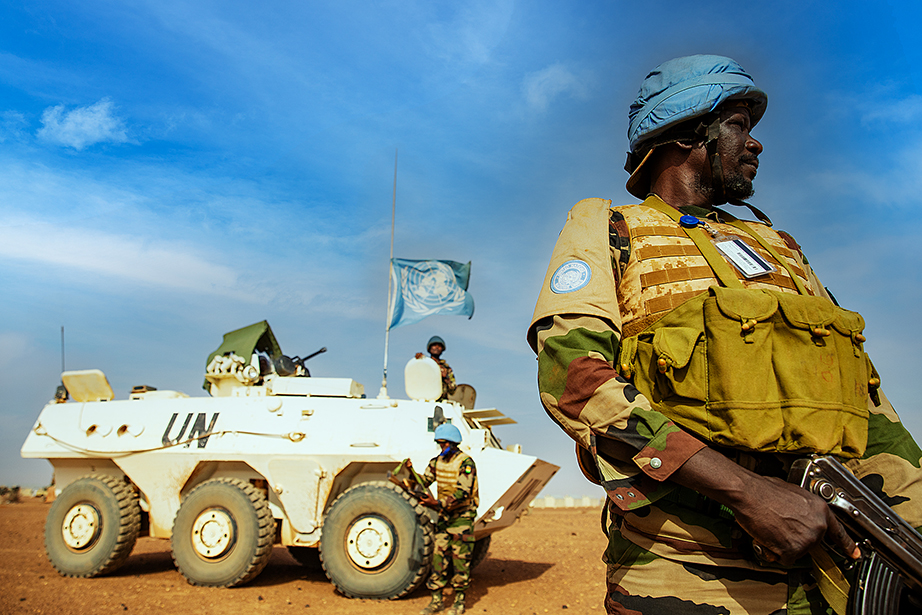
Number two, the overwhelming majority of member states support peacekeeping. We see that time and again. We had a very well-attended and successful meeting at the ministerial level in peacekeeping last year in Germany.
The third thing is that even if there is a lot of polarization, there are many conflicts, but we shouldn’t see this as a sort of black-and-white situation. Sometimes there are opportunities. There are active conflicts, and then it becomes a sort of post-conflict situation. Even as we speak and even amidst all the challenges that I mentioned to you, most situations in which we are involved in peacekeeping have active political processes.
The DR Congo, there’s even a resumption of effort by the AU on South Sudan, a very difficult one. There is a political process now in Lebanon, with the talks between Israel and … I’m not saying all of this is likely to lead to an outcome anytime soon. I’m just saying that those political processes exist, same with Western Sahara, these talks between the parties.
So what is our duty? Our duty in peacekeeping is to create, according to our mandates, and support conditions for these political efforts to continue. Number two, as UN, the duty is to support with all the means that are available to us these political efforts. In many of these processes I mentioned, the UN is actively involved in different ways, not necessarily in the lead. That’s not necessarily what we need to seek.
And then we should be ready. That’s the third thing, the readiness of our system to not only adapt the current operation, but also to be ready for whatever may come our way in terms of new operations, either UN operations or non-UN operations which we would be called upon to support.
What is your perception of the behavior of the US right now?
Lacroix: I think the UN is, by definition, a rules-based system. It’s a system where, as a member state, you commit to certain obligations. And one of these obligations, obviously, is to pay what member states have to pay, based on decisions that are made by those same member states.
I mean, it’s not me who decides the US or whatever country needs to pay X, Y, and Z. It’s their decisions, which then lead to some financial implications that need to be met with financial contributions.
Now, it doesn’t mean that member states should not expect something in return. They legitimately expect that we do what is expected from us, and that not only should the peacekeepers, as they do, fulfill their mandate, but I think there is also a legitimate expectation that we should always strive to adapt, to improve in terms of effectiveness, technology, cost-effectiveness, and all that kind of thing, which is what we do.
We have so many different initiatives under the umbrella which we call Action for Peacekeeping that really are about improving. And we’re also aware that we have a responsibility to use the financial resources in a way that is as effective as possible, especially at a time when most of our member states have constraints on their public finances. So that’s really what I believe the guiding principles are for us, to me.
What do you think was your biggest challenge? And what are you proudest of, also, as an achievement?
Lacroix: The biggest challenge, obviously, is the safety and the security of peacekeepers. They all operate in not only dangerous environments, but actually they operate in increasingly challenging and dangerous environments, politically, but also most importantly, security-wise.
And we had many fatalities and even many more injuries. Recently, six peacekeepers from Bangladesh were killed as a result of a drone attack against our camp, which is the first time that it happened to us. And then more recently six peacekeepers again—four from Indonesia and one and two from France—killed in UNIFIL over the last couple of weeks.
So that is the biggest challenge because we have a responsibility toward them, toward peacekeepers, toward the troop-contributing country, with our colleagues, the UN, to try to avoid as much as possible these accidents.
And it’s a shared responsibility, so, responsibility from those actors to a conflict situation, because they all have a responsibility to protect the safety and security of peacekeepers. It’s our responsibility because we have to do everything that is possible to mitigate the threats against them, and the threats are evolving very rapidly, so that is a challenge within the challenge.
We have this digital technology that is now creating much more dangerous menaces from drones, from IEDs, mines, and all that kind of thing. So it’s our responsibility to see to it that we mitigate those risks, and of course, it’s also a responsibility from the troop- and police-contributing countries to make sure that they prepare their people, their military, their police as best as possible to be able to also deal with those threats as effectively as possible.
But I think that’s ultimately the biggest challenge, if I were to single out one of them.
Do you think enough is being done?
Lacroix: I think there’s never enough done on that because, first of all, we have constrained financial resources, even more now. So of course, we prioritize safety and security if we have to, so it’s always number one on our list.
But then, number two, the threats are evolving, so we constantly need to seek new ways of dealing with new threats. So more recently, I mentioned drones, and we’re currently working on the policy and the response to drone attacks, the potential of drone attacks.
And in addition to that, I mean, there’s also never enough because, by definition, the environment where the peacekeepers operate is not only dangerous from the point of view of those threats resulting from a very unstable situation, but you have the terrain, you have the logistics, you have, in many places where the peacekeepers are operating, a very challenging environment from the point of view of lack of infrastructure, and health conditions, and you name it.
More specifically, in Lebanon, the nature of the attack on personnel was unprecedented. What do you believe the motivations are behind that?
Lacroix: Well, it’s hard to assume any particular motivation. I think that when we have those kinds of incidents, we look at the facts, and sometimes we investigate.
And sometimes the investigation can lead to us being able to attribute responsibility. And sometimes we are also able to attribute or to determine intentionality, which is different from responsibility. Like, for instance, if you have an accident where peacekeepers are confronting armed elements, and those armed elements directly shoot at them. And it’s a clear situation where intentionality can be assumed.
And we’re always very cautious in not assuming anything, or rather, coming to a definite conclusion before we complete investigations. Because we have a golden rule, which applies to pretty much everything: that we report as fact what we observe as fact ourselves.
So the only thing I can say is, sometimes it’s intentional. Is it intentional because what the peacekeepers are meant to do is not welcomed by a particular group, or entity, or party? It can happen. I believe that, where you have intentionality, that would be mostly because of that.
And if you have responsibility, that could be non-intentional, that could be fog of war, that could be all kinds of different things.
But just to elevate a bit, I think that it is the fact that in some circumstances our peacekeepers operate in a context where some actors or some parties are not particularly willing to help us to succeed.
If you have an armed group—let’s imagine a situation in which we’ve seen many of those—like you have a mandate of protecting civilians against armed groups, and you have armed groups which are essentially about exploiting illegal natural resources, plundering certain resources, and basically not willing to see any peacekeepers intrude in what they see as their area of dominance and not willing to see us protect people who they subject to all kinds of mistreatment, then of course they don’t want us to succeed, and they would be aggressive against us.
Terrorist groups, which were operating in Mali, for example, are still operating in Mali. They were not particularly willing to see us succeed. So it’s a reality of peacekeeping today. And it’s just something that speaks to the deteriorating security environment [in] which peacekeepers are operating in many cases.
Regarding Mali, because I know the withdrawal of the troops was more unexpected than in the situation of UNIFIL, for example, what did you learn in Mali that you’re going to apply?
Lacroix: I think what we learned, or what we confirmed, is a couple of things. First, peacekeeping operations have to be based on an agreement between conflicting parties.
In the case of Mali, there was an agreement between the government of Mali and certain armed groups, a sort of political agreement. But at some point, the role of the mission was to support the implementation of that agreement, which was always very slow at best.
But at some point, we reached a situation where the new political dispensation, the new regime, essentially decided to put aside the political agreement and try to recover the northern part of the country through military force.
And so that meant that the political objective of the government was the opposite to the political objective guiding our mandate. And when you have that kind of situation, then it’s bad news for the mission. It spells doom for it because you can’t be completely at variance with what the government wants politically.
So that’s number one. Number two, there are and there were terrorist groups operating in Mali, inflicting casualties and damages to the population, but also to peacekeepers. We had many fatalities as a result of terrorist attacks.
And the problem is that a peacekeeping mission cannot fight against terrorists. That’s not the job of peacekeepers. I believe, and there is robust peacekeeping, and we have a number of operations that are mandated with Chapter VII mandates, and they use this faculty to basically use force in protecting civilians, for example. That’s something that is quite important in some of the mandates, but it’s not war.
War is different, and fighting terrorists is war. I mean, it’s much more than war, actually. I think there are lots of other elements in the more socioeconomic dimension. But it isn’t something that peacekeepers can do. And I think that when you have an important peacekeeping mission in that kind of context, then there would be expectation from different actors that we should be fighting the terrorists.
So when you have a discrepancy between expectation and what the peacekeeping operation is mandated to do, then you have a problem.
So these are the two things that I believe are the takeaways from Mali. You have to have a peacekeeping operation that makes sense when it’s supporting a peace agreement or agreement between parties. It can be only a ceasefire; it can be more than a ceasefire.
And then if you have security challenges of a nature such that they cannot be addressed by peacekeeping, then it has to be done by someone else. It has to be peace enforcement, which is war … can make sense in some situations, but then it has to be done by others.
And it doesn’t mean that the UN should not be supportive of these peace enforcement operations, because that is what we do in Somalia, now in Haiti, but it’s a different proposition altogether.
Do you have any thoughts or advice for the next secretary-general on how to approach the issue of peacekeeping?
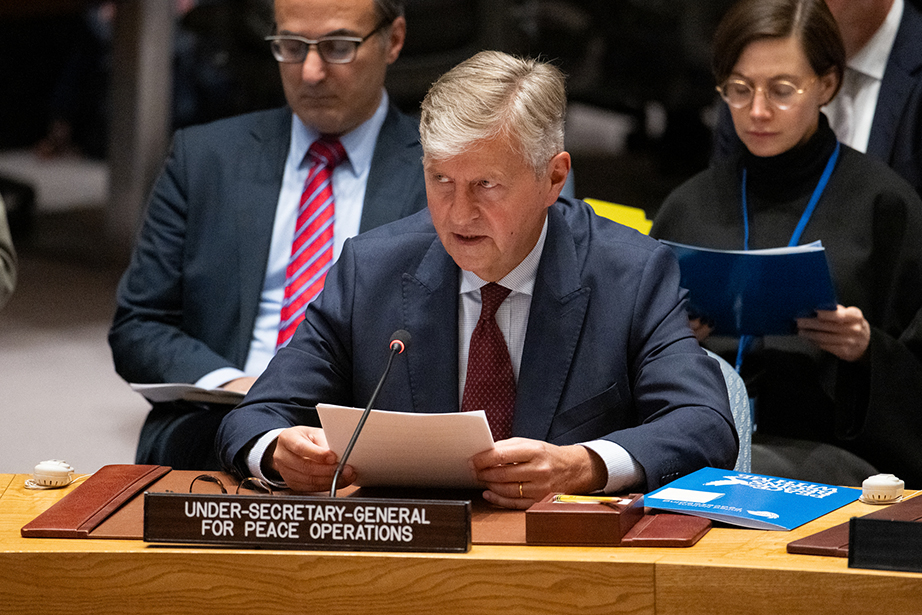
Lacroix: We always want to be very careful in terms of whatever we say about the race for secretary-general. What I can say, though, is that I think the UN is and has to remain an organization with people in the field, with a visible footprint of people actively—multilateralism in action.
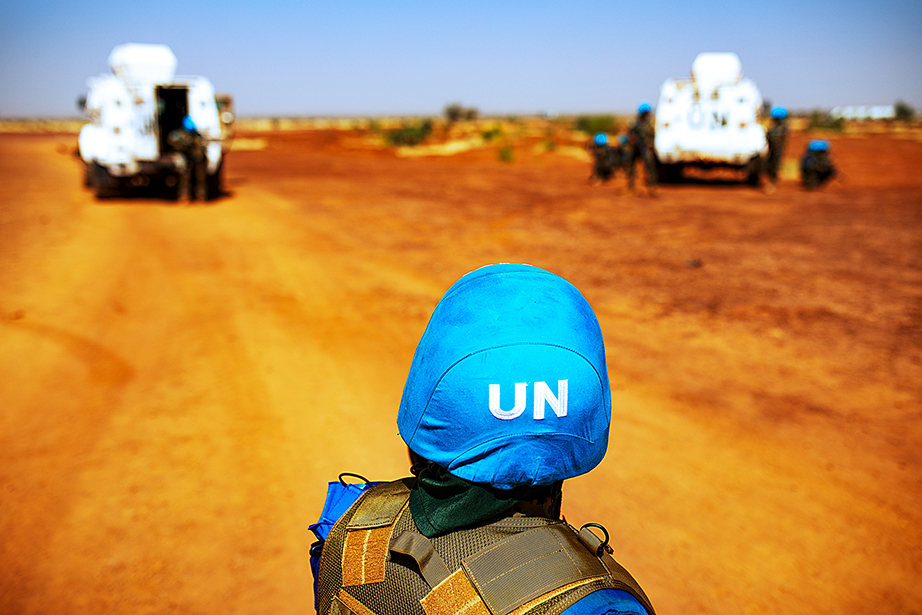
I’m not saying it has to always be peacekeeping, and again, peacekeeping makes sense in certain conditions, but I’m talking about the importance of our humanitarian colleagues being on the ground and doing their best to protect people. I’m talking about peacekeepers doing the same with the blue helmet, which is something that makes the UN visible.
I think that it’s important for the organization to remain a field-based organization, or to put it differently, an organization where the world that watches us sees UN people working in the field directly in those environments where you have people to save, people to protect.
Again, peacekeepers, humanitarian agencies, all of this is critically important. I think we should protect and maintain that. It’s a very important part of the credibility and the legitimacy of the United Nations, which remains, again, an organization widely supported by member states, and I believe also widely supported by the public at large.
I mean, there are several studies that demonstrate that, as opposed to what some would suggest, there continues to be a high level of support for the UN and what it represents really, within what I would call public opinion.
In terms of reform and the UN80 Initiative, do you feel like the UN lost its way a little bit in terms of having too many people in New York or in big European capitals versus not enough in the field? Do you feel like that recalibration was necessary?
Lacroix: No, well, frankly, not really. I mean, UN80, of course, is about, among other things, trying to elicit more, avoiding duplication, and elicit more efficiencies. And that is always something that we need to strive for. That’s one thing.
On the other hand, if I look at peacekeeping, we have, frankly, quite a light headquarters structure relative to the number of people, the peacekeepers on the ground, the civilians, the military, and the police.
And sometimes people compare [us] with other international organizations with operations in the field as well, and we’re quite light in terms of HQ structure. We’re quite decentralized, definitely at least as far as peacekeeping is concerned.
One thing that came up in the dialogues with the candidates for secretary-general was the prominence of some countries having control over some roles. France has had peacekeeping for a while. Do you have an opinion on that?
Lacroix: I leave it to the member states.
Do you think it should be merit-based?
Lacroix: I think in any case, whatever the nationality, obviously, there has to be a level of experience and competence, which is exactly what we seek when we look at how to make proposals through to our secretary-general for positions like heads of mission and so on and so forth.
We look at competence, experience, all that kind of thing. Now, certainly in many cases, we also look at nationality because the UN is eminently political. There are certain cases where certain nationalities, of course, may create misunderstanding or suspicion, whatever.
So yes, the UN is eminently political, of course. I mean, who could question that? No one. But at the same time, the critical importance of experience and competence is absolutely unquestionable as well.
About The Author