For Ethiopian and Eritrean comics, family migration routes, refugee histories and diaspora restaurants have become the infrastructure of a new transnational scene.
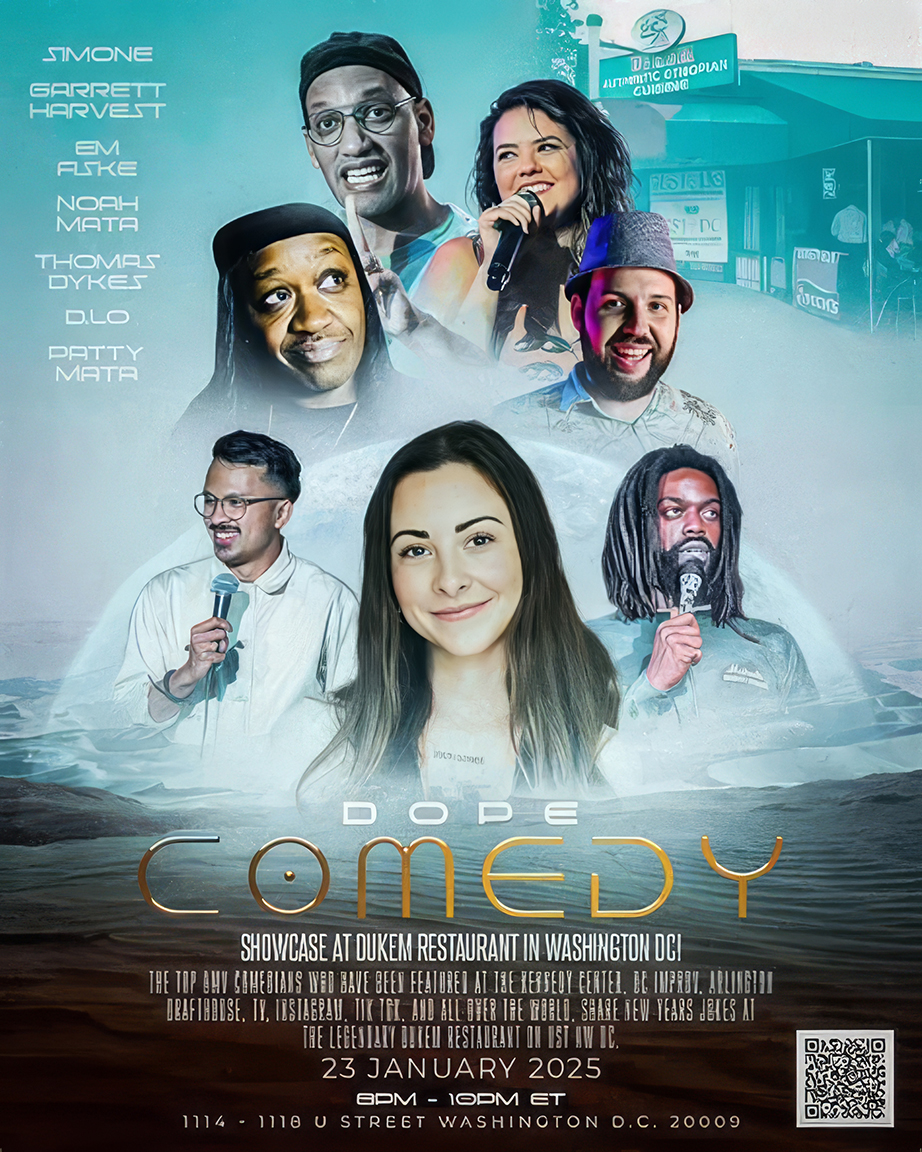
On a breezy Tuesday evening, lanky Simone Shiferaw—whose stage name is Chifforobe—is pacing outside a restaurant on U Street. Positioning himself before commuters emerging from a nearby Metro station, he hands out flyers for tonight’s Dope Comedy Showcase at Dukem, an eatery popular with Ethiopian immigrants and District foodies.
“Comedy Show Tonight,” he chants cheerily. “Comedy and Ethiopian food. It’s a great combination!”
Great, and spreading. Thanks to a new generation of comics tracing their American passage from the Horn of Africa, stand-up schtick is on the menu at Ethiopian bistros across the country. And, increasingly, across the world.
The Ethiopian diaspora spans oceans and continents—South to Johannesburg, East to Dubai, North to Europe and, of course, West to North America. Millions of aspiring émigré scholars, merchants and other enterprising business leaders push past the boundaries of culture from the lands of their birth. Some of those self-inventors wind up with kids looking for their own challenges, often in show business. Starting with stand-up comedy.

By the numbers, this is not a niche cultural story so much as a small window into one of the defining global realities of our time. The United Nations estimated in 2024 that roughly 281 million people worldwide were living outside their country of birth, including about 1.6 million Ethiopians abroad.
According to the International Organization for Migration, migrants sent an estimated $831 billion in remittances globally in 2022. Remittances to Ethiopia equaled 4.8 percent of GDP in 2024. In other words, diaspora is not only a human story of departure and adaptation, but a system of global exchange—of money, memory, ambition and culture—out of which even something as local as a comedy night at an Ethiopian restaurant can emerge.
That’s Simone Shiferaw’s story. The son of Ethiopian immigrants, he performs regularly in Washington, D.C., as Simone Chifforobe, mixing jokes and mild insults to diners hungry for authentic Horn of Africa fare and comedy that draws its laughs from their generation’s experience building new lives in America.
His set at Dukem includes a distant childhood memory of explaining to his father such American habits as exchanging teeth for cash from the Tooth Fairy, or trying to spot Santa Claus on Christmas Eve.
Trying (and failing) to meet the ambitions of his immigrant parents is a frequent theme. “My father says: ‘You’re doing comedy now, Simone. Your life is just a joke!’” he moans before leaning into his applause-winning clincher: “He’s always been that way. When I was two years old, he told me: ‘Grow up, Simone! When I was your age, I was four!’”
Many of today’s comics are from families who fled terrible famines, or else were political dissidents who spent decades seeking asylum in multiple countries before finally landing in North America.
Ethiopia is still living with the aftershocks of war, political violence, displacement and economic distress. The country faces overlapping humanitarian crises. UNHCR reports that 21.4 million people need assistance, including 4.4 million internally displaced people. Against that backdrop, the stand-up circuit taking shape in diaspora restaurants can feel like a social counterpart to survival itself: a place where the children of upheaval turn inherited fear, parental sacrifice and the awkwardness of belonging into something shareable, and bearable.
The stage is not limited to big metropolitan areas like Washington, the largest concentration of Ethiopian and Eritrean immigrants in the US. It’s all over.
In fact, on this same Tuesday evening Chifforobe is cracking up an audience at Dukem, other comedians are working at the Addis restaurant in Richmond, Va., as well as at Abyssinia in West Philadelphia. Abyssinia, as it happens, is one of two West Philadelphia spots in an Ethiopian neighborhood that stage weekly comedy at restaurants. Nearby, Gojjo serves its laughs with Ethiopian fare on Thursdays.

In Toronto, Hirut Café hosts a Last Friday of the Month comedy show that’s grown so popular that Canada’s top comics drop by to test new material.
There’s also the Red Sea in Minneapolis, and Emma’s Habesha in Inglewood, Calif., and Yenat Guada in Dallas, all popular spots where immigrant Africans are drawing crowds who have a taste (ahem) for fun and food from the homeland.
The best of the bunch also ply their talents overseas to Europe, and Africa itself, usually in the comfortable confines of family restaurants serving Ethiopian food. In 2025, Yonas Berhe of Houston joined Atlanta’s Filmon Yohannes in booking shows at Ethiopian bistros in Holland and Scandinavia. This past March Berhe took his act to Ethiopia’s capital for a comedy show sponsored by Heineken’s local brewer. Over a thousand fans packed an auditorium to hear his jokes from America and share their pride at his success.
It’s a form of global trade that rarely gets examined by economists or academics, but which adds to cultural cohesion on a planet where nations are ever more dependent on each other. Show biz skills—like the talents of scientists, doctors, engineers and inventors—thrive in the diverse economies of the Global North. It’s no different with comedy, whose practitioners are rarely rewarded in developing countries but can become breakout stars in countries where billions are spent annually on entertainment.
Which, of course, is also part of an enduring American show biz tradition, which has seen new arrivals from abroad master the latest cutting-edge technologies quickly to showcase their performing skills well beyond immigrant enclaves.
It began with a British circus clown, Charlie Chaplin, who arrived in New York expecting to perform with animals cavorting on sawdust under a tent but instead soon gravitated to silent film. In fact, Chaplin and other British stage comedians practically invented silent films, starting with the first feature Chaplin directed, appropriately titled The Immigrant, released in 1917.
Film in the US not only became a blossoming new industry that welcomed immigrants—it also became a means of storytelling that crossed an ocean back to Europe, essentially to welcome audiences there to become immigrants themselves.
Just as film once gave immigrants a way to tell their stories, humor can offer something even more immediate to families who have left behind war, hardship or uncertainty in search of a better life. In that sense, comedy is not just entertainment but a kind of relief: a way to make exile, sacrifice and dislocation briefly lighter, and a shared laugh its own form of therapy.
Just as Yonas Berhe found American audiences to hone his own sense of humor, his humor—exported back to Ethiopia as TikTok or Instagram clips—now beckons others to follow in his footsteps.
By the television era, US ethnic comedy became a tool of assimilation for minority Black and Latino Americans while the internet age helped spread a comedy tradition to South and East Asians. YouTube, Instagram and other social media created a path for this new wave to include African immigrant comics, often performing for immigrant fans who either operate restaurants, or have raised children itching to test jokes before a live audience.
And out of that mix, a comedy scene was born.
Adding Insult to Injera? Sometimes, but in good fun.
You could call it the Injera Circuit, sort of a latter-day Borscht Belt, the cradle of comedy careers for legendary US performers stretching from Jerry Lewis to Jerry Seinfeld.
Those comics, the children of 20th-Century immigrants arriving from war-torn Europe, crafted humorous bits from typical immigrant encounters with American life—everything from how to get a sweetheart, to how to get a job to satisfy ambitious parents, who’d rather see their sons (and daughters) cracking chests as cardiac surgeons than making a living cracking jokes.
And just as the Borscht Belt turned performers Joseph Levitch and Irwin Kniberg into icons named “Jerry Lewis” and “Alan King,” today’s Habesha comics seek stage monikers drawn from hip-hop culture. Yonas Berhe tours as “Lost Lyrics,” frequently joining “Felonius Munk”—born Arif Bilal Shahid in Chicago. Atlanta’s Michael Kebede tours as “Mr. Goopie.”
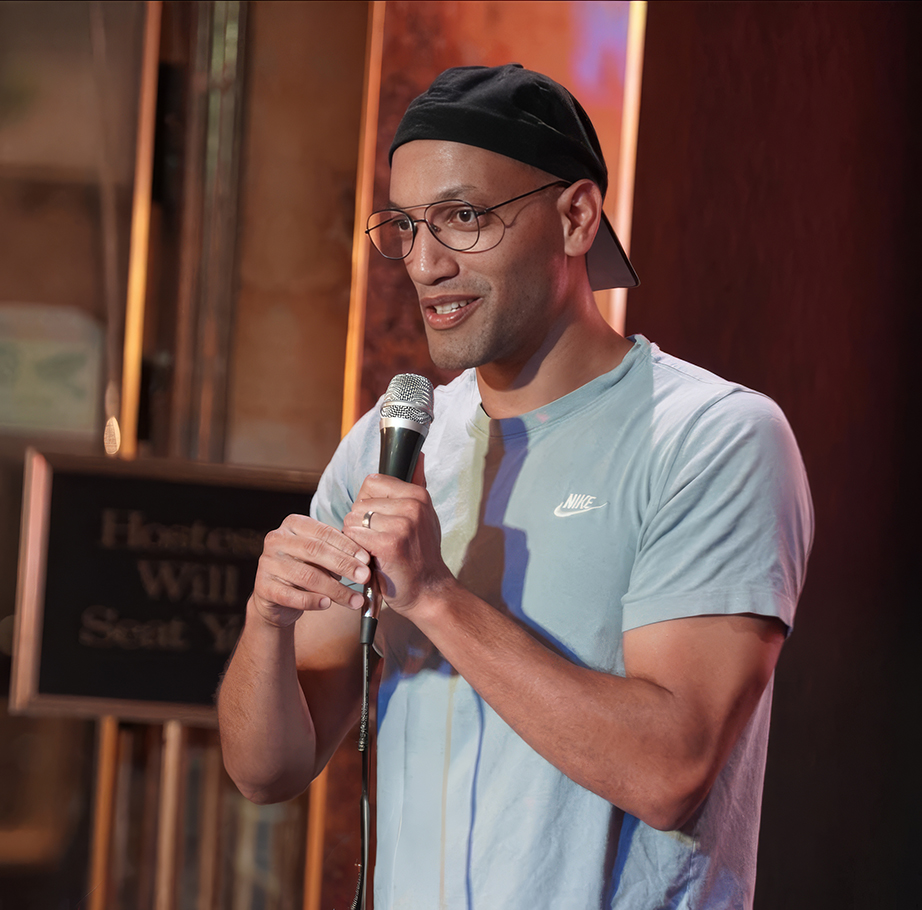
Shiferaw began doing stand-up as an undergraduate at George Washington University, later joining an improv troupe then staging his own shows at Dukem, whose owner is a family friend.
Warming up the crowd as emcee, he spots diners at one table deftly scooping lamb cubes and lentils onto bits of Ethiopian sponge bread, called injera. “Are you Habesha? I dunno,” he says, cocking an eyebrow skeptically. “I think I smell Silver Spring on you.”
It’s an inside joke. “Habesha” refers to any ethnicity from the Horn of Africa—including Eritrean, Amhara, Oromo or Tigrans. In questioning their Habesha bona fides, Shiferaw’s Silver Spring dig adds a dash of insult to their injera, suggesting these aren’t homeys down with the neighborhood. Instead, they’re likely suburbanites out slumming.
Common strains of his routine include dating while Ethiopian, being neither authentically “Black” nor authentically “African” and, a comic standard, disappointing one’s striving immigrant parents.
In diaspora, people from the same region are often seen—and may sometimes see themselves—through a broader shared identity than they would back home. That is part of what Shiferaw is playing with: the way migration can turn questions of authenticity, belonging and cultural performance into comic material. Back home, ethnic and communal identities can be sources of deep political tension and conflict. In the United States, distance and diaspora life can sometimes fold those differences into a broader shared identity—if only around a table breaking injera.
At Shiferaw’s Dukem show, only one of eight visiting comics, Ashinafie Abede, is Habesha. The others include Black Americans, two University of Maryland undergraduates, an Iowa farmer’s daughter and Matilda Epstein whose jokes revolve around life as a stand-up comic who works days as a DC nanny.
Abede, a newcomer to Washington, opens his set with a standard observation. “I’m not a believable Ethiopian,” he begins, gesturing to his large, athletic build. “People aren’t used to Ethiopians coming in Extra Large. People tell me, ‘You don’t look Ethiopian. You look like you eat Ethiopians.’”
Abede started doing live comedy in Minneapolis, where he joined other Habesha comics staging shows at Ethiopian restaurants The Blue Nile and the Red Sea. The Red Sea still offers comedy nights, now promoted by Alonzo Edwards, a Black American who caught the comedy bug watching Abede’s sets.
Russom Solomon, the restaurant’s owner, is a refugee from Eritrea. He says he likes not having to recruit talent or vet an audience. “It all depends on the networking of the comedians,” he explains. On comedy nights, Solomon profits from selling food and drink. Edwards, the promoter, charges an entry fee that he splits with the performers.
“Russom is a good dude, you know? We do a Black Saturday Comedy Jam. He’s good with all of it,” Edwards says. “It’s the usual drill: we get the door; he gets the bar.”
Of all the Habesha comics working today, Biniam Bizuneh may be the biggest star. The Indiana-born Eritrean-American started working clubs in Indianapolis, later moving to the West Coast where he joined the writing team at Jimmy Kimmel’s late-night show.
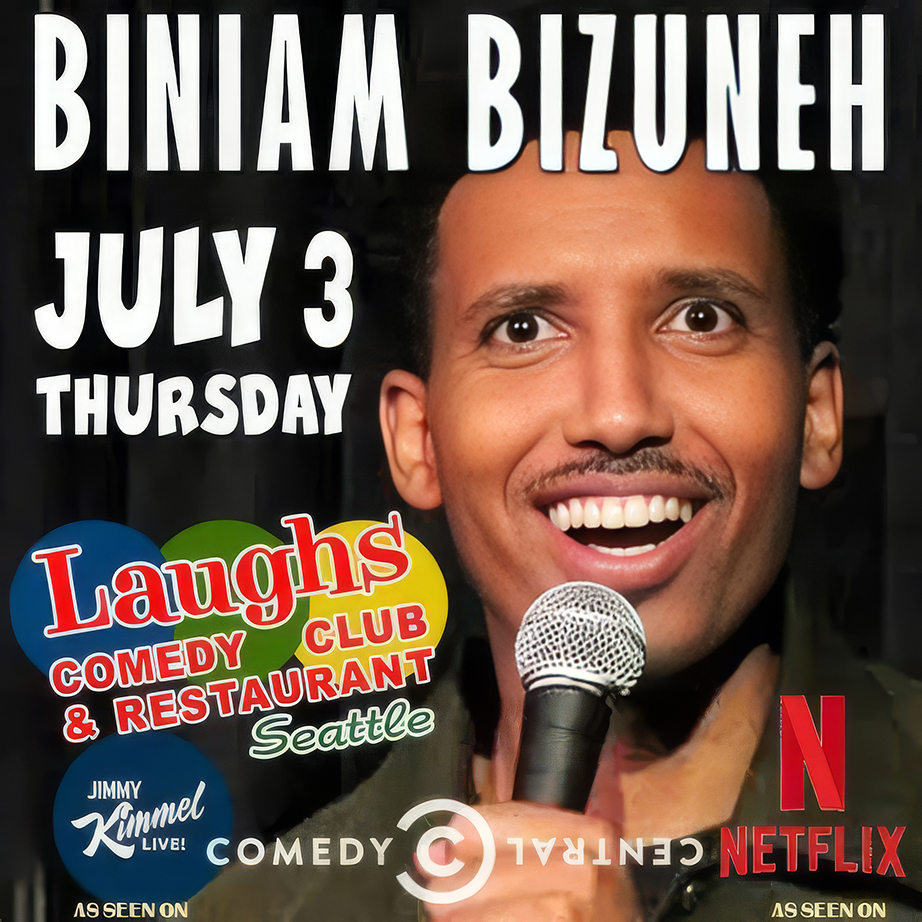
For a while Bizuneh hosted Wednesday comedy nights at Emma’s Habesha eatery in Inglewood, Ca., creating events he called “Wey Gud” parties for other artists sharing an East African heritage.
“Wey Gud” is an expression anyone from the region would recognize, Abede, the Minneapolis comic explains. “It’s, like, ‘Oh, my goodness!’ when your grandmother uses it,” he says. “With younger folks, it’s more like ‘So Cool!’”
It’s also an obvious play on teenage American slang, as in “Way Good.”
A typical sketch demonstrates how neatly Bizuneh hooks an audience.
“If you’re Ethiopian,” he begins, silencing murmurs from offstage.
“And you go to high school” (scattered chuckles)
“And the cross-country coach finds out?” (shriek of recognition).
“I mean, you don’t even have a choice! You just join the team!” (rolling laughter).
Bizuneh grins, then races to his punchline: “Stereotypes work!”
Two summers ago, Bizuneh joined fellow Habeshans on a barnstorming tour of four US cities, appearing at Dukem in Washington as well as dates in Los Angeles, Houston and Toronto.
More recently, Lost Lyrics (Yonas Berhe) and fellow comic Daegen Asfaha teamed up for The Official Eritrean Festival Comedy Show at the Zanzi restaurant in Oakland, Ca., while Bizuneh headlined the Ethiopian Sports Festival after-party with a gig in Seattle.
This emerging Ethiopian comedy scene delights Hollywood veterans like Bill Grundfest, whose résumé includes the hit comedy television show Mad About You and collaboration with Richard Pryor.
“It’s organic. It’s niche, and there’s an inherent point of view built in,” Grundfest says. “Comics in the general market take years to find their specific point of view. Many, in fact, never develop one.”
Discovering outlets like TikTok and Instagram allows Habesha comics to build a national, even an international fan base before leaving home. They hone their patter over platters of Ethiopian home cooking, then create demand for their live shows in other cities.
It’s just like Shiferaw promises: “A Great combination”
About The Author