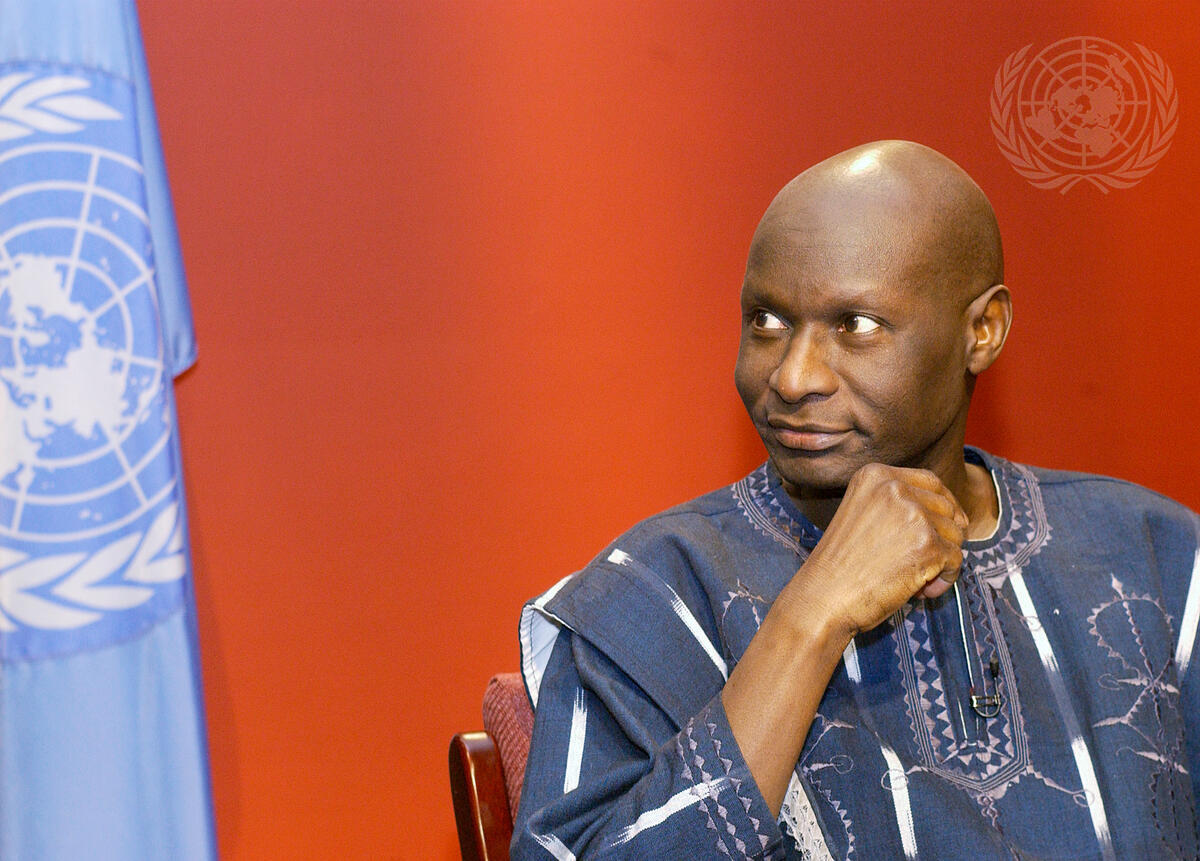
Uganda’s Olara Otunnu will be included in the first Security Council straw poll despite not yet presenting his vision to the General Assembly.
As the Security Council prepares to hold its first round of informal voting to decide who will be the next secretary-general, UN watchers warn that the process is off to a less-than-transparent start.
Concerns began to bubble after the Security Council decided to include the contest’s latest candidate, Olara Otunnu, on the ballot for the first straw poll scheduled for July 30, without having participated in a General Assembly informal dialogue, unlike the other six candidates. The Council’s current rotating president, Zénon Mukongo Ngay, the Democratic Republic of the Congo’s (DRC) permanent representative to the UN, made the announcement at a press conference on July 28 in New York.
When asked why Otunnu would be included on the ballot, Ngay said, “We don’t want anybody to come and just say, well, there’s seven candidates. Why did you put only six on the bulletin of straw poll?” He added, “We want everyone to be included.” Ngay believes the poll will take place “in the morning” on Thursday.
But according to Ben Donaldson, an advisor to 1 for 8 Billion, “Proceeding as planned, including a candidate in the Council’s deliberations who has not yet had a chance to present their vision and face questions in the General Assembly, would set a damaging precedent for the selection process, leaving the door open for possible future last minute candidates to evade scrutiny and accountability.” Donaldson spoke with Envoy via text message.
He added, “The Security Council must ensure a consistent approach to all candidates – anything less risks damaging the credibility of the process.”
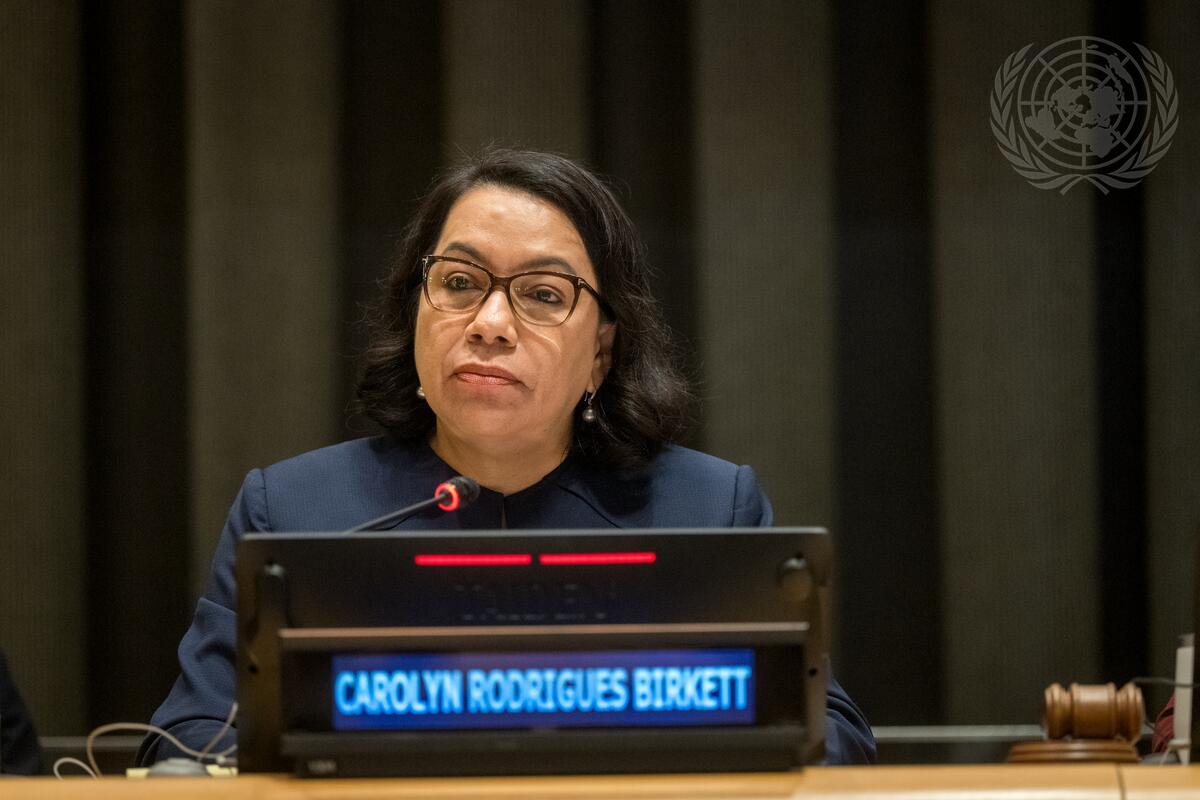
Otunnu, a veteran Ugandan diplomat with extensive UN experience, is the seventh candidate vying for the job of the world’s top diplomat alongside Macky Sall, Rafael Grossi, Rebeca Grynspan, Michelle Bachelet, Maria Fernanda Espinosa and Carolyn Rodrigues-Birkett. The Government of Uganda announced Otunnu’s nomination on July 26, four days before the scheduled straw poll on July 30. The poll is an informal, closed-door procedure used to gauge Security Council members’ support for each candidate.
Each of the six candidates shared their visions and took questions from member states and civil society members at separate three-hour interactive dialogues held in April and June. The hopefuls also participated in a UN Town Hall presented by Bloomberg on July 23. In a text message, UN expert Daniel Safran-Hon told Envoy the criticism of the Security Council’s decision is fair. “Every other candidate invested months in public engagement that Otunnu skipped, so some pushback on equal treatment is understandable.”
According to a July 28 letter sent from the current president of the General Assembly, Annalena Baerbock, to the Security Council, the newest candidate was invited to participate in a dialogue on July 29, but the offer was turned down by the “nominating Member State” as Otunnu “is not able to participate in a dialogue this week,” the letter said. While no further details were provided, there is no indication that Otunnu refused to participate. His interactive dialogue could be scheduled after July 30. “Otunnu isn’t breaking any rule and can’t be penalized for anything,” added Safran-Hon.
Currently in Uganda, Otunnu held a press conference on July 29 and thanked President Yoweri Museveni for his nomination. It is unclear whether he is in the process of applying for a US visa or how long the process may take.
The interactive dialogues are mentioned in General Assembly resolution 79/327. It states that “each candidate should be given the opportunity to present her or his vision statement” and the president of the General Assembly “will convene webcast interactive dialogues with all candidates.” Additionally, a 2015 Assembly resolution states that as the dialogues facilitate the “transparency and inclusivity” of the selection process, candidates who do not participate do so “without any prejudice.”
About The Author