Security Council diplomats backed a Gaza reconstruction body. What emerged became Donald Trump’s most powerful personal institution yet.
It had been two years of conflict with no end in sight, and diplomats came to the inevitable conclusion that one country, and one country only, had the power to stop the hostilities in Gaza: the United States.
In November, members of the Security Council received a draft resolution from Washington, endorsing US President Donald Trump’s 20-point plan for Gaza. The resolution on Gaza was drafted and sent by the United States as a “fait accompli,” Daniel Forti, U.N. expert at the International Crisis Group, said.
Several diplomats familiar with the Security Council told Envoy that, at the time, they faced a difficult dilemma: they had to vote for a resolution that had little room for change, or accept the difficult status quo and the dire humanitarian situation in Gaza. Some countries expressed reservations during the negotiation process, “and we were mostly ignored,” one Security Council diplomat recalled.
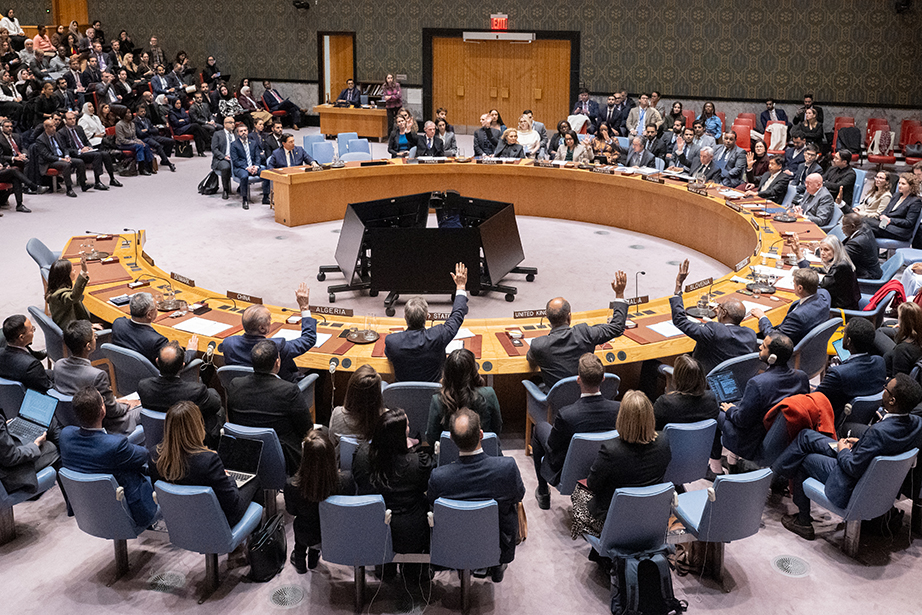
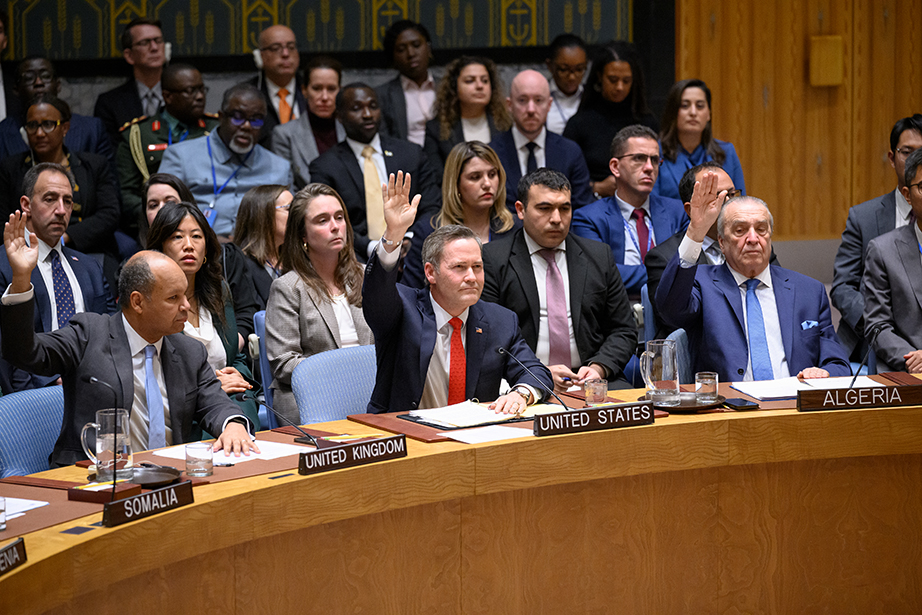
With little room to negotiate and eventual signals from both Palestine and the Arab states to support the text, Forti said, several diplomats voted in favor, “kind of holding their nose.” In the solemn room, 13 representatives raised their hands, and Russia and China abstained.
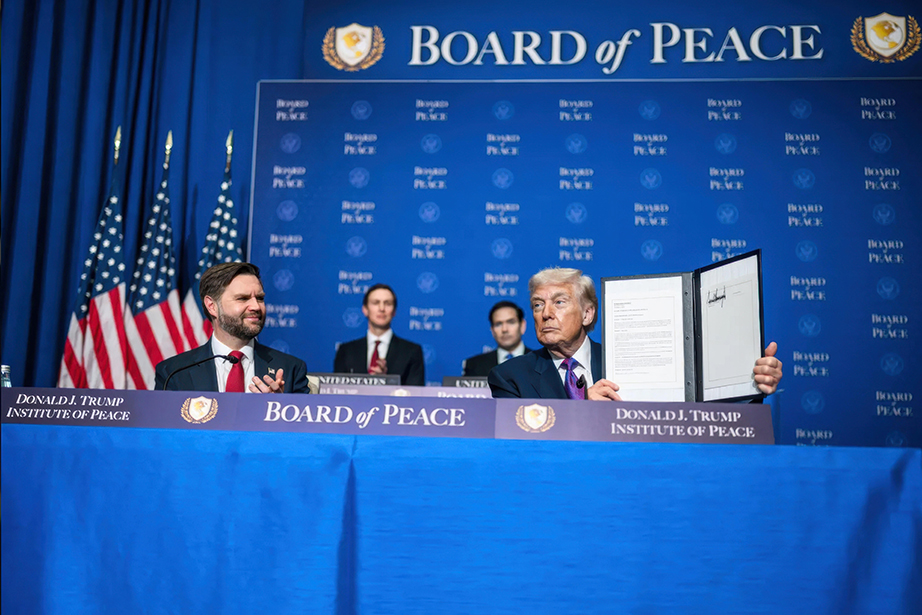
Two months later, US President Donald Trump presented his Board of Peace (BoP) to the world in Davos. Gaza does not appear once in its Charter. The Charter vests unusual authority in Trump: as inaugural Chairman, he approves Board decisions, selects the Executive Board, and designates his successor. “My jaw was dropping” every step of the way when reading the Charter, a mission representative whose country sits on the Board said.
For one Board diplomat, the venture is an “attempt to monetize peace and security.” For others, it’s a post-retirement project that will build Trump’s legacy. After all, Trump said the Board could one day “look over the U.N.”
Within weeks, diplomats who had accepted the Board as a narrowly focused Gaza mechanism were describing it in much darker terms—as a vehicle less for reconstruction than for political branding, personal legacy, or worse.
With the resumption of violence in the Middle East and Indonesia’s decision in late February to “freeze” its participation in the Board until Palestinian people’s interests are represented, some diplomats now question the very existence and future of the venture.
Several diplomats expressed concern that the Board’s decision-making is heavily concentrated in one person’s hands. Less obvious from its structure, however, is that Trump, in his personal capacity, could retain control over the Board’s funds beyond his presidency, as a private citizen.

From a Board on Gaza to a UN alternative
Resolution 2803 is specific about the Board’s mandate: the Board is a transitional administration for Gaza, with an international legal mandate, tasked with setting a framework for redevelopment and coordinating funding “pursuant to the Comprehensive Plan” annexed to the resolution.
What was unveiled in Davos took a completely different turn. Trump unveiled what he called “the greatest and most prestigious Board ever assembled at any time, any place.” That day, the composition and Charter of the Board captured the fast news cycle. Observers expressed concerns over the overwhelming power Trump holds over the Board, and how different its Charter is from its original mission.
“Just like so many U.N. resolutions are, [resolution 2803] was just ambiguous enough,” Hugh Dugan, an American diplomat who served in the previous Trump administration, said. “They [Washington] interpreted it liberally, and decided to create a Board that goes beyond the idea of just rebuilding Gaza.”
Credit: UN Photo/Manuel Elías
As a Security Council diplomat put it, the Board was built so Trump “can have his cake and eat it too.” Diplomats were genuinely surprised. Many diplomats said that since Trump’s return to office, the US mission to the U.N. had been disorganized, lacking a formal ambassador for several months. They said information about the Board was limited, and that negotiations were conducted largely between Washington and their capitals, bypassing New York.
When Trump announced the Board of Peace in Davos, 35 countries were said to be joining. Since then, that initial show of support has appeared less robust than first advertised: the Board is backed by more than 20 countries, while around 20 others attended its first meeting in Washington as observers.
“So far, the membership of the Board has not been seen as a success,” Forti said. Ultimately, the Board now has a membership that Forti sees as countries whose presidents are ride-or-die allies of Trump, and Gulf countries who have a genuine interest in Gaza’s stability.
Dugan also believes that the Board’s current membership isn’t large enough to be a real alternative to the U.N.: “Whether that’s fully representative or democratic, it does not appear to have the institutional identity that implies legitimacy upfront,” he said. President Trump himself said the goal wasn’t to replace the U.N., because it has “potential.”
Credit: UN Photo/Laura Jarriel
These countries, Forti adds, have sent clear signals that the Board should keep its focus on Gaza and Gaza only, with mixed success.
The U.N. has also repeatedly made its position clear that resolution 2803 endorses the Board’s work on Gaza, and Gaza only. “We will work with the Board of Peace in respect to its work on Gaza, which was mandated and approved by the Security Council,” Stephane Dujarric, the U.N. Secretary-General’s spokesperson, said in January.
As one Board member put it, “the proof will be in the pudding,” and Trump’s expansionist view on the Board will depend on how it fares in Gaza.
For Dugan, the Board’s slim Charter could serve as a counterweight to the U.N., which is often criticized as being slow and bureaucratic. “It’s quite unencumbered by many of the things that the U.N. Charter promotes,” he said, “it presents expediency for the purpose of moving on to the next piece of business.” For some observers, however, Washington’s ambition for the Board was never solely about Gaza.

A Chairman without a country
One mention has caught several people’s eyes when the Board of Peace was unveiled, but for different reasons: the Charter’s language appears to position Trump as chairman in his personal capacity, not as President of the United States. While many saw it as an ego-driven provision, a legal expert sees this section as much more consequential.
Article 3.2 of the Charter makes this explicit, designating Trump in two separate roles—Chairman (personal) and US representative (Head of State). These are distinct positions, and that distinction matters from January 2029 onward, according to L. Ali Khan, Emeritus Professor of Law at Washburn University. He argues in a recent piece for JURIST that the Charter has produced something that “functions more like a sole proprietorship than a legitimate multilateral institution.”
When Trump’s presidency ends, his chairmanship does not. He has no term limit and gets to handpick his successor. He alone designates his successor, without requiring any member-state approval, and there is no requirement that the successor be a head of state, a government official, or even a US citizen.
Khan flags the logical endpoint: from 2029, the sitting US president would be a member-state representative formally subordinate, within the Board’s structure, to whatever private citizen Trump had designated as his successor.
More importantly, and more concerning for many, Trump controls the budget: the Charter instructs the Executive Board to provide oversight of finances, but the Executive Board answers to him. He controls the Charter itself: Article 8 gives him veto power over any amendment, even one unanimously approved by every member state. He can dissolve the organization whenever he “considers necessary or appropriate.”
The Charter also states that the Executive Board’s decisions on budgets, accounts, and disbursements are subject to the Chairman’s approval. Trump is, structurally, both the entity being overseen and the entity doing the overseeing. As such, it is possible that in 2029, when Trump is back to being a private citizen, he, in his personal capacity, ends up having control over the fund, should the Board still exist by then.
Credit: UN Photo/Paulo Filgueiras
The Money Trap
During its first meeting only, the Board received over $17 billion in pledges, $10 billion of which from the US itself. The United Arab Emirates pledged $1.2 billion, while Saudi Arabia, Kuwait, and Qatar each pledged $1 billion.
The Trump administration’s 2026 budget request makes no specific reference to funds requested for contributions to the Board of Peace. It is not clear whether the administration might seek to use funds from other accounts to make contributions, and the $10 billion pledge has not been formally authorized by Congress.
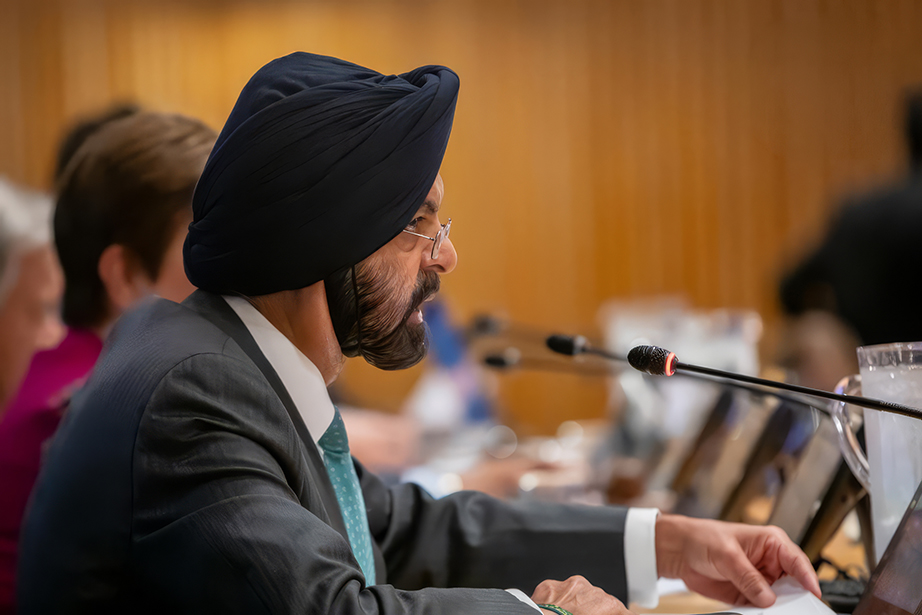
When the Board was announced, it was done so with the reassurance that the World Bank would administer the fund as a limited trustee. At the meeting, World Bank President Ajay Banga announced the creation of the Gaza Reconstruction and Development Fund—the GRAD Fund—housed as a Financial Intermediary Fund. Banga described the arrangement at Davos with unintended clarity: “The actual Board of Peace is the political leadership. I call us the worker bees, them the deciders.”
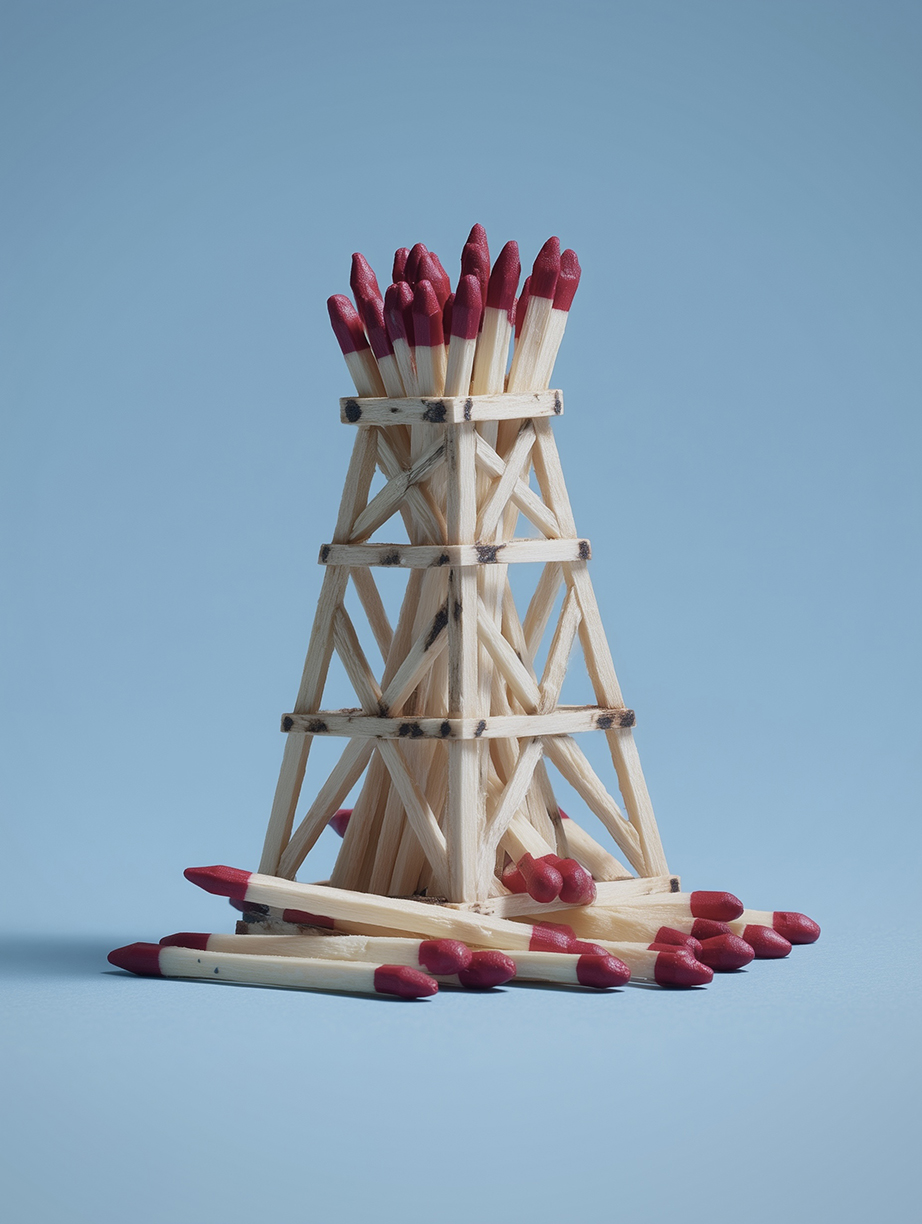
However, The World Bank memorandum governing the arrangement is more precise about what that transparency covers. It states that any use of funds “will be determined by the Board of Peace without approval, recommendation, or input from the World Bank”—including decisions about sub-grantees, implementing agencies, and contractors, and “any policies, procedures or safeguards relating thereto.”
The Bank holds the money and reports on balances. Once the Board of Peace sends a transfer, the Bank’s accountability appears to end. The World Bank’s involvement provides meaningful transparency on inflows, but little on outflows.
Stacie Goddard, Professor of Political Science at Wellesley University, said in an interview with NPR, that the Board of Peace is better understood when looked through the lens of “16th Century dynastic politics,” in which Trump is the absolute sovereign surrounded by a royal clique. As such, she argues that the Board of Peace was constructed in a way that would enrich him and his followers.
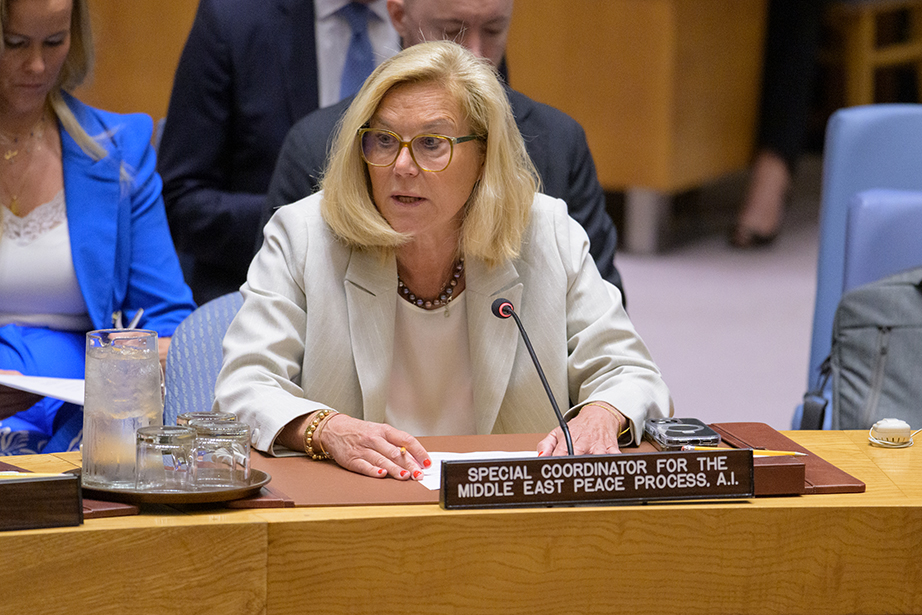
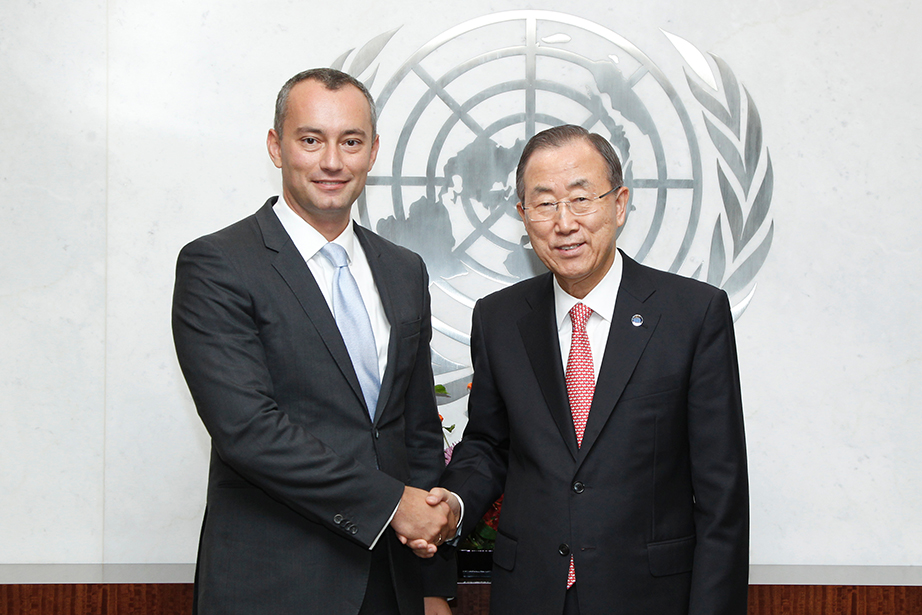
The venture’s Executive Board includes members close to the president, including his son-in-law Jared Kushner, and Special Envoy Steve Witkoff and Special Coordinator for the Middle East Peace Process, Nikolay Mladenov. Gaza’s Executive Board includes Sigrid Kaag, the current coordinator. Both boards are ultimately subordinate to Trump, whose charter-based powers reportedly include veto authority over decisions as well as the power to create, modify, or dissolve subsidiary bodies.
Dugan has a less sinister view, and sees it simply as a way of “remaining prominent on the world scene beyond his presidency.”
Credit: UN Photo/Loey Felipe
What Comes Next
The Board of Peace’s most immediate problem might not lie in its governance structure—but rather in the most recent action of its chairman-for-life. With the resumption of violence in the Middle East and the launch of the joint US-Israel military campaign on Iran, reconstruction in Gaza has taken a backseat, and some members now even question the Board’s very own existence.
Shortly after the US and Israel launched their attack on Iran, some pundits renamed the venture the “Board of War.” Richard Haass, president emeritus of the Council on Foreign Relations, was pointed in his criticism. In a piece titled “War of Choice, Board of Peace,” he argued that Putin’s invitation to join the Board made “a mockery of the undertaking.”
The ceasefire that the Board was created to consolidate has broken down. Indonesia has halted its participation. The U.N. estimates Gaza reconstruction will cost approximately $70 billion; $17 billion has been pledged, against a backdrop of resumed hostilities and no agreed political framework.
When Security Council members voted on resolution 2803 last November, they were voting on Gaza. What they got was something else—an organization with a lifelong chairman, a self-amending charter, and a fund whose outflows the World Bank does not track. In that solemn room, 13 hands went up. None of them can come back down.
About The Author