From the crowded market streets of Adana in southern Turkey, Syrians are weighing whether the fall of Bashar al-Assad has made a return possible—or whether home is now a country they no longer recognize.
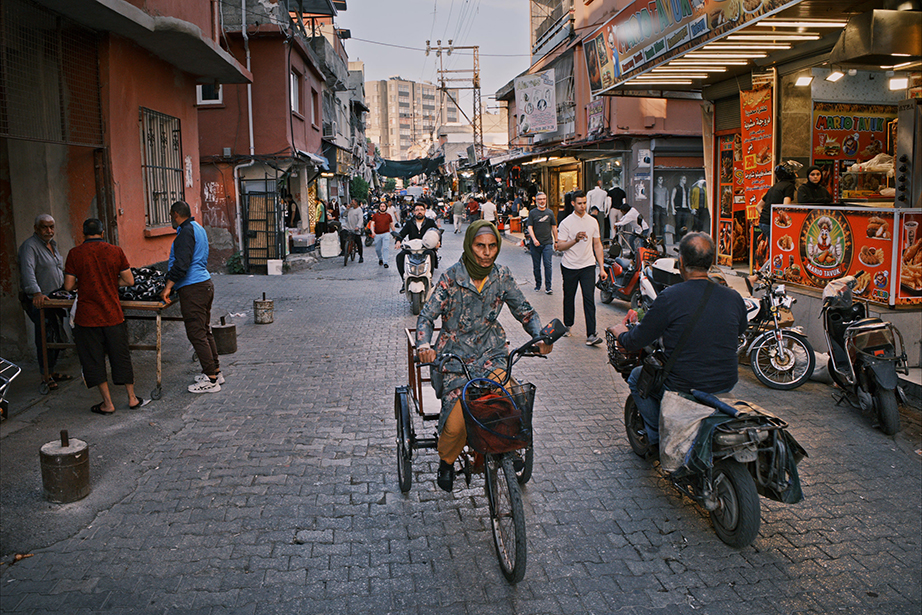
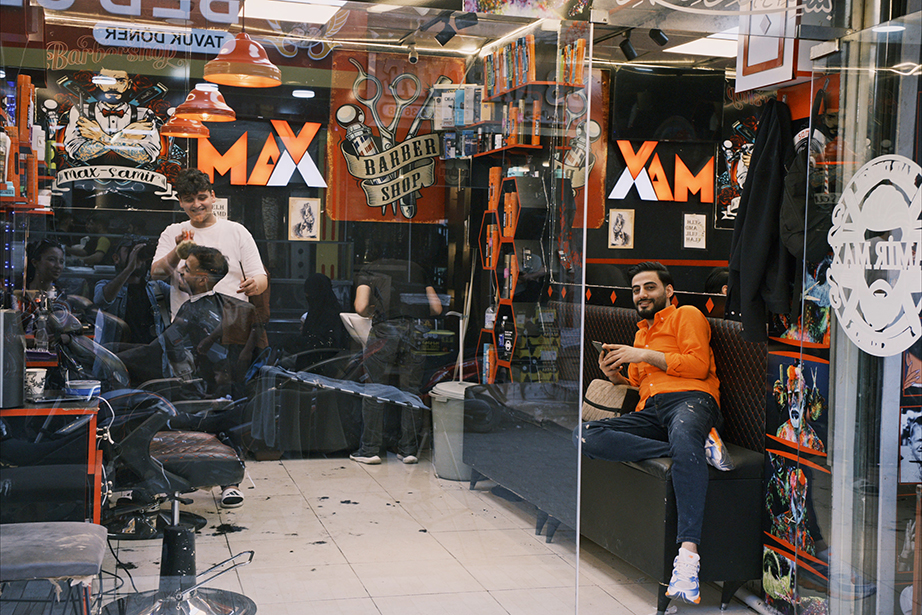
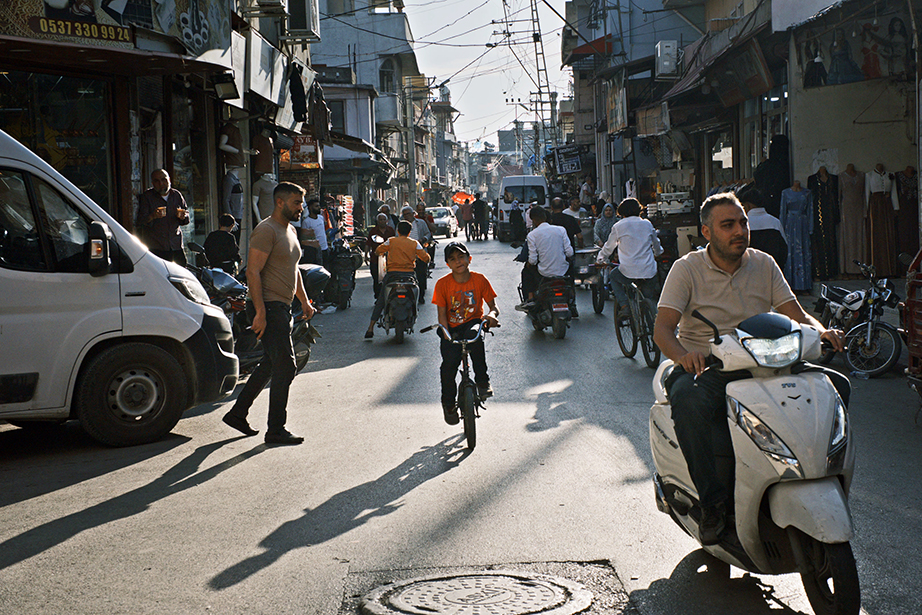
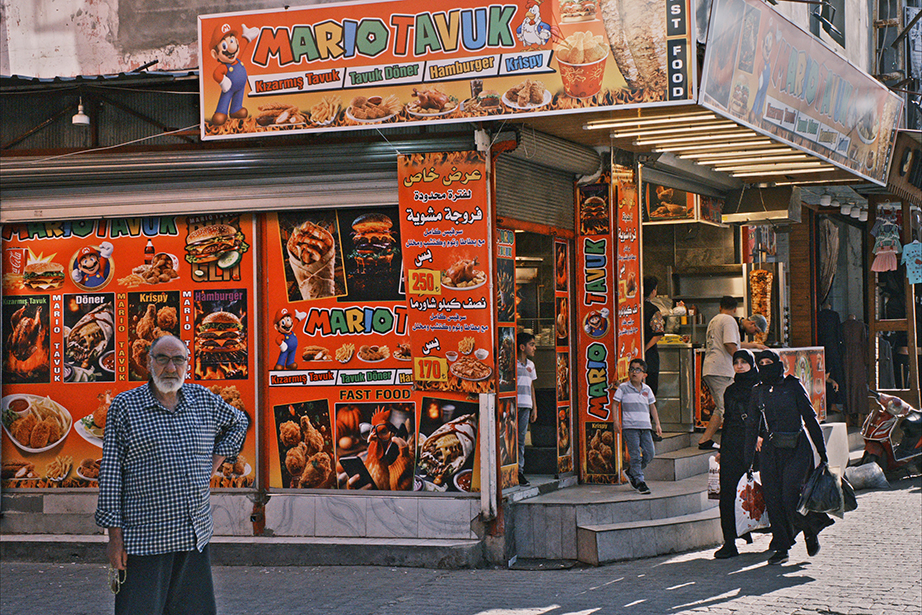
What used to be a deserted street in Adana’s old town has become a vivacious spot for Syrians who arrived after the war. The street is now called “Little Aleppo,” a home away from home in southern Turkey.
Shops selling spices, gold, falafel, tunics, cellphones, cheese, and olives line the narrow street, where dozens of colorful scooters honk at any given moment, creating another world a few kilometers from Adana’s modern city center.
Abdullah Abdo, a 32-year-old carpet seller, says he is happy with his life in Turkey, where he arrived with his family when he was 20. “But I’m planning on returning to Syria by next year,” he adds.
He wholeheartedly welcomed the fall of Bashar al-Assad on December 8, 2024, after rebel factions led by Hayat Tahrir al-Sham (HTS) launched an offensive that culminated in the fall of the regime. “We weren’t expecting this to happen so quickly,” he says.
The offensive marked a major turning point in the Syrian civil war, which began in 2011, lasted more than fourteen years, killed more than 580,000 people, and displaced more than 11 million, according to the United Nations.
The conflict, which began with protests against the former president, turned into a bloody civil war after the regime used live ammunition against civilians.
Abdo is one of roughly 2.3 million Syrians still living under temporary protection in Turkey, part of a refugee population now weighing an uneasy question after the fall of Bashar al-Assad: whether the country they fled is finally safe enough to return to, or whether the devastation left behind makes home a place they can no longer recognize.
Envoy spoke to half a dozen Syrians in southern Turkey to understand what they are weighing as they decide whether to return—and whether they still see today’s Syria as home.
Homeland “below ground level”
Abdo was also one of the citizens who picked up a gun and fought against what he calls “a brutal regime.” He lost his brother and two nephews in the fighting for Aleppo and left the city during the 2016 siege, when citizens were put on buses and forcibly evacuated.
While Western powers, including the United States, Britain, and France, backed opposition groups throughout the war, Russia and Iran continued to support the Assad regime, turning the conflict into a proxy war.
During the war, major cities such as Aleppo and Homs were reduced to rubble, with the World Bank announcing in October 2025 that the total cost of post-conflict reconstruction is $216 billion. That figure, the group said, is ten times the country’s projected 2024 GDP.
Now, Abdo says, there is a lot to do. “The n ew government is trying to build a country not from ground level. The country is way below that because of the war.”
Still, he is not wihout hope that things can get better. “If Assad is gone, we believe anything is possible, that anything is better than having him,” he smiles.
His mother, father, and siblings, who were living in Adana with him through the war, returned to their homeland months ago. He hears from them about daily challenges, such as electricity and water cuts, but is not disheartened about going back to his home in Aleppo.
That sentiment is widely shared in the street. Yemen Shabaq, a 26-year-old Syrian from Aleppo who works at a currency exchange office on the street, says he is also looking to return soon, but because of the lack of jobs and low wages, he is waiting for the right moment.
A fragile sense of stability
Ahmed al-Sharaa, the country’s new leader, who used to head the al-Nusra Front and, later HTS, during the war, used to come across as a dishonest man, Shabaq says. “But now, I really like the way he thinks strategically when he meets with world leaders and gives public speeches.”
Sharaa, who was known during the war as Abu Mohammed al-Jolani, sparked controversy over his past ties to al-Qaeda when he took the country’s leadership in late 2024. While minorities in Syria immediately voiced fears that he would seek revenge and oppress Alawites, Christians, Kurds, and Druze, Sharaa publicly pledged to protect them.
However, some three months after the toppling of Assad, Syria’s western coast, where many of the country’s Alawites reside, experienced what numerous national and international human rights groups have labeled “a massacre.”
The fragile sense of stability that briefly emerged quickly unraveled when coordinated insurgent attacks along the coast targeted government forces. Syrian officials said the assailants were armed groups linked to the former regime.
The clashes left dozens dead and were followed by a surge of retaliatory violence against Alawite communities. Security forces from the Defense and Interior Ministries, joined by pro-government militias and armed volunteers, moved through Alawite-majority towns, villages, and neighborhoods in the Tartous, Latakia, and Hama provinces.
“In the process, they killed at least 1,400 people,” according to a report by Human Rights Watch. “In many cases, they moved house-to-house, demanding to know the residents’ sect, looting valuables, torching homes, and executing children, women, and men, including older people, often using overtly anti-Alawite slurs and rhetoric. In some places, fighters wiped out entire families,” the report says.
Shabaq thinks these incidents happened only because minorities were rebelling against the new status quo at a fragile time for the war-torn country.
“For decades, a minority, not even twenty percent of the country, oppressed us and made our lives miserable,” he says with a nervous smile. “Now, I don’t think they have the right to say anything against us.”
He compares the times when Syrians were protesting against the Assad government under fire with how “Alawites are granted police protection when they protest now.”
Syria’s population of 26 million is made up of various ethnicities, with some 70–75 percent identified as Sunnis, while Alawites account for 10–15 percent, Christians for 10 percent, and Druze for 3 percent, according to a report by the US Commission on International Religious Freedom.
Another bloody conflict erupted last July in the southern governorate of Sweida. Nine days of clashes between Druze-led militias and Bedouin armed groups escalated amid the Syrian government’s intervention and Israeli airstrikes, raising fears that the country could once again spiral into a larger conflict.
More than 1,700 people were killed in the crossfire, according to a UN Commission of Inquiry on Syria investigation, and more than 200,000 were displaced. The clashes, along with Israeli airstrikes, also severely damaged critical infrastructure, leaving large parts of Sweida city without electricity, water, or telecommunications.
“These incidents happened because the Druze wanted to separate the country,” Shabaq says. “What were they expecting?”
He has similar views about Kurdish-led autonomy in northeastern Syria, where the Autonomous Administration of North and East Syria, also known as Rojava, emerged during the war.
The rapid collapse dealt a major blow to Washington’s longtime partner, and a cease-fire was declared on January 30, leaving questions about whether Sharaa’s military gains could translate into political stability in the region.
“The one thing I don’t like about the new government is how they are dealing with the Kurds who want to separate our country,” Shabaq says. “I think once they show you their true colors, you should deal with them accordingly.”
Explaining that separatist Kurds are not representative of Syria’s entire Kurdish community, he says the armed, Western-backed People’s Defense Units, or YPG, must be wiped out completely to avoid the country falling into another conflict in the future.
“But I understand Sharaa,” he says. “No one wants another war, so he opts for the peaceful, negotiating way.”
Weighing options “very carefully”
“The first issue on their minds when it comes to making a decision to return is security,” Metin Corabatir, president of the Research Centre on Asylum and Migration (IGAM), says. “Then, it’s access to daily needs, such as food, water, electricity, jobs, health, and education.” “We know that there are armed groups and a high level of gun ownership,” Corabatir continues. “This is perceived as a security issue. There’s also the question of how the integration of minorities will play out, and whether relative peace can be maintained.”
Explaining that there are serious issues with health services and schooling in Syria, he points to how many children are returning to soil floors and wrecked buildings, and how that factors into families’ decisions to extend their stay in Turkey.
“They are comparing their lives in Turkey to a new chapter in Syria,” he says. “And now, since July, the Turkish government forbids them from returning to Turkey if they go to Syria, so they’re weighing their options very carefully.”
Despite the challenging conditions in Syria and Turkey’s regulation blocking returns to the country from Syria, about 1,000 Syrians are going back to their homeland weekly, he adds, but notes that these numbers are lower than expected. “More than 2.2 million Syrians in Turkey are waiting to make a decision,” Corabatir says.
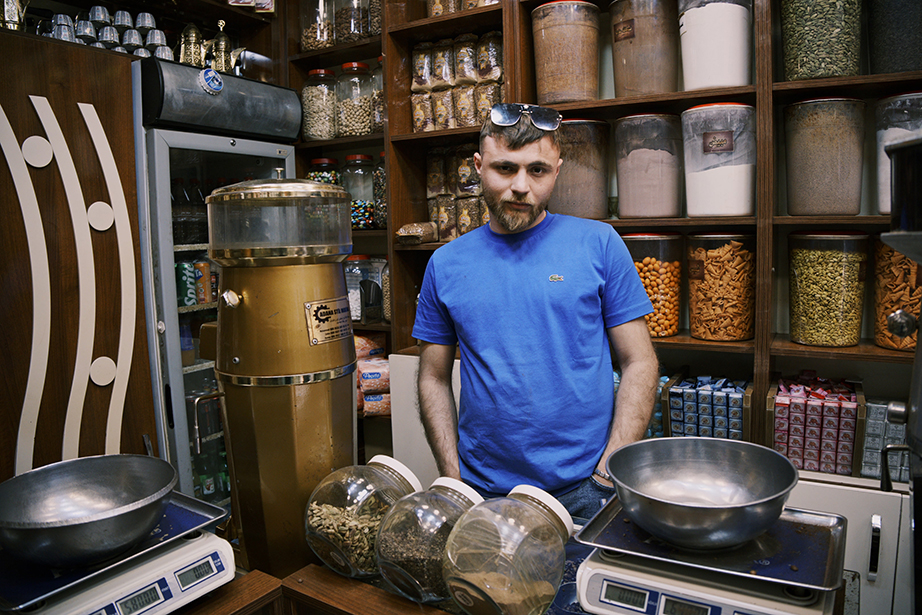
“So far, I like how they are getting things done,” says a young man from Aleppo who did not want to be named, organizing the shelves at a tiny nut shop on the street. “They are working on building the roads, and I’m hearing that the electricity and water access is getting much better, that they arrive for 12 hours a day now.”
However, his family’s home back in Aleppo was wrecked in the war, and he explains that there are not many job options yet. “When things return to a level of normal, we are planning on returning,” he says, adding that he looks forward to doing so after a decade away.
Over the coming years, the country will need to create hundreds of thousands of jobs annually just to keep pace with demographic change, the UN Development Programme says, while many Syrians who spoke to Envoy said this issue will be a major deciding factor.
More than 1.6 million Syrians have voluntarily returned from neighboring countries since December 2024, according to the UN.
Turkey, the country that hosted the largest number of refugees for over a decade, has seen more than 660,000 Syrians voluntarily go back to their homeland since the fall of Assad, the Turkish Interior Ministry announced in early May.
But not everyone wants to leave Turkey, which at its peak housed 3.7 million Syrians in 2021. Aheed Toprak, a 39-year-old housewife from Aleppo, says she arrived in Turkey early in the war with her ex-husband and two children, looking for refuge from the harrowing situation in her homeland.
“We got a divorce eight years ago, and I married a Turkish man,” she says. “This is our son,” she adds, showing the toddler in the cart she is pushing.
Although she thinks Sharaa’s government is taking the right steps to rebuild her native country, she says what she found in Turkey gives her enough reason to stay.
About The Author