Former President Michelle Bachelet’s campaign for the UN’s top job has stirred pride at home, even as shifting politics in Santiago complicate her path.
Throughout the stations of the Santiago Metro, commuters traveling on Line 3, an underground expansion that Michelle Bachelet helped spearhead during her second presidency, could hear the low murmur of conversations sparked by front-page headlines.
On a crisp February morning, as the trains moved toward the residential foothills of La Reina, where she resides, the news was everywhere: the government of President Gabriel Boric had officially nominated Bachelet for UN secretary-general.
For many Chileans, Bachelet’s candidacy is a rare chance for a relatively small country to project its democratic story onto the world stage. But her path remains uncertain: she faces competition from other Latin American contenders and possible resistance from permanent members of the Security Council over her record as UN human rights chief.
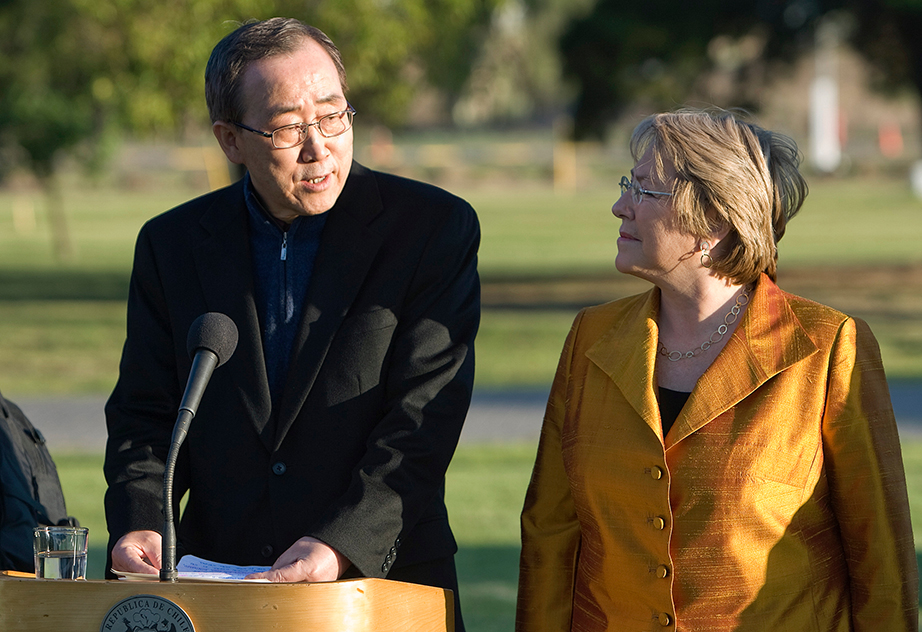
“For Chile, it would be a great honor and a great opportunity to position the country, although it is a small country, on the global agenda,” Gabriel Gaspar, an international consultant and former Chilean ambassador who served as undersecretary under Bachelet, told Envoy.
A torture survivor under the military dictatorship of former president Augusto Pinochet, Bachelet served as Chile’s first and, to date, only female president from 2006 to 2010, and from 2014 to 2018. Between terms, she headed the UN Women agency and subsequently served as UN high commissioner for human rights, where she earned criticism from rights groups who charged her with being soft on alleged Chinese rights abuses.
Among many Chileans, support for Bachelet’s candidacy appears to cut across party lines.
“While not being a supporter of her or her positions in Chile, I believe that she has many attributes for the UN: the political leadership she has had, she was president of a country, she has significant international experience. So I believe she would be a good asset to the UN,” Rodrigo Cataldo, a 59-year-old bank executive who is on the opposite political spectrum from Bachelet, said.
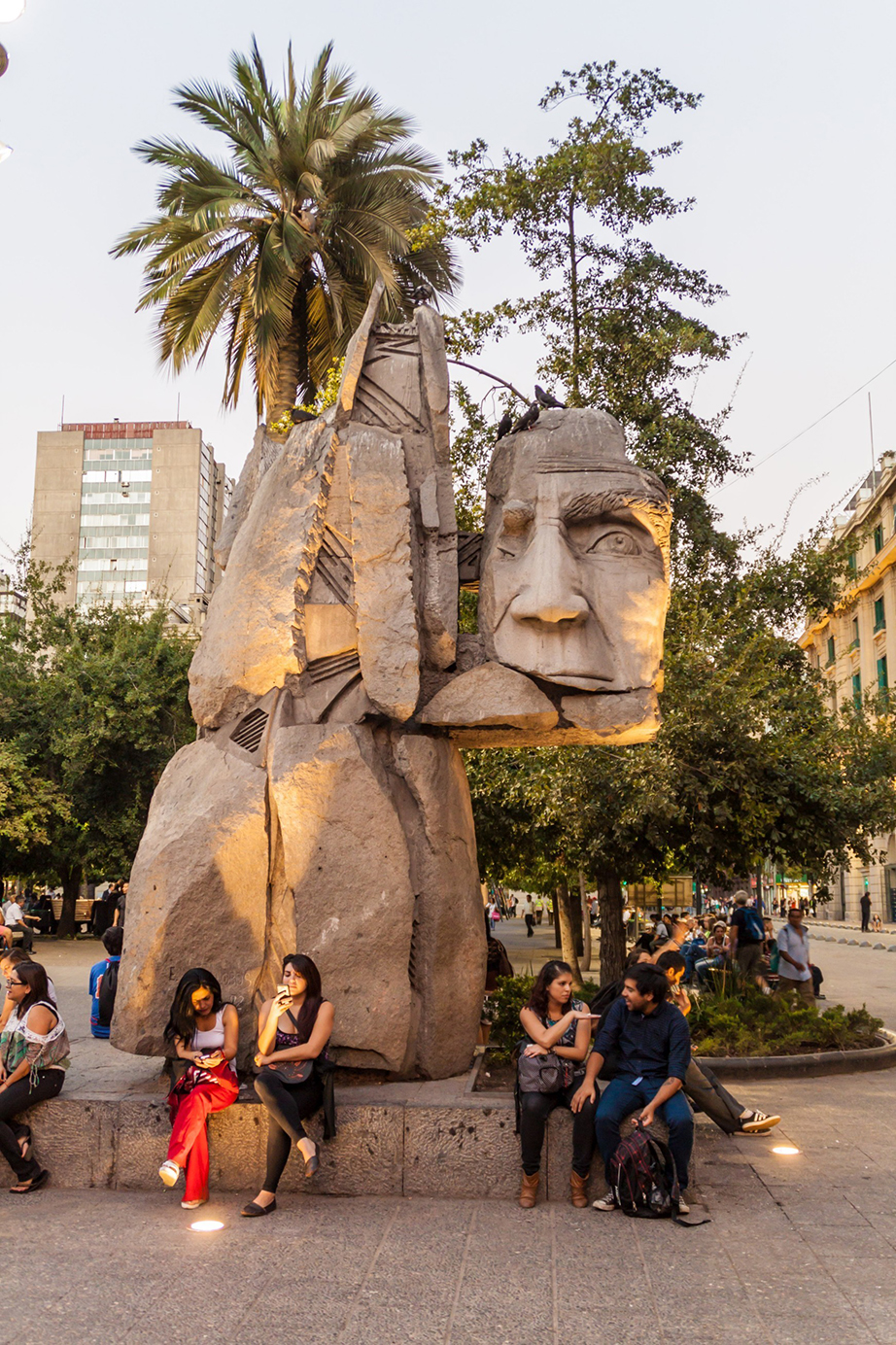
For others, her candidacy is a source of national pride.
“It’s a source of pride that the only female president we’ve had in Chile is a candidate for UN secretary-general,” Daniela Sandoval, a final-year journalism student at Universidad del Desarrollo in Concepción, told Envoy. “She has a long and distinguished political career. From her beginnings in politics, she has done a lot of good, and not every country can say that a former president has held positions at the UN.”
Chile Withdraws, but Brazil and Mexico Carry On
While Santiago’s underground pulse reflected the impact of the infrastructure she helped build, the political landscape was already beginning to shift toward a dramatic withdrawal of support from the incoming administration.
The February nomination came from three countries: Chile, Mexico, and Brazil. But a month later, as incoming right-wing president José Antonio Kast took office, Santiago pulled its backing, arguing that “the dispersion of candidacies from across the continent” would make it “very difficult to obtain enough votes,” and that the months-long competition would “have a significant cost for our nation.”
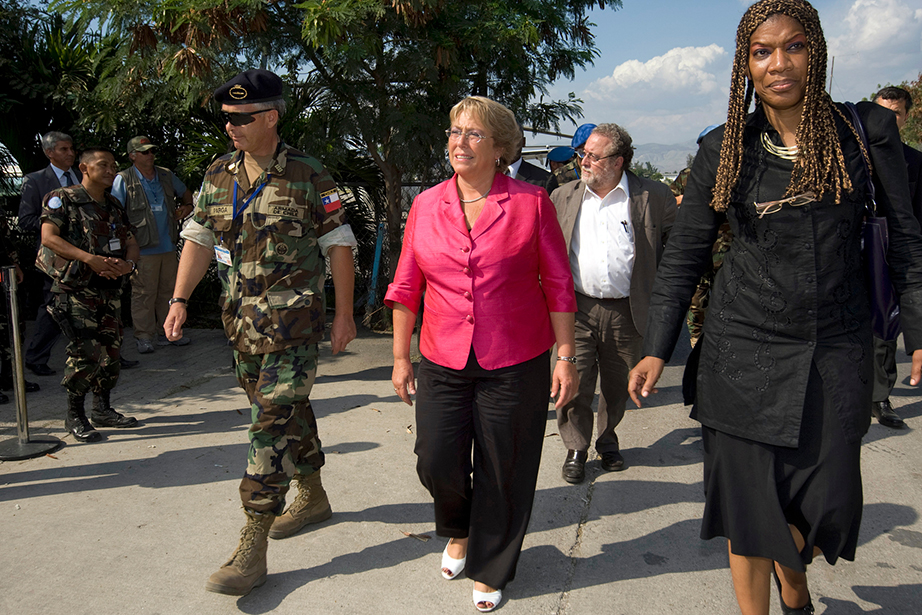
Credit: UN Photo Archives Pasqual Gorriz
Bachelet called her country’s decision to withdraw support for her “purely domestic.” Afterward, she said that “reforming and strengthening the multilateral system is not a slogan; it is an urgent necessity to improve people’s lives.”
“She is an excellent choice. I regret that she hasn’t received support from the Chilean government. I think the context is ideal, considering she is a woman and a Latin American,” Paulina Boysen, a 44-year-old sociologist, said. “She is a woman who understands how governments operate, how states function, and she has all the necessary skills to do it.”
The two remaining co-sponsors, both led by left-leaning governments, held firm. Brazil’s Lula da Silva said he “maintains his support for Bachelet due to her global stature,” while Mexico called it a “regional priority that transcends the internal decisions of a single country.” Only one supporting state is required to keep a nomination alive.
Guido Larson, director of the Institute of Humanities at Universidad del Desarrollo, told Envoy that Chile’s refusal to back Bachelet “should be interpreted as an attempt to curry favor with Washington.” Republican lawmakers and US envoy to the UN Mike Waltz have criticized Bachelet, calling her a “pro-abortion zealot” and saying she failed to condemn China for its treatment of Uyghur Muslims while serving as UN human rights chief.
Larson added that Bachelet’s candidacy comes amid a context where “multilateralism is in crisis,” and that “the odds are relatively low… it is quite plausible that Bachelet’s candidacy will be vetoed by one of the five permanent members of the Security Council.” Still, Bachelet’s strengths “rest on her track record and experience, both as president and as UN high commissioner for human rights,” he said.
On the streets of Chile, José Ortiz, a 52-year-old security guard, said Bachelet’s candidacy shouldn’t depend only on her country’s support. “If she has good ideas, she should be supported. Now, if she doesn’t have the support of this government, she’s going to get there anyway,” he told Envoy. “Ideally, they would support her, but if her aspirations are motivated by something real, if she has a vocation for service and a realistic outlook, and if it’s going to be a benefit to everyone, there’s no reason not to support her.”
Samuel Fernández, an international analyst with over 45 years of experience in the Chilean foreign service and as an ambassador to UNESCO, Egypt, and the League of Arab States, said that domestic support is irrelevant: “It is not essential to have internal support or not, because the elected person is no longer bound by any obligation to their country of origin, since they must obey the decisions of the organization, the United Nations.”
The opinion of a single nation “is irrelevant outside the country. What matters is the individual, the evaluation by the five permanent members, and the program they present,” said Fernández.
The Legacy Chileans Remember
Bachelet’s imprint on Chile is not limited to Santiago’s subway. For many Chileans, it reaches into health care, education, housing, and civil rights.
A trained pediatrician, she served as Chile’s minister of health from 2000 to 2002 before becoming minister of defense, the first woman to take up the position in South America.
Her terms as president saw major health care reforms like the Ricarte Soto Law, which created financial protections for high-cost diseases, and the removal of pregnancy as a pre-existing condition by health insurance providers that had excluded women from coverage.
In education, Bachelet ushered in new higher education institutions, improved the working conditions of teachers, and made substantial progress in offering more students free higher education.

“I was very happy with my president. She helped the poor a lot,” Doris, a 65-year-old woman who works as a cashier at a small business located a block from the main square in Concepción, the third largest city in the country, said. “Thanks to her, I was able to get a subsidy for my house. If she has already helped the country, and she’s going to help the world, even better.”
In 2009, she signed the Chile Crece Contigo law, creating an integrated system that followed children from the womb through early childhood, guaranteeing vulnerable families priority access to healthcare, education, and social support. In 2015, Bachelet signed the Civil Union Agreement into law, granting legal recognition to same-sex couples in Chile for the first time.
During her first term, her approval ratings neared 80 percent, the highest levels ever recorded for a Chilean president. Those ratings collapsed, however, during her second term, amid slowing economic growth, growing public dissatisfaction, and the 2015 Caval Case (Caso Caval). The matter involved her son and daughter-in-law allegedly influence-peddling and using political connections for financial gain.
Still, several Chilean citizens proudly highlight her candidacy.
Elsira Martini Huenullanca, a 72-year-old Mapuche artisan woman, said, “Mrs. Michelle has all the knowledge. She has already been president twice. I think it’s good that she win. She is a good representative of our country.” Larson noted that a majority of Chileans want to see Bachelet as UN head, with public opinion showing “a significant majority, close to 60 percent, who not only view her optimistically, but also consider her to be a good candidate.”
Several Chileans interviewed by Envoy echoed that confidence in her abilities.
Juan Pablo Vergara, a bank branch manager, thinks the same: “I have no doubt about her abilities. I believe she has the capacity to mediate conflicts between countries, as she demonstrated during her presidency, and to work towards human rights, as she has already shown at the UN,” he said.
From Prison to the Presidential Palace
Bachelet has a lifelong tie to human rights. Her father, Air Force Brigadier General Alberto Bachelet, opposed Pinochet’s 1973 coup, which ousted Chile’s democratically elected socialist president, Salvador Allende. Bachelet’s father died in prison after being tortured by Pinochet’s security forces.
Bachelet and her mother were also imprisoned and subjected to torture at Villa Grimaldi, a clandestine detention center in the Peñalolén district; today, the site is a peace park where the original iron gates and a rose garden stand as silent markers of the cells where they were detained. They were ultimately released and went into exile in East Germany in 1975, where from cities like Potsdam and East Berlin, Bachelet worked to denounce human rights violations.
Bachelet has often framed human rights not as an abstract diplomatic principle, but as a lived experience shaped by Chile’s dictatorship. In 2019, while serving as UN high commissioner for human rights, she gave a CNN en Español interview about her office’s report on Venezuela, which documented abuses under Nicolás Maduro’s government. Asked about her approach to human-rights violations, Bachelet pointed to her own past: “I, myself, had experiences regarding human-rights violations in my country, during the dictatorship.”
In 2004, as minister of defense, Bachelet led the historic deployment of Chilean troops to the UN Stabilization Mission in Haiti, known as MINUSTAH, the first time Chile sent a combined military force to a multinational peace operation.
In her first presidential term, she established a groundbreaking gender-balanced cabinet and spearheaded the creation of the Museum of Memory and Human Rights, inaugurated in 2010—a legacy that endured long after her presidency, with the museum receiving the King of Spain Human Rights Award just last month.
During her second term, she pushed through an electoral system reform that mandated that no gender exceed 60 percent participation in parliamentary elections.
Though much to her credit as a strong leader, such reforms may carry little weight in the contest, Fernández pointed out: “Do you think any of this reaches Putin, Trump, or Xi Jinping? Please, that’s what really matters. They’re the ones who will decide.”
Bachelet’s path remains long and uncertain. But for many Chileans, her candidacy already represents something larger than one country’s diplomatic campaign. “We are in a very big fight, at a very critical moment for the United Nations,” Fernández said.
For younger Chileans, too, Bachelet’s candidacy carries symbolic weight. Benjamín Henríquez, a 23-year-old civil engineer, said he was not deeply familiar with the mechanics of the race, but hoped she would win. “It’s important in terms of visibility for a relatively small country like Chile,” he said. “It gives us a voice on the international stage and stands as a symbol of the country’s stability and democracy.” This report is published in collaboration with Egab.
About The Author