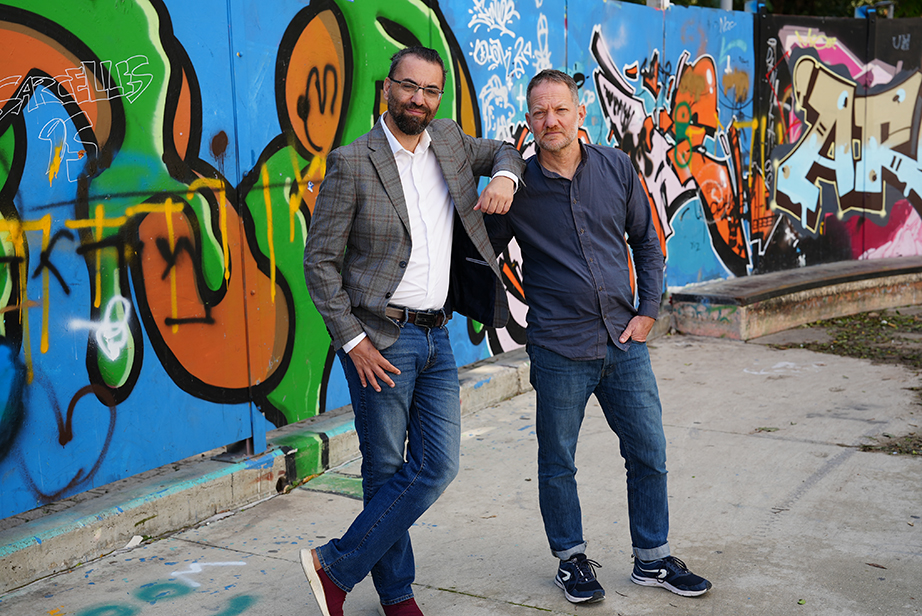
In a region consumed by war and escalating violence, Maoz Inon and Aziz Abu Sarah chose peace. In separate interviews with Envoy, the co-authors of The Future Is Peace discuss personal loss, moral agency, and why they still believe peace is possible.
Maoz Inon and Aziz Abu Sarah come from opposite sides of the Israeli-Palestinian conflict – one of the world’s longest-running and most polarized divides. Each man has endured profound personal loss. Inon, an Israeli peace activist, lost both of his parents in the Hamas attacks of October 7, when they were killed in their home in a kibbutz just a mile from Gaza. Abu Sarah, a Palestinian from East Jerusalem, lost his brother after he was tortured in Israeli detention. Yet their response has not been enmity, but collaboration.
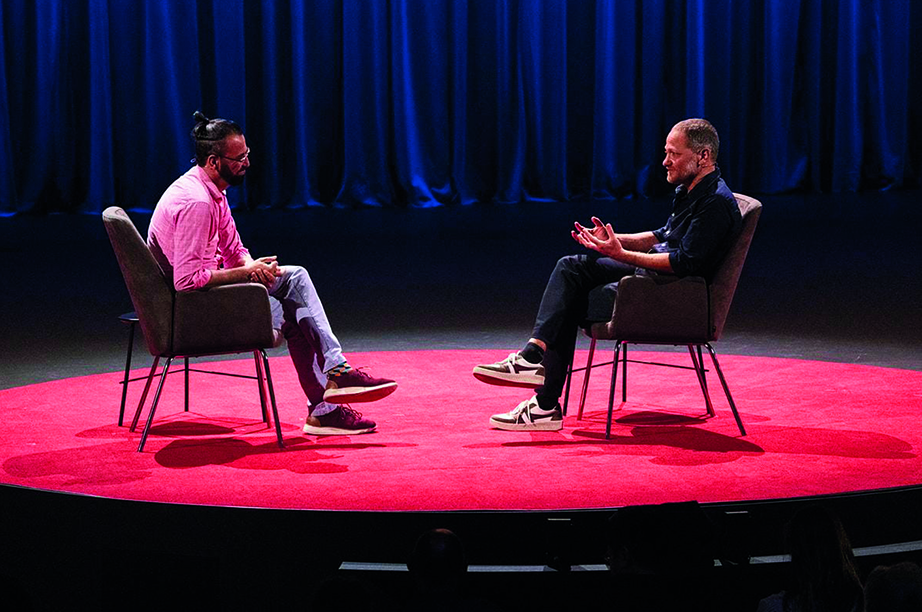
“Forgiveness is not about them deserving it,” Aziz Abu Sarah said. “It’s about taking back control. To say: you don’t define me.” He and Maoz Inon are the co-authors of The Future Is Peace: A Shared Journey Across the Holy Land, released in New York on April 14. “We are not ‘others,’” Inon said. “We are on the same side — on the side of equality, dignity, justice, and peace.”
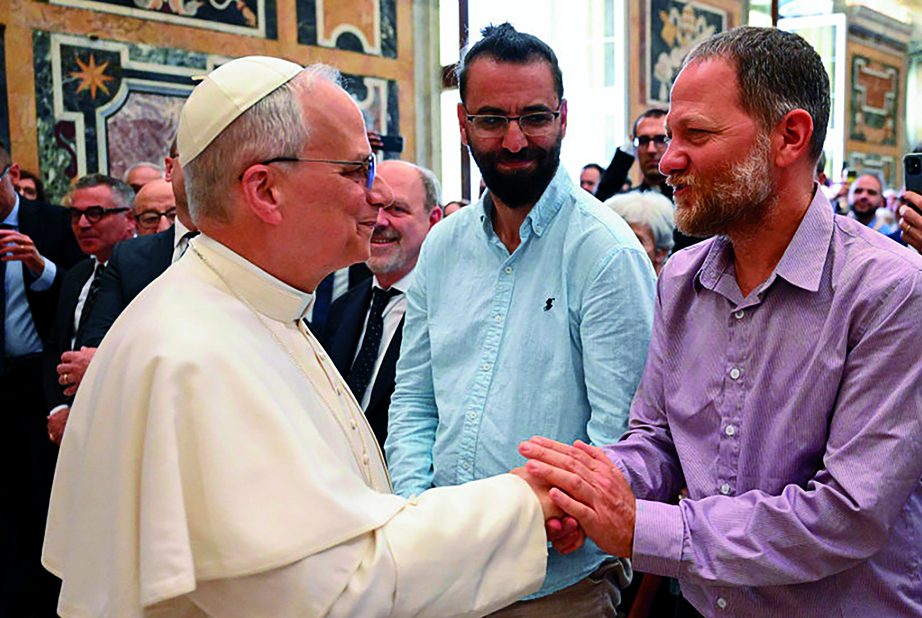
Their partnership has already drawn global attention: they have met Pope Francis, who was the first to call them “brothers,” and, ahead of the 2026 Winter Olympic Games, they carried the Olympic torch together in Verona. According to media coverage of the event, the stretch of the Verona relay shared by Abu Sarah and Inon—accompanied by the cry “Peace, Salam, Shalom”—remains in the collective memory.
As hostilities in Gaza continue, amid a widening regional conflict, the very language of peace
can sound distant or even naïve. However, the Israeli and Palestinian peace activists say their
message is deliberately counterintuitive. In exclusive and separate interviews with Envoy, they spoke about grief, forgiveness, multigenerational trauma, and why they believe peace is not only possible, but the only serious political horizon.
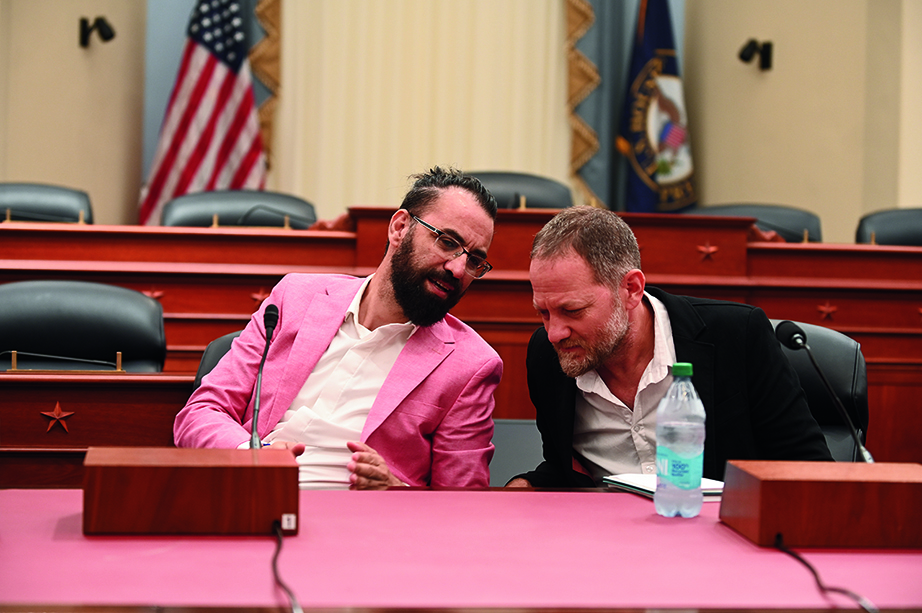
You have both lost close family members in this conflict under very different circumstances. How has that loss shaped the way you see the “other side” today?
Maoz Inon: Now I see that we are not “others.” We are on the same side — on the side of equality, dignity, justice, and peace. Only when we choose to be on the same side are we able to heal ourselves from personal loss and suffering but also give a path to our people. Our tears are the same, literally our blood is the same, and our love of life is the same. We are both connected to the land through our heritage, our culture, our religion, our narratives. So we are basically the same.
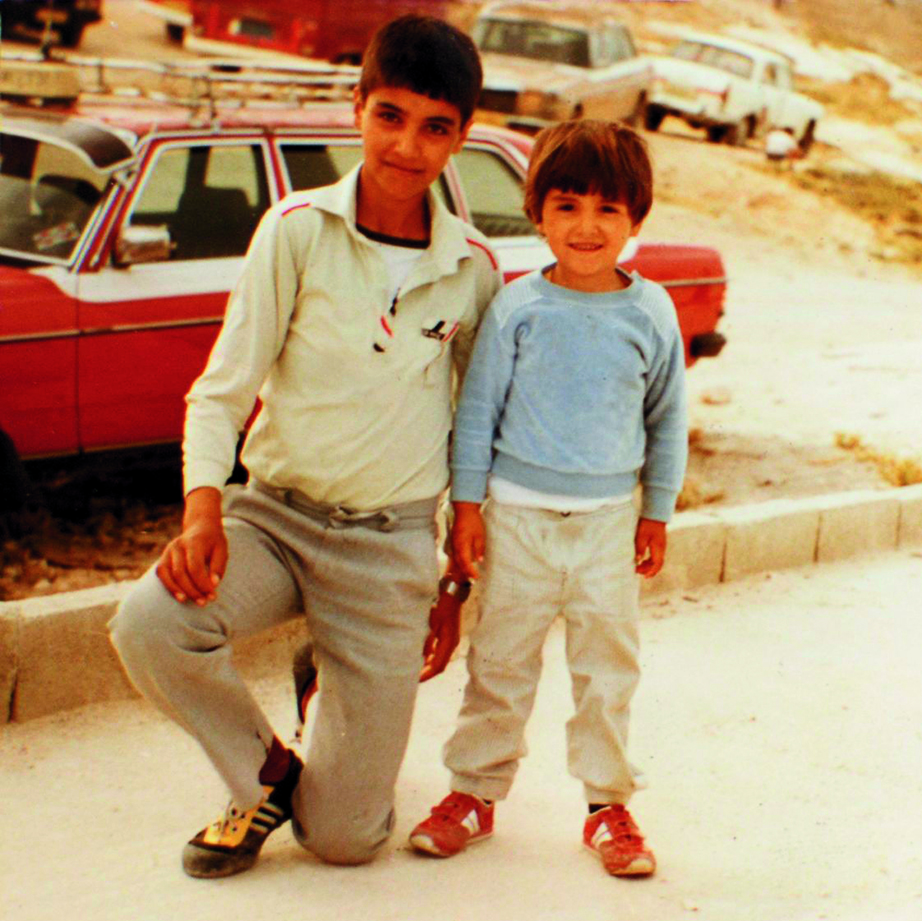
Aziz Abu Sarah: When somebody kills your brother, you are going to be angry. You are going to be furious. I was ten years old. The concept of peace and forgiveness did not even seem real. I grew up with the feeling that somebody had murdered my brother and I wanted them to pay. But later I realized that having those emotions of hate and vengeance meant I was being enslaved by the person who killed my brother. I was reacting instead of acting. Forgiveness, for me, was not because they deserved it. It was because I wanted to take back agency.
Was there a specific moment when grief could have led you in one direction, but you consciously chose another?
Aziz Abu Sarah: The person who killed my brother does not deserve forgiveness. That’s not why I chose it. I chose it because it was the only way to take back control. To say: you don’t define me. You don’t decide who I become. The choices I make in my life will be mine, not yours. There is something deeply freeing in that. It’s incredibly hard, but it’s freeing. Because someone with a gun can take so much from you: your home, your family, your safety. But there is one thing they cannot take unless you give it to them: your humanity. That remains your choice. For me, that shift didn’t happen overnight. It took eight years.
At eighteen, I realized that if I wanted any kind of future in Jerusalem, I needed to learn Hebrew. So I signed up for a class in West Jerusalem. I was the only Palestinian there, and just getting into that classroom felt like crossing a line I had been avoiding my entire life. But then something unexpected happened. My teacher, an Israeli Jewish woman, greeted me with a few words in Arabic and treated me with kindness. It was the first time I had experienced that. Until then, every interaction I had with Israeli Jews had been shaped by power: soldiers, settlers, employers. That classroom changed something in me. I began to understand that the real barrier between us wasn’t only physical. It wasn’t just checkpoints or walls. It was something deeper: fear, ignorance, narratives we carry about each other. And once you see that, you also begin to understand that those walls can be taken down.
Maoz Inon: At first, I was full of anger. I felt a deep sense of hatred, and I wanted to punish those I believed were responsible for my parents’ death. What might surprise people is that my anger wasn’t directed at Hamas. Hamas is a terrorist organization. Killing innocent people is part of its logic. My anger was directed at my own government, the one that had promised us security and safety, and failed to deliver it.
But everything shifted because of my younger brother. Just two days after we lost our parents, he said something that changed the course of my life. He asked that we unite around a message we would carry into every conversation: that we do not seek revenge. Because revenge would not bring our parents back. And it would only continue the cycle of violence that has been going on for about a century. It didn’t start on October 7. He wanted us to choose a different path. One that could break this cycle and create a better future for both Israelis and Palestinians. That’s when I began my own journey — not only to heal myself, but to work toward a lasting peace.
My loss also led me to Aziz. Three days after October 7, he reached out to me to offer his condolences. We had only met once before, for about ten minutes years earlier — there was no real relationship. But his message was deeply honest and human. From there, we began speaking, first online, then in person, then publicly. And over time, something unexpected grew. When we later met Pope Francis, he was the first to call us “brothers.” That word stayed with us. Because in a way, I lost my parents, but I gained Aziz as a brother.
In moments like this, amid an ongoing conflict, anger can feel like the most immediate and justified response. How do you navigate that emotion personally?
Maoz Inon: Not only anger. Also revenge. People sometimes do not want to talk about it, but they act from it. For me, the answer is to cry. When I feel anger, when I feel revenge, I cry it out. I do not let anger be my motivating force. I recognize it, of course. But revenge is an emotion we must reject, even though it is very human. My motivation is empathy and love.
Aziz Abu Sarah: I still have anger. Every time I hear about somebody dying due to torture in prison, every time I hear about children being killed, or civilians being killed, it brings pain and anger. But I try to use that anger in my peace work. Forgiveness does not mean the anger disappears. It means it no longer owns you.
Since the ceasefire was announced, hundreds of Palestinians have reportedly still been killed. What does that do to your understanding of what “ceasefire” or even “peace” actually means right now?
Maoz Inon: It is not a ceasefire. I would even dare to say that we have been in a war for a century, with fake ceasefires in between. A ceasefire is not our goal, not our mission, and definitely not our destination. If it does not involve investment in shared life initiatives, in dignity for all people, in reconciliation, then it will not last. Our destination is lasting peace.
Aziz Abu Sarah: Since that ceasefire was signed, I told everyone around me that it was bullshit, because it was based on force and power, not on equality. It said: you do what we tell you to do, and we can still do whatever we want. There was no equality in it. There was no dignity in it. You cannot build peace with one side. If there is a peace board and there are no Palestinians in it, then it is not serious. If there is a future for Gaza being discussed without Gazans, it is not serious.
In The Future Is Peace, what is the central idea you want readers to reconsider?
Aziz Abu Sarah: The title says it: the future is peace. One of the biggest lies spread by politicians, media, and systems of power is that the future cannot be peace, that there are too many threats, too many enemies, too many reasons to be afraid. So we need more war, more weapons, more preparation for violence. What we argue is that this is a lie. If we prepare for war, the future will be war. If we prepare for peace, the future will be peace.
Maoz Inon: With the book, we invite readers on an eight-day journey — both physical and emotional — through four different layers. There is the theological and historical layer, the layer of conflict, our personal stories and relationship, and finally, the future. We move through eight locations that are deeply connected to this story. We begin in Nir Am, the kibbutz where I was born, just a mile from Gaza, where my parents are buried. From there, we go to Netiv HaAsara, where they lived for the past thirty years. Then to Jaffa Tel Aviv, to East Jerusalem — Aziz’s hometown—through Jerusalem, the West Bank, Nazareth, and the Galilee. Each place carries history, memory, and pain — but also the possibility of something else. And through this journey, we try to show that the future is not predetermined by the past. The future is peace.
We are showing how revenge can be transformed into reconciliation, how trauma can be transformed into hope. One of the core messages of the book is that we have agency to shape the future. We should not wait for politicians, generals, prophets or the Messiah. Each one of us should act as if we are responsible for opening gates in the walls, both the physical walls and the mental walls of ignorance.
The book talks about multigenerational trauma. How do you feel that trauma in your everyday life, and how can it be broken?
Aziz Abu Sarah: It manifests in the body. I have had panic attacks. I have ended up in the hospital from stress. I saw displaced children in Syria and it triggered something so deep in me because it connected to what my family had gone through, what Palestinians have gone through. This is not only a story passed through words. Trauma lives in the body. How do you break it? First, with mental health support, which Palestinians deeply lack. Second, by changing the reality itself. As long as Palestinians live under occupation and fear, you cannot fully heal. But peace work can be part of the healing. It gives us meaning. It gives us agency.
Maoz Inon: I choose not to let trauma or fear control my life. Twenty years ago I opened a guesthouse in Nazareth because I was not willing to let ignorance and fear shape my future. What I learned is that the first step toward a shared future is to know the other side’s narrative, because the other side is traumatized too. The walls will never bring peace. They will only create monsters. Healing is possible, but only if we are brave enough to recognize the trauma on both sides.
Your book points to long histories of cultural exchange between Israelis and Palestinians that are often forgotten. Why are those shared histories so absent from public narratives today?
Maoz Inon: Because they do not serve the extremists who now control the narrative. They want ethnic supremacy, one land for one people. Shared history does not serve them. So they erase it. They ban peace groups from schools. They cut investment in shared life initiatives. But there is so much shared work happening already, from education to humanitarian aid. That is exactly why we wrote the book: to amplify it.
Why publish this book now, in the middle of renewed violence, war in Gaza, and wider regional escalation?
Maoz Inon: We are seeing it now in Iran, there may be no clearer example. This is not the war of the American people, nor of the Israeli people. It is a war driven by political leadership, and its consequences are being felt far beyond the region.
What it reveals is how quickly decisions at the top can escalate into global instability. And that is precisely why we believe there must be an alternative – an antidote to this cycle. A different way forward. This message is needed more than ever. Politicians all over the world are using division, hate and ignorance to polarize societies, and many are importing this conflict into their own countries. We want to show there is another political imagination.
Aziz Abu Sarah: If not now, then when? This is precisely when people need an alternative language. The pro-war camp always has a vision. It may be a destructive vision, but it is a vision. If those of us who believe in equality and dignity do not articulate our own vision clearly, then we will lose by default.
After everything you have experienced personally, what still makes you believe that choosing peace is not only possible, but worth it?
Aziz Abu Sarah: Peace has happened before. Europe is the obvious example. Nobody imagined France and Germany becoming partners, and yet it happened. Peace is not fantasy. It is a political and moral choice. If I did not believe we could create it in our lifetime, I would not be doing this work.
Maoz Inon: Peace will come. That is a fact. The real question is when, and how many lives will be lost until then. We are here to shorten that distance. Without a bold vision, people perish. So we must have a bold vision and work together to make it real.
Their stories begin in loss, but they do not end there. What emerges instead is something quieter, and far more demanding: the decision, again and again, to resist hatred — even when it feels justified. At a time when the language of war dominates political discourse, Inon and Abu Sarah are making a different argument: that peace is not naïve, but strategic. Not a distant aspiration, but a responsibility. And not something that begins with leaders — but with the choices individuals are willing to make. It begins with the imagination of peace.
About The Author