For the spouses of diplomats, every posting can mean another country, another home, and yet another time they must rebuild their lives.
Diplomatic spouses are not diplomats, generally have no official role, and yet their lives, careers, and families are profoundly shaped by diplomacy. While they may have no official title, they often perform a surprising amount of diplomacy separate from the career of their spouse.
“There are moments when we have no choice but to accept a situation, regardless of our own will,” Junghee Lee, spouse of deputy permanent representative and ambassador to the Republic of Korea mission to the United Nations, said of the challenges diplomats’ families face.
Diplomats and their families frequently uproot their lives, often becoming detached from the several homes they may live in over the course of a diplomat’s career. Family life becomes increasingly difficult as children change schools and suddenly part with close friends each time their parents receive a new assignment.
For Katia Tinajero, spouse of Ecuador’s ambassador to the UN, being married to a diplomat entails a “mosaic of challenges” as well as opportunities. “While we build a new home and learn to live within another language and culture, back home we miss births, birthdays, and weddings. It means watching our children struggle, and often suffer, as they adapt to a new place, only to see them eventually blossom in surprising ways, spread their wings and fly far,” she said.
Upon arriving in a new country, Tinajero said coordinating the children’s education, medical appointments, and everything else required to maintain the home is often expected of diplomats’ spouses.
But beyond the logistical challenges, diplomatic spouses work largely in the shadows. They often balance their personal and professional ambitions with the demands of a partner’s career, all while uprooting their families every few years. They rebuild homes, navigate new cultures and school systems, and forge new communities, taking on an unofficial role in diplomatic life that is rarely acknowledged but deeply intertwined with the work their spouses do.
While Envoy spoke only with wives of diplomats for this story, husbands also play an important role in diplomatic life. Envoy contacted three UN missions led by female ambassadors seeking the perspectives of male spouses, but none were available for an interview before publication.
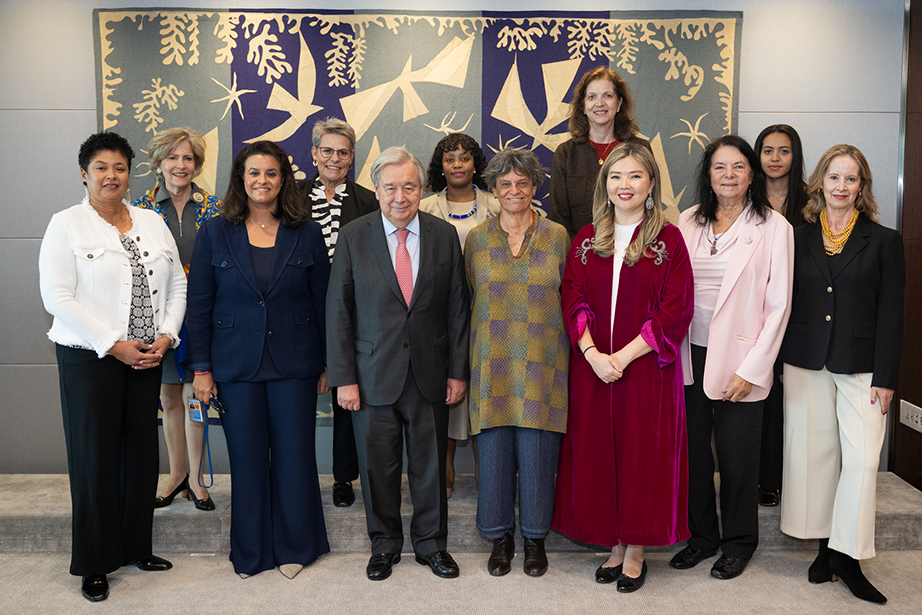
Credit: UN Photo/Manuel Elías
A Different Kind of Diplomacy
Diplomatic spouses often go unnoticed in government operations but are a crucial part of life at the UN. Much of the worldly conversation and events diplomats participate in do not include their spouses; however, many continue to use the time apart to further diplomatic ties.
“Spouses are often the first point of contact for the local community,” said Eddna Samuel, spouse of an Israeli diplomat posted at the UN. “We navigate healthcare systems, schools, and cultural norms on behalf of the missions and our diplomats. During crises, we are the continuity, and in times of calm, we are the bridge.” She continued, adding that involving spouses is not symbolic, but strategic: “When we are included, missions become stronger, networks deepen, and messages land differently, because they are carried by a united front.”
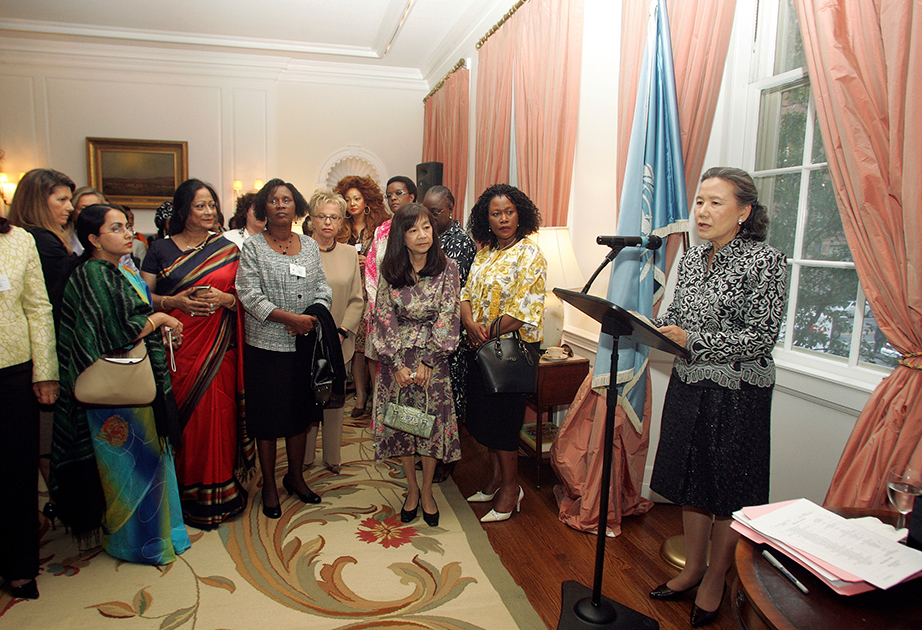
While diplomats may work together to find common ground on worldly issues and advocate for the needs of their countries during the General Assembly, their spouses give a different meaning to diplomacy—especially when it comes to the shared sense of hospitality that transcends national as well as cultural borders.
Despite the difficulties she and other spouses face while their significant others serve as diplomats, Lee said her family has come to feel grateful for the unfamiliar and exotic experiences that come with the territory, noting the “extraordinary opportunities” that allow them to “gain a broader perspective on the world.” As a diplomat’s spouse, Lee said she has also shared her own experiences, playing a role in introducing Korean culture and food to other diplomats and dignitaries.
For them, cultural exchanges have become almost an unspoken duty in their lives. Tinajero explained that when new diplomats arrive, she often takes them to local attractions like museums or gives them tours of the city to assist in their acclimation to New York.
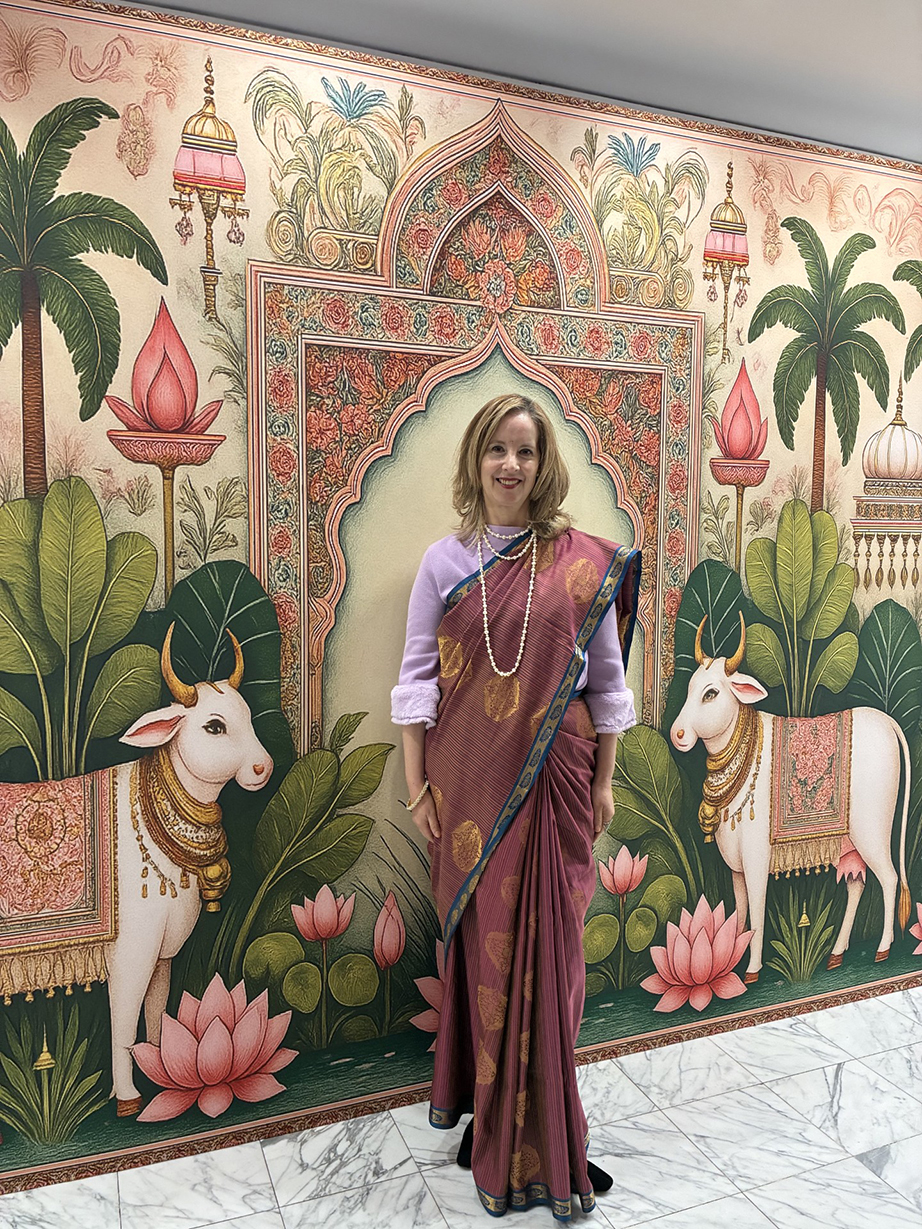
Taken at an event at the Mission of India.
More Than a Plus-One
For some spouses, following the career of their significant other became a top priority after getting married. Tinajero put her career as a lawyer aside in pursuit of her husband’s diplomatic aspirations; however, she, like several other diplomats’ significant others, joined diplomacy-related groups and missions, like the Women’s International Forum, the UN Delegation Spouses’ Club, the Christian Embassy, and others.
As for others, like Samuel, who established her own PR and marketing firm, accompanying her husband through his diplomatic career proved advantageous.
“For me professionally, moving and relocating from country to country might even be an advantage where I can utilize my intercultural skills and abilities, as well as my experience, to benefit my own business, as well as support my husband’s position,” she said. “In the new places we go to, I am able to broaden my own potential, and not only to support the interests of my husband and the country. From my perspective, it is a two- level or two-pronged or two-type approach to life, whereby we both benefit from the constant moving and challenges of diplomatic life.”
Although spouses often keep busy with the unwritten tasks that come with being a diplomat’s significant other, uprooting one’s life can easily become alienating. For Lee, the UN turned out to be nothing like what she had originally expected. “As a spouse, I had met delegations from many countries even in bilateral settings, but the sheer number of delegations one encounters on the multilateral stage belongs to another scale entirely,” she said. “Coming to know countries I had never visited, meeting the people who represent them, I began to sense how deeply I, individuals everywhere, and nations themselves are bound together in relationship[s] across the world.”
Lee added that at times, the sheer diversity felt overwhelming, and yet the anchor of the community of diplomatic spouses remained constant through the discomfort.
For both Lee and Tinajero, connecting with the diplomatic community has become an integral part of their daily lives. “The community of diplomatic spouses holds a truly special place in my life,” Lee said. “We share the particular struggles that come with being part of a diplomatic family, and though our nationalities and backgrounds differ, that shared understanding becomes its own kind of kinship.”
Alongside preparing themselves and their families for a life that includes constant change, as well as working on their own careers, many spouses find time to indulge in the arts and discover an additional zest for an often alienating life within them.
For Tinajero, art became a hobby that helps find a sense of belonging amid the constant transitions. “I like to say that I found art as a refuge, because in this life we live in a lot of solitude. Now, in this city, it is very easy to find art. You just need to walk along the street, and you will see something artsy,” she said.
Lee is a former music teacher and spoke highly of her love for music. “New York is such a rich place for music that I consider myself very fortunate to have lived here. There’s so much to see and hear,” she said. Lee also helped organize a band of Korean mission officers and performed at a year-end national reception, where she played Beatles songs on the piano.
Although alienating at times, Tinajero said a large part of living the lifestyle is also accepting all that comes with it, as a partner to one’s spouse, mentioning the life lessons that coincide with the duties of diplomatic work. “This accompaniment essentially means standing by our spouse’s side, not only at social events, but more importantly when they come home exhausted after grappling with problems of paramount international importance.” She added, “This role carries even greater weight and importance for diplomats’ spouses. We not only bear the name of our country, but we must also conduct ourselves with prudence and respect for our spouses’ work.”
While they do not hold official titles, diplomatic spouses are very aware of how important their work is for their homeland. For Tinajero, that includes representing the flag of one’s country within their own sphere. She asked, “After all, is there any greater responsibility than upholding the good name of our country?”
About The Author