On day 2 of UNGA, the biggest draw wasn’t a head of state
While eyes were turned toward Washington for the US-China meeting, several influential leaders were speaking at the UN General Assembly, including Ukraine’s Volodymyr Zelensky and Iran’s Masoud Pezeshkian.
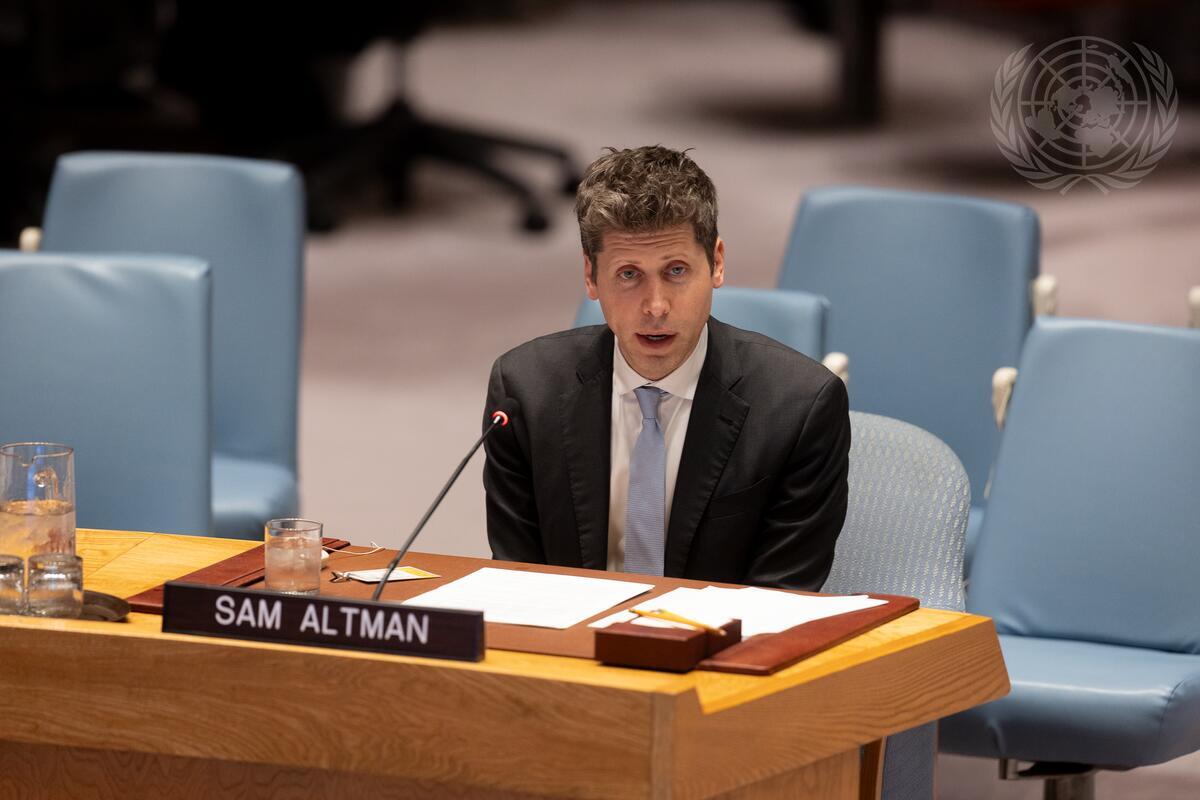
But the person who attracted the most attention wasn’t a head of state or government. It was undoubtedly OpenAI CEO Sam Altman, who appeared before the Security Council to talk about the risks of the products his company is actively building and developing.
“In our history, there have been times where countries who compete and don’t always like each other very much still come together for shared interests and the collective good in the face of a powerful new technology,” Altman told the Council. “We believe this must be one of those times.”
Altman didn’t just face the 15 members of the Council. He also faced a crowd of reporters who had been told they would at least get a photo opportunity. Instead, he ran into the Security Council chamber, only to emerge 10 minutes later to use the bathroom and have to face the same crowd of curious reporters, again. AI can’t solve everything, after all.
Dario Amodei, the CEO of OpenAI’s biggest competitor, Anthropic, also addressed the Council remotely, calling on the international community to agree on specific prohibitions, including against using AI to make bioweapons.
You can find more details on the countries’ speeches below, as well as an update on the secretary-general race.
Iran’s President Accuses the US and Israel of Terrorism
By Dawn Clancy
Ditching his prepared remarks, a fired-up Iranian President Masoud Pezeshkian called Israel and the US “true terrorists” for violating international laws and vowed that his country will never surrender to aggression.
“Yes, they did hit us,” said Pezeshkian, referring to ongoing lethal air strikes on the country by the US and Israel that started in February, killed Iran’s Ayatollah Ali Khamenei, and slaughtered over 100 children at a school in Minab, a city in Iran. Amnesty International alleges that the US was responsible for the attack. The US has not admitted responsibility.
Holding up pictures of the children who were killed, Pezeshkian asked the assembly hall, “You see these children? These children perished under bombs with weapons used by the United States and Israel. They were innocent. Had committed no crimes.”
While on-again, off-again negotiations between the US and Iran to end the war have repeatedly stalled, according to media reports, the countries met for three hours on Tuesday on the sidelines of the UN General Assembly.
Notably, as Pezeshkian slammed the US and Israel for killing civilians, protesters assembled a few blocks outside of the UN to protest his speech and called out the Iranian government for killing its citizens and violating their human rights.
Mai Sato, the UN’s special rapporteur on human rights in Iran, has accused the Iranian regime of carrying out public executions and arbitrarily arresting and torturing protesters and minority groups.
One US delegate walked out of the assembly hall during Pezeshkian’s remarks.
President Zelensky Says Ukraine Won’t Back Down from “That Man” and Rings AI Alarm Bells
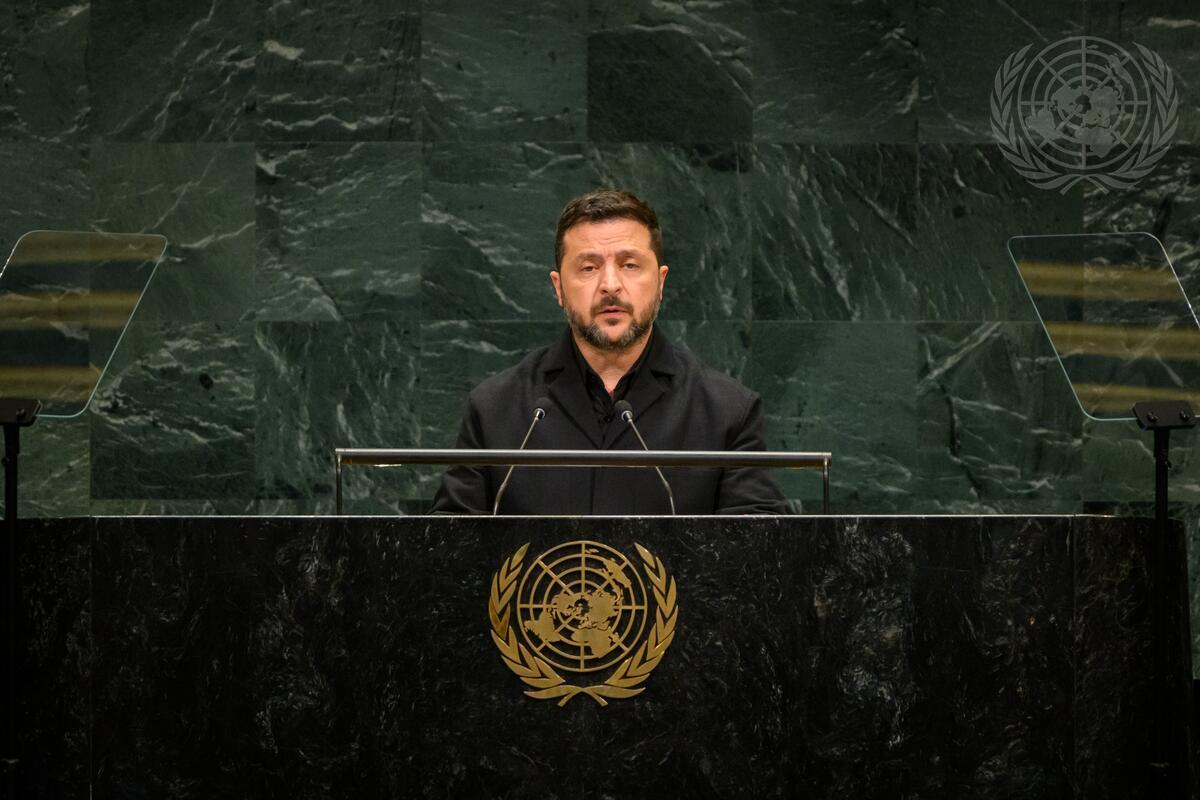
With winter around the corner, Ukrainian President Volodymyr Zelensky made it clear that Ukraine will not surrender to Russian aggression or “that man,” referring to President Putin.
“If Russia continues to target our energy system and our heating, Ukrainians understand that this winter could be very harsh for us,” Zelensky said, “but in response, we will have no choice but to make it painful for Russia too.”
Zelensky called on “freedom-loving nations” to join Ukraine in beefing up their defensive capabilities against ballistic missiles and the more deadly jet-powered drones—one of Russia’s more recent weapons of choice—that fly faster, at higher altitudes, and carry a bigger payload compared to older drone models, making them more lethal and incredibly difficult to defend against.
Towards the end of his remarks—he spoke for roughly thirty minutes—Zelensky hit member states with a stark warning about the creeping use of AI in conflict.
“They say today, AI still remains mostly digital. But one day AI will move from the digital world to shaping atoms, and when that happens, we had better be at peace.”
Relatedly, on Wednesday, the Security Council held a briefing on the threat that the unbridled development of AI technology poses for the maintenance of international peace and security.
Latin America’s Second Act: Crime, Reform, and Venezuela’s Pitch
By Camilo Lopez Delgado
Day two of the General Debate echoed many of yesterday’s themes: security, Security Council reform, pitches to investors, and, for Paraguay and Panama, a defense of what their leaders framed as family and cultural values.
Venezuela was also high on the agenda, both in regional leaders’ speeches and in that of Acting President Delcy Rodríguez. Meanwhile, Argentine President Javier Milei highlighted Trump’s latest talking point, referring to artificial intelligence “super intelligence.”
Honduran President Nasry Asfura, Panamanian President José Raúl Mulino, Ecuadorian President Daniel Noboa, and Dominican President Luis Abinader called for stronger action against transnational crime, with some citing cooperation with Washington.
Abinader sounded the alarm on Haiti, warning that the Gang Suppression Force has only a fifth of its authorized troops and funding, with its mandate expiring September 30.
He, Noboa, and Paraguayan President Santiago Peña emphasized stronger multilateralism, while Peña, Mulino, and Abinader called for Security Council reform. Peña and Abinader also argued the next secretary-general should come from Latin America and the Caribbean, with Abinader adding that it is time for a woman to lead the organization.
On the investment side, today’s speakers showcased the region’s assets, from Honduras’s ports and mining potential to Argentina’s Vaca Muerta energy reserves, Paraguay’s second investment-grade rating, and Panama’s role as a bridge between markets.
Among the outliers, Milei pressed Argentina’s claim over the Isla Malvinas/Falkland Islands, which Foreign Minister Pablo Quirno had also reiterated in a right of reply after the UK’s speech the previous night, calling on London to resume negotiations. He said that the UN had become a “useless organization” sustaining “fatally arrogant parasites,” defended Argentina’s exit from the WHO, and aligned his country with the US and Israel.
Peña reaffirmed Paraguay’s long-standing support for Taiwan’s participation in the UN. Noboa framed illegal fishing around the Galápagos and illegal mining in the Amazon as security threats, while Asfura called his election as part of a struggle to “rescue and restore” his country’s greatness.
Rodríguez spoke in the evening, making no mention of Nicolás Maduro and focusing instead on the country’s “democratic transformation” and dialogue with the opposition toward elections. Peña, who visited Caracas days before, likewise called for a democratic transition, as did Mulino, who championed free elections across the region.
Rodríguez also thanked Trump for restoring relations, highlighted the US-Venezuela energy deal, and described the country’s “rebirth” after the double earthquake of June 24. She reiterated Venezuela’s claim over the Essequibo and urged Guyana to return to bilateral negotiations.
The Campaigners Take Over Turtle Bay
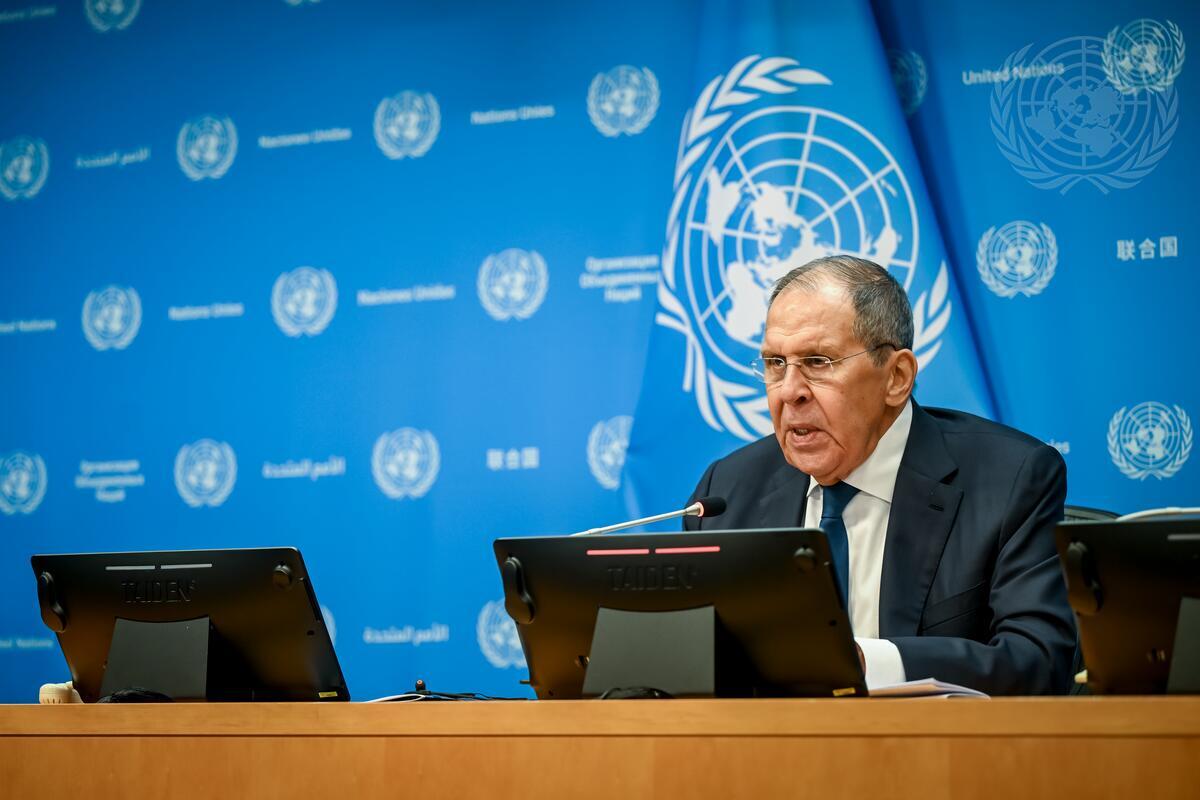
Envoy Magazine reporters spotted several secretary-general hopefuls throughout the week. Front-runner Rebeca Grynspan appears to be among the most active. Rafael Grossi is in New York wearing two hats, as a candidate and as director general of the International Atomic Energy Agency. A person close to Grossi’s campaign told Envoy that his campaign is alive and well, and that relations with Moscow have since been smoothed over, despite critical remarks from Russian Foreign Minister Sergey Lavrov.
Carolyn Rodrigues Birkett, who sits just one vote behind Grynspan in the latest straw poll, has also attended several events. So has María Fernanda Espinosa, even though her campaign trails in the straw polls. Ivonne A-Baki was spotted at a Muslim World League event.
No new candidate has entered the race so far this week, but the Envoy team is keeping an eye out for any late entries.
Sánchez Makes His Pick: A Latin American Woman
By Stéphanie Fillion and Pau Torres Pages
Pedro Sánchez, Trump’s bête noire in Europe, brought his defense of multilateralism to the General Assembly on Wednesday. The Spanish prime minister, recently named a champion of the UN’s Sustainable Development Goals, used part of his speech to weigh in on the race for secretary-general.
“How can an organization that claims to speak on behalf of all humanity never have had a woman at its helm?” he asked.
“Nine men have held the position of Secretary-General of this organization in its 80 years of history. Now it is time for a woman. A woman from Latin America.”
He wasn’t alone. Dominican President Luis Abinader and Paraguayan President Santiago Peña made a similar case from the same podium. That’s good news for front-runner Grynspan and runner-up Rodrigues Birkett, who both fit the description.
Camilo López Delgado, Pau Torres Pages and Stephanie Fillion contributed to this article
About The Author