Russia declares a new world order, China warns against protectionism, and the Holy See takes aim at autonomous weapons.
Welcome to Day Five of the UN General Assembly’s high-level week, also known among the UN press corps as the annual Lavrov show.
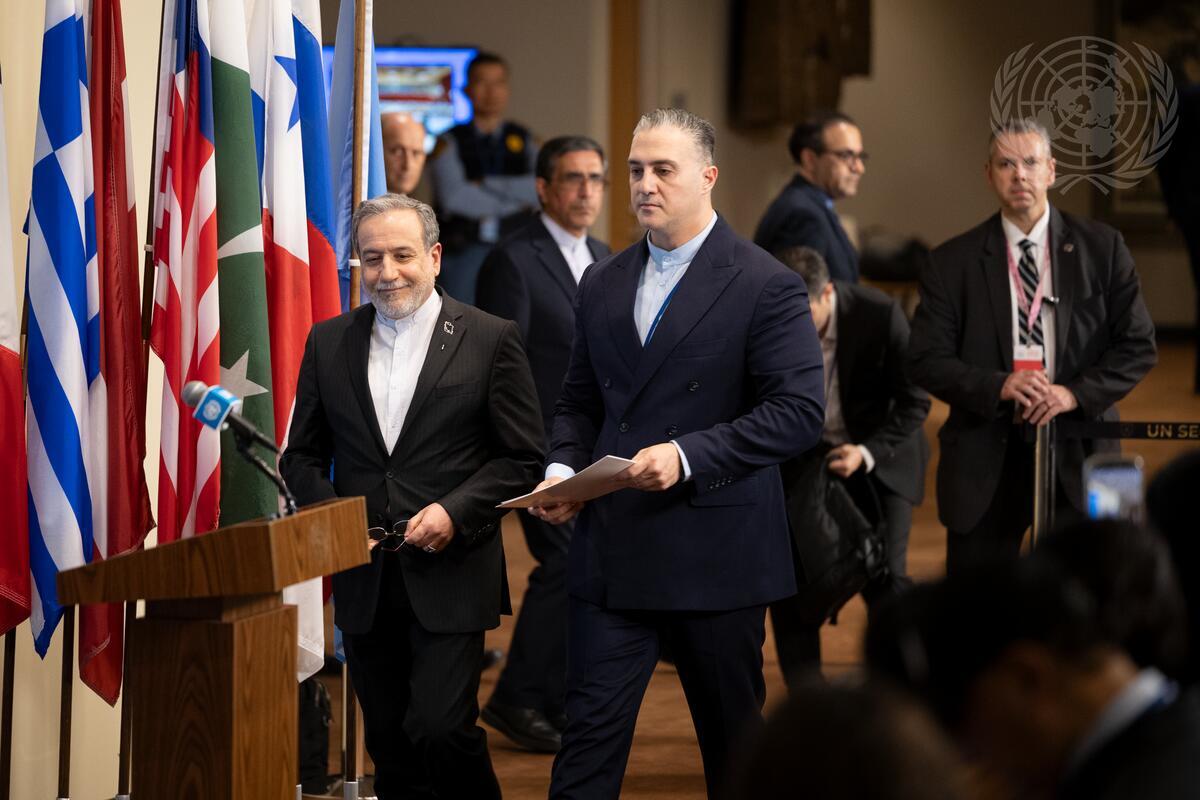
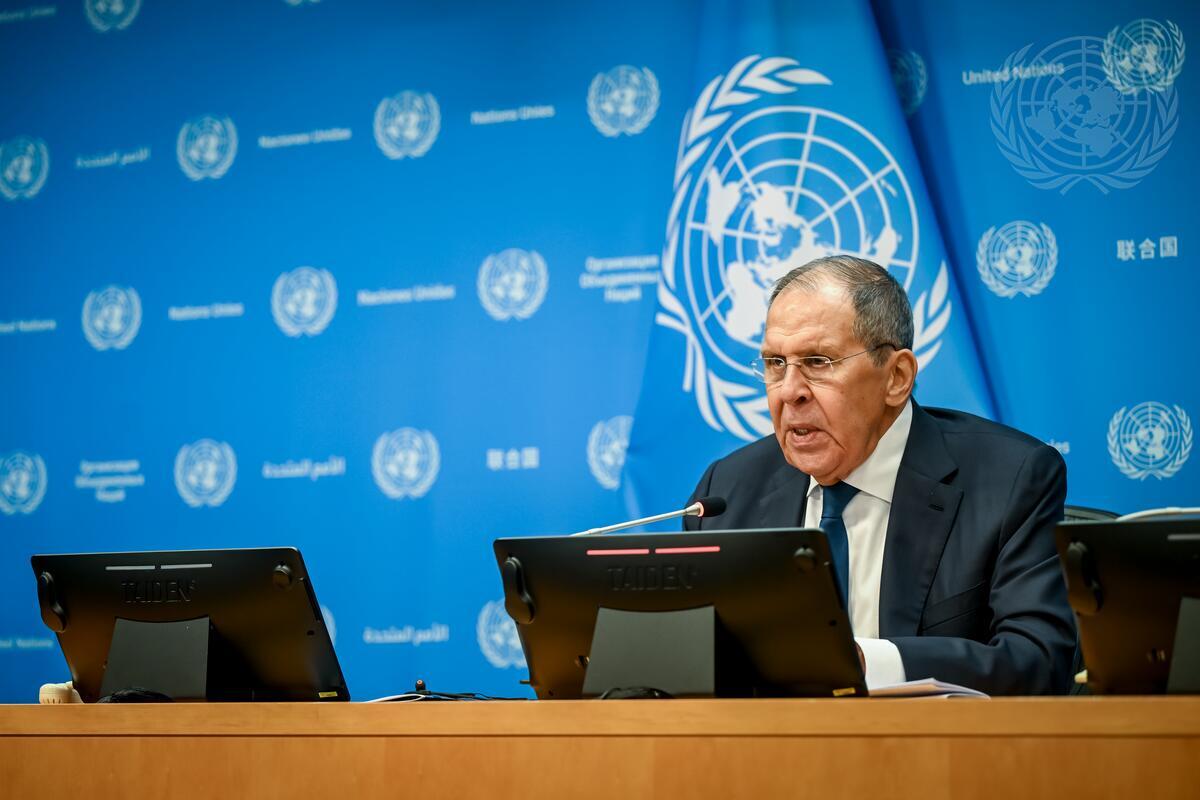
By now, the routine is almost scripted. In recent years, Russian Foreign Minister Sergey Lavrov has come to New York, taken the General Assembly rostrum on Saturday around noon, roughly 7 p.m. in Moscow, then headed downstairs to the UN press briefing room for an hour-long news conference where he largely sets the agenda himself.
A string of influential countries also spoke at the rostrum today, including China’s vice president and the foreign ministers of Saudi Arabia, Belarus, Cuba, Germany, India and, of course, Russia.
China’s speech was assertive and direct, taking aim at Washington over trade tensions and military confrontation. Belarus and Russia both spoke of an emerging new world order. India, meanwhile, made no mention of Pakistan or Kashmir in its national address.
On the secretary-general race, Lavrov offered one of the clearest signals yet of how Moscow is thinking about the contest.
“There are representatives of Latin American states and other continents,” he said. “Right now, Latin America is the priority in light of the informal rotation arrangement.”
He added that some candidates meet both the regional and gender considerations, including “Latin American representatives and female representatives of Latin America,” and said Rebeca Grynspan and Carolyn Rodrigues-Birkett fit those criteria.
President Xi Skips UNGA, VP Han Focuses on Trade and Development
Perhaps the most relevant part of China’s speech to the General Assembly was who delivered it. After a three-day summit in Washington, D.C., President Xi left on Friday without making a stop in New York. He has spoken in person at the General Assembly only once, in 2015, on the occasion of the UN’s 70th anniversary. At Turtle Bay, some were hoping for a surprise visit.
“China has gained a huge amount of influence at the UN since that time,” Richard Gowan, Director of Global Issues and Institutions at Crisis Group, told Envoy before the start of UNGA. Gowan predicted a “hero’s welcome” for Xi, had he decided to come. “There are a lot of countries that are banking on China to prop up this system,” he added.
It was Vice President Han Zheng who ended up taking the podium with a speech focused on trade and development. “Protectionism produces no winners,” he said, as the US remains engaged in a global trade war that China has recently managed to ease. At the recent summit, both governments agreed to extend a trade truce for two extra months.
“International industrial and supply chains should be kept stable and unimpeded, and global trade should be safeguarded,” said the vice president, without explicitly naming the Strait of Hormuz.
Unsurprisingly, China highlighted its commitment to development and asked for the international community to “pull strength to formulate the post 2030 global development agenda.” Han also made an appeal for the Global South and called for “Developed countries should honor their commitment to development, financing and climate financing.”
On the secretary-general front, Han kept it vague by supporting a candidate who “has exceptional capability, upholds integrity and fairness, and demonstrates courage and dedication.” China didn’t show its cards ahead of the next straw poll, scheduled for Tuesday, right after the end of UNGA. The Chinese vice president also paid “high tribute” to outgoing Secretary-General Guterres.
Russia’s New World Order
Before heading to the briefing room to talk to reporters for over an hour, Lavrov told the General Assembly that a new world order was taking shape:
“There are tectonic shifts underway in global politics,” he said. “A fairer, multipolar world order is emerging before our very eyes. The countries of the global South and East are asserting themselves as sovereign centers of development, they’re taking responsibility for ensuring security in their own regions. They’re demonstrating a commitment to international law. They’re refuting external pressure. They’re showing interest in the prosperity of all states, not just a select few.”
Lavrov then went on to attack the US “hegemon” for Washington’s actions in Venezuela and its “abduction of President Maduro.” He also called for the settlement of hostilities in the Gulf and in Cuba.
The Holy See Warns About the Dangers of AI Military Use
Speaking as a permanent observer, Secretary of State of the Holy See Cardinal Pietro Parolin warned the hall that “the development of lethal autonomous weapon systems raises profound moral questions.” The cardinal called for an “ethical ordering” of artificial intelligence and asked governments to “curb the technological arms race.”
The tension between humanity and AI development has been a major topic during Pope Leo XIV’s first year of pontificate. In his first encyclical—an all-important papal moral guide on Catholic doctrine—the pope wrote that “technology is never neutral, because it takes on the characteristics of those who devise, finance, regulate, and use it” and asked to “safeguard the grandeur of humanity.”
In a call for peace, Cardinal Parolin addressed the conflicts and humanitarian situations in Sudan, Myanmar, the Gulf region, Ukraine, and others. Addressing Gaza, he expressed concern over the “dire humanitarian crisis” and reiterated a call for a two-state solution.
Cuba
Just as the American delegate walked out of the room, Cuban Foreign Minister Bruno Rodríguez Parrilla delivered a sharp rebuke of the United States on Saturday, condemning its “military aggression” against Venezuela and the fuel blockade imposed on Cuba since January. Washington’s actions are part of a wider set of US measures he said has left more than 7,000 containers of food, medicine, and medical devices stranded in ports.
Insisting that “Cuba is not a threat,” he pushed back on Trump’s description of the country as a failed state, asking why a failed state would require a fuel blockade.
The foreign minister further rejected the Monroe Doctrine and any military intervention in Latin America and the Caribbean, while voicing support for Nicaragua’s government and Puerto Rican independence.
Still, he said Cuba remains open to dialogue with Washington “without preconditions” and pointed to an ongoing economic transformation aimed at adapting socialism rather than abandoning it.
About The Author