As wars take an unprecedented toll on children, Vanessa Frazier, the UN official charged with protecting them, must confront governments, withstand political pressure—and keep them talking.
NEW YORK. The confrontation lasted only a few minutes, but it became one of the most talked-about moments at United Nations Headquarters this summer.
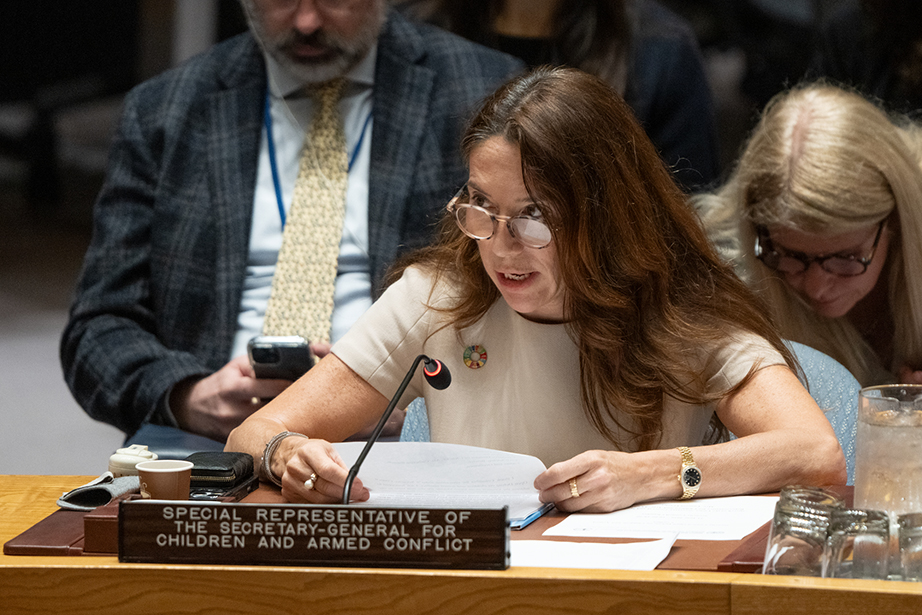
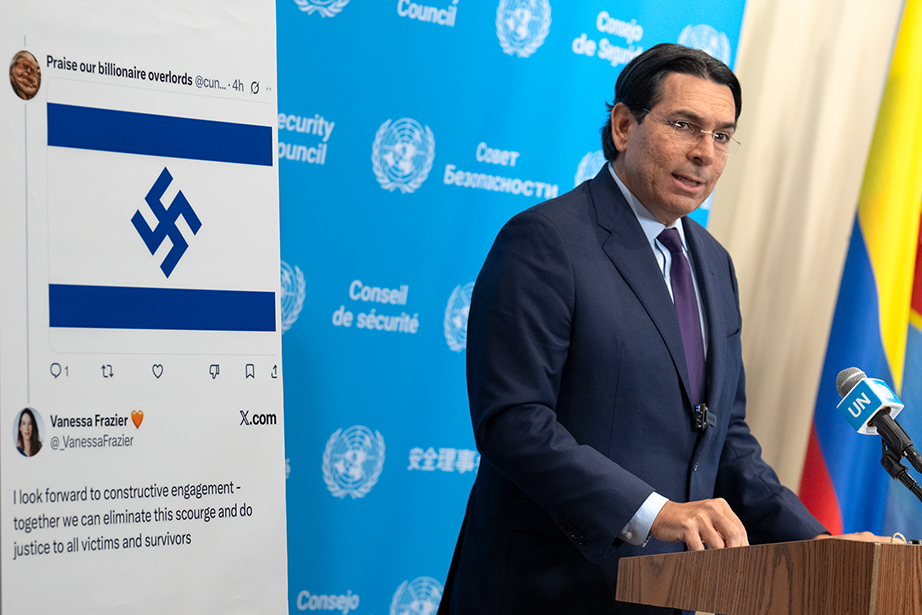
During an event to mark the International Day for the Elimination of Sexual Violence in Conflict, Vanessa Frazier publicly defended a fellow UN official after Israel’s Ambassador Danny Danon launched a personal attack against the report’s author.
Days later, the Special Representative for Children and Armed Conflict herself received what she described as “serious and credible” death threats.
Yet when Envoy met with Frazier a few weeks later, she preferred to talk not about herself, but about children trapped in war.
Children recruited by armed groups. Children killed in bombardments. Children raped. Children abducted. Children denied humanitarian assistance. Children whose schools have become battlefields.
“They are at the center of every decision I take,” she says.
That sentence reveals almost everything about the transformation of a diplomat who spent more than three decades representing Malta before becoming one of the UN’s highest-ranking international civil servants.
Today, she no longer represents Malta, but a UN mandate. It is a distinction that may sound technical, but inside the UN, it changes everything.
As Malta’s ambassador, Frazier defended her government’s positions while seeking compromises with other Member States. Today, she is expected to do almost the opposite: present independently verified facts, engage governments that may strongly disagree with her findings, and persuade them to better protect children caught in armed conflict.
It is one of the most politically sensitive jobs in the UN system. Her office does not negotiate peace agreements. It has no sanctions to impose, no troops to deploy, and no judicial powers. Its influence rests almost entirely on credibility, persistence, and dialogue.
Frazier knows diplomacy from every angle. After studying at Luther College in Iowa and completing postgraduate studies at the University of Malta, she joined Malta’s diplomatic service in 1992. Over the following three decades, she served in some of her country’s most important diplomatic postings, including Rome, London, Washington, and Brussels. She later became Malta’s permanent representative to the UN, leading her country’s delegation during its term on the Security Council before Secretary-General António Guterres appointed her as a special representative.
Those who followed Malta’s recent diplomacy at the UN had already seen that combination of firmness and composure during several high-profile exchanges, including a widely shared confrontation with Serbian President Aleksandar Vučić. Today, countries have disappeared from her vocabulary.
“The greatest change,” she tells Envoy, “was in the constituency I represent.”
That new constituency has no flag. It has no vote in the General Assembly. Very often, it has no voice at all.
From Representing a Country to Representing a Mandate
For Frazier, becoming a UN official meant much more than changing offices. It meant changing perspective.
“As a Maltese diplomat,” she says, “my responsibility was to advance my country’s positions while working to build consensus with others. Today, my point of departure is different. I represent a United Nations mandate, and children affected by armed conflict are at the center of every decision I take.” That change also transformed the way she understands diplomacy.
“My role is not to defend a national position,” she explains. “It is to present verified facts, uphold the mandate entrusted to me by the General Assembly and the Security Council, and use those facts to secure practical commitments for children.”
For her, credibility depends not on satisfying governments but on applying the same rules everywhere.
That consistency, she argues, is precisely what allows governments to trust the process, even when they disagree with its conclusions.
“If we want parties to conflict to change behavior,” she says, “they must know that our findings are based on evidence, not politics.”
It is a demanding form of diplomacy: one that requires firmness without confrontation, persistence without grandstanding, and the willingness to continue talking even after the headlines have faded.
Unlike political envoys trying to negotiate ceasefires or peace agreements, Frazier measures success differently.
A child released from an armed group. A school protected from attack. A military commander changing operational procedures to reduce civilian casualties. A government signing an action plan with the UN.These are the victories her office pursues. Much of that work remains invisible.
Every year, the secretary-general presents his report on Children and Armed Conflict—often referred to as the “list of shame”—before the Security Council. It is one of the UN’s most politically sensitive documents because it identifies governments and armed groups responsible for grave violations against children. What appears as a single report, however, is the result of a year-long process of monitoring, verification, and dialogue carried out by UN agencies and child protection specialists working in conflict zones.
One of the most infamous reports came in 2016, when the UN listed the Saudi-led coalition fighting in Yemen for the first time over violations including the killing and maiming of children. After Saudi Arabia objected, Secretary General Ban Ki-moon temporarily removed the coalition pending a review, fueling accusations that powerful Member States could pressure the UN over the contents of the report. The coalition was subsequently listed again under Guterres. More recently, in 2024, the Israeli armed and security forces were added to the list for the first time, for killing and maiming children and attacks on schools and hospitals in connection with the war in Gaza.
Frazier is keen to correct another common misunderstanding. Many assume that her office independently decides which conflicts to investigate. It does not. “Our priorities are shaped by Security Council resolutions, by the Monitoring and Reporting Mechanism established by Member States, and by the information gathered by UN teams on the ground,” she explains. The secretary-general ultimately decides whether a new situation should formally fall under the Children and Armed Conflict agenda. “Our role is to implement and advance the mandate entrusted to us while using independent advocacy and expertise to translate it into concrete protection for children.”
That distinction matters because it defines the limits as well as the strength of her office. If evidence emerges from a conflict that is not yet formally included in the mandate, Frazier can raise concerns, engage with governments, coordinate with UN partners and alert the secretary-general. But she cannot simply decide to open a new country file on her own. “The responsibility of my office,” she says, “is to alert, convene, persuade, and foster coordination.”
Those four verbs probably describe her work better than any official UN job description.
Persuasion, rather than coercion, is her principal instrument. Dialogue, rather than denunciation, is her preferred method.
That approach may appear frustratingly slow, yet it has produced concrete results. Every year governments revise military manuals, issue new operational directives, sign action plans with the UN, and release children from armed groups. None of those decisions make international headlines, but together they represent the quiet, patient work that has defined the Children and Armed Conflict agenda for nearly three decades.
Frazier knows that progress rarely comes through public confrontation alone.
“It comes,” she says, “through sustained engagement that eventually changes behavior.”
A Troubling Shift
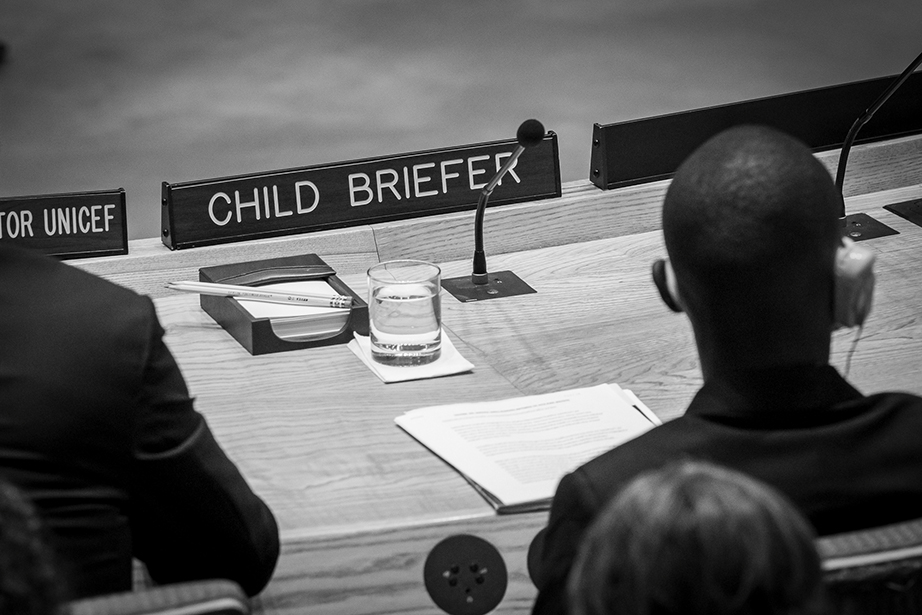
Every year, the secretary-general’s report on Children and Armed Conflict measures the human cost of war through six grave violations: killing and maiming, recruitment of child soldiers, sexual violence, attacks on schools and hospitals, abduction, and the denial of humanitarian assistance.
The numbers have never been encouraging. This year, they are alarming. More than 38,000 grave violations against children were verified in 2025, one of the highest figures since the monitoring mechanism was established almost twenty years ago. The most significant finding is not the number itself, but rather, who is responsible.
For the first time, state armed forces accounted for more verified violations than non-state armed groups.
“It is a major development signaling a worrying shift,” Frazier says. “Governments are expected to protect children. When state actors themselves become the principal perpetrators of violations, we are witnessing something profoundly disturbing.”
The finding challenges one of the assumptions that has shaped much of the international debate on children and war.
For years, the image of the child soldier was associated with militias, terrorist organizations, and rebel movements operating outside the law. Those actors remain responsible for countless abuses. But today’s conflicts increasingly show that regular armies, equipped with sophisticated weapons and working under internationally recognized governments, are also causing unprecedented harm to children.
The reasons vary from conflict to conflict.
Urban warfare has become more common. Military operations are increasingly conducted in densely populated areas. Schools and hospitals often stand close to military objectives. New technologies have changed the battlefield, but they have not eliminated the obligation to distinguish between military targets and civilians.
For Frazier, none of this diminishes the importance of international humanitarian law. Quite the opposite.
“The legal framework already exists,” she says. “The principles of distinction, proportionality, precaution, and military necessity remain valid. The real challenge is ensuring that parties to conflict respect and implement those obligations.”
That is why she resists the argument that the world simply needs new legal instruments.The problem, in her view, is not the absence of rules. It is the absence of political will.
“International norms remain strong,” she explains. “Their effectiveness depends on compliance by parties to conflict and on sustained engagement by the international community.”
The report itself is intended to be part of that engagement. Governments often object to being listed in its annexes, sometimes calling the findings politically motivated. Frazier understands those reactions, but she insists that the purpose of the report is not to publicly shame governments for its own sake.
“The objective is to change behavior,” she says. “Listing creates an opportunity to engage with parties to conflict, agree on practical measures, and ultimately improve protection for children.”
Several governments have done exactly that, negotiating action plans with the UN, changing military procedures, improving training programs, and releasing children from armed groups.
Success, in other words, is measured less by who appears on the list than by who eventually leaves it.
That philosophy also explains why Frazier consistently refuses to frame her work as a campaign against governments.
“It is a mandate for children,” she says, “not a mandate against states.”
The distinction is more than semantics. It is a distinction she returns to repeatedly throughout the conversation.
Because, in the end, every recommendation, every meeting with military officials, and every page of the secretary-general’s report is intended to answer the same question:
How can the next child be protected before the next violation occurs?
Engaging Governments, Not Fighting Them
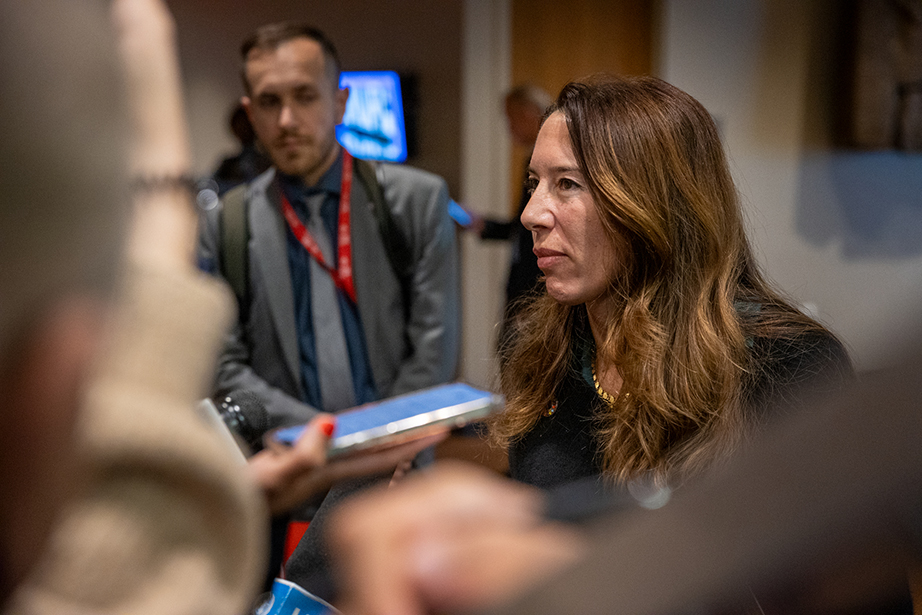
Given the nature of her work, it would be easy to describe Vanessa Frazier as one of the United Nations’ most outspoken critics of governments that violate children’s rights.
Every year her office identifies governments and armed groups responsible for grave violations against children. Yet publishing those findings is only one part of the job. The larger objective is to convince those same governments to change their behavior.
“I consider governments our partners,” she explains. “Our role is to engage with them, help them identify practical measures, and support them in strengthening the protection of children.”
That engagement often begins long before the secretary-general’s report reaches the Security Council. Governments are consulted throughout the verification process. Evidence is discussed. Factual observations are shared. Technical assistance is offered. Military authorities are encouraged to review procedures, improve training, and adopt measures that reduce the impact of military operations on children.
For Frazier, credibility depends on two principles that have to coexist. The facts cannot change, but dialogue with governments cannot stop. One gives the mandate its credibility; the other gives it a chance to make a difference.
That balance has become increasingly difficult as debates at the UN have grown more polarized.
The episode that brought Frazier unexpectedly into the international spotlight illustrates just how quickly professional disagreements can become personal. The death threats she received after publicly defending a fellow UN official earlier this year were a reminder of how quickly an independent UN mandate can become entangled in wider political battles.
Instead, she returns to the principle that guides her office. Independent mandates, she believes, can only function if facts are allowed to stand on their own, regardless of the political consequences they may generate.
That conviction also shapes her response to accusations of bias.
Following publication of this year’s report, several organizations accused her office of unfairly targeting Israel, while others questioned her impartiality and even called for her resignation.
Frazier does not answer those criticisms politically, but institutionally. “The methodology is applied consistently across all situations on our agenda,” she says. “Every verified violation is assessed against the same standards, regardless of who the perpetrator may be.”
The Human Side of the Mandate
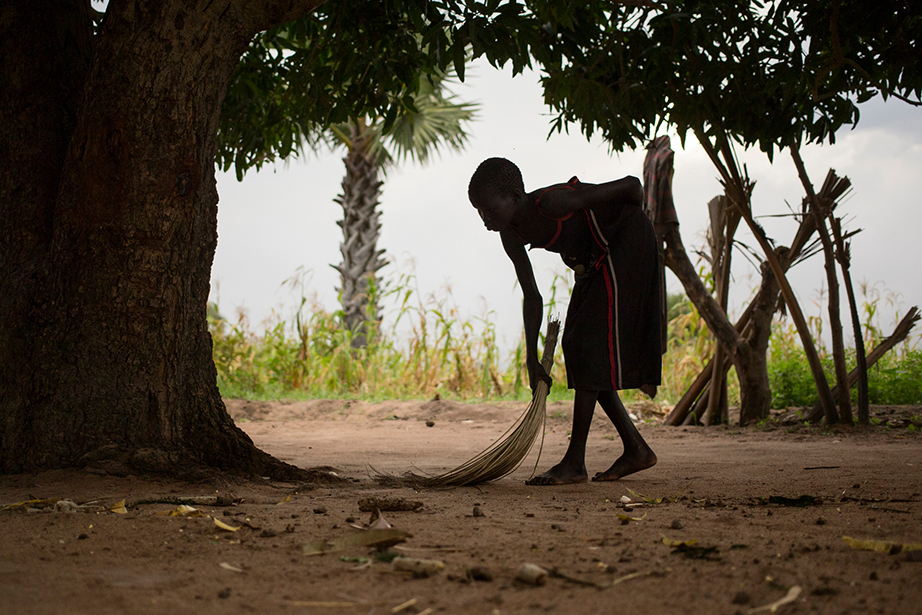
For all the diplomatic language that surrounds the UN, Frazier’s work is ultimately about people.
Or, more precisely, about children.
Every statistic in the secretary-general’s annual report begins with a child whose life has been permanently changed by war. A child killed or maimed. A child forced to fight. A child raped. A child who can no longer go to school because the classroom has become a battlefield.
The numbers are public, but the stories rarely are. Asked how she copes with carrying that information every day, Frazier gives an answer that surprised many when she first shared it.
“I cry a little every day.”
She smiles when she repeats the sentence, aware that it attracted attention far beyond diplomatic circles. But she immediately explains that the point was never about emotion itself.
“I do not believe emotional distance should become indifference,” she tells Envoy. “The suffering described in our reports should affect us. Retaining that humanity is essential to carrying out this mandate with integrity.”
At the same time, she knows that compassion alone cannot protect a child.
“You cannot allow yourself to become overwhelmed,” she says. “Children and their families need us to remain credible, focused, and capable of acting.”
Over the years, she has learned to separate empathy from paralysis. When confronted with another tragic story, her first instinct is no longer simply to react emotionally. Instead, she asks herself practical questions. What can be done now? Who needs to be called? Which government can be persuaded? Which commander can be convinced to change procedures? Which child can still be saved?
“I try to distinguish between carrying the responsibility of the mandate and carrying every individual tragedy alone,” she explains. “Compassion sustains the work, but discipline makes action possible.”
Like every senior UN official, Frazier knows another transition is approaching. In January, a new secretary-general will take office. For officials serving in the Secretariat, that moment always brings uncertainty.
“The incoming secretary-general may decide to retain us, reassign us, or appoint successors,” she explains. “That decision belongs entirely to the next secretary-general.” Asked what qualities the next UN leader should possess, Frazier avoids endorsing any candidate. She welcomes the fact that several highly qualified women are competing for the position.
“There is certainly a strong case for choosing a woman,” she shared. “But ultimately the decision should be based on leadership, integrity and the ability to unite Member States.”
The challenges awaiting the next secretary-general, she believes, will require exactly those qualities. Not because the Charter has changed, but because the world has.
About The Author