As the UN enters its ninth decade in crisis, Khalilur Rahman of Bangladesh takes the helm of the General Assembly—with a promise and a problem.
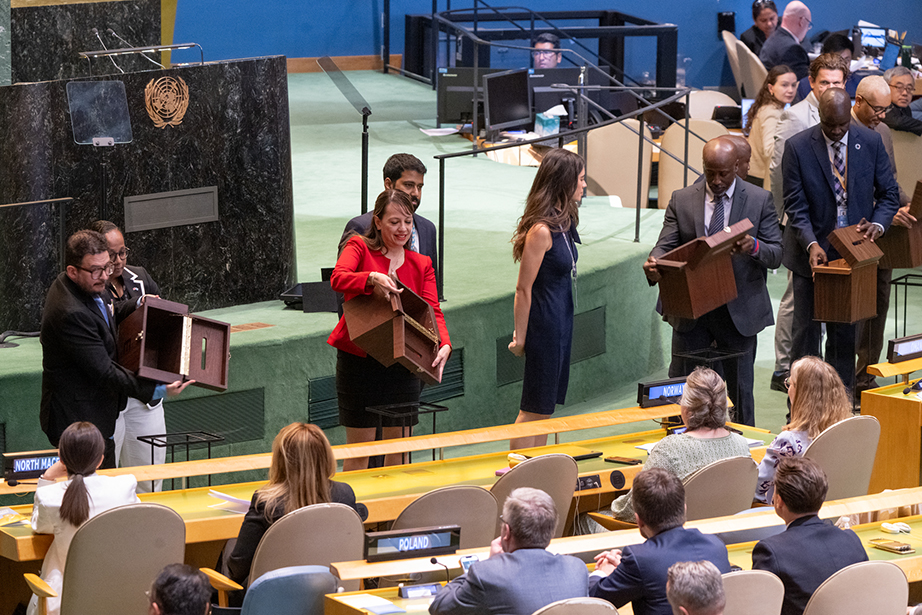
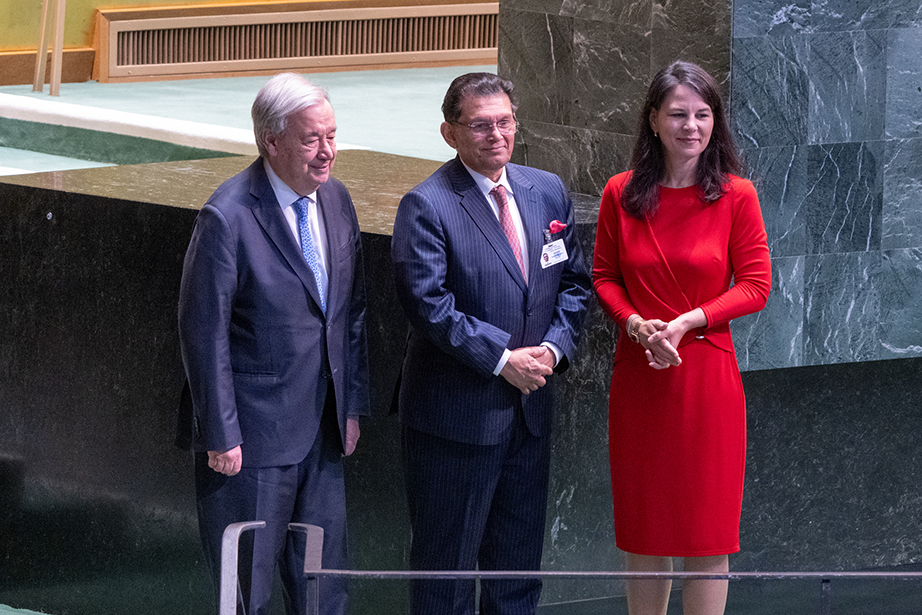
On June 2, 2026, the United Nations General Assembly Hall fell silent as Annalena Baerbock read out the result of a secret ballot: 99 votes for Khalilur Rahman of Bangladesh, 91 for Andreas Kakouris of Cyprus. The margin was thin—eight votes—but the message was clear. The world’s most representative diplomatic body had chosen its next president.
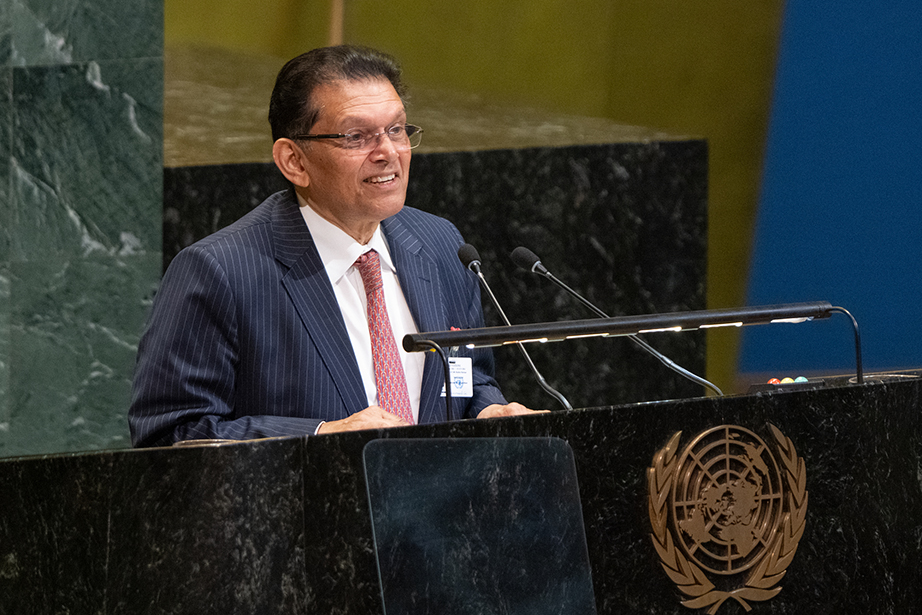
“I accept the position of the President of the 81st session with humility and respect,” Rahman said as he addressed the assembly. Then came the harder truth: “The UN will commence its ninth decade at a time when trust in our organisation is being tested on multiple fronts.”
It was not a triumphant declaration. It was a diagnosis.
Rahman, 72, is a career diplomat and economist who has spent nearly five decades at the intersection of multilateral diplomacy and development policy. He was largely unknown outside diplomatic circles—a deliberate technician rather than a headline-grabbing politician. He succeeds Annalena Baerbock, one of the most high-profile and media-savvy presidents the General Assembly has ever had. The contrast could not be more stark.
And yet the moment he inherits could not be more consequential. His one-year presidency will coincide with the selection of a new UN Secretary-General—as António Guterres’s term ends on December 31, 2026—making Rahman a central figure in one of the most significant transitions in the UN’s history. Rahman or his office did not answer several interview requests from Envoy Magazine.
A Diplomat’s Diplomat
Rahman was born in 1954 in what was then East Bengal—a land that would become Bangladesh through a war of independence before he had finished school. He came of age in a country that had to fight for its own existence, and spent the next four decades fighting for the rights of the world’s most vulnerable nations on the diplomatic stage.
He ranked first in his economics examinations at the University of Dhaka, went on to earn a master’s degree in law and diplomacy from Tufts and a PhD in economics from Harvard, and joined Bangladesh’s diplomatic service in 1979. In 1991, he joined the UN Secretariat—the beginning of a 25-year career inside the organization whose General Assembly he will now preside over. He worked across the UN system in New York and Geneva, serving as spokesperson for the world’s Least Developed Countries and lead author of major UN publications on trade, finance and development—the kind of work that rarely makes headlines but shapes the architecture of global policy. He is also a founder of the East West University in Dhaka.
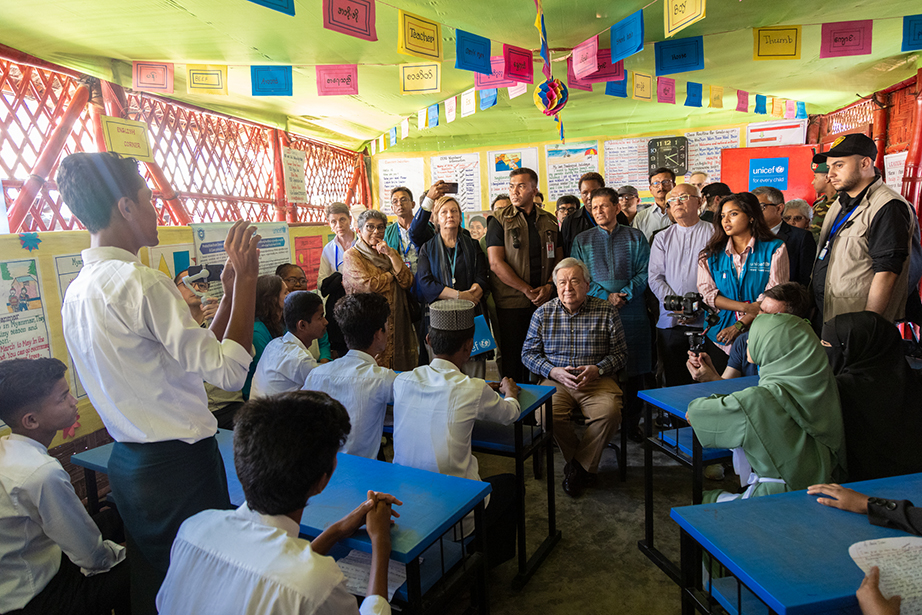
The Rohingya crisis gave Rahman his most recent test before the General Assembly. In November 2024, Bangladesh’s interim government appointed him High Representative for the Rohingya crisis—charged with internationalizing a displacement emergency that had stalled for nearly a decade. Bangladesh hosts over one million Rohingya refugees, the largest such population in the world. Rahman’s task was to make the world pay attention again. The results were mixed. As one analysis noted, the gap between official diplomatic progress and political reality had become “the graveyard of Rohingya diplomacy.” But the experience gave him something few UNGA presidents bring to the role—direct, personal knowledge of what it means when the international system fails the most vulnerable.
When Bangladesh’s interim government took power in 2024, Rahman was called back into public service—eventually becoming Foreign Minister in February 2026. Four months later, he was elected to lead the General Assembly.
Credit: UN Photo/Eskinder Debebe
A Narrow Mandate
In the secret ballot, Rahman secured 99 votes to Cyprus’s Andreas Kakouris’s 91—out of 190 ballots cast. The margin was narrow by the standards of a body that typically operates by consensus, and it raised immediate questions: who voted against him, and why?
The UNGA presidency rotates among the UN’s five regional groups, and the 81st session fell to the Asia-Pacific group. Bangladesh was the region’s candidate—but not everyone within the group was comfortable with the choice. Cyprus, though geographically and politically European, sits in the Asia-Pacific group under a long-standing UN arrangement—and mounted a surprisingly competitive campaign against Bangladesh for the nomination. The reasons behind 91 member states ultimately choosing Cyprus’s candidate over Bangladesh’s remain unspoken—secret ballots do not come with explanations. But the diplomatic community does not lack for speculation.
Secretary-General António Guterres welcomed the result warmly. “Your remarkable political and diplomatic experience are a guarantee of success not only to the General Assembly but to the United Nations as a whole,” he said. The African Union echoed that sentiment. “The election of Dr. Rahman is a major milestone for Bangladesh, allowing it to enhance its global presence,” the continental body said in a statement.
Rahman’s response was characteristic. “I accept the position of the President of the 81st session with humility and respect,” he said. “I will be the President for all member states. I will not allow my personal opinions to interfere with my duties. I will seek common ground without ignoring our differences.”
It was a careful, measured statement from a careful, measured man. Whether that temperament is a strength or a limitation will become clear in the months ahead.
Six Promises, One Year
Rahman has outlined six priorities for his presidency: peace and security, accelerating progress on the Sustainable Development Goals, climate action, human rights, the governance of emerging technologies including artificial intelligence, and UN reform. The list is ambitious—perhaps deliberately so. In a year when the multilateral system is under its greatest strain in decades, a narrow agenda would have seemed tone-deaf.
But it is the theme of his presidency that cuts deepest: “Restoring Trust, Managing Transformation: A United Nations that Delivers for All.” The phrase acknowledges something that few UN officials say out loud: that trust in the organization has eroded, that transformation is not optional, and that the gap between what the UN promises and what it delivers has become impossible to ignore.
“The UN will commence its ninth decade at a time when trust in our organisation is being tested on multiple fronts,” Rahman told delegates after his election. “Scourges of conflict and war, from which our organisation aimed to save our succeeding generations, continue to inflict untold sufferings. Development gains remain fragile and uncertain, and in some cases are regressing.”
Drawing on Bangladesh’s long tradition of UN peacekeeping—the country is one of the largest contributors of peacekeeping troops in the world—Rahman pledged to support preventive diplomacy and civilian protection. He also highlighted the need to address development financing gaps and advance the implementation of the Global Digital Compact.
On AI governance, his emphasis is significant. Bangladesh is not a tech powerhouse, but Rahman understands that the countries most affected by algorithmic decisions and digital exclusion are precisely the ones least represented in the rooms where those decisions are made. His voice on this issue could carry weight that more powerful nations’ voices cannot.
“I will dedicate myself to rebuilding trust, nurturing consensus, and opening space for good faith negotiations that will lead to outcomes for all that are owned by all,” he said.
There is, however, a structural reality that no amount of ambition can fully overcome. The presidency of the General Assembly is largely ceremonial. The real power at the UN sits elsewhere—in the Security Council, where five permanent members hold veto rights, and in the Secretary-General’s office. Rahman can set the agenda, moderate the debates, and shape the tone of the session. He cannot compel. He cannot veto. He cannot enforce. In a year of compounding crises, that is a significant constraint.
It is a formidable promise. Whether the institution he is inheriting is still capable of keeping it is the question that will define his year.
An Institution Under Siege
Rahman takes office at a moment of compounding institutional crises. The UN is navigating a funding emergency: UNHCR ended 2025 with roughly 25 percent less funding than the year before, its lowest level since 2015, even as the number of forcibly displaced people worldwide has never been higher. The United States, historically the organization’s largest financial contributor, has withdrawn from or reduced its support for multiple UN programmes. Russia’s invasion of Ukraine has paralyzed the Security Council. The gap between the UN’s founding ideals and its operational reality has rarely felt wider.
And then there is the Secretary-General question. Guterres’s term ends on December 31, 2026. Rahman will thus preside over the most consequential leadership transition in the UN’s recent history.
The selection of a new Secretary-General will be the defining political event of his presidency, requiring him to navigate the competing interests of the five permanent Security Council members while maintaining the General Assembly’s voice in a process that is overwhelmingly controlled by the Council. It is a delicate balance that has defeated more prominent figures than Rahman.
Is Quiet Diplomacy Enough?
He is not Annalena Baerbock. He does not arrive with her media profile, her political network, or her instinct for the dramatic gesture.
The contrast with his predecessor is stark and deliberate. Baerbock arrived as a sitting foreign minister of a G7 nation, with global name recognition and a talent for the diplomatic spotlight. Rahman arrives largely unknown outside UN corridors—a technocrat where Baerbock was a politician, a consensus-builder where she was a communicator. It’s unclear whether that difference is a weakness or precisely what this moment requires.
Baerbock herself set the tone for what lies ahead. She warned that “the international environment was unlikely to become easier during the coming year”—a parting message that reads less like a farewell and more like a warning.
What he brings instead is something rarer at the top of the UN system: Deep institutional knowledge, a career built entirely inside the multilateral machinery, and a perspective shaped by decades of advocating for the world’s smallest and most vulnerable nations.
Rahman has spent his life in the rooms where global decisions are made, arguing for the countries that are rarely invited in. Now, for one year, he runs the room.
“We must collectively demonstrate that the UN can adapt, reform and better deliver,” he told the General Assembly on June 2. The question is not whether he believes it. The question is whether the institution still can.
About The Author