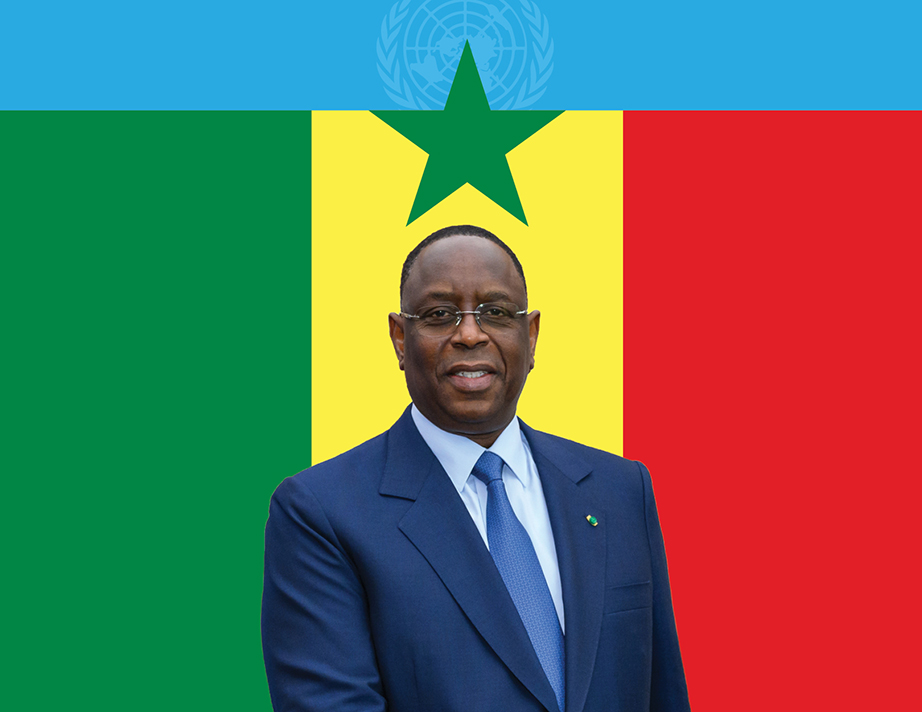
Former Senegalese president Macky Sall wants to succeed António Guterres as UN secretary-general. His controversial candidacy, filed by Burundi, reveals as much about his international ambitions as about the resistance his political legacy has generated.
Former Senegalese President Macky Sall took the world and Senegal by surprise when he announced his bid for UN secretary-general in March.
His candidacy was even more unusual because Burundi, not his native country, nominated the former president on March 2, 2026. Both Senegal and the African Union have refused to back him, and in late March, Senegal’s AU mission said Dakar’s government “has at no stage” endorsed Sall’s candidacy. In fact, Sall’s request for support went unanswered by Diomaye Faye, Senegal’s president, a move that people close to Sall deem as “a breach of all rules of propriety and courtesy.” [Update: In July: after receiving Sall in Dakar, Faye formally threw Senegal’s support behind his predecessor and instructed the government and the country’s diplomatic network to campaign on his behalf. Sall therefore entered the final phase of the race with the endorsement of his home country, even as the African Union remained divided over his candidacy.]
The longtime leader presented himself as a pragmatic, managerial reformer from the Global South at the UN in April. However, in Senegal, Sall’s legacy remains tainted by his role in suppressing political protests and pushing for government amnesty—actions that, for many critics, make him unfit to lead an institution dedicated to international law.
A Presidency Shaped by Modernization and Repression
From the bustling terminals of Blaise Diagne International Airport to the gleaming towers of Diamniadio—the satellite city Sall built from scratch 30 kilometers east of Dakar—his physical legacy is hard to miss. The TER, a high-speed commuter rail line connecting Dakar to the airport, remains one of the most tangible symbols of his infrastructure drive. The Diamniadio Industrial Park, completed in 2023, now hosts firms across the pharmaceutical, electronics, and textile sectors.
Elected president of Senegal twice, in 2012 and again in 2019, Sall made modernization a central pillar of his agenda. His years in power are associated with the Dakar Regional Express Train, the expansion of road networks, and the Emerging Senegal Plan, a bid to make Senegal a regional economic hub and achieve emerging-market status.
“He reduced the presidential term from seven to five years and permanently enshrined a two-term limit for the presidency in Senegal’s constitution,” Hamidou Anne, a communications consultant close to Sall, told Envoy. “He also restored economic growth to the country, averaging 6 percent during his first term, up from the sluggish figures he inherited when he came to power.”
But his final years in office, a tumultuous period of political unrest, have cast a shadow over his tenure.
Rights groups, including Amnesty International, have held Sall responsible for the repression of political protests in 2021 and 2024, which resulted in 65 deaths, according to the organization. The protests erupted after the arrest of opposition leader Ousmane Sonko, and after plans were announced to postpone presidential elections, in 2024.
On X, Seydi Gassama, executive director of Amnesty International Senegal, warned that any support for Sall’s candidacy would betray “the memory of more than 65 Senegalese killed under his regime, including the four killed following his decision to postpone the February 2024 presidential election.”
“Macky Sall should have set up an independent commission of inquiry to shed light on allegations of torture and extrajudicial killings, but that was never done,” Alioune Tine, founder of the Afrikajom Center think tank and former UN independent expert on the human rights situation in Mali, said.
“When President Bassirou Diomaye Faye and his Prime Minister Ousmane Sonko came to power, they could have created a commission of inquiry to establish the truth and open judicial investigations,” Tine told Envoy in text messages. “Victims filed complaints, but to this day, there has been no investigation.”
One month before Sall left office, he pushed through a controversial amnesty law. It granted blanket immunity for “all acts likely to be classified as criminal or correctional offenses … relating to protests or politically motivated events … whether or not their perpetrators have been tried.”
Human Rights Watch denounced the law, stating it “opens the door to impunity for serious human rights violations.”
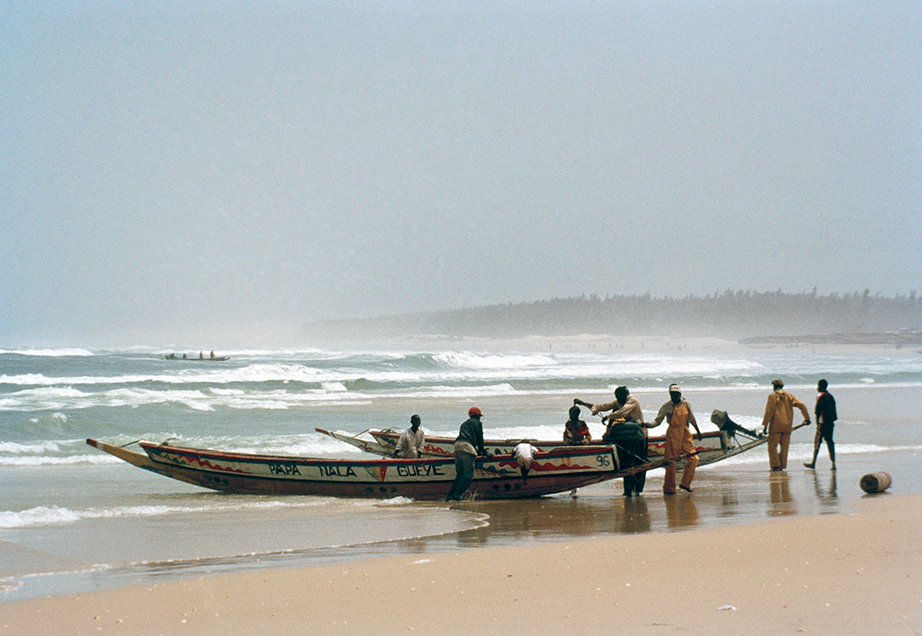
Shortly after Sall’s candidacy was filed, a group representing the families of those killed in the protests held a press conference in Dakar. They argued that Sall must be held accountable for “crimes of bloodshed and economic crimes,” and does not deserve to lead the UN.
On April 11, hundreds of protesters marched through the streets of Dakar to reject his UN candidacy.
A report published in February 2025 by the Court of Auditors, Senegal’s public finance watchdog, revealed that the country’s debt was concealed under his presidency—another potential red flag.
Anne has a different take on the final tense years of Sall’s presidency. He argues that public order was under threat, and the state acted in self-defense to guarantee public security.
“In a curious reversal of roles, those who promoted yesterday’s violence now cloak themselves in the mantle of victims,” Anne told Envoy. “After three years of political unrest, Macky Sall, who declined to seek a new term in 2024, passed an amnesty law despite opposition from within his own camp, so as not to leave behind a fractured country.”
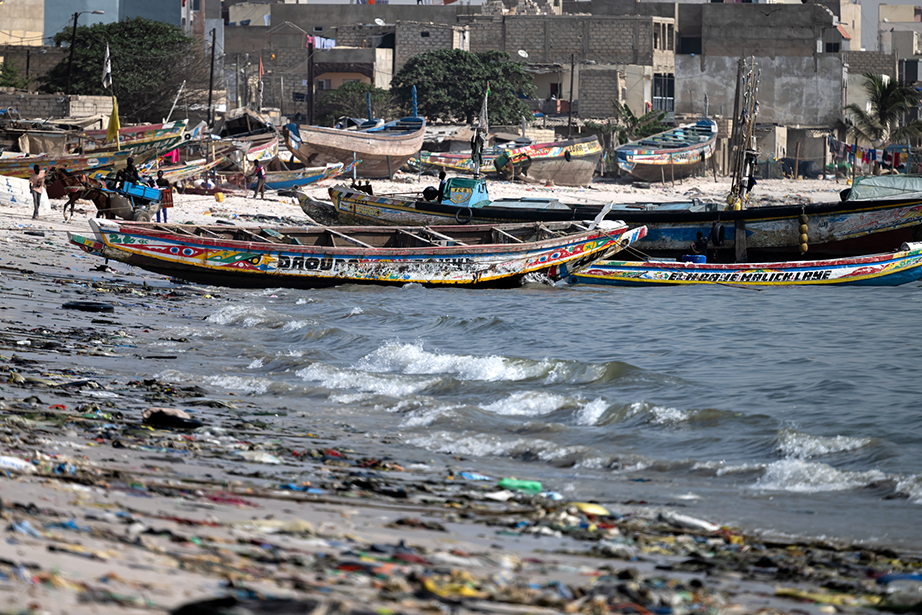
He added that if the current government, whose leaders were party to this law, wants to shed light on the events of 2021–2024, they can use their majority to repeal the law. “We will then find out who is who and who did what. Otherwise, the debate will be obliterated by anathemas and lies,” Anne said.
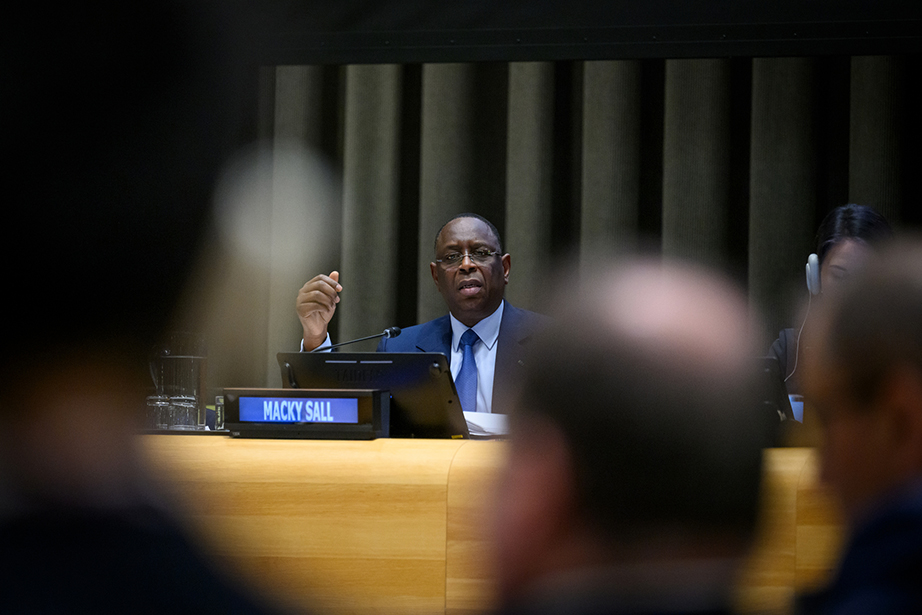
Sall and his backers describe the 2021 violence as an attempt to seize power through insurrectional means. “People wanted to take advantage of a particular situation to use violence to come to power, something I could not accept,” he said at a meeting with NGO representatives at UN headquarters on April 20.
“I swore an oath to defend the institutions of the Republic,” Sall said during a formal interactive dialogue to discuss his candidacy.
Sall’s inability to get support from Senegal is another obstacle. He is locked in a deeply adversarial relationship with his successor, Bassirou Diomaye Faye. A 2025 audit found that Senegal’s budget deficit under Sall had been more than double the officially reported figure, prompting legal and political fallout. A lawmaker from PASTEF, the ruling party, sought to pursue a high-treason case, but the National Assembly declared the effort inadmissible on procedural grounds.
The rift deepened further when, in a major interview on May 2, 2026, Faye revealed that Sall had never spoken to him directly about his UN secretary-general bid, and that pressure had been exerted to force Senegal’s endorsement—something Faye flatly refused, opting instead for a carefully worded neutrality.
Getting “the support of a state like Senegal is indispensable given its diplomatic influence,” Tine said. “First, it would naturally bring about unwavering AU support and, better still, could have removed any reluctance from the permanent members of the Security Council, who have good relations with Macky Sall, who had a very successful term as AU president.”
In a policy document arguing for his candidacy, Sall diagnosed a “deep and systemic” crisis in the international system. He proposed an integrated approach linking peace, security, and development; the revitalization of multilateralism; and strengthening UN governance. On the economic front, he called for rethinking development financing by leveraging private investment and improving access to credit for indebted countries.
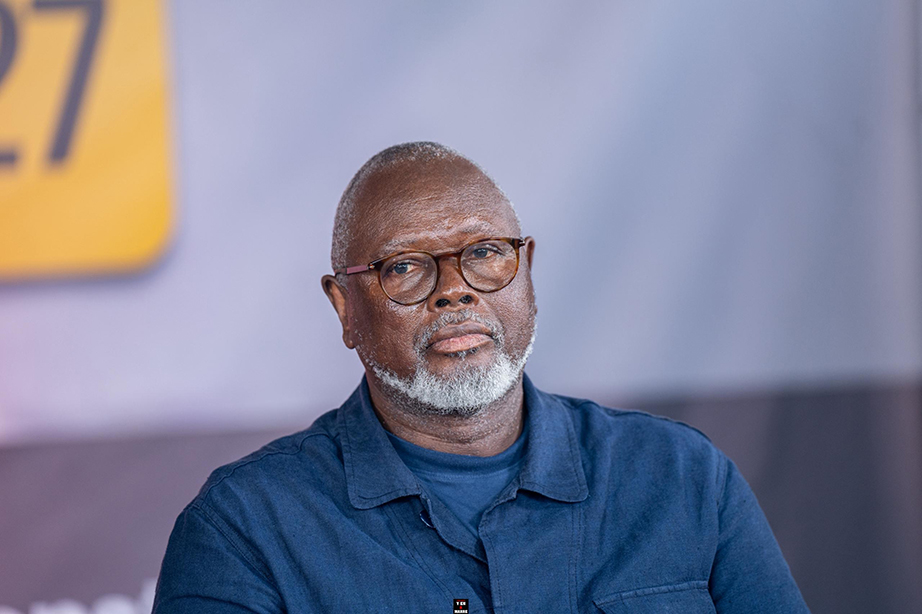
A “procedurally incorrect” candidacy
How Sall’s candidacy was filed is still the subject of controversy.
While Burundi’s president, who chairs the AU, officially nominated Sall, the AU chose not to endorse him. Twenty of its 55 members spoke out against the endorsement during a so-called silence procedure, which requires at least two-thirds of members to remain silent for a unified endorsement.
Still, Dakar’s lack of support is “not an insurmountable obstacle,” Anne said, as the UN Charter allows candidates to be nominated by a country or group of countries. An endorsement by one’s own country, which Sall lacks, “is by no means a mandatory criterion,” he said. Bachelet saw her country of Chile withdraw support, Anne pointed out, yet she continues her campaign.
When Sall wrote an official letter to the Senegalese president in February seeking his support, “he did not deign to reply,” Anne said, calling this “a breach of all rules of propriety and courtesy.”
Sall has an “aura, a credibility, an internationally recognized leadership. His great diplomatic achievements speak for themselves and cannot be tarnished,” Anne said.
Moussa Faki Mahamat, former chairperson of the AU Commission, publicly endorsed Sall on X: “Having worked with him for eight years as President of the African Union Commission, including during his presidency of the African Union, I have witnessed his leadership and diplomatic skills first-hand. He possesses the rare ability to build consensus across diverse interests,” the social media post read.
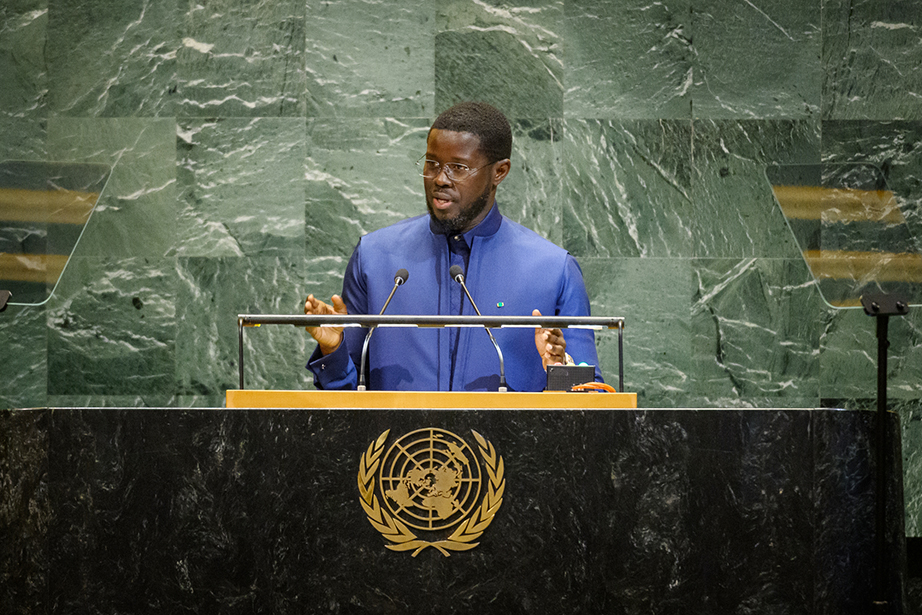
Geopolitical stakes
Another complication surrounding Sall’s candidacy is its geography. An informal UN convention suggests that the role of secretary-general should cycle among the world’s major regions. Since Latin America has only produced one secretary-general to date, many argue it is now the region’s turn. The other three candidates are from Latin America.
“It is a known fact that it is the turn of South America and the Caribbean region to produce the next United Nations secretary-general,” Nigeria wrote in an official communication to the AU Commission. Abuja also called it “procedurally incorrect,” as it came without review by the Ministerial Committee on Candidatures.
Anne said that the “rotation is not enshrined in the UN Charter,” and invoked history: “Of the 17 UN secretary-general mandates, Western Europe has held eight, Asia four, Africa three, and Latin America two. In 2016, many observers felt it was finally Eastern Europe’s turn, yet António Guterres was elected,” he said. Guterres is from Portugal.
For Tine, “the rotation question, with Latin America’s turn, is a reality. The three other candidates are from Latin America; that is no coincidence. Moreover, this year women are making a strong case for a female head of the UN.”
“But Macky Sall,” he said, “as Africa’s sole candidate, representing a continent that carries little weight in global governance, is also a defensible position, if one looks beyond the domestic problems—specially in a context where Africa accumulates the deadliest and most devastating conflicts, producing the most refugees and displaced persons.”
Ultimately, the final decision rests with the Security Council, where the veto power of the five permanent members remains the ultimate lock.
The real stakes will play out during the informal “straw polls,” expected around July. That’s when the 15 Security Council members will progressively signal their positions until one name prevails by elimination.
The successor to António Guterres is due to take office on January 1, 2027, leaving Macky Sall only a few months to convince the Security Council. While he courts world leaders abroad, Sall has done little to convince his own people or his own government of the merit of his new pursuit.
This article is published in collaboration with Egab.
About The Author