As calls grow for the UN to finally choose a woman secretary-general, Envoy examines the barriers that have kept women from the top of global diplomacy—and the networks now trying to break them down.
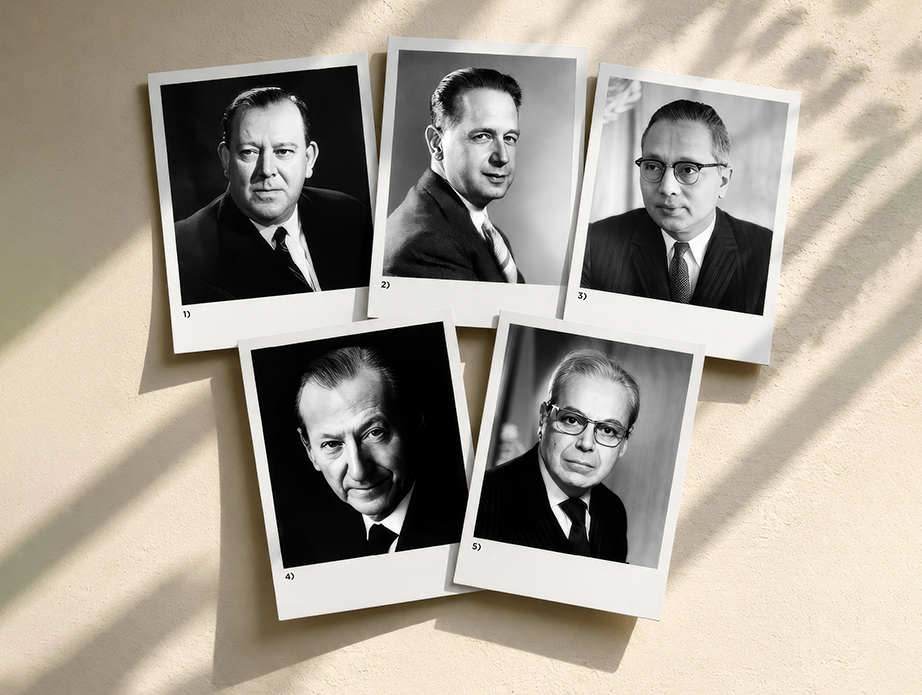
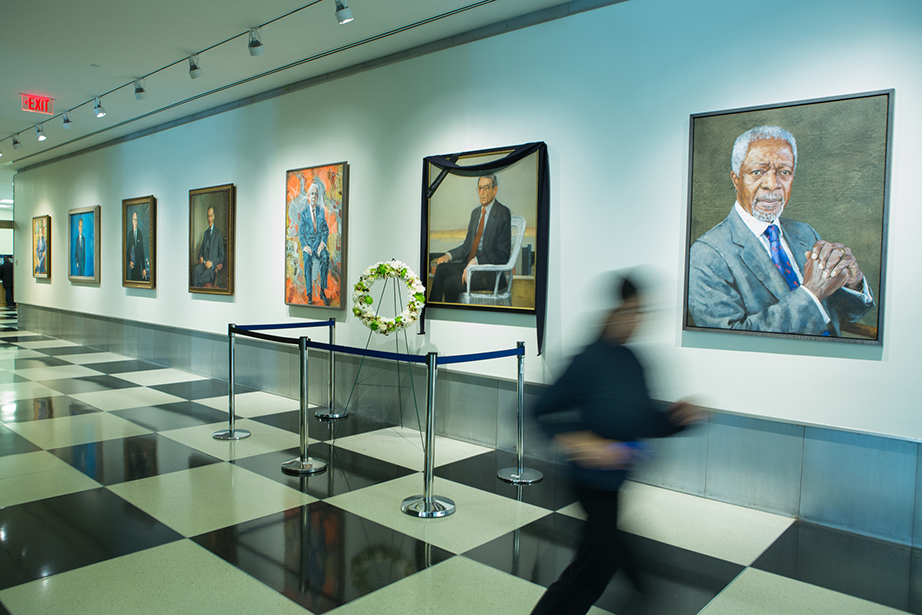
At the United Nations, the walls do not always live up to the grand promises of its founding Charter. An organization that in 1945 pledged to defend “the equal rights of men and women, and of nations large and small” has produced, in 80 years of existence, exactly nine leaders. All of them men. Not one woman. Their portraits line the lobby walls of the Secretariat building, man after man staring down at every visitor with an unappealable verdict.
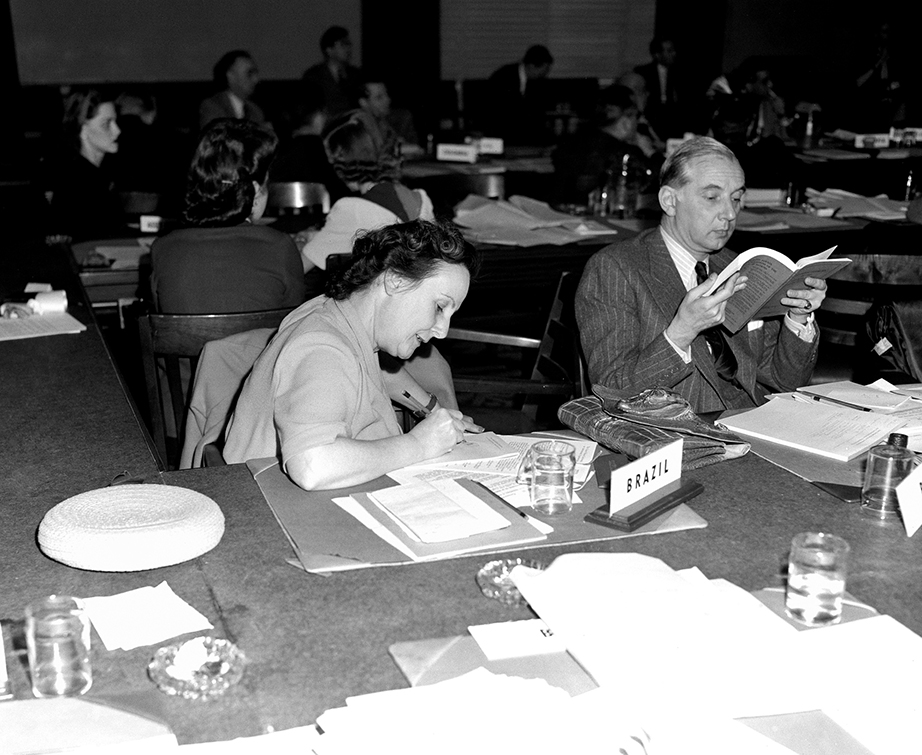
Women make up 50 percent of the world’s population. Yet they have never led the most powerful multilateral organization—founded to defend the very equality it does not always practice. That irony is rooted in its own founding text, thanks to the work of Bertha Lutz. The Brazilian diplomat was one of only four women among the 850 delegates who signed the UN Charter in San Francisco in 1945. She is responsible for the inclusion of one word, “women,” in that defining line of the Charter that consecrated gender equality. But she did not receive credit until 2016, when researchers at the University of London uncovered documents detailing the negotiations. By then, she had been dead for 40 years. The contradiction isn’t debatable; it’s standing right there on the wall. The portraits of António Guterres, Ban Ki-moon, Kofi Annan, Boutros Boutros-Ghali and Javier Pérez de Cuéllar, all the way back to Kurt Waldheim, U Thant, Dag Hammarskjöld, and finally Trygve Lie as the first secretary-general are clear: the gallery doesn’t match the rhetoric. But it fits perfectly with the experience of many women in global diplomacy, still waiting to be heard. “Often when they get to talk, the men in more senior positions have left the room,” Myriam Oehri, former deputy permanent representative (DPR) of Liechtenstein, says. Hierarchy governs UN diplomacy. Women remain rare at the top.
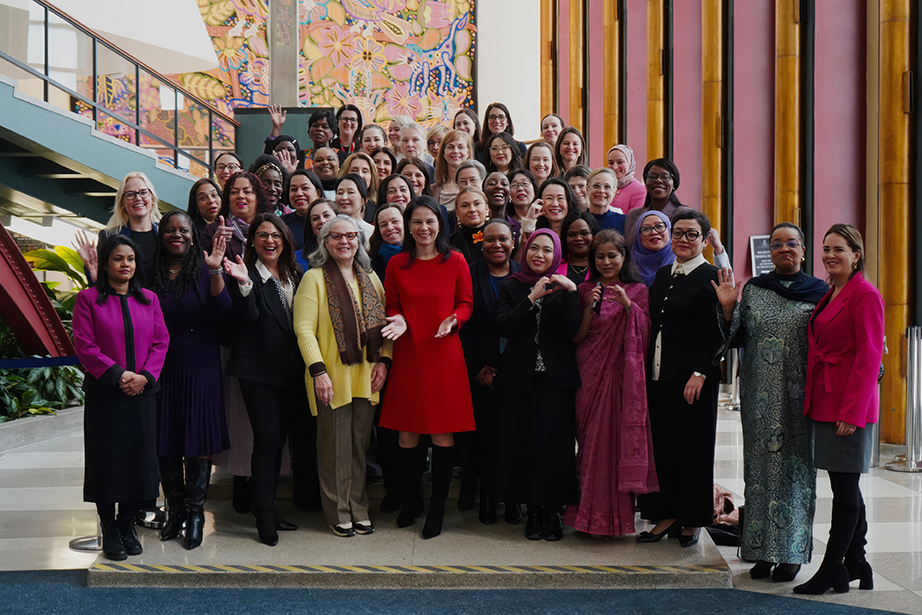
As of last December, 72 countries had never sent a female permanent representative (PR). Only 23 percent of PRs in New York are women, according to a report on Women in Multilateralism published by GWL Voices. At the end of February, there were only 40 female ambassadors, out of 193 countries, says Bahia Tahzib-Lie, the deputy permanent representative of the Netherlands to the UN. The country co-organized this year’s “The Diplomatic Sisterhood” retreat in New York, where 72 women DPRs go annually for inspiring discussions on leadership and empowerment. Men often play golf. These women practice yoga and African dance. Tahzib-Lie also loves running. “It’s symbolic of my life,” she admitted.
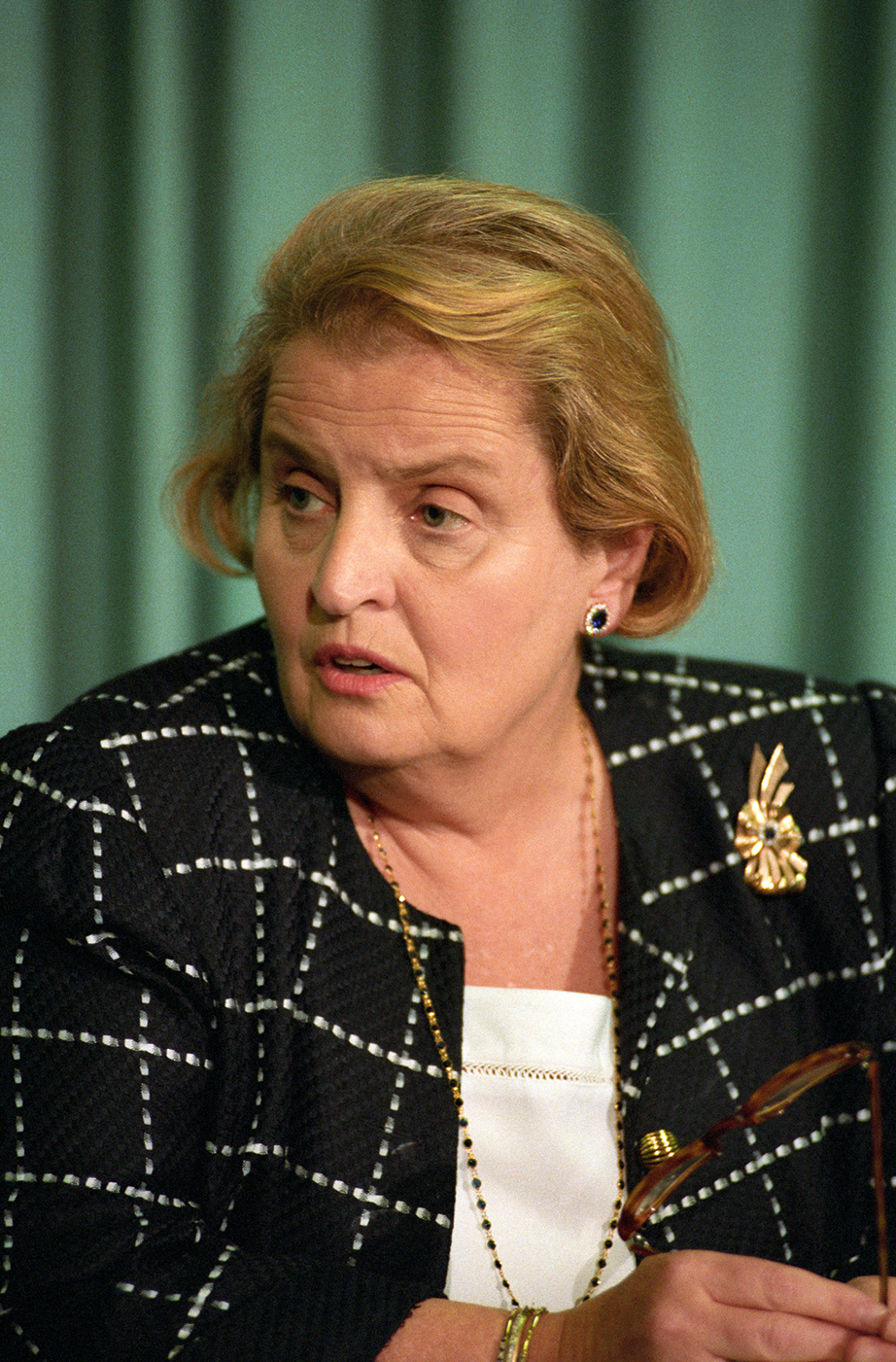
That imbalance shaped Madeleine Albright’s approach. The first woman to serve as US secretary of state, and previously US ambassador to the UN in 1993, she famously declared “there is a special place in hell for women who don’t help other women.” The line resurfaced in February 2016 at a campaign rally in New Hampshire in support of Hillary Clinton’s presidential bid, drawing considerable criticism. But it was no surprise to those who had shared these walls with her. At the time, between 95 and 97 percent of all seats at the General Assembly were held by men. Albright was the only woman sitting at the Security Council.
Once she reached the top diplomatic position in Washington, she redrew the map of access by giving the few existing female permanent representatives her private line, before cell phones were invented. When a male ambassador complained, she resolved it swiftly. “That’s easy to fix. Tell your government to name a female ambassador.”
Credit: Permanent Mission of the Kingdom of the Netherlands
At the Greentree Foundation Conference Center in Manhasset—the former Whitney estate that hosts UN Security Council retreats to discuss peace operations and foster dialogue—71 women deputy permanent representatives and their corporate guests gather informally every year to honor the sisterhood Albright wanted. There are also frictions. “Women who worked very hard to get where they are can also be more judgmental,” one of them admitted privately. But what strikes Oehri, a co-founder of the group, is the “extraordinarily talented women” who convene there. It should come as no surprise. To reach a leadership position, it is not enough for a woman to be good at what she does. She must be exceptional. And yet, despite that impossibly high bar, many of them are cracking the glass ceiling.
“There are deep-rooted structural barriers that have prevented women for a very long time from being represented in diplomacy,” said Crystel Downing of the International Crisis Group. “At the bottom of all of them is the system itself. If women past a certain age or stage of their career cannot progress because of personal choices in their lives, then you’re effectively reducing the pool of women who will ever reach the senior levels of their own foreign service—the very pipeline from which candidates for secretary-general are drawn.”
In many countries, limited access to education and decades of exclusion from the workforce have compounded that deficit. But Susana Malcorra rejects the notion that the field is thin. In 2016, when she was a finalist alongside António Guterres for the post of secretary-general, there were not one but seven credible women candidates. “And none of them was good enough?” she asks.
As usual, the decision came down to the five permanent members of the Security Council, the very structure that contradicts the UN’s promise of equality among nations. “I was the second candidate after António Guterres. I had the most votes after him. I would have gone into another round except for the fact that one P5 vetoed me,” she says.
Malcorra has redirected any frustration into advocacy, co-founding GWL Voices. “When, finally, I learned who the culprit was, they said: Nothing personal—it’s geopolitical.” Her eyebrows still arch at the memory. “There is always a reason. I heard them say of one candidate: ‘She is too soft.’ Of another: ‘She is too bossy.’ She is … always something.”
The double bind has a long pedigree. Women in leadership are told to be more assertive, then told they are too bossy: praised for emotional intelligence, then passed over for “tough jobs.” Nobody wants the election of the first female secretary-general to be a matter of justice or quota. “Not any woman, not any man,” reads the slogan of the Madam Secretary campaign. Downing is also measured. She doesn’t think a woman would necessarily bring any specific qualities to the table. Others, like Malcorra, begin from the premise that women and men are different. “It’s the addition of both sets of qualities that enriches the discussion,” she says. “When you have a team with men and women fundamentally sitting around the table, you reach different conclusions than if you only had men or only had women.” The argument is not that women are better. It’s that the current arrangement is worse, and demonstrably so.
Credit: UN Photo Archives Manuel Elías
In peace processes, agreements with meaningful female participation are 35 percent more likely to last at least 15 years, according to an International Peace Institute study of 182 signed peace agreements. Yet between 1992 and 2019, women made up only 13 percent of negotiators. They are credited with helping bring peace to deep-rooted conflicts such as Sierra Leone, Liberia, or Colombia.
By contrast, in Bosnia, after women had been subjected to some of the most atrocious abuses of the war—including systematic mass rape—“there was not a single mention of reparations or justice, nor any reference to how to support women victims in the aftermath,” Cristina Gallach, the only Spanish woman who has served in top positions at the UN, the EU, and NATO, says. “The focus was on institutions, on territory, on the surrender of weapons. And that was because there were no women at the negotiating table.”
What other qualities could they bring to that table? In her presentation as a candidate for secretary-general last April, Michelle Bachelet said she has been in places where she sensed something major was about to happen, when the people around her didn’t see it coming. “Intuition is a feminine characteristic,” says Malcorra. “Failing to build on that feminine characteristic would be a loss.”
For Malcorra, “women shape outcomes through a careful handling of the threads. Their balance of soft and hard power resembles the tension between the secretary and the general itself. I don’t think we need to change the narrative that we are good for the Sustainable Development Goals (SDGs) and soft issues. We are the peacemakers,” she said.
As foreign minister in Mauricio Macri’s government in Argentina, Malcorra recalled being part of a very inclusive presidency, with one exception: the Thursday soccer match. Afterward, the men went off together for a lavish Argentine asado. Friendships were born; deals were done. After asking many times when they were going to be invited, someone replied to her: “‘And what are you going to play, or are you going to bring us the water?’ And I answered: ‘I just want to be at the grill!’”—where the meat is carved.
If men have their own space playing soccer or golf, women can have their own retreats. It is about leveling the playing field. Margaret Thatcher became the Iron Lady, in part because there were only men as role models. “Who else were they going to emulate? Women of that era even wore blue suits with white shirts, IBM-style,” Malcorra recalls.
One of the arguments is the power a Madam Secretary would have to bring attention to the UN—an institution fighting for its own relevance. And this cannot happen without the broad support of member states.
Spain, one of about a dozen countries that have formally declared a feminist foreign policy, has already voiced support for a female candidate. At the Security Council debate on “Leadership for Peace” last December, Ambassador Héctor Gómez called for a Latin American candidate, citing geographic representation. Both Bachelet, from Chile, and Rebeca Grynspan, from Costa Rica, meet the requirement. “We believe that the election of the first female secretary-general of the United Nations would reinforce the legitimacy and credibility of the Organization,” the ambassador concluded in his remarks.
The next leader will be expected to restore the UN’s relevance, to push reforms forward, and to navigate a period of global turmoil. In Bachelet’s words, her mission is “the urgent need for hope in a world order based on international law.” For Tahzib-Lie, it’s also achieving gender equality in her daughters’ lives. The question is: Is the UN ready to match action with rhetoric? But since the World Economic Forum estimates it will take 123 years to close the global gender gap, perhaps Tahzib-Lie will have to fight for her granddaughters. The portraits in that lobby better have company by then.
About The Author