Humanitarian assistance has kept millions afloat. But without a political strategy that reaches beyond the Taliban, Afghanistan’s deeper crisis will remain unresolved.
Five years after the Taliban returned to power, millions of Afghans remain trapped in overlapping humanitarian, economic, political, and human rights crises. While international attention has shifted to other global crises, Afghanistan has gradually faded from the forefront of international engagement. Yet for its people, the crisis has not ended—it has simply become less visible.
The international response during this period has understandably focused on preventing a humanitarian catastrophe. Close to seven billion dollars in humanitarian assistance has been mobilized, much of it coordinated through the United Nations and delivered by international and Afghan nongovernmental organizations operating under increasingly difficult administrative and financial constraints. This assistance has undoubtedly saved lives. However, humanitarian aid was never intended to substitute for a political strategy capable of addressing the root cause of Afghanistan’s crisis.
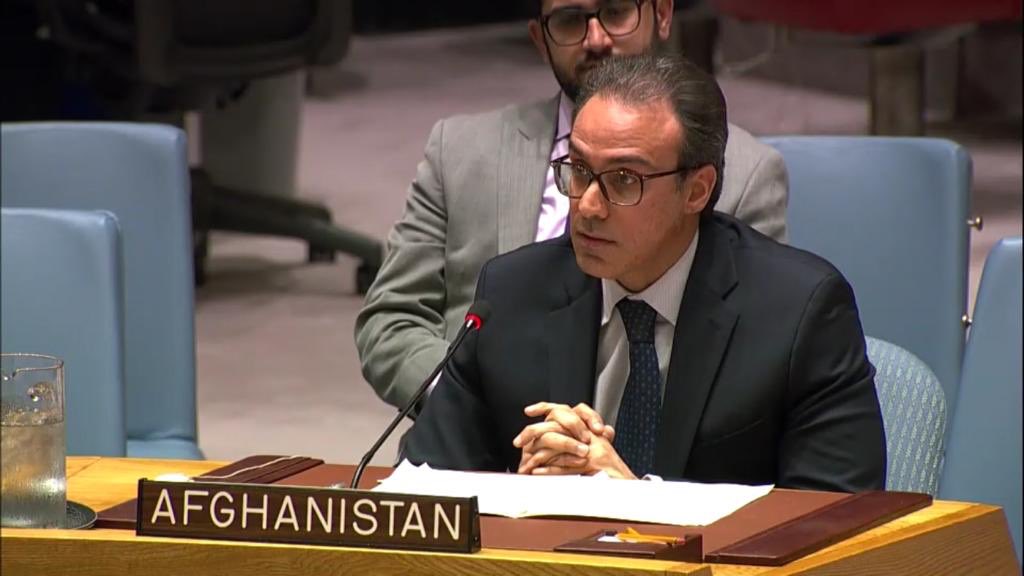
Credit: UN Photo/Fardin Waezi
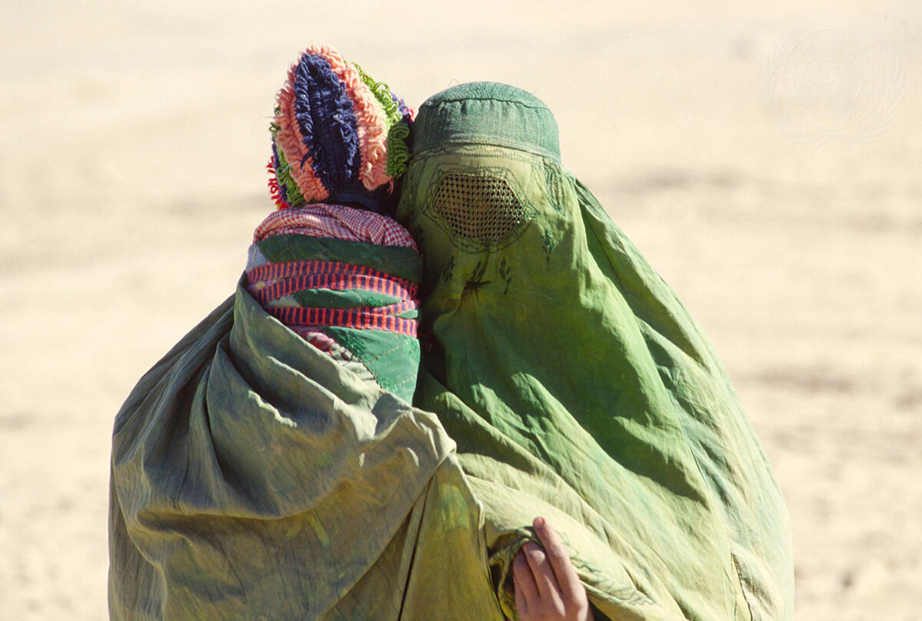
At the same time, the country’s human rights situation has continued to deteriorate. Reports of extrajudicial killings, arbitrary detention, restrictions on freedom of expression, and reprisals against former members of the Afghan security forces have persisted. Most alarming has been the systematic exclusion of women and girls from public life. The denial of education beyond the sixth grade, restrictions on women’s employment, and limitations on their participation in society are not merely domestic policy choices; they represent the denial of fundamental human rights and deprive Afghanistan of the human capital necessary for its long-term peace and prosperity.
The security dimension also remains deeply concerning. Despite Taliban assurances, regional and international terrorist organizations continue to maintain a presence in and operate from Afghanistan. This presents an ongoing threat not only to Afghanistan itself but also to neighboring states and the broader international community.
Underlying these challenges is a fundamental political crisis. Afghanistan continues to lack a credible, legitimate, and representative system of governance that reflects the country’s political, ethnic, and social diversity. The absence of such a political order has prevented the international community from conducting normal state-to-state relations with Afghanistan. To date, the Russian Federation remains the only country to have formally recognized the Taliban as the official government of Afghanistan.
Yet the Afghan people have neither remained silent nor passive to the situation. Across the country and throughout the diaspora, Afghan civil society organizations, political figures and groups, academics, women leaders, youth representatives, and professionals continue to convene, deliberate, and develop proposals for the country’s future. While differing on questions of politics, including the future system of governance, these diverse groups converge on one essential principle: Afghanistan’s long-term stability requires an inclusive and representative political system emerging from genuine intra-Afghan dialogue.
This conclusion is not unique to Afghan civil society. The importance of an inclusive political process leading to inclusive governance has repeatedly been emphasized by the United Nations, including in the Independent Assessment conducted pursuant to United Nations Security Council Resolution 2721. Lasting peace and stability cannot be achieved through exclusion, nor can they rest solely upon humanitarian assistance.
But five years of experience also make clear that humanitarian relief and engagement with the Taliban, however necessary, cannot by themselves resolve Afghanistan’s deeper political crisis. Without a broader process that gives other Afghan political and social actors a meaningful role in shaping the country’s future, the international community risks managing the consequences of instability rather than addressing its causes.
The Missing Political Strategy
Despite broad support for this objective, meaningful progress toward an Afghan-led political process has remained elusive. The principal obstacle has been the Taliban’s continued rejection of substantive dialogue with other Afghan political and social actors and its unwillingness to accept a broad-based and representative political set-up. This was demonstrated when the Taliban refused to participate in earlier phases of the UN-led Doha Process because representatives of Afghan civil society had been invited to participate. The message from the international community should therefore be clear and consistent: “The Taliban can be part of the solution to Afghanistan’s crisis, but they cannot constitute the solution by themselves.”
A second obstacle has been the lack of international consensus. While both Western governments and regional powers publicly support the objective of an inclusive political process, they remain divided over the sequencing, incentives, and practical mechanisms required to achieve it. These differences are further compounded by persistent divisions among the permanent members of the United Nations Security Council, preventing the emergence of a coherent international strategy and the appointment of a Special Coordinator to facilitate a credible Afghan-led and Afghan-owned political process.
A Broader Role for the UN
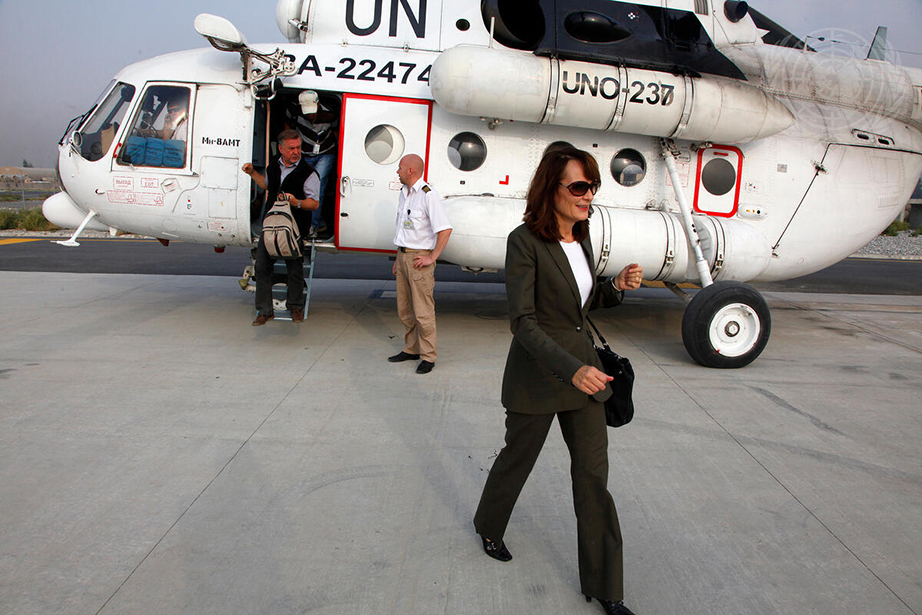
An opportunity for renewed momentum exists. In June, the Security Council renewed the mandate of the United Nations Assistance Mission in Afghanistan (UNAMA). The mandate rests on three interconnected pillars: monitoring and reporting on the human rights situation; coordinating humanitarian assistance; and engaging all Afghan stakeholders in support of a political process leading to inclusive governance. The third pillar, however, has received considerably less attention.
To date, much of UNAMA’s political engagement has centered on the Taliban, based on the expectation that sustained dialogue might encourage greater flexibility on fundamental issues, including human rights, women’s rights, and inclusive governance. However, five years of experience suggests that this approach has not produced tangible results. Engagement with the Taliban alone has not translated into meaningful progress on human rights, inclusive governance, or a shared foundation for Afghanistan’s future stability and prosperity. This reality calls not for the abandonment of engagement with the Taliban, but for a significant expansion of the United Nations’ political engagement beyond the group.
The time has come for UNAMA and the broader international community to engage far more systematically with the full spectrum of Afghan political and social actors—including political parties, civil society organizations, women’s networks, youth movements, academics, religious scholars, business leaders, and representatives of Afghanistan’s diverse ethnic communities. An Afghan-led political process cannot be genuinely inclusive if it is confined to dialogue with only one actor.
Afghanistan Beyond the Taliban
We must not forget that one of the most significant achievements of the international community’s two decades of engagement in Afghanistan was the emergence of a vibrant, educated, and dynamic civil society. A new generation of Afghans—drawn from every region, ethnic community, and social background—acquired experience in public administration, diplomacy, education, journalism, entrepreneurship, law, and civic leadership. Although many now live outside Afghanistan, they remain deeply committed to their country’s future.
Today, these networks are evolving from traditional civil society organizations into a mature political constituency. Across Europe, North America, Asia, and within Afghanistan itself, they are convening conferences, organizing consultations, and working to build common positions on constitutional principles, governance, human rights, and national reconciliation. Yesterday’s civil society is steadily transforming into tomorrow’s leadership of the country.
These efforts deserve recognition, support, and sustained international engagement. They represent one of Afghanistan’s greatest remaining assets and perhaps its strongest foundation for its future stability.
The United Nations has a history of seeking to facilitate a political solution to Afghanistan’s crises. Even prior to the Bonn Agreement of 2001, the United Nations Special Mission in Afghanistan (UNSMA), established in 1994, sought to mediate between Afghan parties and support a negotiated political settlement in coordination with the then government of Afghanistan. Successive Special Envoys and Representatives—including Mahmoud Mestiri, Norbert Holl, and Lakhdar Brahimi—pursued diplomatic initiatives, including the regional “6+2” Contact Group, recognizing that Afghanistan’s stability required a political solution, Afghan ownership, and sustained international support. Moreover, the creation of an authoritative Council to support the establishment of a joint negotiated council to transition Afghanistan towards a representative government was part of UNSMA’s core mandate. And of course, UN efforts on the political front for a comprehensive settlement continued during the post-2002 period up until the Taliban’s takeover. That objective remains just as important today.
The Cost of Waiting
Moreover, the costs of continued political exclusion should not be underestimated. A governing system that remains unwilling to respond to the legitimate aspirations of its citizens—particularly with respect to fundamental human rights, political participation, and inclusive governance—risks generating deeper public discontent and frustration. History has repeatedly shown that stability cannot be achieved or sustained through coercion alone. Where avenues for participation and inclusion are absent, resentment inevitably grows, increasing the risk of renewed conflict.
Recent developments in Afghanistan may already be pointing in that direction. During the past two weeks, reports have emerged of local uprisings and armed clashes against Taliban forces in several districts of Badakhshan Province, including incidents in which local administrative buildings and district offices were temporarily seized. While these events remain localized, they challenge the Taliban’s longstanding narrative of invincibility and serve as a reminder that public dissatisfaction can manifest itself in different ways.
If underlying political grievances remain unaddressed and opportunities for peaceful, inclusive dialogue and governance continue to be denied, similar episodes could emerge elsewhere in the country. These developments should reinforce—not diminish—the urgency of launching a credible UN-led political process before deeper instability takes hold.
The five-year anniversary should be the moment this changes. The UN should move without further delay on the appointment of a Special Coordinator to work in tandem with the UN Special Representative for Afghanistan to engage the full spectrum of Afghan political and social actors, not the Taliban alone, in support of a genuine, Afghan-led process.
That process should build on what Afghans have already started. Civil society leaders, women’s networks, and diaspora professionals have spent five years refusing to stop planning for their country’s future; the international community’s task now is to make room for that work, not replace it. Only an inclusive political settlement—Afghan-led, and finally Afghan-owned—can offer the Afghan people the peace, dignity, and stability they have waited far too long to see.
Youssof Ghafoorzai is the former ambassador of Afghanistan to the Kingdom of Norway. He also served several tenures at Afghanistan’s permanent mission to the United Nations, including as political counselor.
About The Author