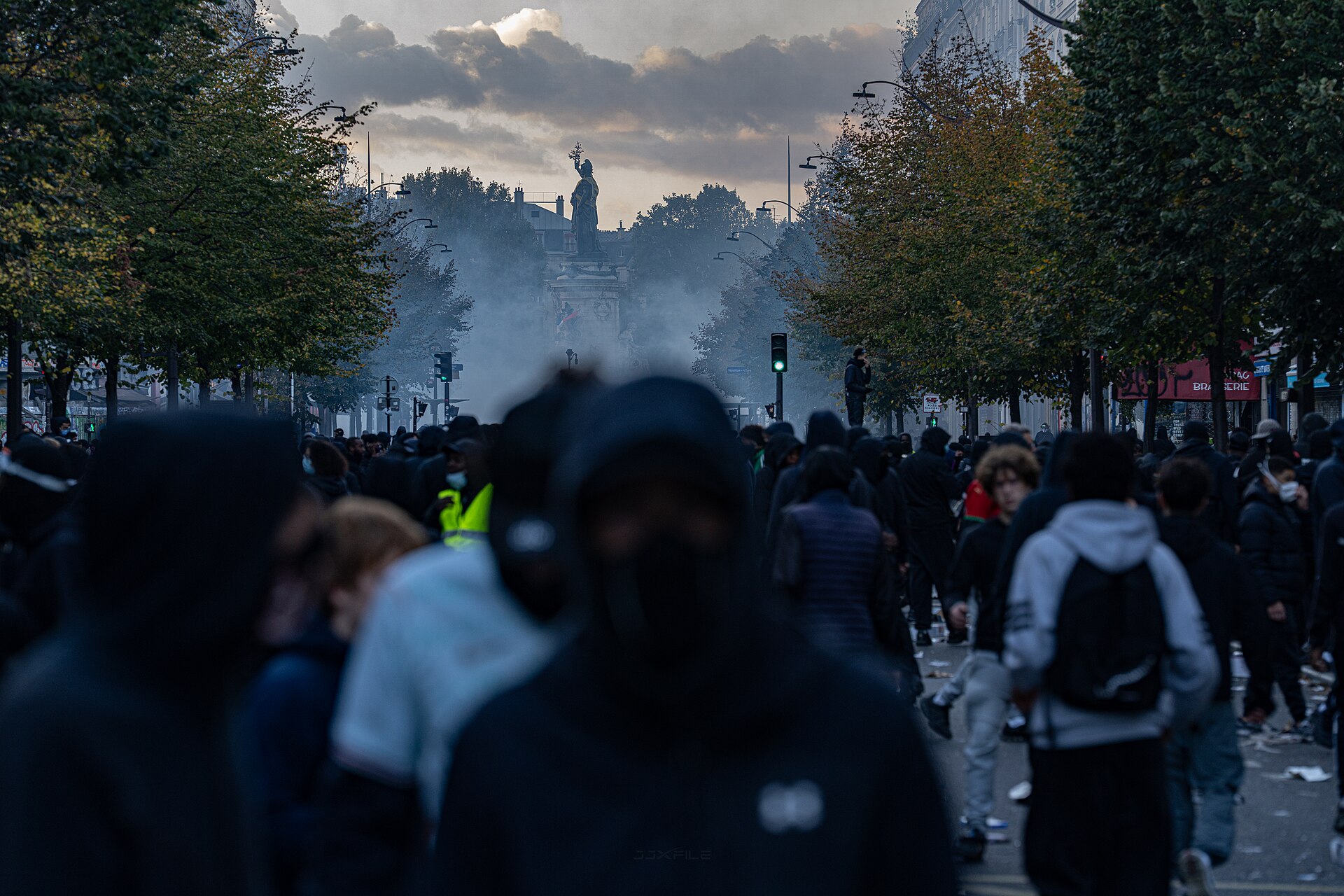
Young protesters are demanding a more affordable future, but violence in the streets and growing political polarization suggest a deeper crisis for France—and potentially Europe.
Paris is burning, or so it seems, and France along with it. Manifestations are nothing new in France but the fervor and violence may signal deep schisms in French society and in the Eurozone as well.
“How can French people do this to France?” French President Emmanuel Macron said in his address to the nation Monday evening of the day violent crowds destroyed and defaced historic monuments. The intentional burning to the ground of the Limoges townhall symbolized the intensity and gravity of the historic site that survived WWII and a Parisian synagogue, along with the looting and burning of stores and cars. Macron expressed not only “anger” but “shame.” Paris was burning.
In a country accustomed to demonstrations, Saturday morning’s Paris demonstrations morphed quickly to a nationwide riot: presumably 3,000 small stores and shots were damaged. The protests attracted anywhere from 550,000 to 800,000 protestors, depending on the source. During the days leading up to the National Day of Protest one could walk the streets near demonstrations unmolested. The mood was upbeat with vulgar chants to the tempo of a conga drum. High school students were exuberant and performative, demanding of all things more air conditioning in a country notorious for its objection to over-chilled cars and rooms.
What began as a familiar expression of French discontent has become a warning sign for Europe. Behind the burning cars and ransacked storefronts lie grievances that extend far beyond France: rising living costs, widening inequality and a generation increasingly disillusioned with its economic prospects. As similar frustrations fuel demonstrations across the continent, France’s unrest raises a larger question: Are these isolated outbreaks of anger, or the early signs of a political reckoning that could reshape Europe?
From Peaceful Demonstrations to Chaos
The Saturday morning 7:00 a.m. vigil was peaceful on the Pont Saint-Michel–the bridge to the University student district — to commemorate the 65th anniversary of the police crackdown of Algerian protestors.
By Sunday, the protests expanded to include a coalition of the gilets jaunes–farmers in yellow vests–who led protests before with the students and anti-Israel protesters. Although the marchers and all the groups sponsoring the demonstration cited domestic issues like affordability, lack of funding for secondary (not university) education, there was little doubt that the issues related to the Middle East (on Israel and Gaza), and signs of extremist views were part of the riots. As night fell, the looting and burning of shops and cars began. Not just in Paris, but in cities across France.
There is no end in sight to the protests: at least two more national days are set for October and November. Significantly, these protests come when President Macron—a centrist—is lame duck and very unpopular. Public disorder, according to political pundits, will favor the right led by Marine Le Pen and the effect on the upcoming April and May presidential elections is already making itself clear.
Ripple effect
With elections coming soon in Italy, Spain, and Poland, France’s protests are catching on. In Italy, Belgium, Albania, Portugal and Spain protests are occurring with similar themes of affordability, emblematic of a cross-generation feeling that the rich are getting richer and everyone else is paying the price–a theme in the November US midterm elections as well.
Former US State Department official Robert Wood told Envoy, “Many of the grievances expressed by French demonstrators have also been voiced in other European countries and beyond,” but it may be too early to tell if there will be a ripple effect around the world.
According to Wood, several European diplomats believe that the peaceful high school protests became violent because radical infiltrators took over, setting fires, destroying property and looting stores. On Monday Parisian law enforcement led by France’s Prime Minister Sébastien Lecornu set an overnight curfew in areas of Paris and banned overnight demonstrations – as did several other cities including Lille and Nice.
Larger implications
Alexis de Tocqueville forecast in 1848 that disorder is inevitable when economic and social grievances morph into riots, which are not isolated but are signs of structural cracks and precursors of major change. De Tocqueville urged, “…in God’s name, change the spirit of the government; for, I repeat, that spirit will lead you to the abyss.”
What happens next on the global affordability question is anyone’s guess, but the issues reflect a generational schism on priorities.
About The Author