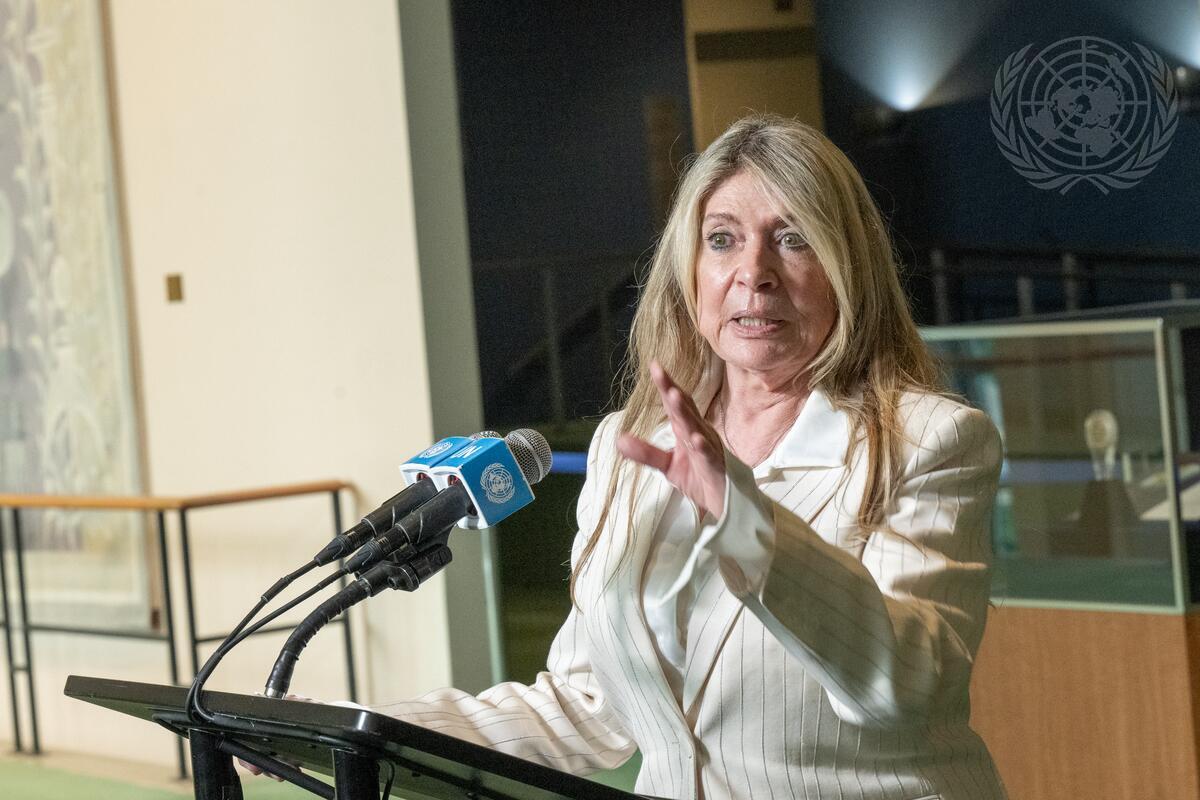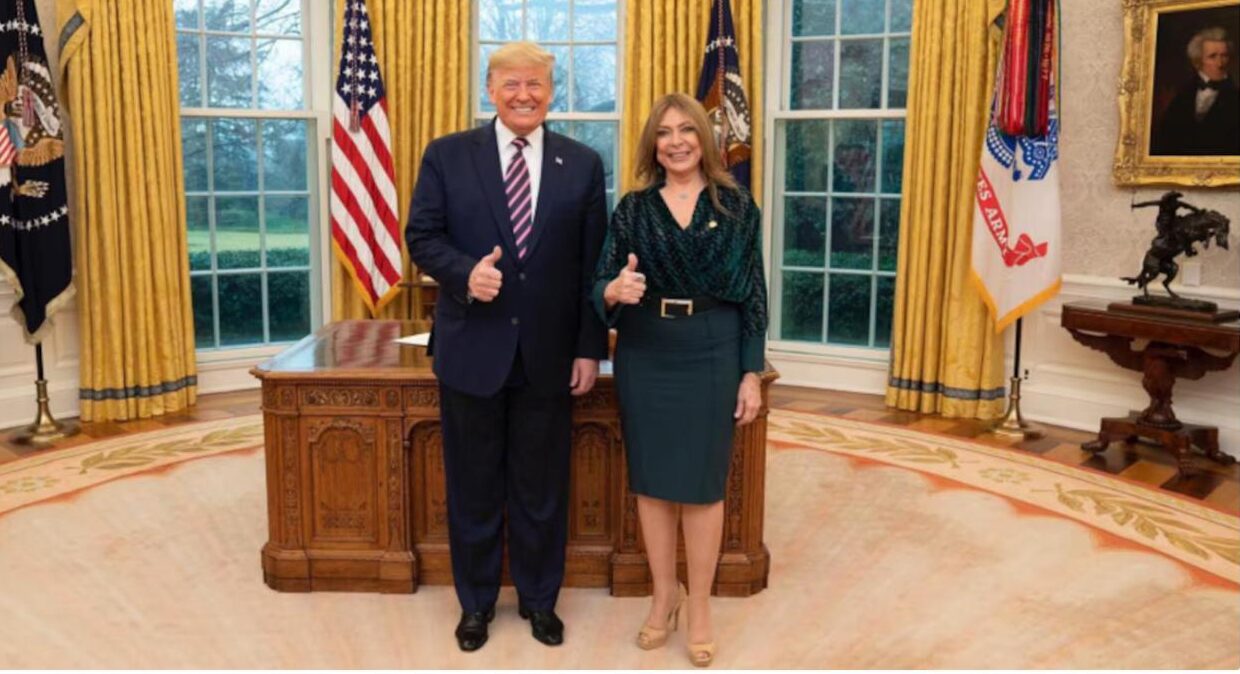
Ivonne A-Baki’s last-minute entry adds some drama to the UN leadership race, bringing Tonga’s backing, a claimed friendship with Donald Trump and fresh questions about Washington’s influence and the transparency of the selection process.
Three days before the Security Council’s next straw poll, a candidate calling herself Donald Trump’s friend crashed the race to lead the United Nations. Diplomat Ivonne A-Baki, 75, a former Ecuadorian diplomat and minister of foreign trade, became the eighth name in a contest that had followed a predictable script since last November: seven candidates, months of dialogues, straw polls parsed for P5 favor. On Tuesday, that script tore.
Not nominated by Ecuador. Not by Lebanon, her other passport. But by Tonga, a Polynesian kingdom of some 170 islands, roughly three dozen of them inhabited.
“I feel humbled and honored to announce that I am now an official candidate for the position of Secretary-General of the United Nations,” Baki posted on X, thanking Tonga’s King Tupou VI for “believing in a vision of peace and institutional renewal.”
That vision leans heavily on Trump. She has credited him with defusing a global crisis, playing the role she believes the UN itself should have: “We were on the brink of entering a Third World War if it weren’t for Donald Trump, who stepped in and saved us by securing negotiations,” she said last December in an interview with Radio Centro de Guayaquil, before adding — without further detail — that she now works to support his peace efforts in the Middle East.
The friendship is older, and more complicated, than her campaign trail retelling suggests. In her 2021 autobiography, My Destiny: Horrors of War and Aspirations for Peace, Baki writes that she first met Trump in 2000, two years into her tenure as her country’s first woman ambassador to Washington, and deepened the relationship through the Miss Universe pageant she helped organize in Ecuador in 2004. The book devotes considerable space to that friendship, but it isn’t hagiography: Baki has also said she criticized Trump, during his first term, for his support of Israel — specifically his 2017 decision to move the US Embassy from Tel Aviv to Jerusalem. It’s a detail her current campaign does not advertise.
Some advocates who have pushed for a woman to finally lead the UN, speaking on condition of anonymity, say their worry was never simply that a man would win, but that a candidate might emerge who fit the profile of Trump’s own government. They cited figures such as former attorney general Pam Bondi, a former homeland security secretary Kristi Noem, a former UN ambassador Nikki Haley as examples. Among them, the fear isn’t losing to a man, it’s winning with the wrong woman, someone who checks the box without the substance behind it.
GWL Voices does not comment on candidates. Their slogan, “Not any woman, not any man,” stands on its own: the goal isn’t a woman for the sake of a woman, but the right woman for the job.
Whether Baki, an Ecuadorian career diplomat rather than a Trump administration official, complicates or confirms the advocates’ fear is an open question.
By convention rather than by rule, P5 countries don’t nominate candidates. Their real leverage comes from the veto they don’t have to use — quietly shaping and promoting candidacies rather than fielding their own. So far in this race, none of the five has publicly signaled a favorite, despite Baki’s repeated assurances that she has Washington’s support. With Denmark’s Council consultations set for Friday, her timing puts that claim to its first real test: if the friendship is more than a talking point, this is where it would start to show. In a Security Council where five vetoes sit behind the throne, a candidate broadcasting a personal bond with a sitting American president isn’t making a subtle bet. It may be the only bet she has.
For close to a year, Baki had been searching for a state willing to nominate her. Ecuador, where she served as consul, ambassador, and minister across nine governments spanning the ideological map — from Jaime Roldós to Rafael Correa to Daniel Noboa, surviving every political swing — “was taking too long” to decide, she said in December. She assured interviewers around the same time that Lebanon, where she moved at 17 to marry the late Lebanese millionaire Sami A-Baki, would nominate her instead. It never did, for reasons that remain unclear.
Ecuador’s awkward doubling
Baki’s entry makes her the second Ecuadorian in the race, alongside María Fernanda Espinosa, nominated in May by Antigua and Barbuda. Neither was put forward by Ecuador. Noboa’s government has said nothing about Baki, just as it said nothing about Espinosa. Two credible contenders for the world’s most visible diplomatic post — and Ecuador’s flag nowhere near either of them. Envoy reached out to Ecuador’s UN mission for comment and received no response.
The process advocates worried about
That silence, and the manner of Baki’s entry, is exactly what Susana Malcorra — former Argentine foreign minister, GWL Voices co-founder, and herself a 2016 finalist for the job — has spent years flagging. “We have always advocated for transparency in the selection process for the UN Secretary-General,” she told Envoy. “There are many dimensions to that transparency; one of them is having a clear timeline that gives the process predictability.”
The missing piece, she said, is a deadline. “An essential element of that predictability is setting a deadline for the submission of candidacies. The absence of a closing date exposes the candidates already participating in the process to the emergence of new candidacies that haven’t gone through the same debates, dialogues, and exchanges with members of the General Assembly and the Security Council, nor with the global public.”
She went further on what an open door actually invites. “Keeping the door open indefinitely to new candidacies also leaves room for ‘last-minute’ interventions by the permanent members of the Security Council, allowing them to exercise their power in ways that can go beyond the spirit and transparency that should govern the process.” Until the very last day, candidacies can be withdrawn — and new ones introduced.
Self-nomination, notably, is not an option: a would-be candidate must be put forward by a member state, a rule made explicit a few years ago after an individual attempted to submit her own name without government backing and was ruled ineligible. Tonga is being actively courted by Washington as part of a broader campaign to draw Pacific nations away from China’s orbit — but no source has drawn a line between that courtship and Baki’s nomination. What’s documented instead is friction: Tonga was among more than 20 countries hit with new US visa restrictions in January 2026, prompting Tongan Prime Minister Lord Fakafānua to publicly call his country “collateral damage” of a Washington policy shift. If there’s a Washington-Nuku’alofa axis behind this nomination, it runs through Baki’s personal network, not through any evident state-to-state alignment.
The rolodex may be in her favor. The odds aren’t. In the modern, formalized selection process, candidates have generally relied on the backing of their own governments, making Baki’s nomination by a country other than either of her own unusual.
“Historically, presenting one’s own candidate was seen as a source of national pride and international projection for the country,” Malcorra said. “However, today, growing ideological polarization within states can mean that highly qualified figures, associated with a political current different from the government in power, are not considered viable for nomination by their own country. In those cases, other states can take on that role, recognizing the candidate’s merit beyond their national political context.” Ecuador’s silence on both its own candidates reads exactly that way.
What comes next
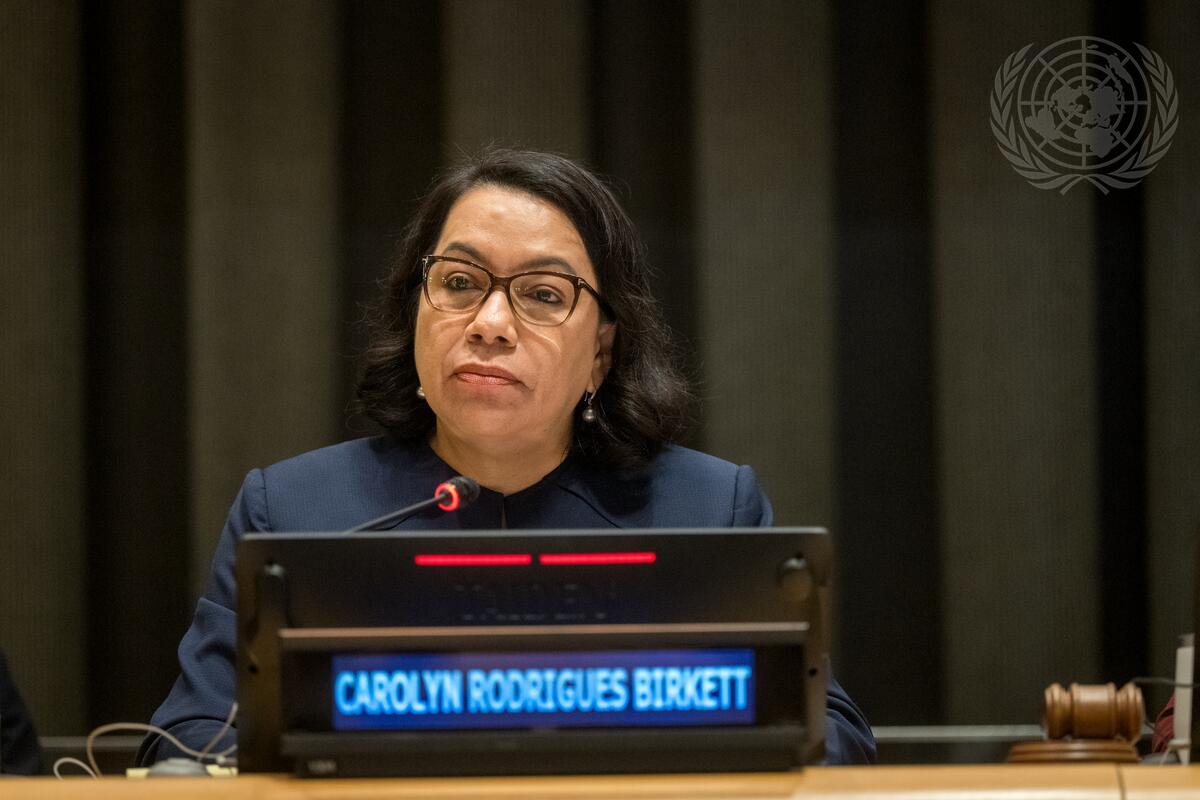
Olara Otunnu of Uganda, the seventh candidate to enter the race, nominated on July 24, holds his interactive dialogue this Wednesday — the same public vetting step every candidate before him has already completed. Baki’s dialogue is scheduled for Thursday, just one day before the Council’s expected next informal poll. The Council’s first straw poll, on July 30, put Grynspan narrowly ahead, followed by Guyana’s Carolyn Rodrigues-Birkett and Argentina’s Rafael Grossi. Denmark, chairing the Council this month, has another round of consultations set for Friday — the first real chance to see whether Baki’s claimed Washington support shows up as anything more than a talking point. The vote is secret, but typically leaks, letting observers gauge whether any candidate is facing a quiet veto from a P5 power. The process will repeat, round after round, until a consensus candidate emerges — historically sometime between late September and November — to go before the General Assembly, which has never voted against the Council’s recommendation.
History says this runs into the fall before anyone has a name. Baki’s arrival, right on the eve of the next straw poll, may stretch that further still.
This article has been updated to reflect the correct name of GWL Voices and Susana Malcorra’s title as a co-founder of GWL Voices
About The Author