Rival candidacies and ideological battles are turning what could have been a moment of regional unity into a test of Latin America’s deepest fractures.
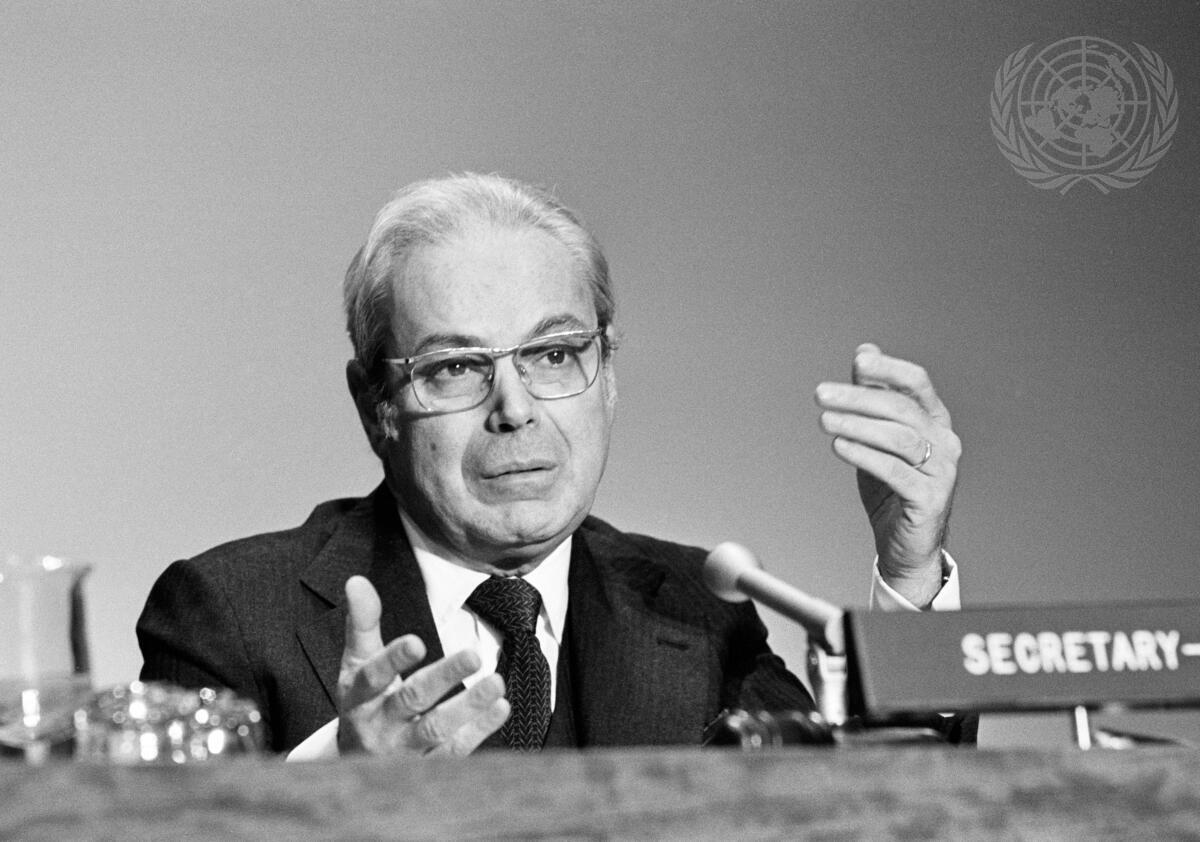
After more than 30 years, Latin America long awaited its chance to once again lead the UN. The last to hold the position of secretary-general of the organization, the Peruvian Javier Pérez de Cuéllar (1982-1992), had led the entity at a time when the region was trying to overcome its military regimes and adhere to international human rights pacts.
For years, the hope of diplomats and politicians in the region was that, when Latin America returned to the position, history would not repeat itself, with a region where democracy would be consolidated and a process of integration would be a reality.
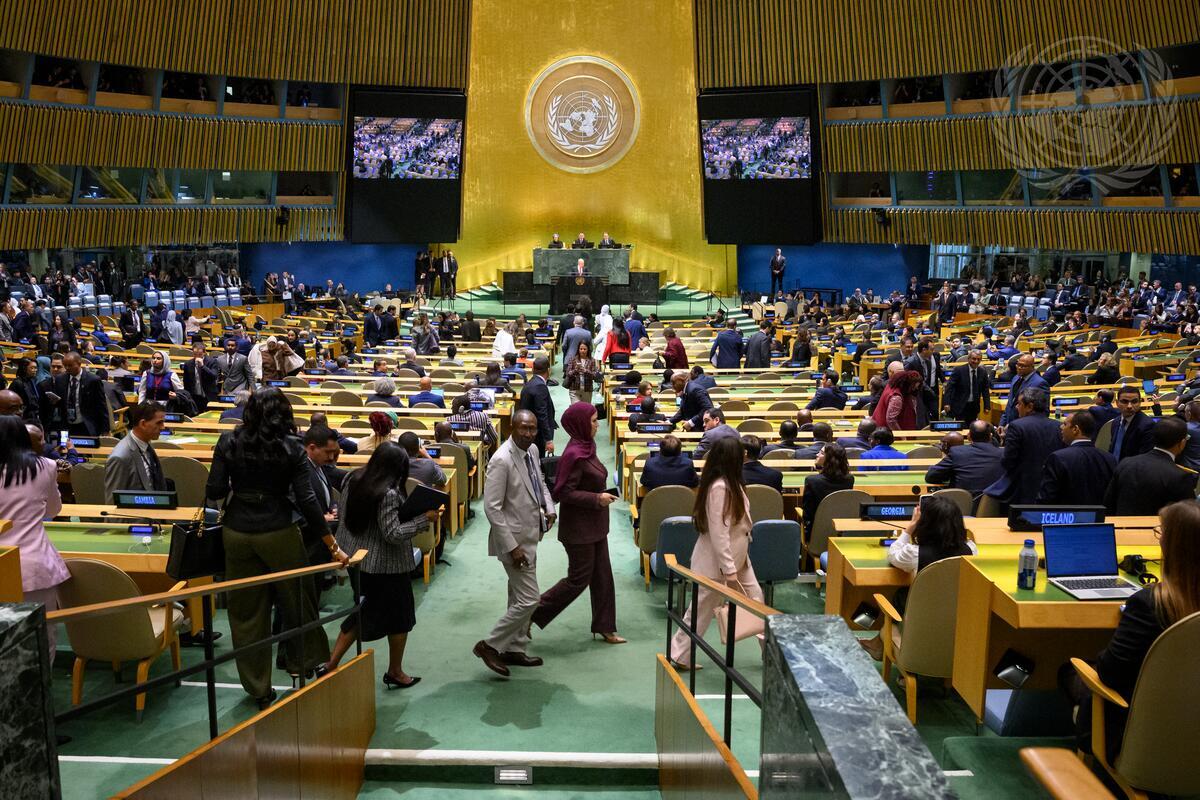
instead, the winds blew in another direction. While there is a consensus in the region that the new UN leadership should be held by a Latin American, the continent enters the process deeply divided. At stake is not only the fate of the UN, but also which political project in the region will prevail.
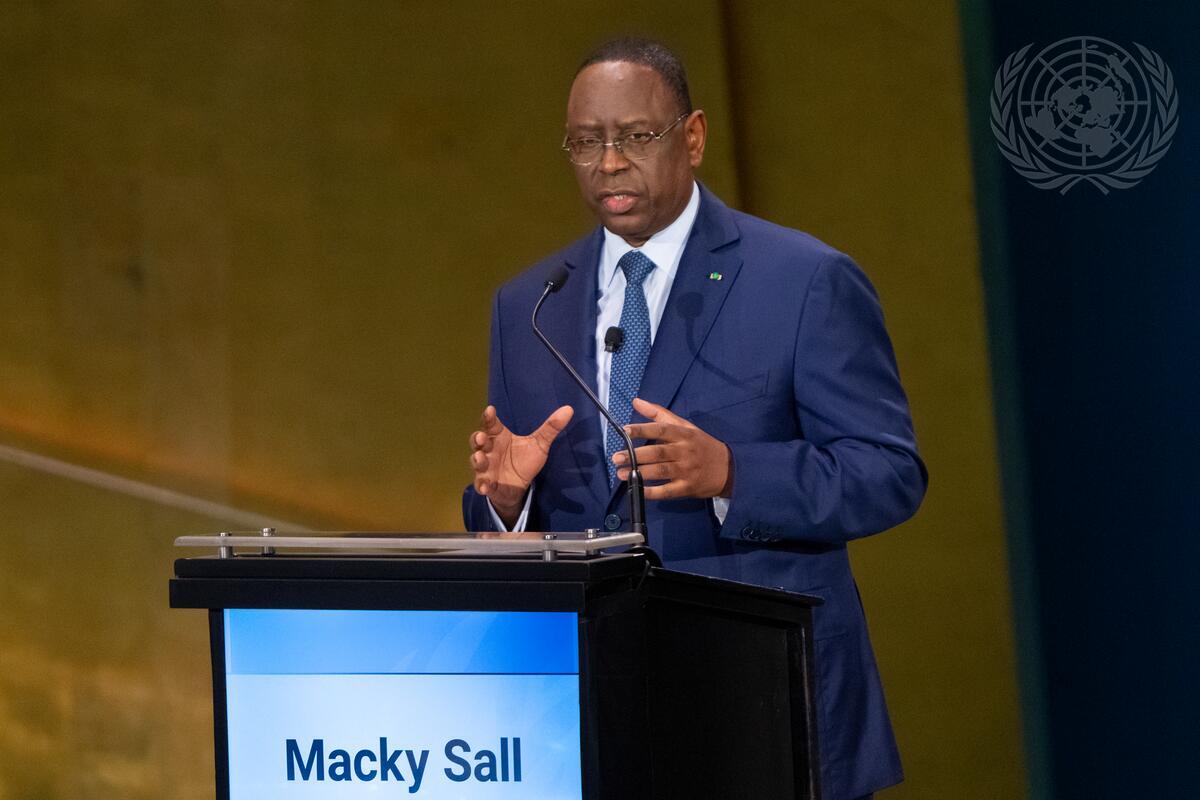
Officially, five candidates are vying for the position. Chilean Michelle Bachelet, Argentine Rafael Grossi, Ecuadorian Maria Fernanda Espinosa and Costa Rican Rebeca Grynspan, as well as the Senegalese Macky Sall. [Carolyn Rodrigues Birkett and Olara Otunnu announced their candidacies after this story was drafted.]
The process, however, reveals a deep chasm within the region itself. In a melancholic tone, in November 2025, Brazilian President Luiz Inácio Lula da Silva acknowledged the disillusionment with the idea of Latin American integration, an old dream of his.
“Latin America and the Caribbean are experiencing a profound crisis in their integration project,” he said in a speech in Colombia. “We have become a Balkanized and divided region again, more focused outwards than inwards,” he said.
“Intolerance is gaining strength and preventing different points of view from sitting at the same table. We are once again living with the threats of political extremism, information manipulation, and organized crime,” he added. “Personal projects of clinging to power undermine democracy. We are failing to cultivate our vocation for cooperation and allowing conflicts and ideological disputes to prevail. As a result, we live from meeting to meeting, full of ideas and initiatives that often never leave the drawing board. Our summits have become an empty ritual, from which the main regional leaders are absent,” he said.
It is under this umbrella that diplomats are mobilizing political efforts to make their case for their respective candidates. Rebeca Grynspan gained the trust of Europeans and Russians by negotiating, in absolute secrecy, the agreement that allowed Ukraine to continue exporting its agricultural products despite the war.
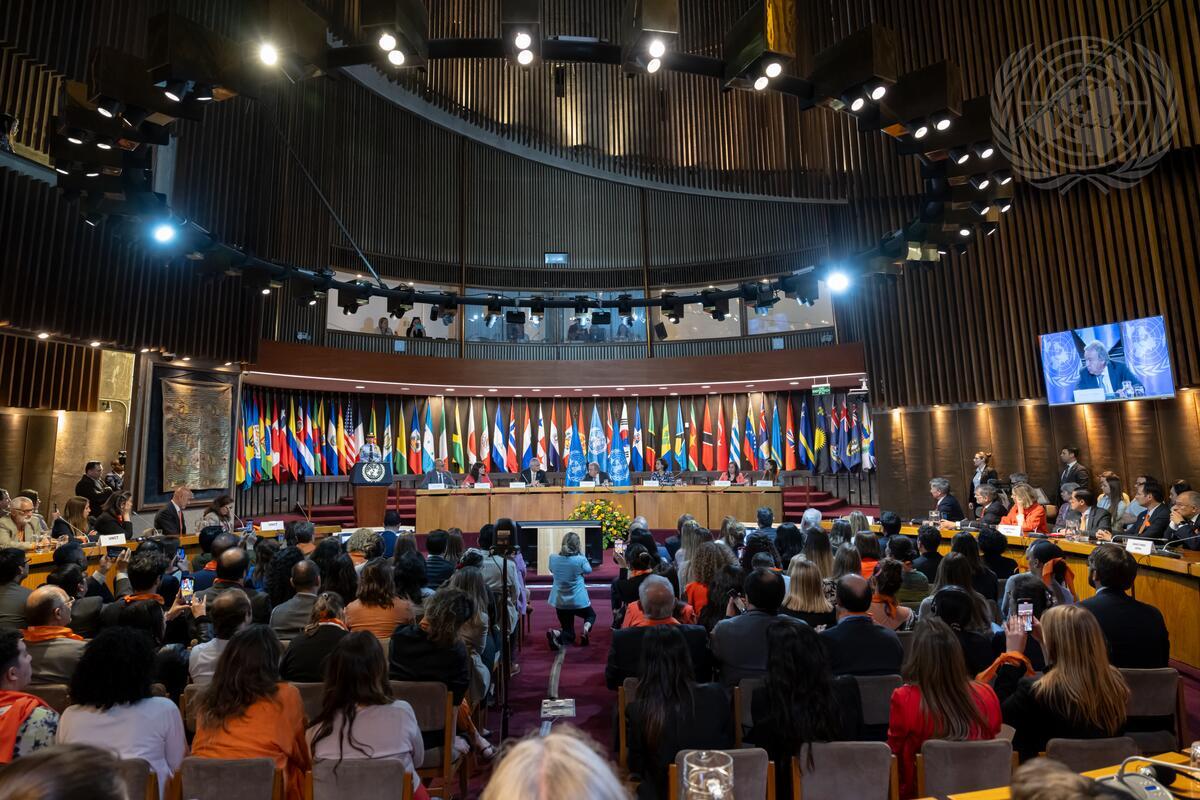
Espinosa’s candidacy is an example of the complex situation in Latin American politics. Former Foreign Minister of a progressive government, she has not yet been supported by her own country, Ecuador. Instead, she was nominated by Antigua and Barbuda. The move was seen as a strategic one, hoping to gather both Caribbean votes, as well as small developing islands, a group that has 39 UN member states and 18 associate members.
But no case exemplifies the gap between Latin American governments as much as the candidacy of Chilean Michelle Bachelet.
Supporters of Bachelet’s candidacy, the former president of Chile, argued that few people could surpass her credentials. She was the first female president in South America, the first female Minister of Defense, a political exile after Augusto Pinochet’s coup, and, in recent years, also held strategic positions within the UN itself.
Above all, she represented the vision of these governments regarding multilateralism and a potential brake on nationalist projects.
But the defeat of the progressive camp in the Chilean elections changed the story. The rise to power of José Antonio Kast, whose brother was a minister under Pinochet, ended Santiago’s support for Bachelet’s candidacy.
The Chilean remained in the race, securing support from Mexico and Brazil. Officially, Kast guaranteed he would not campaign for anyone else. But he did not need to. In a recent interview with the Argentine newspaper La Nación, fellow candidate Rafael Grossi, from Argentina, questioned the fact that the Chilean was nominated by Brazil and Mexico without the support of her own country.
Grossi’s barb was fired when he was questioned about Javier Milei’s support for his candidacy. “For me, it’s a source of pride. I am Argentine. I don’t understand someone who presents themselves under the flag of another country. I don’t understand it,” he said.
When asked if he was referring to Bachelet’s nomination, he replied: “I don’t criticize anyone, but I don’t understand it. I don’t judge anyone, but I am, on leave, a permanent and very proud member of the Argentine foreign service.” Grossi’s candidacy has stirred unease inside the UN system, where some diplomats question how the head of the International Atomic Energy Agency can openly campaign for the secretary-general’s job while remaining in charge of an agency at the center of some of the world’s most sensitive nuclear files, from Iran to Ukraine.
And then he added: “How am I going to look for a flag? On the contrary, I am grateful. And I thanked the President who was introduced to me because, as you know, he is skeptical of the United Nations. And he had very deep conversations with him about the UN, about why I wanted to be a candidate. He liked the conceptual discussions. I will try to explain that this is precisely the nature of the organization, that it has to change and that it is possible to change.”
In Mexico and Brazil, Grossi is seen as the person who undermines the hopes of progressive wings in Latin America for a broad consensus behind Bachelet. This alliance, they claim, would be important to win the support of other members of the Security Council. In May 2025, for example, then-Chilean President Gabriel Boric asked Xi Jinping to support Bachelet. The signal was that China would be “willing to consider,” provided she had broad support in the region.
Among diplomats, the expectation is that political divisions in Latin America will intensify with the dispute over the UN leadership. Paraguay, Ecuador, Peru, Bolivia, El Salvador, and a dozen Caribbean and Central American governments are being strongly pressured not to support Bachelet. Meanwhile, Milei and Grossi are trying to convince Trump to endorse the Argentine candidate.
A Race of Ideologies
The UN case has become, in essence, part of a new chapter in an approach by the ultraconservative wing to occupy international organizations. To control them became a strategic foreign policy priority to establish a path towards a redefinition of human rights values and a new world order. The battle over Bachelet, Grossi and the Latin American vote, in this way, is not an isolated diplomatic contest, but part of the same broader effort to decide whether multilateral institutions will remain constraints on power or become instruments of a new ideological order.
Beyond the UN and as part of this strategy, Trump and his far-right allies in Latin America have also launched an offensive to try to restrain the continent’s main human rights body, including blocking hearings on issues that may not be in the US’s interest.
Since the beginning of the year, the ultraconservative bloc has proposed a reform of the Inter-American Commission on Human Rights (IACHR), linked to the OAS.
In a document obtained by Envoy, the governments of the US, Argentina, El Salvador, Ecuador, Paraguay, and Peru present what is supposedly a project to “strengthen” the Commission. Within 12 months, the changes would aim to allegedly reduce delays in processing petitions and complaints, protect victims, optimize hearings, and provide greater transparency.
What appears to be merely an administrative proposal, however, has been interpreted as a rehearsal for control of the Commission and a blow to its independence. For Uruguay, Colombia, Mexico, and Brazil, human rights activists and observers, the move could jeopardize the Commission’s independence.
The far-right initiative comes at a time when Trump is establishing his “Shield for the Americas,” an initiative officially aimed at creating an alliance to fight drug trafficking in the region. Brazilian diplomats and observers suspect that the project goes far beyond organized crime and is a way to consolidate US hegemony on the continent.
One element is the dismantling and control of bodies and treaties that could place any kind of limit on the actions of the US and its allies in the region. The proposal, therefore, was received in many corners as part of a political instrumentalization by the Commission of the far-right movements in Latin America.
In February, the reality is that the Trump administration already demonstrated that it will not tolerate action by the Commission against its practices. The body held a hearing to receive complaints against the Trump administration regarding its actions against boats allegedly used by drug traffickers in the region. More than 100 people were killed.
In a statement, however, the State Department did not hesitate to attack the initiative, which, during the meeting, heard complaints from American activists, such as the American Civil Liberties Union (ACLU).
“Today, the Inter-American Commission on Human Rights (IACHR) far exceeded its mandate and acted beyond its competence by holding a thematic hearing on US counterterrorism operations in the Caribbean and the Eastern Pacific,” the State Department said.
“The IACHR allowed the ACLU to exploit the hearing to try to force the United States to prematurely disclose arguments and evidence in two pending cases before US federal courts,” it stated.
In another passage, the statement affirms that the IACHR “does not have the competence to analyze the issues under discussion, which concern the interpretation and application of international humanitarian law, and not human rights law, and should not be used as an instrument in a strategy.”
As part of this effort to transform regional institutions into instruments of a new ideological order, the US has also managed to get an ally elected as part of the IACHR. The chosen candidate was Cuban Rosa María Payá, daughter of an opponent of the Havana regime.
After securing the position with the support of the US diplomatic machine, she broke all protocols of impartiality as commissioner and was one of the guests at the inauguration of Bolivian President Rodrigo Paz, a right-winger.
“We offer our support so that his new government can dismantle the interference of the Cuban regime in state institutions. The new Bolivia, which is opening itself to the world, unites with the nations that defend freedom,” stated the new commissioner.
She also met with Jeanine Añez, the ousted president prosecuted over her disputed rise to power and accused over the deadly Sacaba and Senkata crackdowns. “Her story illustrates that this struggle is continental: against the interference of the Cuban regime, the dictatorships and their injustices. President Añez personified the integrity of those who did not bow before the political vengeance of the Castro regime and its accomplices,” Payá wrote.
In social media posts, she also marked “the day against communism” and attacked Nicolas Maduro. Payá celebrated the selection of Venezuelan Maria Corina Machado as the winner of the Nobel Peace Prize, a decision that has drawn criticism in Norway. “Thank you for showing the world that FREEDOM is essential to protect PEACE,” the commissioner wrote.
What draws the attention of other Commission officials, however, is the selective nature of her indignation.
During this period since Payá took office, she made no comments on social media about the attacks against immigrants in the US, the deportations by ICE, the Trump administration’s censorship of science or the attacks against the press. On social media, her selectivity in denouncing violations is further evidenced by a photo from November of 2025, in which she is embracing Iván Espinosa de los Monteros, former secretary general of the Vox party, the political heirs of General Franco in Spain.
For the State Department in the US, however, her election was a matter to be celebrated.
Nothing, however, compares to the political impact the election of the head of the UN would have. It is true that the future secretary-general will face unprecedented challenges. The chosen candidate will take over an entity without financial resources and which is being forced to shrink in order to survive.
One of the concerns among diplomats is that the deep distrust between governments will be transferred to the choice of the new leadership. A process in which a veto from one side or the other leads to a lack of decision “would be catastrophic,” an experienced ambassador said.
A stalemate and a vacant position at the highest post in the UN would be another nail in the coffin for the institution’s credibility, already seriously shaken.
For Latin America, the dispute is also a domestic fight over the region’s destiny.
About The Author