With elections looming in Israel and new leadership on the horizon at the UN, an outgoing Israeli diplomat examines what has driven the two sides apart—and what it would take to repair their relationship.
I arrived in New York to start my position at the Mission of Israel to the UN in the summer of 2022. At the time, the UN was still dealing with the aftereffects of the COVID-19 pandemic, highly focused on the Russian invasion of Ukraine, and already facing questions about the UN’s role in these uncertain times, with dispersed centres of power and shifting global structures. The Hamas terrorist attack on Israel in October 2023, and the ensuing war in Gaza, to a large extent, overshadowed the UN in the following years.
A significant contributing factor to this intense and almost obsessive dealing with Israel and the Middle East conflict lies, to a large extent, in the tumultuous and often conflictual relations between Israel and the UN. I was here at the UN throughout this period and witnessed firsthand how underlying tensions and misperceptions, distortions, and negative reactions developed and were sometimes purposely perpetuated to serve particular interests. There were also instances where the rampant anti-Israel sentiment on the streets filtered and impacted actions and statements in the UN. People working at the UN felt they could express their own personal opinions about the situation, often far exceeding the accepted and expected standards of objectivity, neutrality and professionalism of the organization.
After completing my four-year post at the Mission this summer, I wanted to attempt to assess some of the reasons why the UN and Israel view each other negatively, why the strained gaps in perceptions, politics, and what is the reality?
One of the most troubling changes I witnessed over the past four years was the erosion of diplomacy itself. In too many Security Council meetings, representatives no longer appeared to be speaking to one another, but past one another. Delegations delivered prepared statements, repeated established positions, and often paid little attention to what others were saying. The Council chamber, which should be a place for negotiation, persuasion, and quiet compromise, increasingly became a stage for public confrontation. At times, exchanges descended into accusations, interruptions, and shouting matches. When diplomats stop listening, the possibility of narrowing differences disappears, and meetings become exercises in performance rather than problem-solving. This deterioration has affected far more than the debate over Israel; it reflects a broader weakening of the diplomatic culture on which the UN depends.
Without going into an in-depth analysis of what is the UN, is it member states, agencies, bodies, secretariat, or individuals, or a collective of all of the players? This piece will use the term UN in a broad general sense, in an attempt to simplify matters.
Suspicion from the beginning
From the time Israel joined the UN in 1949, the relationship between Israel and the UN has been marked by deep mutual suspicion. In Israel, the UN is often perceived as biased and hostile. At the UN, Israel is frequently criticized and subject to more resolutions than any other country. The question is whether these images are real, manufactured, or based on facts. The answer involves history, politics, and how both parties function. There are several reasons why the UN has such a negative image among Israelis.
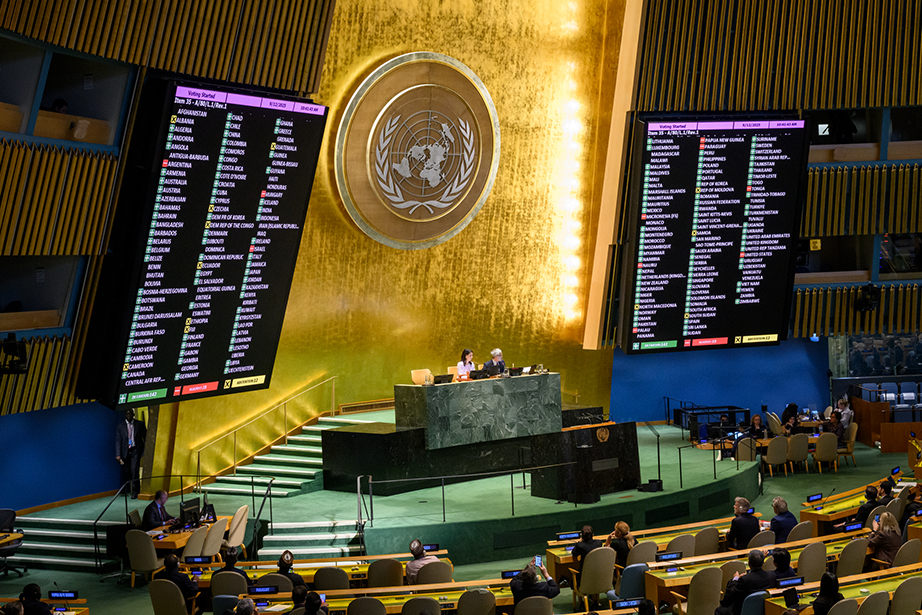
There is a historical memory, whereby many Israelis point to 1975, when the UN General Assembly passed Resolution 3379, declaring that “Zionism is a form of racism.” Though the resolution was finally revoked in 1991, the episode left lasting damage. For many Israelis, it cemented the idea that the UN equates their national movement with illegitimacy.
Israelis follow the voting patterns in the General Assembly and Human Rights Council and see dozens of resolutions each year critical of Israel, often more than the rest of the world combined. UN bodies like the Human Rights Council have a standing agenda item focused solely on Israel, namely Agenda Item 7, when no other country has a dedicated item, even States with abysmal human rights records. This fuels a perception of selective scrutiny.
Many misperceptions and discussions evolve around Israel’s security concerns. After the 2006 Lebanon War, the UN peacekeeping force UNIFIL was tasked with preventing Hezbollah rearmament in south Lebanon. Israeli officials argue that Hezbollah built tunnels and stockpiled weapons under UNIFIL’s watch, reducing trust in UN effectiveness on security. This claim continues until today, in particular in light of the planned termination of UNIFIL’s mandate at the end of 2026.
In particular, after Israel presented evidence that many UN Relief and Works Agency for Palestinian refugees (UNRWA) workers were and are still today active members of Hamas, a great rift developed between my country and the UN. UNRWA operates schools and clinics in Gaza and the West Bank. Over the years, Israeli governments have accused UNRWA of employing Hamas members and allowing its facilities to be used by militants. Reports of textbooks with anti-Israel content and aspiring for martyrdom reinforce this view. Supporters of UNRWA argue it provides essential aid and that issues are investigated. Still, in Israeli public opinion, and with recent legislation by the Knesset, the Agency is perceived as closely tied to the conflict and its perpetuation.
A Unique Position at the UN
To the question of why Israel has a controversial image at the UN, one could look to several issues.
According to UN practice, since 1967, Israel has controlled the West Bank, East Jerusalem, and Gaza. Multiple UN Security Council and General Assembly resolutions consider settlements illegal under international law, citing the Fourth Geneva Convention. Israel disputes this interpretation, arguing the territories are “disputed,” not “occupied.” This policy gap creates recurring clashes and fundamental disagreements.
The civilian casualties in conflicts are another area of major disagreement. UN agencies report on wars in Gaza and Lebanon. High civilian death tolls, restrictions on aid, and strikes on UN facilities during fighting, lead to condemnation in UN reports and debates. Israel says it acts in self-defense against Hamas and Hezbollah, who purposely embed themselves in civilian, medical, and UN facilities and areas. The leads to many disagreements is over proportionality and accountability.
Bloc voting dynamics have a substantial impact on Israel’s standing and sense of anti-Israel bias. The UN has 193 member states. The 57-member Organization of Islamic Cooperation and the 22-member Arab League often vote as blocs on Israel-related issues. Within the 120 or so members of the Non-Aligned Movement, many dominant members have no diplomatic relations or do not recognize Israel. As a result, resolutions critical of Israel pass by large margins. Israel argues this reflects politics, not an objective or neutral assessment of conduct.
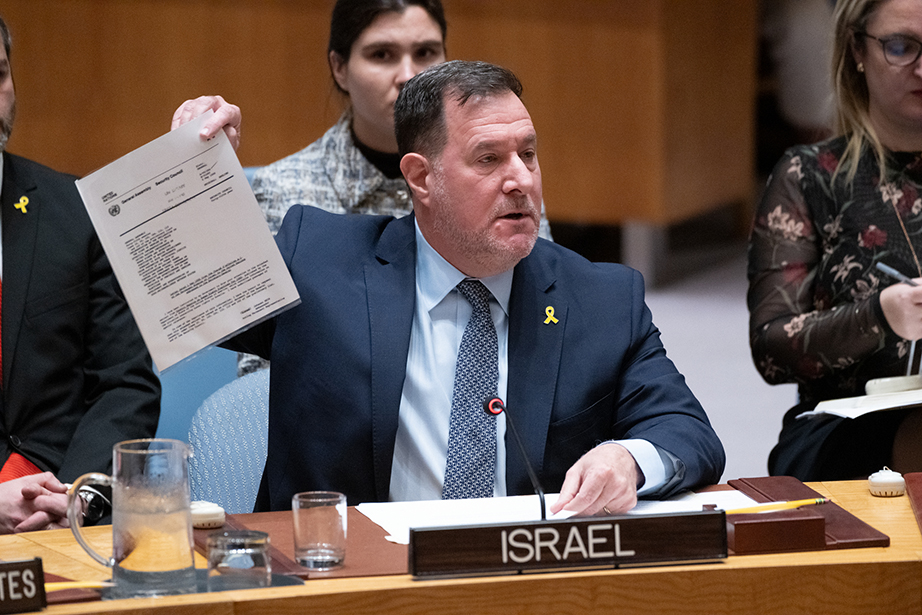
Israel also faces a structural disadvantage because it does not naturally belong to any of the UN’s regional blocs. Geographically, Israel is part of the Middle East, yet it is not included in the Asia-Pacific Group alongside its neighbors. Instead, it belongs to the Western European and Others Group, or WEOG, which allows it to compete for elected positions, including a non-permanent seat on the Security Council. But Israel does not always benefit from the same automatic regional solidarity or coordinated voting support enjoyed by many other states. As a result, Israeli diplomats often have to negotiate support country by country and vote by vote, building coalitions individually in an institution where regional groupings frequently determine candidacies, endorsements, and electoral outcomes. This makes navigating the UN particularly difficult and reinforces Israel’s sense that it operates within the system as an outsider.
In addition, the relations between Israel and the UN are often accompanied by strong diplomatic rhetoric. Due to the strained sentiments, as described above, statements by Israeli officials about the UN tend to be confrontational, and statements by UN officials toward Israeli policy are often blunt. The tone reinforces existing mistrust on both sides.
In such a reality, we should ask ourselves whether the images and character of the relationships are real, deceptive, or fact-based. Each side would, of course, claim that the negative images are based on real events and documents, but each side emphasizes different facts and data.
On the one hand, the numbers are real. It’s factual that Israel is subject to more country-specific General Assembly and Human Rights Council resolutions than North Korea, Iran, or Syria. On the other hand, it’s also factual that UN reports document settlement expansion and civilian harm in Gaza. Both datasets exist. The dispute is over why and how data and facts are collected and verified.
One could claim that perception is shaped by the framing. In Israel, UN criticism is often seen as proof of bias rooted in antisemitism or anti-Zionism. At the UN, Israel’s objections are often seen as a refusal to accept accountability. Each side filters events through its own security and legal lens.
One also needs to look at intentions, or as some might define it, as deception vs. interpretation. There are documented cases of misinformation in wartime, including from both Hamas and Israeli sources. UN agencies have had to retract or correct claims. Israeli officials have also been caught overstating evidence. So “deception” exists, but it’s not the whole story. At the end of the day, the larger issue is competing legal and historical narratives.
In addition, there are structural factors that contribute to the tensions. The UN is a political body of states, not a court, and votes reflect alliances and interests. Israel is a small state with few natural allies in the General Assembly until recent years. That structural reality produces outcomes that look like targeting, even when individual votes are about specific policies.
We could conclude that the mutual negative image is real in the sense that it’s felt and acted upon by both sides. It’s based on facts that each side selects and interprets differently. It’s also amplified by politics, media, and the unresolved Israeli-Palestinian conflict. Until there’s progress on that core dispute, the UN and Israel will likely keep reading the same events and reaching opposite conclusions.
Despite the deeply divided and strained relations that peaked over the last few years, with endless Security Council and General Assembly Emergency Sessions on the conflict, and an extremely anti-Israel sentiment that was prevalent at the UN, Israel still considers it important to be present and active at the UN, to tell our story and promote our narrative. Israel continues to be willing to share its expertise and technological solutions to support and work together with partners to help resolve some of the global challenges our world is facing.
As the UN evolves and adapts to the current global system, perhaps the relations between Israel and the UN can also develop and mature into more positive dynamics and better understanding.
Ambassador Jonathan Miller currently served as the Deputy Permanent Representative for the Permanent Mission of Israel to the United Nations.
About The Author