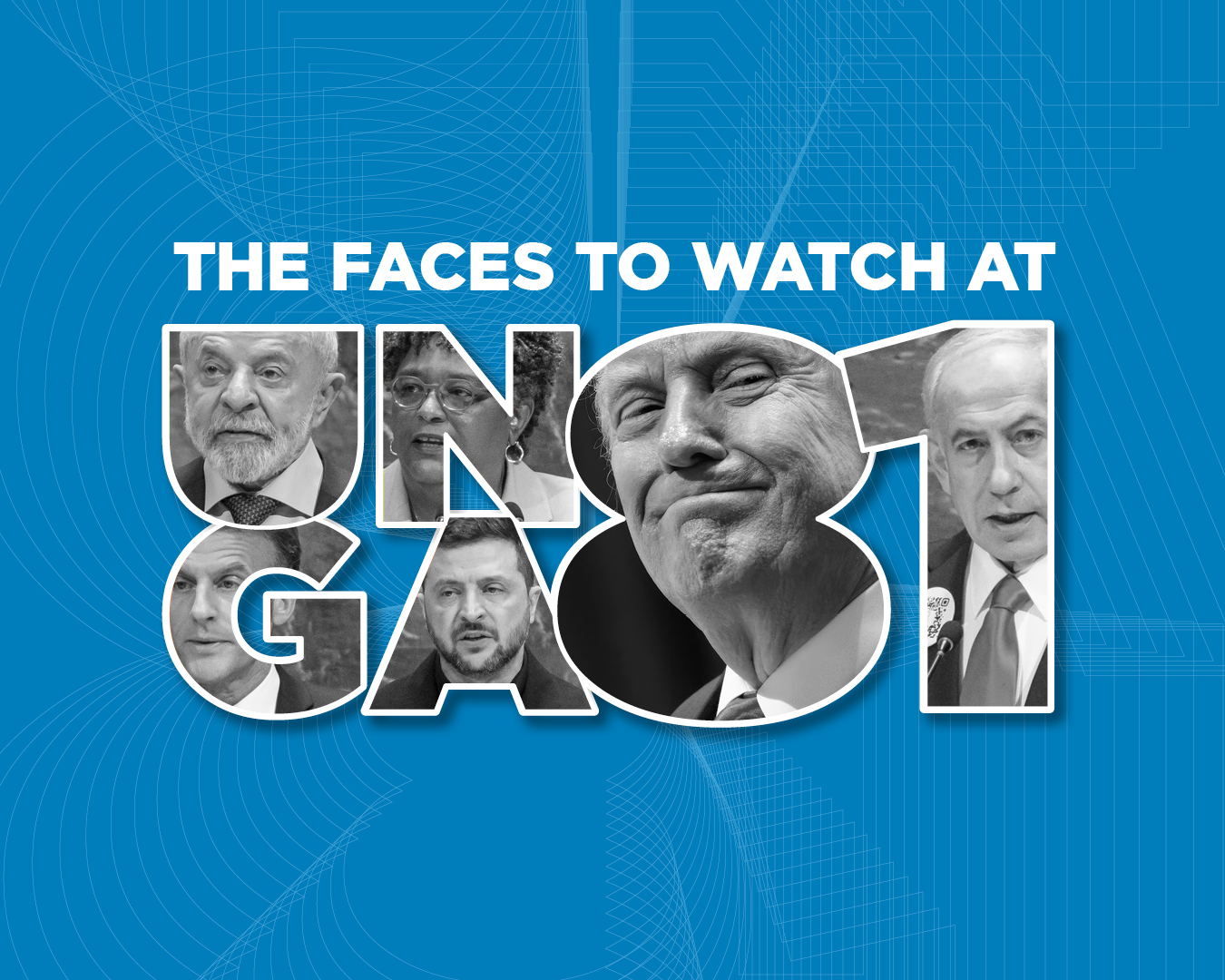
Some are arriving for the first time. Others may be saying goodbye. These are the leaders poised to shape the politics, drama and diplomacy of this year’s General Assembly.
Part of the fun of covering the United Nations General Assembly High-Level Debate (UNGA) as a journalist involves watching world leaders discuss issues tackled by the UN while attempting to cash in political capital with their domestic audiences.
UNGA serves multiple purposes for the dignitaries who visit New York in September. For some, it is positioning themselves for political clout at home. For others, it is making an initial appearance before a world audience and setting the tone for their tenure; for others it is a chance to add a coda as their careers wind down. Many broker backroom deals. UNGA has the power of making or breaking a politician’s legacy. This year may also include the complicated discussions around who the next UN chief will be, which is overwhelmingly in the hands of the P5.
This year’s debate, signalling the opening of the 81st General Assembly, will take place in New York City September 22-26, and finish on the 28th. The theme is “Restoring Trust, Managing Transformation: A United Nations that Delivers for All.”
“Despite talk about the UN being in decline, leaders come not for speeches but because they need to work it out in the back rooms,” said Richard Gowan, director for global issues and institutions at the International Crisis Group.
“UNGA is a vehicle to launch something or a vehicle to consolidate something” said Jordan Street, head of the US/UN program for Saferworld. “It is not the way that problems are solved, but it’s a good place to drive awareness of that problem or issue.”
Traditionally, the debate begins with the secretary-general, the President of the General Assembly, Brazil and the US. This year, three out of four in that line-up set up tensions that are more apt for the Bravo Network, home of the Real Housewives franchise, than C-SPAN and PBS.
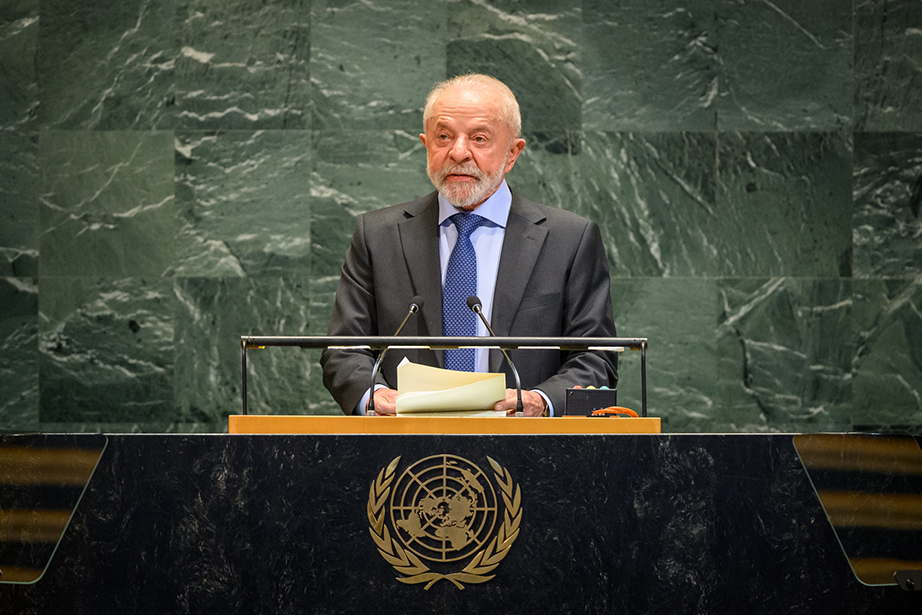
BRAZIL
Polar opposites politically, Brazilian President Luiz Inácio Lula da Silva and US President Donald Trump have clashed over trade disputes, diplomatic tensions and Trump’s support for Jair Bolsonaro, a far-right former president now serving a 27-year prison sentence for plotting a coup to remain in power after losing the 2022 election. Da Silva, commonly referred to as Lula, will most likely provide an opening that leans significantly left of Trump.
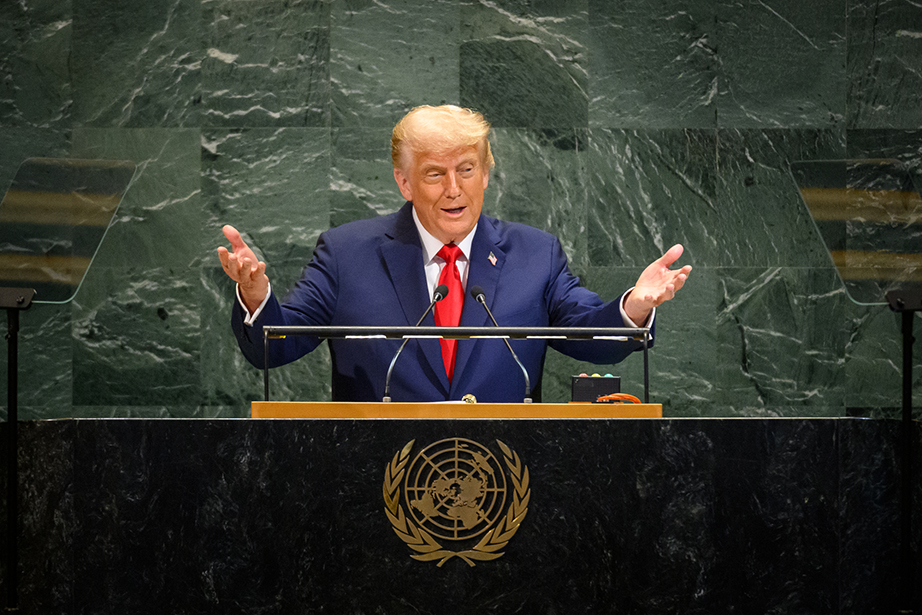
THE UNITED STATES
In his first term in office, Trump delivered UNGA speeches that ran a spectrum between charismatic ad-libbing and rote recitation of prepared texts. Last year, Trump’s bout with an escalator and later a teleprompter overshadowed his 57-minute speech. It is fully reasonable that this year, Trump will remain a chaos agent, threatening the UN through financial cuts and disparaging its role in mediation and conflict resolution, two things he seems to eschew wholeheartedly.
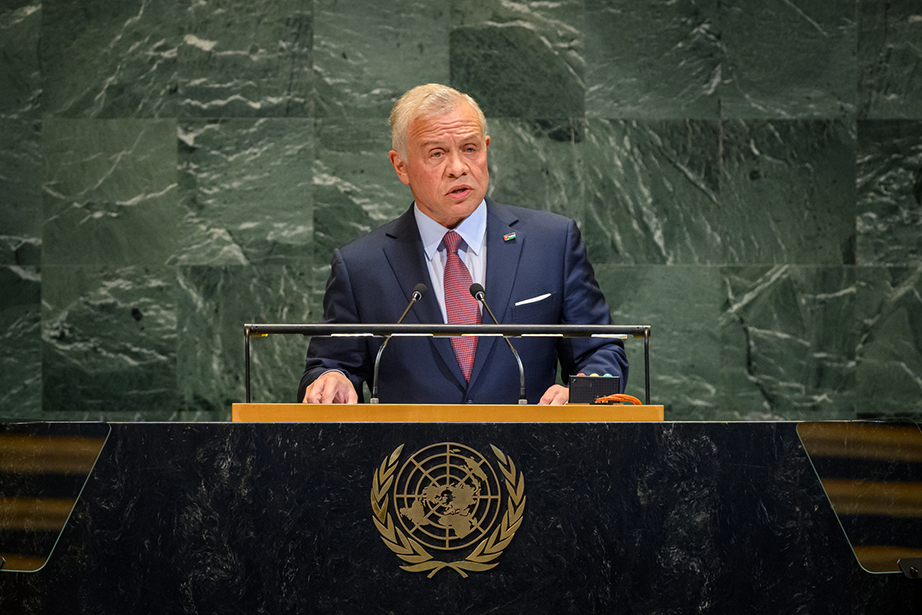
JORDAN
At UNGA, Jordan usually offers a two-fer. Queen Rania often speaks at high-level side events addressing humanitarian crises, and human rights; in the past, she has focused on the specific threats to women in Gaza. Last year at the rostrum her husband King Abdullah II stood as a champion for the Palestinian people, calling the ongoing war in Gaza “one of the darkest moments” in UN history, adding: “How long will we be satisfied with condemnation after condemnation without concrete action?”
According to the Council on Foreign Relations, Jordan has given the most humanitarian assistance to Gaza, providing over $425 million. Look for Abdullah to address the crucial role of small states in global leadership, while again making a plea for peace through the two-state solution. Last year, the royal joined other Arab and Middle Eastern leaders meeting with Trump to discuss Gaza. Another such meeting is highly likely, as Trump and Israel Prime Minister Benjamin Netanyahu have openly disagreed on the conflict lately.
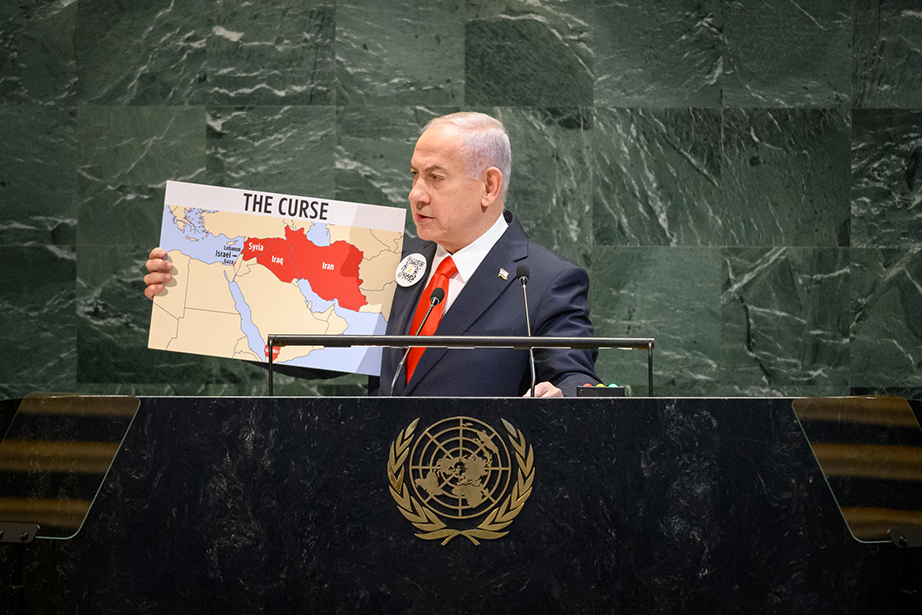
Israel and Palestine
Israeli Prime Minister Benjamin Netanyahu, much like Trump, appreciates any moment in the public eye.
This year, extra drama surrounds his visit. Mayor Zohran Mamdani of New York has publicly stated that Netanyahu is not welcome, in part based on his outstanding 2024 International Criminal Court arrest warrant. Netanyahu responded by claiming that Mamdani was “fomenting hate.”
“They’re both gaining a lot of political exposure from this,” said Daniel Safran-Hon, a veteran of the UN secretariat who now advises on UN issues, “Now Netanyahu cannot not come, if he doesn’t come it’s like he loses to Mamdani. They’re going to fight this out.”
Palestinian President Mahmoud Abbas, one of the oldest world leaders at 90, has called for a general election this year. Palestine has faced near-constant war with Israel and occupation during his time in office. Speaking at the UN annual event offers a global audience to reconcile his legacy.
For the second year in a row, Abbas was not issued a visa to travel to the US. Last year, the United States denied visas to Abbas and some 80 other Palestinian Authority and Palestinian Liberation Organization officials ahead of the General Assembly. The Assembly then voted 145-5 to let him address the session by pre-recorded video instead.
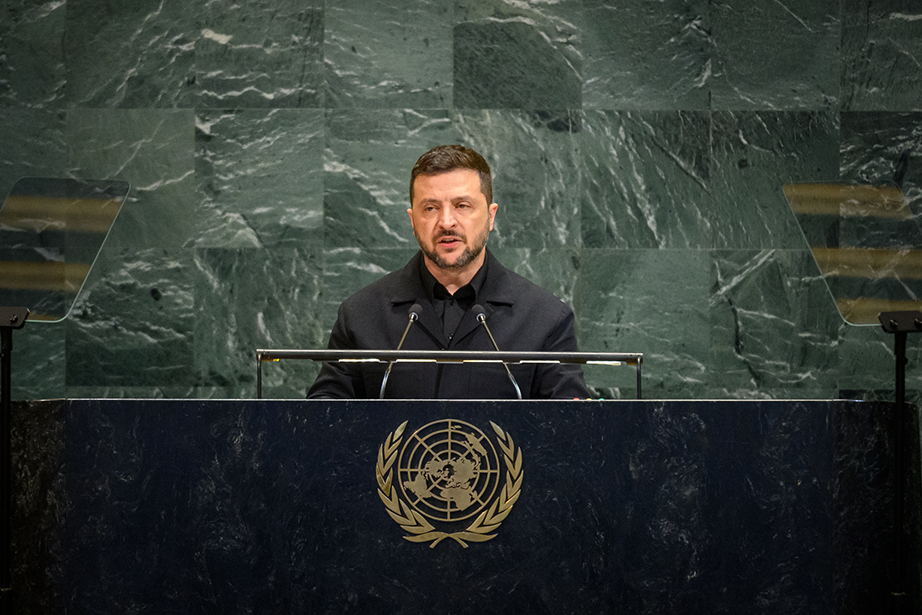
UKRAINE
President Volodymyr Zelensky leads a country caught in a war where a permanent member of the UN Security Council is an adversary. Russia first invaded Ukraine over 12 years ago and launched a full-scale invasion in 2022. Speaking at UNGA in 2025, Zelensky decried an international order unable to deter or mediate conflicts, lamenting that “for decades, just statements and statements.” He also cautioned against allowing war to become normalized in the global order. This year, after recently receiving a warmer welcome in DC and a possible tide turning in the conflict, Zelensky’s tone about the global order could be different, but his message remains worth watching.
WHERE ARE THE WOMEN?
Women remain conspicuously underrepresented among the leaders taking the podium at this year’s General Assembly, even as several prominent women heads of state and government have arrived in New York. Italian Prime Minister Giorgia Meloni is among the notable absences. Italy’s delegation is instead being led by Foreign Minister Antonio Tajani. Meloni’s absence comes three months after a public rupture with President Donald Trump, when she rejected as “fabricated” his account of their interactions at the G7 and later criticized what she called his “unprovoked attacks.”
Danish Prime Minister Mette Frederiksen is attending UNGA week as Denmark, Greenland and the United States prepare to sign a new Arctic security agreement following months of tensions over Greenland. Icelandic Prime Minister Kristrún Frostadóttir is also in New York and has already appeared at Climate Week events
“Europe is where half of the world’s women leaders are now. That’s also important to note the history of democratic institutions and gender equality,” said Linda Robinson, author of Women in Power: Fighting for Democracy in an Age of Authoritarianism and a senior fellow at the Council on Foreign Relations.
Several other women leaders are in New York this week. Among them are Bulgaria’s Iliana Iotova, Namibia’s President Netumbo Nandi-Ndaitwah, Dominica’s President Sylvanie Burton, Japan’s Prime Minister Sanae Takaichi, Barbados Prime Minister Mia Mottley, Suriname President Jennifer Geerlings-Simons, Trinidad and Tobago Prime Minister Kamla Persad-Bissessar.
“Having women be so scarcely represented at the top has a very depressing effect on women’s representation because you don’t have those role models to inspire people to run, and you don’t have the role models of successful women, presidents, and prime ministers that help debunk the bias or the claims that women are not suitable to govern countries, that they aren’t capable of national security,” Robinson said.
Despite the imbalance, Robinson said the women who do take the podium can have an outsized impact.
“One of the most eloquent leaders, male or female, is Mia Mottley. For so many years, she has come there, and rocked the house. She has spoken boldly and eloquently in favor of not just climate justice, but UN reform, many different issues that the world should be grappling with much more creatively and decisively.”
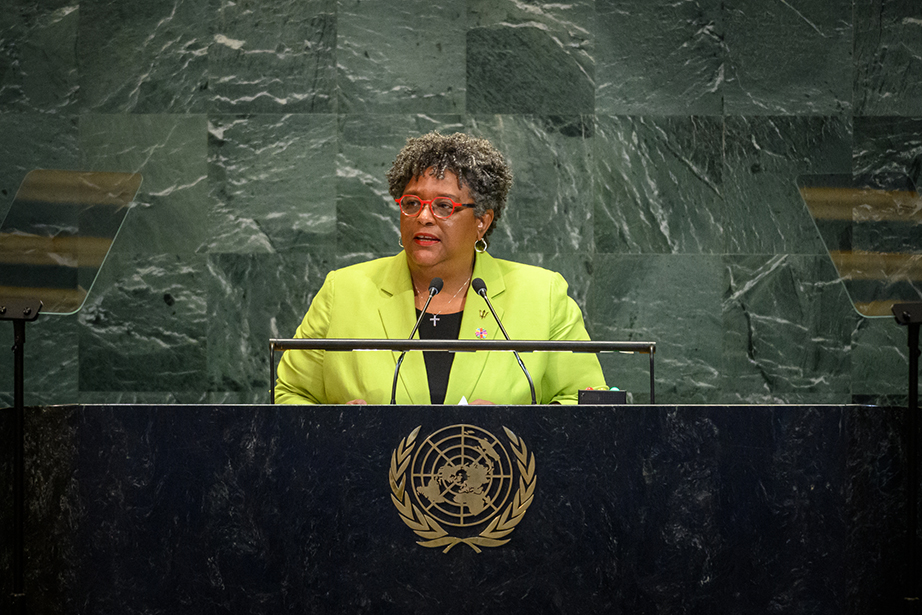
BARBADOS
It’s no surprise that Mottley, the economist and politician credited with keeping Barbados from financial collapse, was re-elected prime minister earlier this year. Annually, her UNGA speeches give voice to the issues faced by small states, island states and the global south that a focus on the traditional hegemony of Western-based UN leadership often misses.
HELLO, GOODBYE
There are new leaders replacing some of the longtime attendees, and some leaders appearing at their last UNGA worth watching.
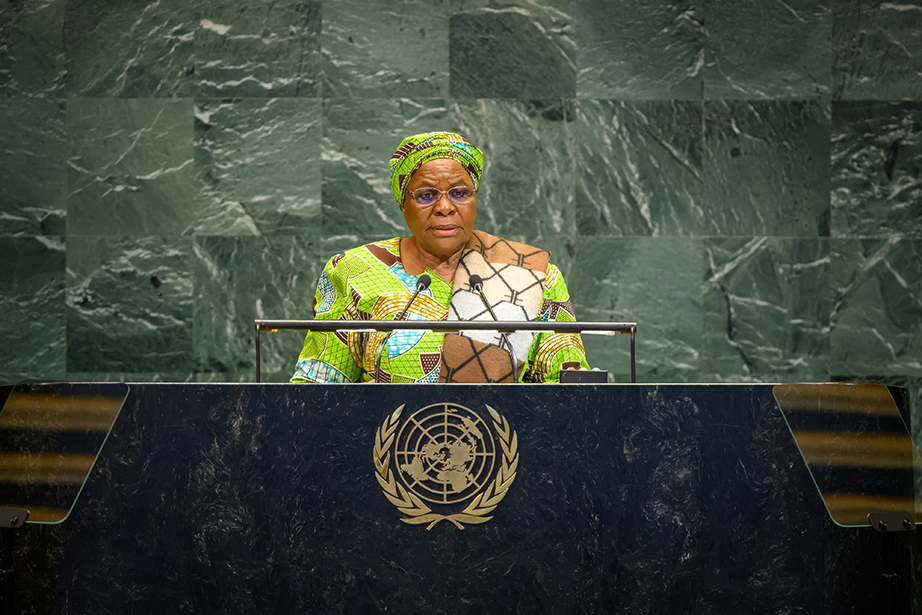
NAMIBIA
Netumbo Nandi-Ndaitwah became the first woman president of Namibia in March 2025. She leads a center-left government over the African state, which gained independence in 1990. Like Mottley, Nandi-Ndaitwah champions reform and the importance of small state natural resources in 2025. Throughout her career, she has advocated for gender equality and women’s issues, serving as a minister of women’s issues before becoming the vice president of her party, SWAPO.
FRANCE
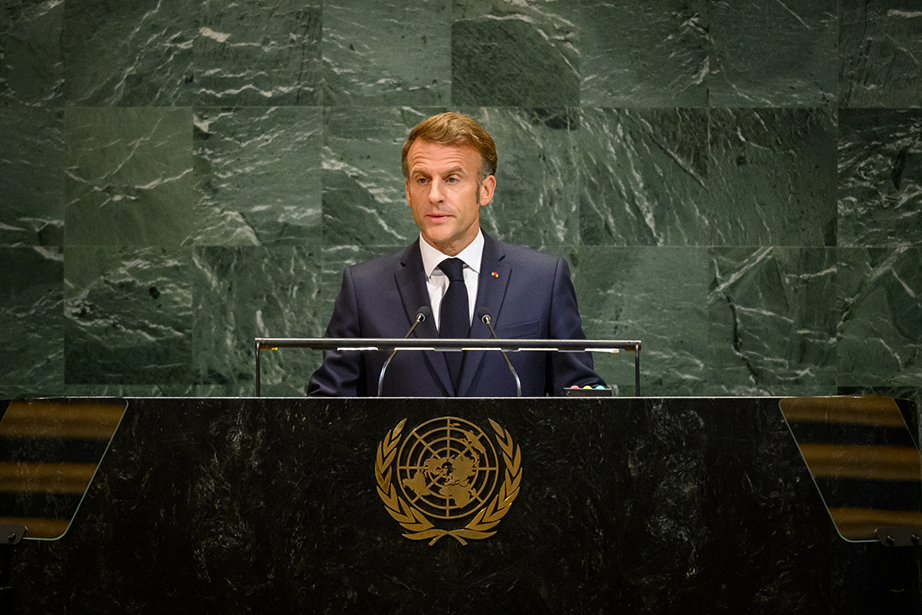
This will be French President Emmanuel Macron’s last UNGA. During his time at the UN, he has frequently stood up for multilateralism, a two-state solution to the Israeli-Palestinian conflict, and the rights of women and girls. Will he use his final speech the same way Donald Tusk, then president of the European Council, did in 2019—as a scathing and forceful reminder of the ideals on which the United Nations was founded in the face of growing autocracy?
JAPAN
The first woman to be elected prime minister, Sanae Takaichi leads a conservative government with a familiar platform of policies—strict limits on immigration, military growth, and conservative social positions. Japan has the fifth-largest economy in the world by GDP and remains a strong Western ally in Asia. She follows her mentor, Shinzo Abe, closely and will most likely try to appeal to her Western allies’ more traditional views, as well as Trump’s more aligned views.
ANTÓNIO GUTERRES
Macron and Abbas are not the only ones looking to cement legacies; this will also be Secretary-General António Guterres’s last UNGA address. Guterres, after a tumultuous second term that saw a host of calamities hit the UN, which included two of the permanent members of the Security Council invading other countries and ongoing fiscal crises, has the chance to defend the positive aspects of his term. “This will be Guterres’ final appearance,” said Gowan. “It’ll be interesting to see if he decides to close up with any challenging lines to lay out his legacy, maybe get a little sharper than past years.”
While Guterres will be speaking publicly, his potential replacements will be making the rounds behind the scenes in closed-door meetings. To Safran-Hon, who each of the remaining candidates are meeting with is worth watching as well, serving as indicators of Security Council members’ stance on each.
“Lots of people and states are looking for a job in the next administration,” said Street. “There are plenty of other good gigs in the UN system beyond the departments controlled by P5.” The 82nd session of the General Assembly could mark the last time that Donald Trump will address the hall. It will also be the first of the next secretary-general, and possibly the first time a Madam Secretary-General provides opening remarks. UNGA drama will not abate in 2027.
About The Author