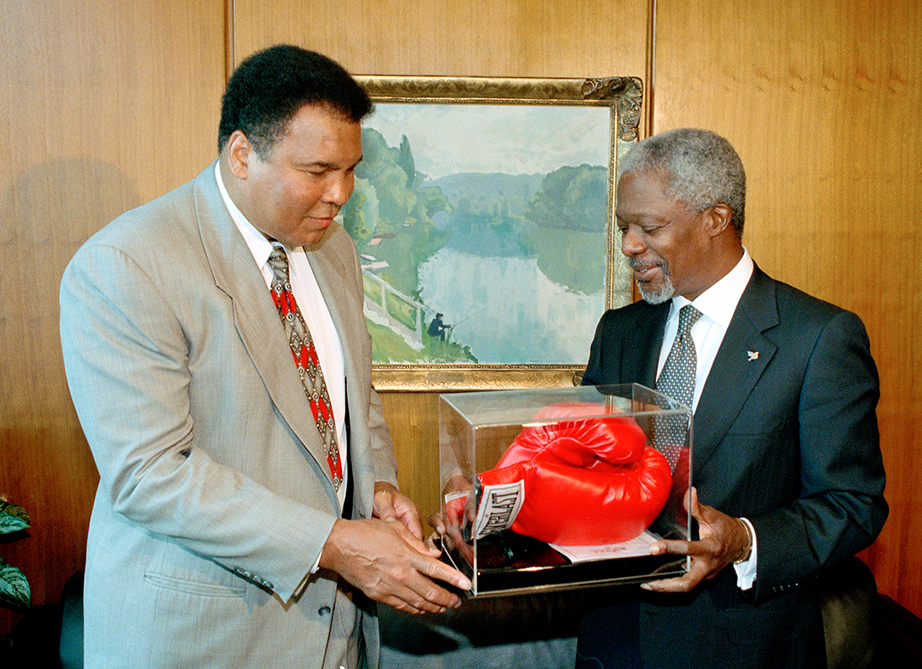
As UNGA brings the world’s leaders to New York, diplomatic gift-giving offers a window into how countries court allies, signal priorities and seek influence.
While visiting Buckingham Palace in March, President Zelensky of Ukraine gifted King Charles an Apple iPad. But this one was unlike any other. With one swipe of a finger, the king would be able to see in real time the war’s front line.
“Today…I began my visit with an audience with His Majesty King Charles, and I gave him the iPad, really like this, as a sign of respect and gratitude, and to strengthen our cooperation with the United Kingdom, with your great country.” Zelensky added, “I have one. My prime minister has one. Our minister of defense and our top military commanders—they have it. It lets us see the front line in Ukraine and even every enemy killed with video proof.”
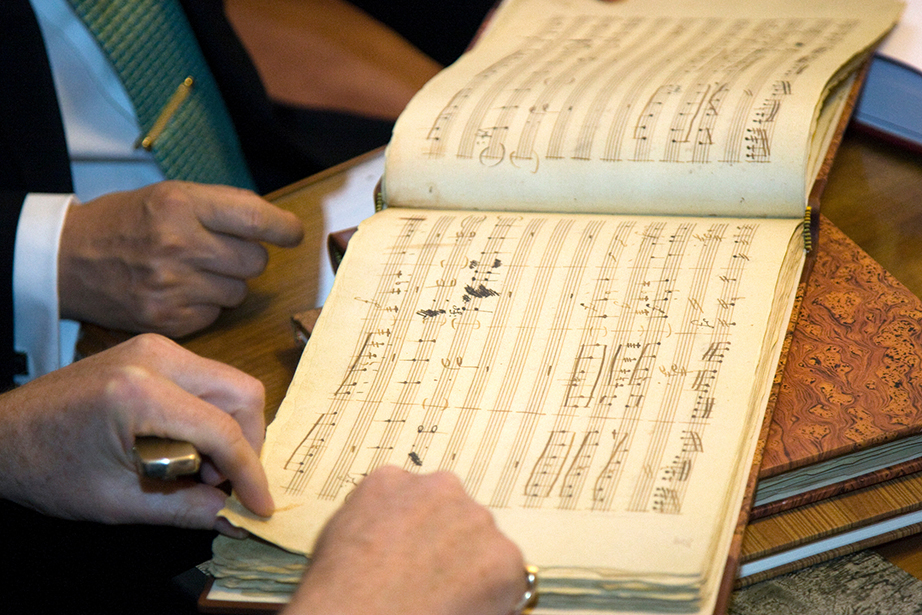
Zelensky’s offering may seem unusual. Diplomatic gifts exchanged between heads of state and diplomats more often evoke ornately framed portraits, sparkling crystal bowls and other ceremonial objects. However, Paul Brummell, author of the book Diplomatic Gifts: A History in Fifty Presents, said the iPad is “the kind of gift that underlines what is both central” to Ukraine’s relationship to the UK at this time, the “extremely strong support that the UK has given and continues to give to Ukraine” as it battles its neighbor Russia. Currently, Brummell is the UK’s high commissioner to the Republic of Mauritius. Previously, he served as ambassador to Latvia, Romania, Turkmenistan, Kazakhstan, and Kyrgyzstan.
Diplomatic gifts, in all their shapes and sizes, have been a feature of diplomacy for centuries. Long before the giver and receiver meet, in a room full of onlookers, all sorts of complicated considerations are weighed to ensure that the intended message is sent and received. Getting it right can build strong relationships, but getting it wrong can tear them down.
As delegates prepare to descend on New York for the busiest season on the diplomatic calendar, Envoy spoke with former diplomats, historians and experts about the art of diplomatic gift-giving—what makes a gift memorable, what it is meant to signal and how these carefully chosen gestures can shape relationships between countries.
Of Influence and Diplomacy
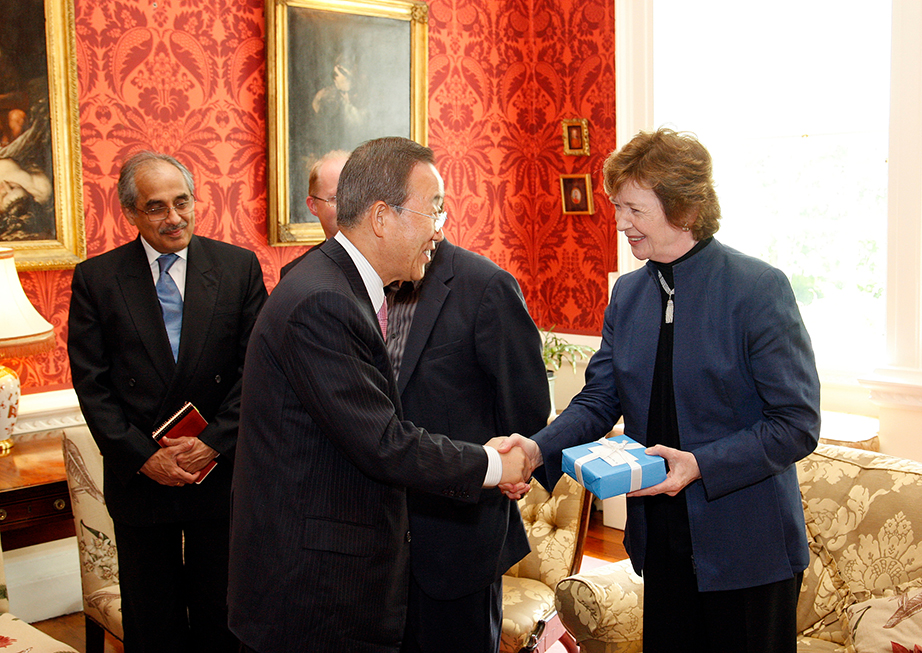
Gift-giving is not just a matter of “diplomatic protocol,” said Alisher Faizullaev, but rather a “powerful tool” and a “carefully crafted act of communication and relationship-building.” Faizullaev has served at different times in his career as Uzbekistan’s ambassador to the European Union, NATO, Belgium, Luxembourg, the Netherlands, and the UK and has witnessed both outcomes firsthand. Envoy spoke with Faizullaev over the phone and in emails.
In one instance, he recalled a senior European diplomat who publicly refused a very chic-looking traditional Uzbek robe out of concern that it would be perceived as “inappropriate or as an attempt to influence” by the journalists in the room, even though it was “culturally appropriate and well-intentioned.” Effective preparation requires both the giver and receiver to “take public perception into account,” he added.
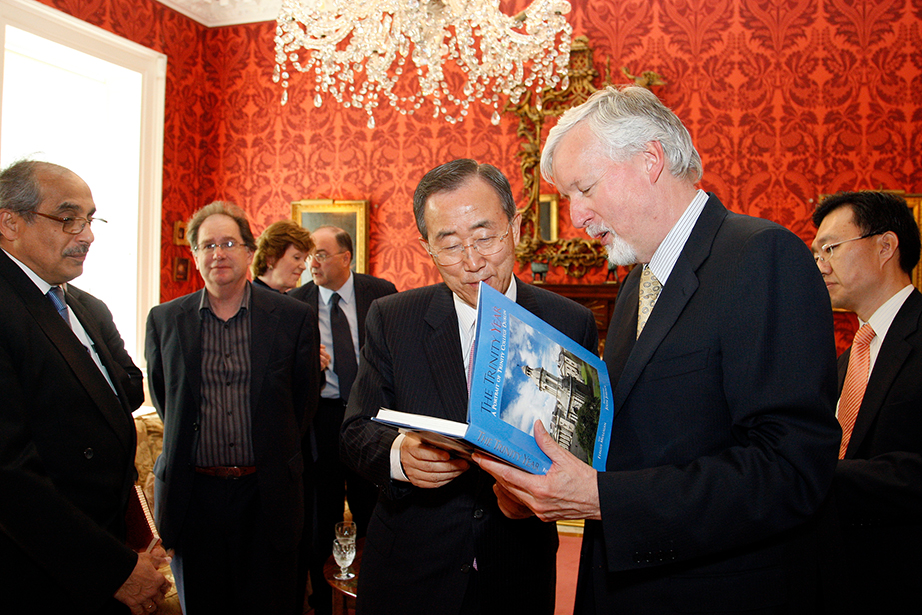
In another exchange, considered a success, a handmade Uzbek dutor—a traditional long-necked two-stringed lute found across Central Asia—was gifted to a diplomat known to collect antique instruments. “The success of the gift did not depend on its monetary value but on the care invested in understanding the recipient as an individual while at the same time presenting the giver’s national culture, traditions, and values,” said Faizullaev. “It was nicely received.”
Another well-known example of a carefully considered offering was given to the late Nelson Mandela by former US President Bill Clinton. Knowing that Mandela, who served as president of South Africa, was an avid boxing fan, Clinton gave him a scrapbook of memorabilia that included personalized letters to Mandela from boxers alive at the time.
Russian President Vladimir V. Putin, an animal lover, has received a series of dogs as gifts from visiting dignitaries. They include an Alabai puppy from Turkmenistan in 2017, an Akita Inu from Japan in 2012 and the famous Pungsan pair from North Korean leader Kim Jong Un in 2024.
Meanwhile, some gifts can carry a more sinister message. In February 2025, during his visit to the White House, Israeli Prime Minister Benjamin Netanyahu gifted Trump a golden pager in an apparent reference to Israel’s deadly attack against Hezbollah in September 2024, where thousands of electronic handheld devices, bugged with explosives detonated across Lebanon. At least 32 people were killed and thousands were maimed or injured, including women and children, as noted in a press release from the UN’s Human Rights Office (OHCHR).
“Making a gift that indexes this kind of thing, these kinds of attacks, is of course to celebrate one’s own assassinations,” said Iver Neumann, director of the Fridtjof Nansen Institute, an independent research body in Norway. “If you accept a gift like that, that means you are complicit in the whole thing,” he said. Mounted on a piece of wood, the pager reads, “Press With Both Hands.” On a gold-colored plaque below that, an inscription in black hails Trump as Israel’s greatest friend and ally.
Whether a gift is macabre, magnificent or misinterpreted, it is a message through material means, said Guido van Meersbergen in a call with Envoy. “The presentation of a gift, the setting in which it takes place, who gives the gift, who receives it, those sorts of questions are all significant.” Meersbergen is a historian at the University of Warwick in the UK. As has been the case throughout the history of diplomacy, the giver can communicate a message about their own power and the relationship between the donor and recipient.
Also important, especially in modern times, when anyone can record anything, are the onlookers or the audience. “You give because you want to be seen, to be in a position to give.” Receiving can also be a confirmation of status and “significant in the eye of the world, or at least to the people who are taking notice.”
Most recently, the world took notice when the Qatari government donated a four hundred million dollar luxury jet to President Trump. According to Jorg Kustermans, an associate professor of international politics at the University of Antwerp in Belgium, while using flattery, in a diplomatic context, is not a strategic move that is exclusive to Trump, “gifts are extremely useful to flatter a person who is easily flattered.” In a call with Envoy, Kustermans added that for the giver, a lavish gift can also “establish a position of authority” over the receiver.
While it is impossible to know Qatar’s intention behind its multimillion dollar offering, President Trump fought back against critics who raised ethical concerns about the exchange by insisting that turning down a “free plane” would be “stupid.” Initially, Trump said the plane would be put on display in his presidential library once he leaves office. Possibly next to his FIFA peace prize.
About The Author