
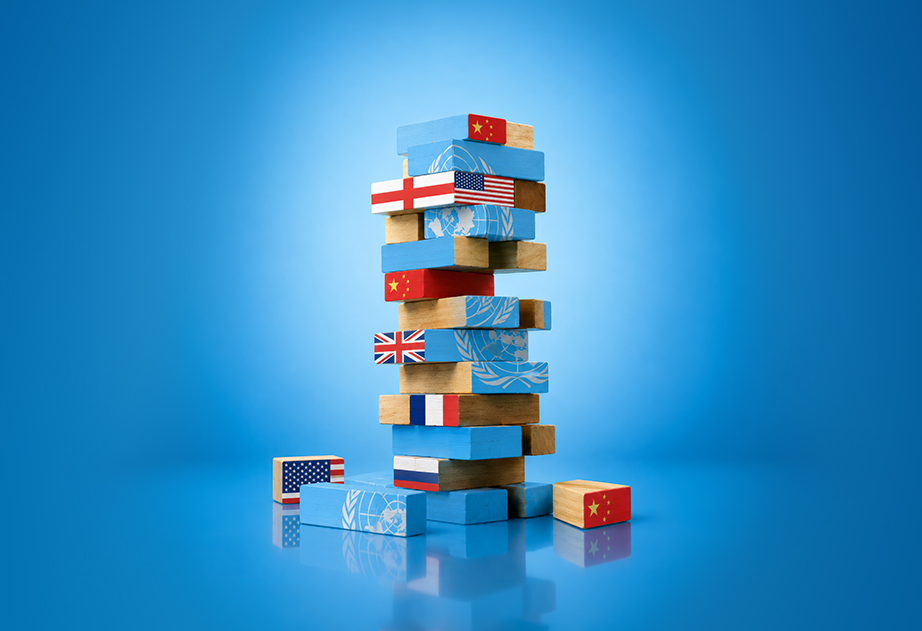
Envoy’s insider’s guide to UNGA81 examines how the Security Council’s five permanent members are shaping the agenda—and where cooperation remains possible despite deepening geopolitical divides.
UN HEADQUARTERS. The 81st session of the United Nations General Assembly, a form of diplomatic speed dating, opens on September 8. “High-level” week, when the heads of state and their entourages arrive, runs from September 22 through September 28. World leaders will arrive in New York as wars and humanitarian crises—from Ukraine and Sudan to Gaza, Haiti and the Gulf—continue to test the UN’s capacity to prevent or resolve conflict. This year, more heads of state than usual are expected due to the high number of festering conflicts around the world.
Denmark’s Christina Markus Lassen, president of the Security Council for August, has described the moment as one of “deep uncertainty” for international peace and security: “Geopolitical tensions are rising, and political solutions seem out of reach in many regions of the world, and on many of the topics that we also discuss in the council, whether it’s Ukraine, Sudan, the Middle East and the Gulf, we do fear further escalation.”
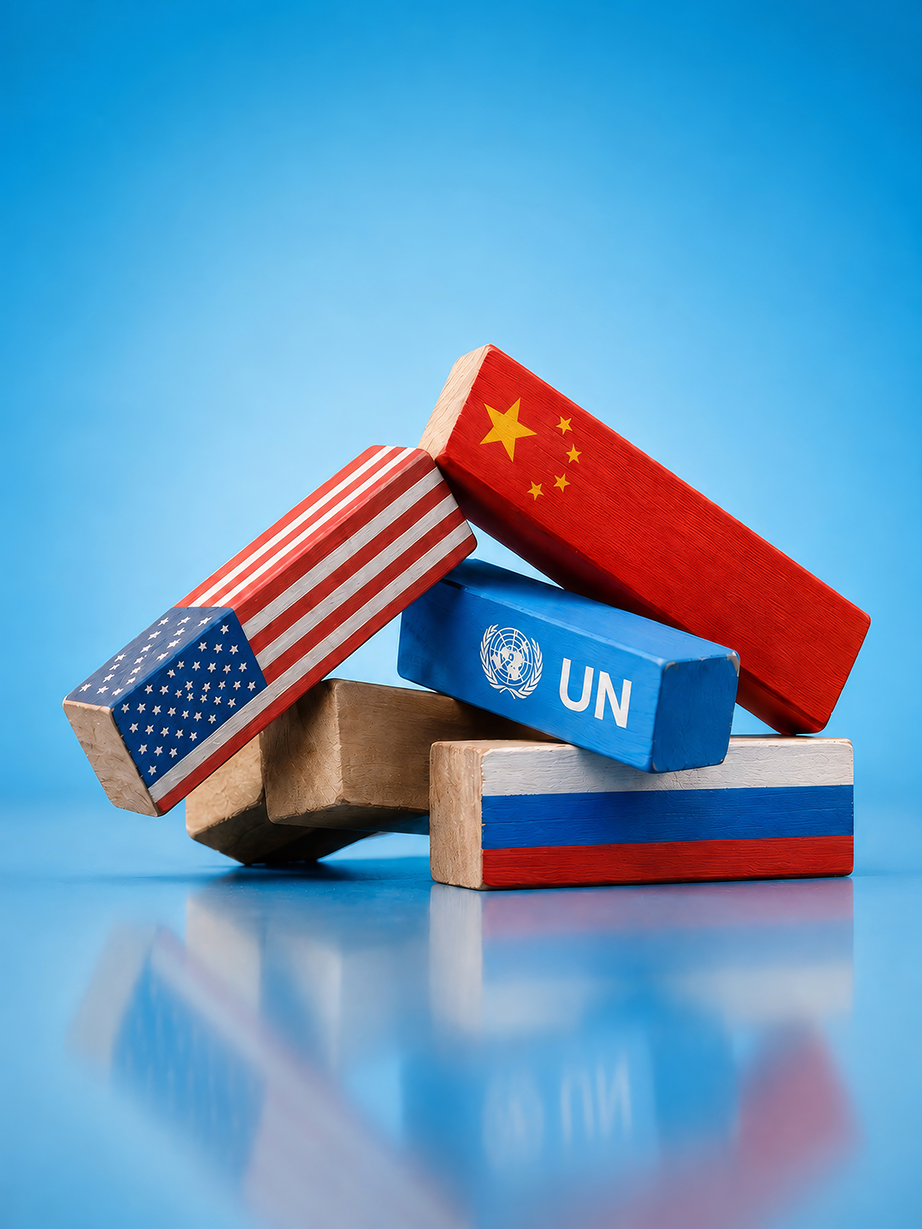
At the center of the diplomatic drama are the five permanent members of the 15-nation Security Council: the United States, China, Russia, the United Kingdom and France, plus 10 rotating members of the Council elected for two-year terms. Because the framers of the Charter gave the five permanent members a veto (the ability to quash a draft proposal), ultimate decision-making and power lie with the five.
That veto does not give the P5 an “absolute veto” over every Council decision. Procedural matters are not subject to the veto. But on the most consequential questions of war, sanctions and peace operations, their decisions determine whether the Council acts at all.
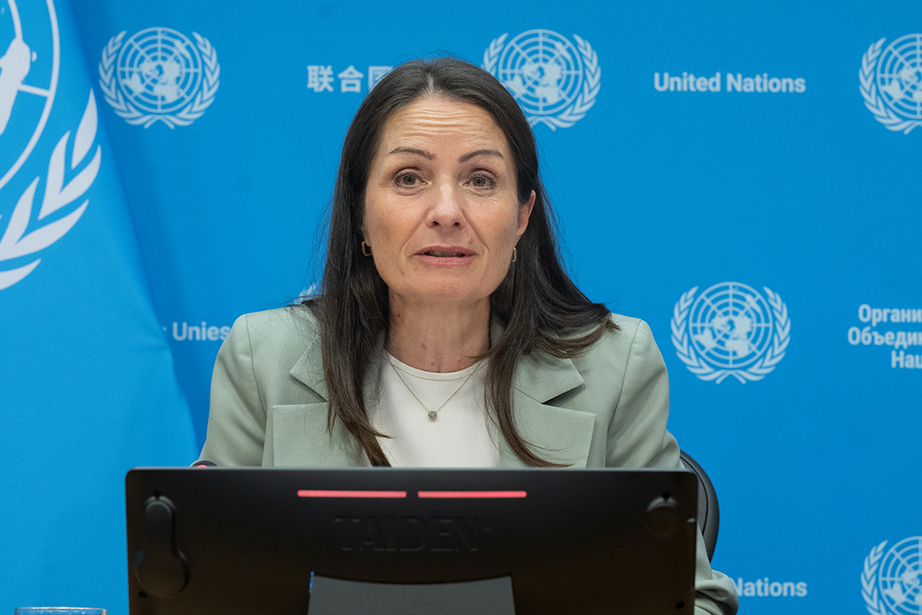
Cooperation Amid Rivalry
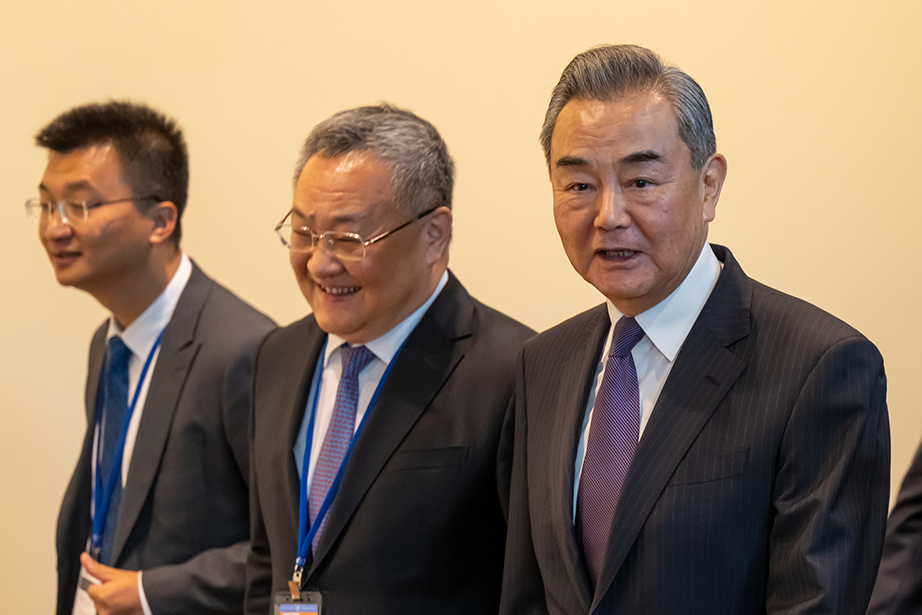
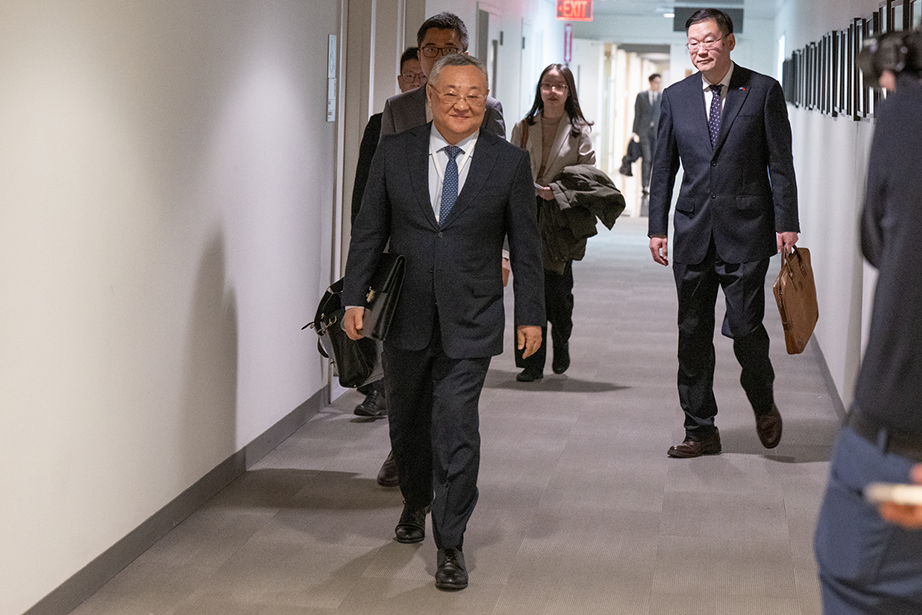
When divisions are on the rise among the five, conflicts become intractable. And that is the state of play today. Over the years, there have been proposals to reform the voting structure of the Council, specifically to add leading nations and diversify the regions of the permanent members, but 81 years later, there has been no change. As the top and second largest contributors to the UN, the US, led by Ambassador Mike Waltz, and China, led by Ambassador Fu Cong, have found areas of cooperation despite the wariness of each country.
The P5 do not agree on big-ticket issues like peace and security, but they share an interest in preserving a forum where conflicts can be managed, humanitarian operations can be supported, and military escalation can be debated.
“China and the US know how to minimize their frictions in the Security Council,” Richard Gowan, the International Crisis Group’s program director for global issues and institutions, told Envoy. “The US gives China space on issues like Afghanistan and Myanmar, and Beijing defers to Washington on Haiti. It is only when a really big split arises, as over Iran, that diplomacy breaks down.”
According to Gowan, Russian Ambassador Vassily Nebenzia has been disappointed that they have not developed better relations with the Trump administration at the UN. And the UK and France, Gowan says, “find the current set-up at the UN perplexing.” The European Union, led by Ambassador Stavros Lambrinidis, can no longer assume the US will have the EU’s back in debates at the Council. The French clashed with the Trump Administration about Iran and Lebanon, and both France and the UK had testy collisions on human rights as related to Gaza.
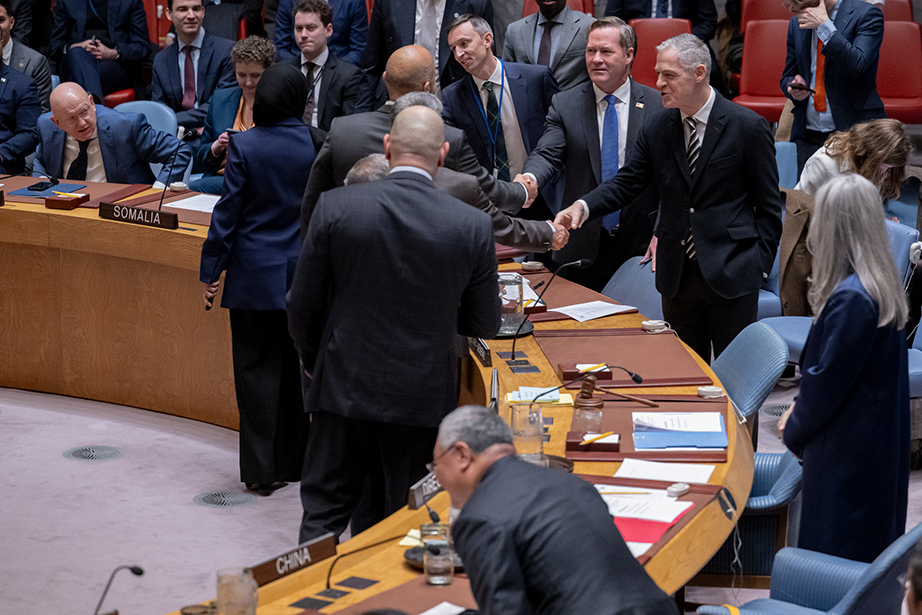
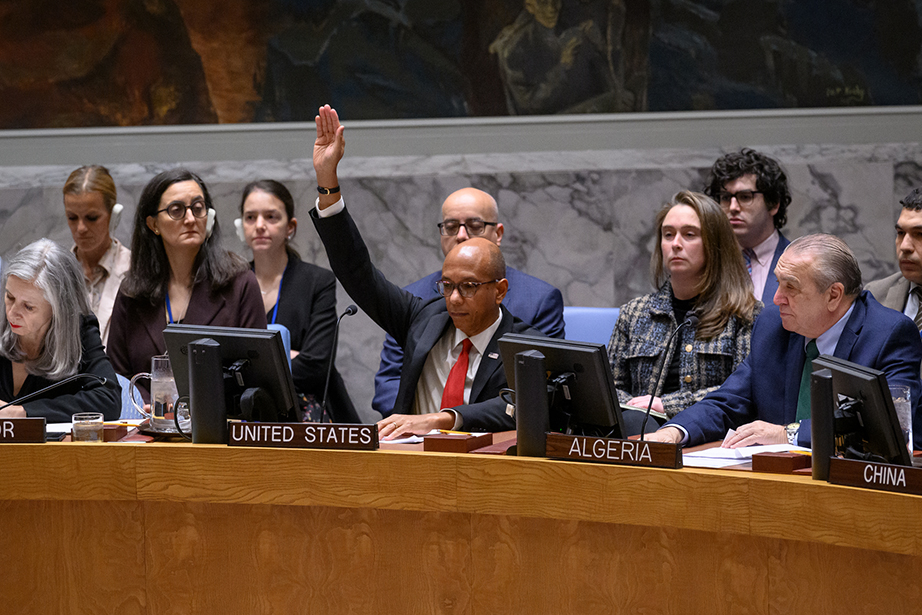
In July, US Ambassador Waltz scolded France’s Ambassador Jérôme Bonnafont, calling his remarks “politicized drivel.” The US delegation walked out on Bonnafont’s talk. President Trump then threatened not to accept the credentials of the new French ambassador to Washington, Aurélien Lechevallier. The disagreement was about the vote that extended the current UN High Commissioner for Human Rights Volker Türk’s term—which France supported, and the US [and Russia] did not. Washington’s issue with Türk was the criticism of Israel in Gaza and immigration issues, including deaths in US custody.
The public display of discord began after the failed attempt by the US and nine other countries in the 193-member General Assembly—in a fruitless effort to stop the reappointment. After the lopsided vote, France’s delegation in Geneva (where the human rights divisions are based) posted a no-holds-barred response, saying, “The US used to be a beacon of human rights. Not any more,” adding the hashtag #AmericaAlone.
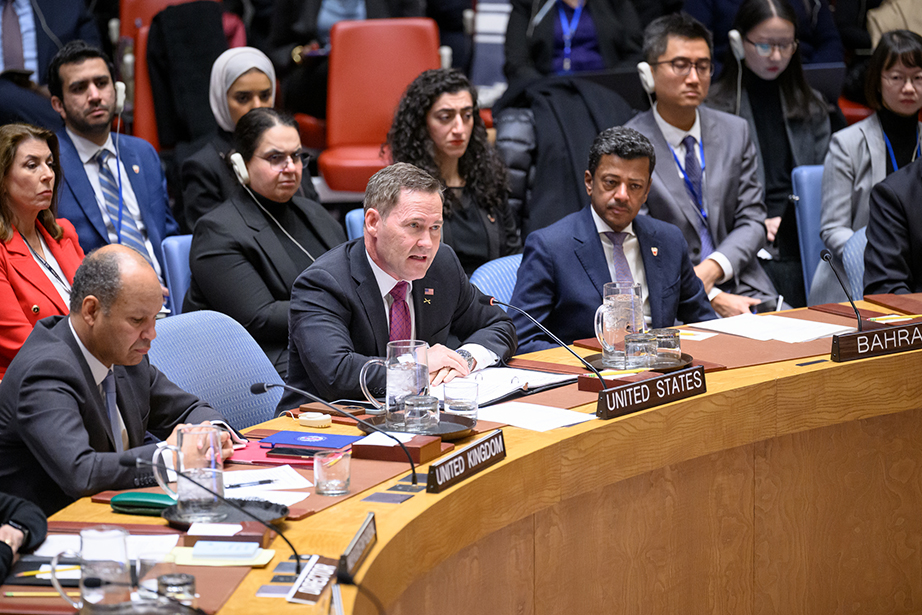
And although the 250-year France-America alliance is not generally strained, the idea that the US, UK and France—the so-called P3—could basically drive the agenda at the UN “no longer applies,” Gowan observes. Rather, he notes, it is the new P3 of China, Russia and the US “shaping Council diplomacy,” adding that the new grouping is “hardly likely to drive a clear, common policy agenda at the UN.”
Reflecting the P5 divisions, in 2024, there was the largest number of vetoes in 40 years.
But even with all the divisions, analysts like Gowan believe that the P5 “can still cobble together some sort of cooperation when they want to,” citing the 50,000 peacekeepers and over a dozen economic sanctions programs—far more than during the Cold War.
Failing Diplomacy
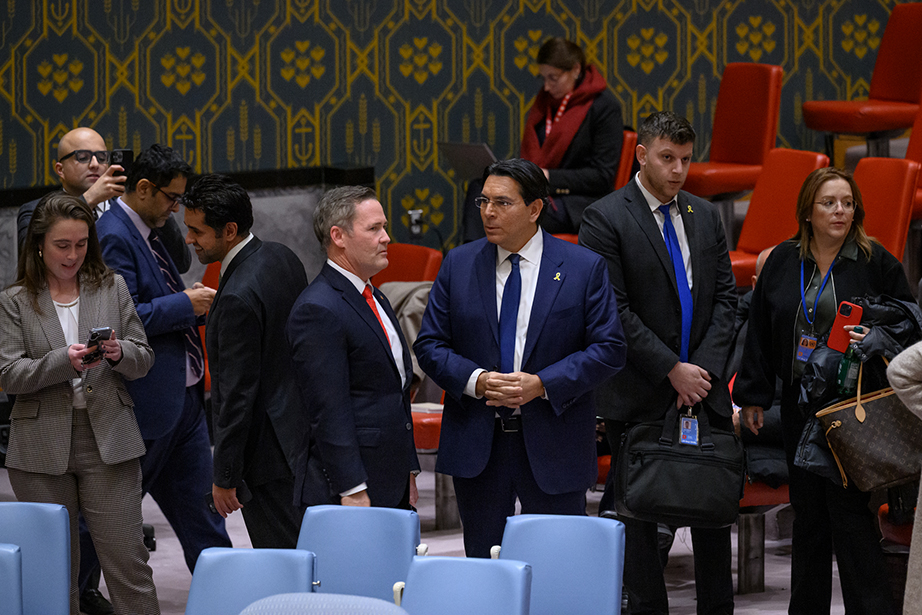
In the Middle East, the Iran conflict is on the front burner. But the Israel-Palestine conflict, Iran’s nuclear program and the US proposal to support Saudi Arabia’s nuclear power development are all high-priority items.
As if Middle East issues were not intractable for decades, New York City’s Mayor Zohran Mamdani delivered a well-publicized, but admittedly hollow, arrest threat to Israeli Prime Minister Benjamin Netanyahu. Although Mamdani quickly acknowledged he lacked the power to arrest a visiting head of state, he exhorted New Yorkers to protest the visit, upping the ante for security and NYPD presence at the events.
Israel’s Ambassador Danny Danon criticized Mamdani’s calling for people to protest: “A mayor should unite the people of the city. He’s doing exactly the opposite. He’s spreading hate, and I’m worried about what will happen here in the UN High-Level Week,” Danon told Envoy. Apart from regional conflict, food security and trade issues, as well as climate, will be in focus at UN headquarters, ahead of the COP31 Conference of the Parties coming up in Turkiye in November. Artificial intelligence and its military applications will also be high on the UNGA agenda.
The US—as largest contributor—tells Envoy Magazine what it believes is needed: the UN on a “diet”
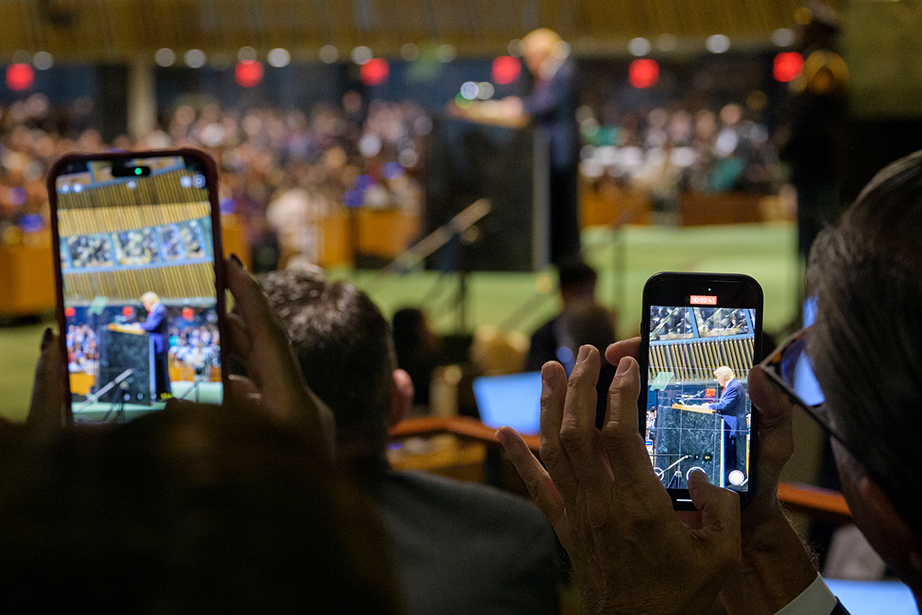
As for President Trump, the assumption is that he will again take the world stage, but whether he will exhort the institution to do better or simply call for its shrinkage remains to be seen. UN Ambassador Waltz has stated the US goal is to re-focus the world body—not abandon it. In a one-on-one interview for Envoy magazine, Waltz made clear that he (and the White House) are optimistic about the UN’s future. But in that future, according to Washington, the UN must cut the bureaucracy, increase transparency and accountability, make the contributions meaningful to US farmers and increase burden sharing by other member states.Waltz cited the US Food for Peace Title II program to support international aid agencies, including the UN World Food Program.
“We are trying to help the UN do fewer things better,” Waltz said, adding that, in 80 years, the UN “did nothing but grow, so we put it on a diet.” His view is that there is much the UN can do, but that reforms are needed to “help the UN realize its potential.”
Russia’s long-standing Foreign Minister Sergey Lavrov is expected to attend and usually has a central role in talks that take place on the sidelines of UNGA. French President Emmanuel Macron will make a swan-song appearance, and the UK’s Andy Burnham, recently elected prime minister, debuts before the body.
Volodymyr Zelensky, who has spoken seven times at UNGA, is expected to fly in from Kyiv to restate his case for Ukrainian sovereignty.
The question lingers: Despite the fact that these leaders will make emphatic speeches, can the UN’s “upper house,” the Security Council, and particularly its veto-toting permanent members, rescue the institution from its growing reputation as a do-little debating society in a bloated bureaucracy?
How the “P5” Determines Direction & Multilateralism’s Future
Apart from the frustration of the non-P5 nations, underpinning the criticism of the UN is its ever-increasing budget and employee headcount. The UN regular budget is close to $4 billion for 2026 (not including peacekeeping and voluntary-funded agencies), a cut of around 7% from 2025.
Although the UN importantly connects all nations—despite ancient enmities—in one room, the structure crafted in the wake of World War II provides disproportionate power to the Allied powers at the end of World War II: the US, the UK, Russia, China and France. The P5 are the five nuclear-weapon states recognized under the Nuclear Non-Proliferation Treaty, although other nations have unofficially joined the club.
And because the nomination of candidates for UN secretary-general goes first to the Security Council, a veto by any one of the P5 nations puts an end to a candidacy and gives the P5 the ultimate say in the selection of the secretary-general.
Further, by convention or tradition (not Charter), the secretary-general will not be chosen from any of the P5 nations. Finally, there is a tradition of selecting from differing regions, with a regional focus each term. This time, it is Latin America’s turn, although diplomats say a candidate from Eastern Europe would also be acceptable since it was skipped because the current Portuguese secretary-general António Guterres is from Portugal.
And for many years, there has been the question of whether a woman should lead the body. In terms of religious diversity, all nine secretaries-general to date have been Christian or Buddhist, and there are candidates in this round who are Muslim and Jewish.
All of the initial seven candidates for secretary-general expressed concern about the future of the UN.
“The highest number of armed conflicts in the past 40 years,” Rafael Grossi said, adding that leaders have “profound doubts and skepticism about the ability of the United Nations to address and to address effectively any of these problems.”
P5 Is “Not Upholding” the Bargain
Former US Ambassador Robert A. Wood told Envoy, “The perception is, rightly or wrongly, that the P5 are not upholding their end of the bargain with regard to the maintenance of international peace and security.”
Curiously, as of 2025—before the Iran war began—support for the UN remained relatively high around the world, with 61% having a favorable opinion, according to the Pew Research Center, but much of that has changed with the inability to resolve the Iran conflict. Wood, who has been a US Foreign Service officer and worked with other agencies of the US government for 32 years, serving both Republican and Democratic administrations, said the P5 needs to meet more regularly, as they once did.
Nonetheless, Wood cites the areas where the UN still makes a difference: infectious disease, air travel, refugee resettlement, migration and intellectual property.
Reforming the UN means different things for each of the P5 nations. The US is looking for a sizable cut to the UN bureaucracy, elimination of what Washington calls anti-Israel rhetoric and resolutions, and an increase in the UN’s field presence. France and the UK are continuing to focus on human rights, which takes place largely in the UN’s Geneva headquarters. China and Russia both call for structural changes like more representation, with or without a veto, on the powerful Security Council.
China, as the second-largest financial contributor to the UN, for example, has for many years called for consensus-based reform, and supports adding nations to the Security Council, but has not backed specific country proposals.
Some elected nations on the Security Council do not see the possibility of reforms on the number of permanent members, even though it is the five that block initiatives because of differences in policy. Pakistan’s UN Ambassador Asim Iftikhar Ahmad told Envoy’s Editor in Chief Stéphanie Fillion that for decades, “when it comes to the Security Council on substantive decision-making, peace and security matters, use of the veto, blocking, preventing the council from taking action, or as we were discussing, working methods, transparency—all of it boils down to … the P5.”
“If you are going to have 10 or 12 permanent members, you are only going to aggravate these problems, so if someone is arguing that by having more permanent members they will resolve or address this situation, I think it’s a big misnomer. It’s a fallacy,” Ahmad said. “This is never going to happen. I don’t think the P5 will agree that there [should] be more new permanent members. They are not at all ready to accept that any new member will share the veto power with them … irrespective of what the French and the British say.”
Reforms or No Funding
Waltz cited US legislation passed in 1999, sponsored by the late US GOP Senator Jesse Helms and then-Senator Joe Biden, that enabled the US to pay the UN arrears, or back dues, contingent on reforms, and it lowered the UN’s assessment rate for the US for its regular operating budget and peacekeeping operations.
“Number one, leadership matters,” Waltz said. “The last time we saw major UN reform was in the late ‘90s with the Helms-Biden legislation, where the United States said enough is enough.”
Waltz pointed to “major cuts” that have made the UN leaner and more effective, and said that some of the reforms the US pushed for were ones that the current UN Secretary-General Guterres has wanted, “like the credit system that made absolutely no sense, so we’re making progress.”
“I think there’s always going to be some inherent flaws in a multinational system where every country gets an equal vote, regardless of how much they contribute,” Waltz added.
Burden-Sharing of the UN Is Key to US Policy
In a full-throated defense of the UN, Waltz told Envoy, “You need one place in the world where everybody can talk, and part of an ‘America First’ foreign policy is burden sharing.”
“I don’t want to see US troops in Gaza or Haiti or places like that, and the rest of the world needs the stamp of the UN to be able to contribute to their peacekeepers. So there are a number of reasons why the US has to stay engaged and to lead within what is, in some ways, an inherently flawed system.”
“I am in the reform camp. If the walk-away camp happens, you’re just going to see UN Brussels or UN Beijing.”
Eyes on Trump and the US Mission to the UN: Making the UN Great Again
Budget cutting aside, Waltz continues to focus on the UN’s ability to partner with non-government organizations to combat issues including global child exploitation. In March, he repeated, “the UN has tremendous potential.”
“My charge from [President Trump] is to help it realize that potential. We are dedicated to making the UN live up to that promise, to making the UN great again.”
Long-standing observers have tried to temper expectations. Stephen Schlesinger, a fellow at the Century Foundation who wrote Act of Creation: The Founding of the United Nations, told Envoy, “The UN is not a world government. It has no enforcement powers.”
The Race for the Next Secretary General
This year’s General Assembly will serve as an important prelude to choose the next secretary-general, who will start a five-year term on January 1, 2027, to replace the 10-year term of António Guterres of Portugal. Although that decision will not be made during UNGA, the election is on everyone’s agenda. Straw polls after “town halls” have not produced an uncontested winner, and they are confidential, although the results have been leaked.
Informal tradition excludes P5 representatives and generally rotates the post by region. The frontrunner in July’s straw poll, Costa Rica’s Rebeca Grynspan, secretary-general of the UN trade agency UNCTAD, who played a lead role in the now-defunct Black Sea Grain Initiative, said, “We should not only focus on numbers, but we should focus on effectiveness and impact.” That said, the straw poll was not “color-coded” for P5, so the results do not exclude candidates that may be knocked out in the future by a veto.
The candidates in the UN Town Hall, a TV-like debate held in July at the UN, were: Michelle Bachelet from Chile, Maria Fernanda Espinosa Garces from Ecuador, Rafael Mariano Grossi from Argentina, Rebeca Grynspan from Costa Rica, Olara Otunnu from Uganda, Carolyn Rodrigues Birkett from Guyana and Macky Sall from Senegal. Candidates can be presented right up to the time of the vote—which normally takes place in December.
“Making the UN great again” is not only a mantra of Waltz. Straw poll third choice, UN climate activist and former president of the General Assembly, Ecuadorian María Fernanda Espinosa Garcés, told delegates at the Town Hall, “Our responsibility is to make the UN relevant again,’ reflecting a commonly held view that the bloated budget and inconclusive peace-making performance of the UN is under scrutiny around the world.
Argentine Rafael Grossi, director general of the International Atomic Energy Agency—the pre-straw poll favorite—asserted that “the coming selection of the next secretary-general could arguably be one of the most consequential in the 80 years of history of this great institution.”
For now, UNGA will go forward under a cloud of conflicts unresolved, a divided Security Council—and a lame-duck secretary-general, António Guterres.
General Assembly resolutions have garnered world headlines as a result of the Security Council failure to influence, let alone help to, resolve conflicts in Ukraine, the Middle East, Sudan and Haiti, but they are non-binding.
Can the UN Rebound?
Will it rebound? Those watching it for years think the answer is yes.
“While it can appear ineffective at times, the words of its founding document are signally important to the world community to remind us that we have the ability to come together and find peace through this institution,” Schlesinger said.
Although criticism of the UN appears to be at an all-time high, the achievements of the world body are significant, including supporting peacekeeping around the world, creating benchmarks for human rights, providing humanitarian assistance, eliminating diseases such as smallpox, solving the Suez Canal crisis in 1956 and promoting goals such as education and the elimination of poverty. Continuing with the UN seems to be one of the few things the P5 nations are unanimous about.
Ambassador Robert Wood summed it up: “I remember sitting in a Security Council meeting one day and asking, Why am I here? Who am I? And then for a moment, I realized there is no other mechanism that we have out there where you have all of the international community sitting at the table talking about issues.”
“They may not be solving anything. But imagine if you didn’t have that there,” Wood said.
Nations must reject “bullying” China says
“The disorder and instability we see today, and the strains facing multilateralism, are not a reflection of any diminished relevance of the UN,” Ambassador Fu Cong told Envoy. “Rather, they underscore the consequences of failing to fully uphold the purposes and principles of the UN Charter,” Ambassador Fu said, “and of failing to give full respect to the role and authority of the UN.”
Nations must reject “bullying” China says
“For the UN to fulfill its rightful role, the immediate priority is for all Member States to fully meet their obligations under the UN Charter, uphold sovereign equality, respect the rule of international law, and reject power politics and bullying,” Fu said, adding, “The UN Charter confers a special status on the five permanent members of the Security Council…the P5 should be fully mindful of the greater responsibilities that come with this status and work together to uphold international peace and security.”
“China stands ready to work with all parties to make its due contribution to world peace and prosperity,” he said.
“In the face of a complex and rapidly changing international landscape, the P5 should lead by example: uphold the standing of the UN and act in accordance with the purposes and principles of the UN Charter; champion multilateralism and respond effectively to major global challenges; and strengthen solidarity and coordination while building greater consensus for international cooperation.”
About The Author
