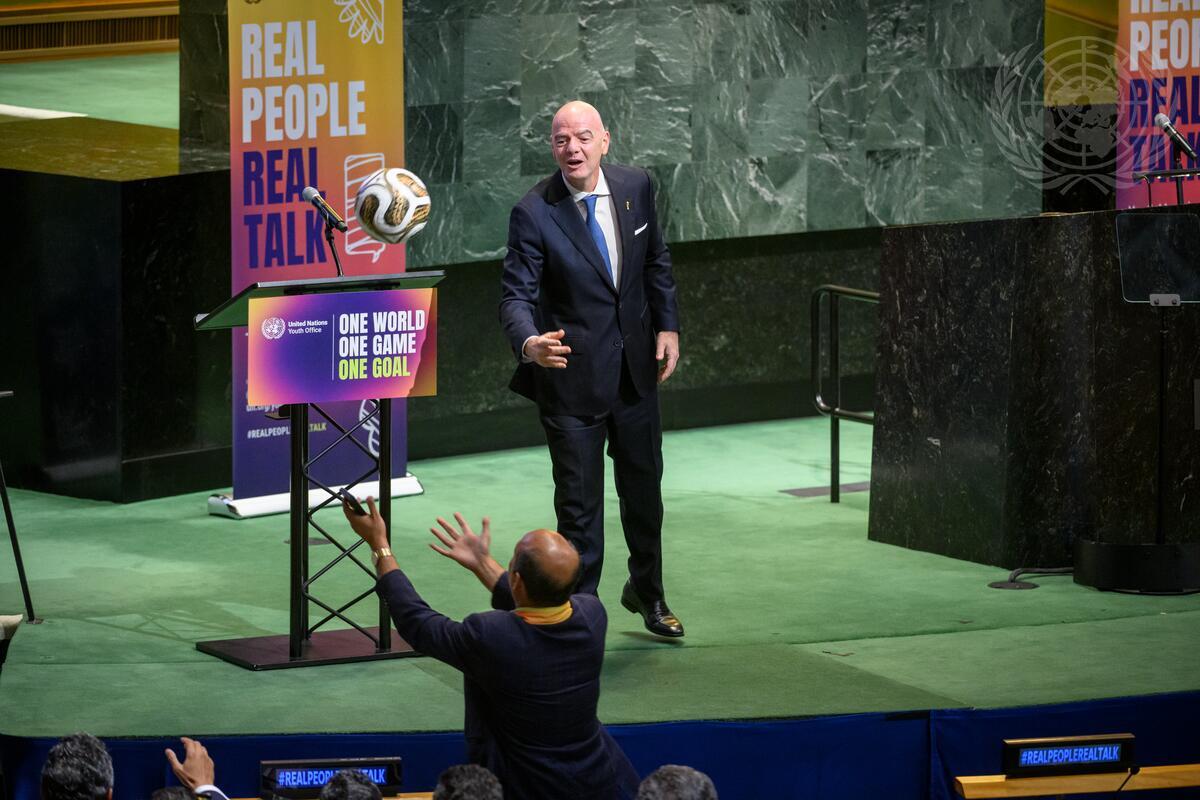
As FIFA’s 2026 World Cup came to a close, human rights advocates say visa restrictions, immigration enforcement, and political interference undermined its promise to be the most inclusive tournament ever.
Weeks before the tournament’s opening whistle, FIFA President Gianni Infantino boasted that the 2026 World Cup would be “the most inclusive ever.” But as Spain lifted the trophy after defeating Argentina in Sunday’s final, human rights advocates said Infantino’s promise of inclusivity had fallen decidedly short.
“This was not the greatest World Cup as measured by human rights,” said Minky Worden, the director of global initiatives for Human Rights Watch. “It has not been the most inclusive.”
From New York on Thursday, July 16, Worden, in partnership with Sport & Rights Alliance—a global sports coalition—led a panel of human rights advocates to assess whether FIFA, the world’s governing soccer body, adhered to and delivered on the human rights framework it says it follows.
Concerns about potential violence towards journalists, visa denials, and mass roundups of immigrants and migrants by Immigration and Customs Enforcement (ICE) agents topped the discussion. According to rights advocates, FIFA has a concerning track record regarding implementation of its rights commitments. While most of FIFA’s players wear cleats and spend their days covered in sweat, off the field there is an entirely separate cast in pressed suits and collared white shirts that advocates say play a game increasingly driven by greed and politics, and that sidelines human rights.
The most recent examples advocates cite include Russia, which despite its notoriously bleak rights record, hosted FIFA’s 2018 World Cup, followed by Qatar hosting the tournament in 2022, where a Guardian analysis, from 2021 found that “more than 6,500 migrant workers from India, Pakistan, Nepal, Bangladesh and Sri Lanka have died in Qatar since it won the right to host the World Cup” in 2010. The number of deaths cited is often disputed.
FIFA adopted a human rights policy in May 2017 in accordance with the UN’s Guiding Principles on Business and Human Rights. In addition to a blanket declaration to respect rights, Article 3 of FIFA’s statutes says that the organization is “committed to respecting all internationally recognised human rights and shall strive to promote the protection of these rights.”
In response to public pressure, at a press conference, Infantino announced, in partnership with Qatar, the creation of a legacy fund where part of it should benefit the education of children in developing countries. Another element included establishing a labor excellence hub with the International Labour Organization (ILO) to deal with “labor issues” that Infantino said he never thought he would “have to deal with.”
According to FIFA’s website, the initiatives of the legacy fund include the “active involvement of the World Health Organization (WHO), the Office of the United Nations High Commissioner for Refugees (UNHCR), and the World Trade Organization (WTO).”
Internally, FIFA’s sub-committee on human rights and social responsibility published a 2024 report noting that “a number of severe human rights impacts did ultimately occur in Qatar from 2010 through 2022 for a number of workers connected to the tournament.” However, FIFA has not acted on the committee’s recommendation to use the legacy fund to compensate those impacted workers.
Notably, it was FIFA’s secretary general Jérôme Valcke who, while organizing for the 2014 games in Brazil, famously said, “Less democracy is sometimes better for organising a World Cup.”
The 2026 World Cup was the first hosted by three countries—Canada, Mexico and the US—and the US staged most of its 104 matches. Politics took center stage when Infantino awarded the first-ever FIFA Peace Prize to President Trump for his “exceptional contributions to peace and unity” despite its commitment to remain neutral in “matters of politics.”
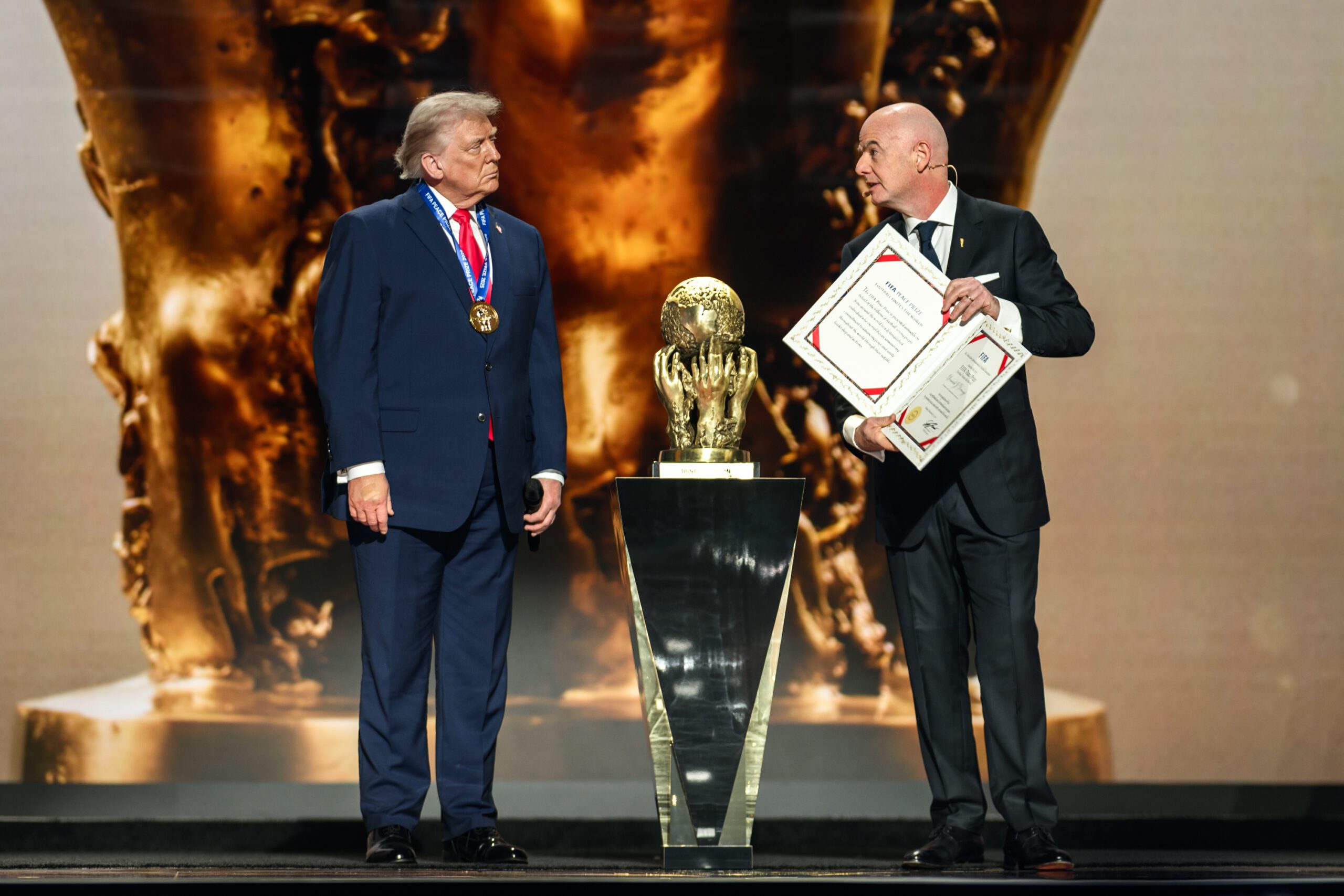
FIFA faced accusations of political interference after Trump called Infantino about the red card issued to US forward Folarin Balogun during the team’s match against Bosnia and Herzegovina. While Infantino admitted that the president called, he said the final decision to reverse Balogun’s suspension was made by FIFA’s disciplinary committee.
FIFA did not respond to Envoy’s request for comment.
“This [2026] World Cup has not lived up to the human rights framework that governed it from the beginning,” said Worden of Human Rights Watch back at the panel discussion in New York. During the discussion on inclusivity, the panelists focused primarily on developments in the US, even though the tournament was co-hosted by Mexico and Canada. Here’s some of what the panelists had to say.
Not All Foreign Journalists are Created Equal
Against the backdrop of a growing mistrust for mass media in the US, according to Gallup, Gypsy Guillén Kaiser, the chief global affairs officer of the Committee to Protect Journalists (CPJ), a global nonprofit that promotes press freedom, told the panel that “in nearly two decades of work protecting journalists at mega sporting events, we had never seen this level of concern and preparation, both from individual journalists as well as news organizations.” Gallup is a US based polling organization.
Most of the fear is based on what has been unfolding in the US prior to the World Cup, namely police violence at protests covered by journalists and the specific targeting of immigrants by authorities given that the “underlying conditions in the United States continue to be and point to a steady decline in press freedom,” she said. President Trump has also directly attacked journalists and referred to the press as the “enemy of the American people.”
While Kaiser said that “there were no major obstacles in reporting during the World Cup so far,” she did mention a tangential connection in Mexico, where three journalists were killed in the northern state of Veracruz, Mexico, during the World Cup. CPJ has identified Mexico as the most dangerous country for the press in the Western Hemisphere.
Still, while any instances of violence towards journalists may take some time to surface, Kaiser also mentioned that amid the US-Iran conflict, some Iranian journalists were likely denied visas to the US. Iran’s soccer team did qualify for the World Cup, but they were forced to set up their home camp in Tijuana, Mexico, while other teams playing in the States settled in US cities. Mehdi Taremi, the captain of Iran’s team, told reporters “It’s a disaster World Cup; a disaster” adding “We have to fight against everything here.”
According to media reports, there have been cases of Iranian and African journalists who applied for accreditation to cover the 2026 World Cup but were denied. One case includes an independent Iranian photojournalist, Sajad Imanian, who said he was questioned about his Iranian military conscription during his interview at the US Consulate in Sydney, Australia, where he is based.
Days before the final World Cup game kicked off on July 19, the Trump administration announced plans to tighten visa regulations for journalists and members of the media, among others.
Watch Out For ICE
The US has made countless headlines recently for its brutal crackdown on immigrants. In June, Human Rights Watch, in partnership with Physicians for Human Rights, a US-based nonprofit, published a report documenting the increase in the number of deaths of people in detention under the custody of ICE.
The fear associated with being racially targeted, rounded up and tossed away is a direct outcome of what Daniel Noroña, advocacy director for Amnesty International USA, called the “deportation and detention machine.”
“FIFA hasn’t used its leverage for this tournament…where everybody could feel safe, included, and free to exercise its rights,” said Noroña.
Politico recently reported that France’s soccer team, Les Bleus, arrived in Dallas, Texas, on a deportation jet. Less than an hour after landing, the report says the jet flew to Harlingen,Texas, for another deportation flight to Mexico. The day before the French team arrived in Dallas, Politico said the jet had been used for an ICE deportation flight to Nicaragua.
When asked if Amnesty International had documented specific cases of immigrants being targeted in or around any event spaces, Noroña said they did not “monitor or have any specific information of ICE activity surrounding the stadiums.” However, during the games but not related to them, ICE agents killed Johan Sebastián Durán Guerrero, a Colombian national in Maine and Lorenzo Salgado Araujo, in Texas. Video surveillance showed that after being stopped by immigration agents Guerrero, twenty-five, was shot and dragged from his car. Araujo, fifty-two, was killed by ICE during a traffic stop in Houston, Texas. Araujo was a Mexican immigrant and father of three and Guerrero had a three-year-old daughter. The US Department of Homeland Security (DHS), according to media accounts, said an ICE agent shot Araujo in self-defense. DHS has said that Guerrero’s shooting was a public safety concern.
Lily Dong Li Rosengard, an advocacy senior specialist at ILGA World, said the rollback of LGBTI rights in the US had created a similar climate of fear, discouraging some fans from traveling to the tournament.
Certain Countries Need Not Apply
In 2025, President Trump signed an executive order expanding a travel ban, with narrow exceptions, to include 39 countries. The policy threatened to shut out supporters from some of the regions where soccer commands its largest audiences.
FIFA’s website says,“There are five billion football fans around the world, with Latin America, the Middle East and Africa” representing the sport’s largest fan bases.
According to Ronan Evain, executive director of the nonprofit Football Supporters Europe, in a country like Morocco, which is not on the travel ban list, no ticket holders were granted visas, despite Morocco co-hosting the 2030 FIFA World Cup alongside Portugal and Spain. He added that while attending the games of Egypt, Senegal (a country on the US travel ban list) and Cabo Verde, held in the US, “they interviewed dozens and dozens of match-going fans of these countries, and we could only find either people that were US-based or were dual citizens of another country.” Evain cited Morocco as an example without evidence.
However, one headline-grabbing incident of entry denial occurred in early June when Somali referee Omar Artan was turned away at Miami International Airport by US Customs and Border Patrol (CBP) for unspecified vetting issues. Later at a press briefing, FIFA president Infantino said the incident was “unfortunate” but that people should “chill” and “relax.”
When asked by Envoy if Evain had a rough idea of the total number of denied visas, he said they do not have that kind of data. But “unless FIFA and the US administration can demonstrate that some people were able to enter the country, our assumption is, at least when it comes to African countries, there seems to have been a blanket ban, essentially.” He added, “It’s been a World Cup for a happy few.”
About The Author