At United Nations Headquarters, cocktail receptions are rarely where geopolitical tremors become visible. Diplomatic gatherings in New York tend to follow a familiar script. Journalists attend them regularly, knowing that behind the polite conversations and glasses of wine, there is rarely much substance. Speeches are usually cautious, carefully calibrated not to disturb the delicate balance of international diplomacy. That is why the reception hosted in January by the European Union Mission to celebrate the new year initially felt like a routine event. It took place high above Manhattan, in the EU Delegation’s offices in a sleek tower on Third Avenue. Diplomats, reporters, and U.N. officials circulated through the room exchanging pleasantries, business cards, and fragments of diplomatic small talk.
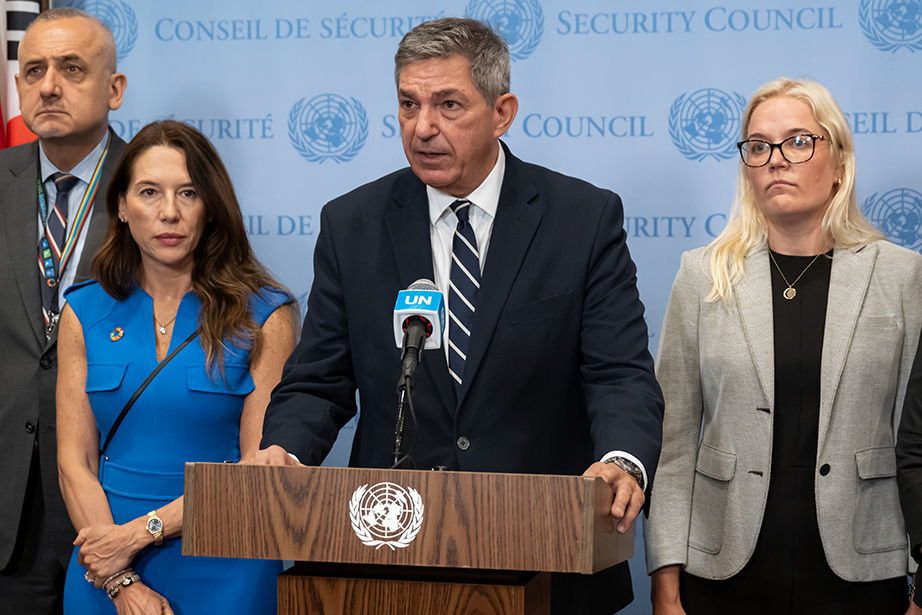
Then EU Ambassador Stavros Lambrinidis took the floor
Lambrinidis, a former Greek foreign minister who now represents the European Union at the United Nations and previously served as the EU’s ambassador in Washington, began speaking about Europe’s role in defending multilateralism, international law, and the institutions that underpin the global order.
But this time, the tone was different. Instead of the usual diplomatic generalities, Lambrinidis delivered an unusually assertive message about Europe’s responsibility to defend the rules-based international system at a moment of growing geopolitical tension.
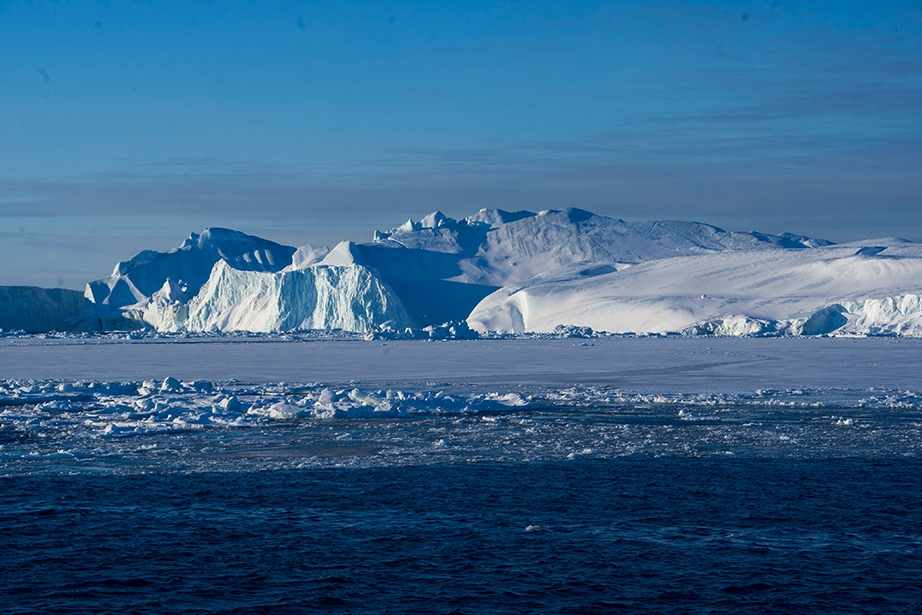
“This is really a tipping point for multilateralism,” he said, referring to the crises in Gaza and Ukraine, as well as rhetoric challenging Denmark’s territorial integrity over Greenland. He condemned what he described as a growing willingness among major powers to violate the U.N. Charter, undermining the post-World War II international order.
“How to deal with a ‘might is right’ world, or what some call a transactional world, is a fundamental challenge for us Europeans.” Around the room, journalists from Latin America, Africa, Asia, and Europe exchanged glances. The reaction was subtle but unmistakable: surprise. For many observers, the moment carried a certain irony. Donald Trump’s return to power in Washington, and the shock it has sent through transatlantic relations, appeared to be producing an unexpected effect: making Europe sound more united in defense of multilateral diplomacy than it often has in the past.
Whether this moment reflects a genuine strategic shift or merely a temporary reaction to geopolitical pressure is becoming a central question in diplomatic conversations at the United Nations.
From the vantage point of the U.N.—where diplomatic rhetoric is constantly tested against geopolitical reality—a deeper question emerges: is Europe slowly becoming a coherent foreign-policy actor, or is this apparent unity simply the product of strategic anxiety?
A Test for European Unity
The geopolitical shock triggered by Trump’s return to the White House is forcing European governments to confront a difficult dilemma.
For decades, the European Union has articulated the ambition of speaking with one voice in foreign policy, especially in multilateral institutions such as the United Nations. Yet that ambition often remained aspirational rather than operational. Behind joint statements and coordinated votes, internal divisions persisted between larger and smaller states, eastern and western members, Atlanticists, and advocates of greater strategic autonomy.
Now the shockwaves coming from Washington may be compelling Europe to transform that aspiration into a strategic necessity.
The United Nations offers a particularly revealing vantage point. In New York, EU diplomats coordinate daily positions on resolutions, sanctions, peacekeeping mandates, and global crises.
In some areas of the U.N. system, coordination goes even further.
Diplomats at the EU Delegation to the United Nations note that European cooperation is often stronger than many observers assume. In negotiations within the powerful Fifth Committee, which oversees the U.N. budget, EU member states have mandated the EU Delegation to negotiate on their behalf, giving Brussels a significant operational role in shaping annual U.N. budget decisions.

Columbia University political theorist Nadia Urbinati, who recently discussed her book For a sovereign Europe during a lecture on campus, believes the continent may be approaching a decisive moment.
The erosion of confidence in American leadership, she argues, could push European governments to rethink their strategic identity. Sovereignty for Europe, in her view, does not mean retreating into national borders but building a new political capacity at the continental level capable of making common decisions on security, defense, and the regulation of global markets. When I described to her the unusually assertive speech delivered by EU Ambassador Lambrinidis in front of international journalists and U.N. staff, Urbinati responded cautiously.
“The European Union has never really had a foreign policy,” she said.
So what if something like that were already beginning to emerge at the United Nations?
“It would indeed be a surprise.”
Greenland and the Transatlantic Divide
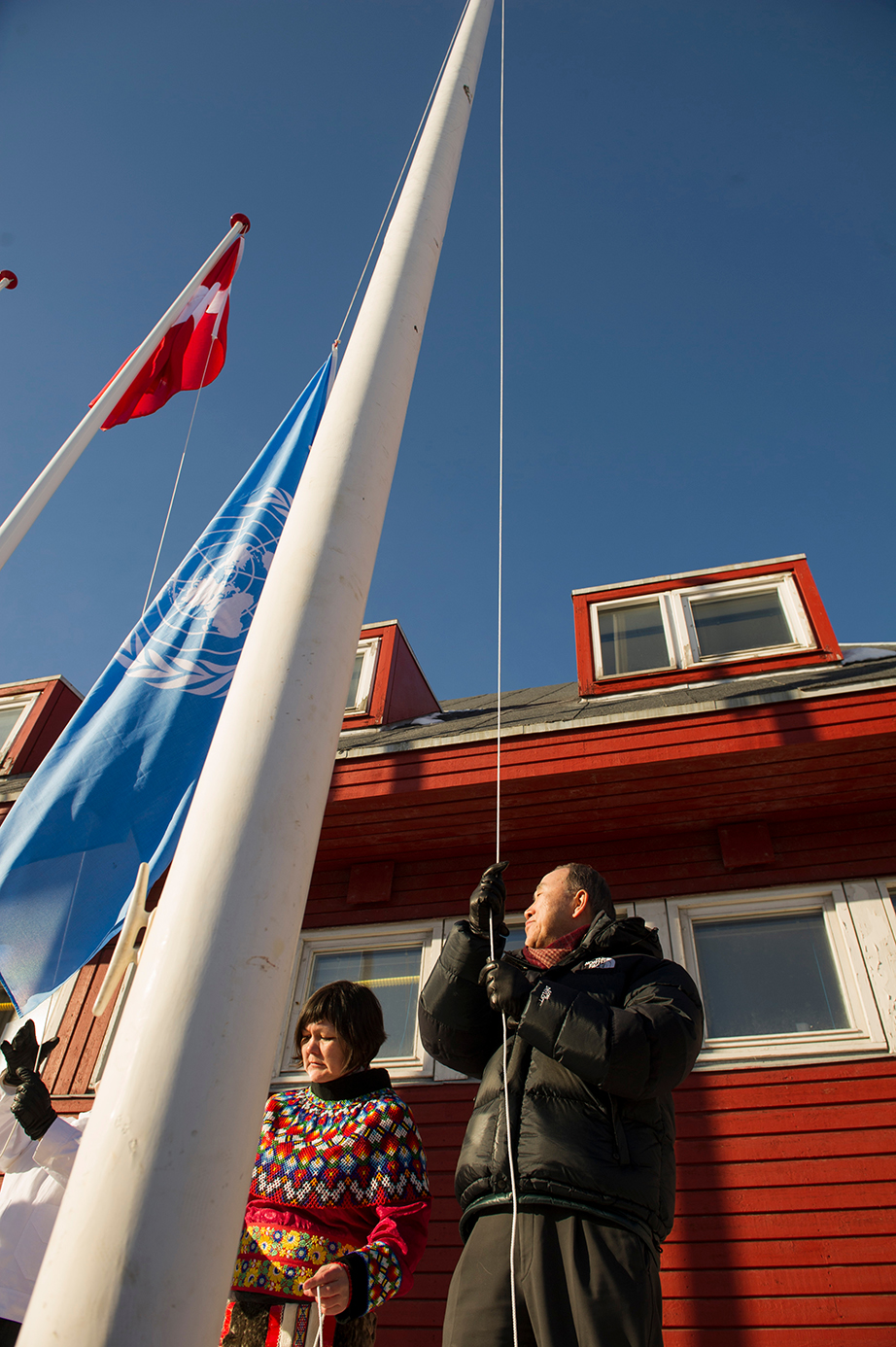
Few issues illustrate the changing dynamics of the transatlantic relationship more clearly than Greenland.
Trump’s renewed interest in acquiring the Danish territory, an idea first floated during his earlier presidency, reopened debates about Arctic geopolitics, sovereignty, and the strategic balance within NATO.
The episode sent shockwaves through Copenhagen and beyond.
Writing after a recent visit to Denmark, journalist and historian Anne Applebaum observed that the crisis forced Danish and European leaders to contemplate an extraordinary scenario: how they might respond if tensions with their closest ally escalated further. The episode, she argued, left lasting political and psychological effects across Europe, and reinforced debates about the continent’s need for greater strategic autonomy.
The Greenland episode revealed how fragile the transatlantic relationship had become. The war between the United States, Israel, and Iran soon offered another test, this time exposing how difficult it still is for Europe to translate strategic anxiety into a coherent geopolitical response.
Iran and Europe’s Divided Reaction
The conflict between the United States, Israel, and Iran has provided another test of Europe’s geopolitical coherence.
European reactions to the strikes appeared divided, with governments across the continent expressing sharply different positions.
Council on Foreign Relations senior fellow Matthias Matthijs argued that the US–Israeli military operation caught many European governments by surprise and produced what he described as a “strikingly disjointed European response.” The episode, he suggested, reflects long-standing differences within Europe regarding military intervention and the use of force.
After I asked officials at the EU Delegation to the United Nations for this article about the apparent divisions, they emphasized that the European Union operates through a Common Foreign and Security Policy (CFSP) that requires constant coordination among the 27 member states.
According to the EU Delegation, the crisis triggered intensive consultations among European governments, culminating in a March 1 statement issued by EU High Representative Kaja Kallas on behalf of the EU-27, which diplomats describe as representing the Union’s initial coordinated position on the conflict.
Despite disagreements over Iran, European governments have demonstrated unity on other Middle Eastern issues. In a joint declaration, the European Union strongly condemned attacks against the United Nations peacekeeping mission in Lebanon, UNIFIL, describing strikes by Israeli forces against the mission as a “grave violation of international law” and calling for an immediate ceasefire.
Italy’s Delicate Balancing Act
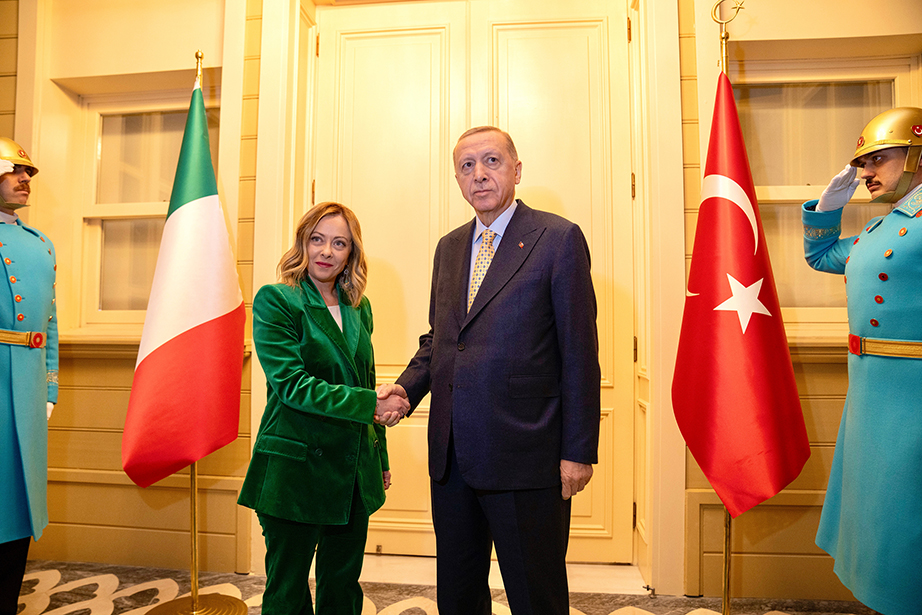
Italy offers an interesting case study in how European governments are navigating these tensions.
Historically one of the strongest supporters of multilateral diplomacy within the European Union, Rome continues to emphasize the central role of international institutions such as the United Nations. At the same time, Prime Minister Giorgia Meloni has sought to maintain close ties with Washington.
That balancing act became visible during the first meeting in Washington of the Gaza “Board of Peace” initiative promoted by the Trump administration. While several major European governments chose not to participate, Meloni opted for a cautious compromise: sending Foreign Minister Antonio Tajani as an observer.
Europe, Italy, and the Security Council
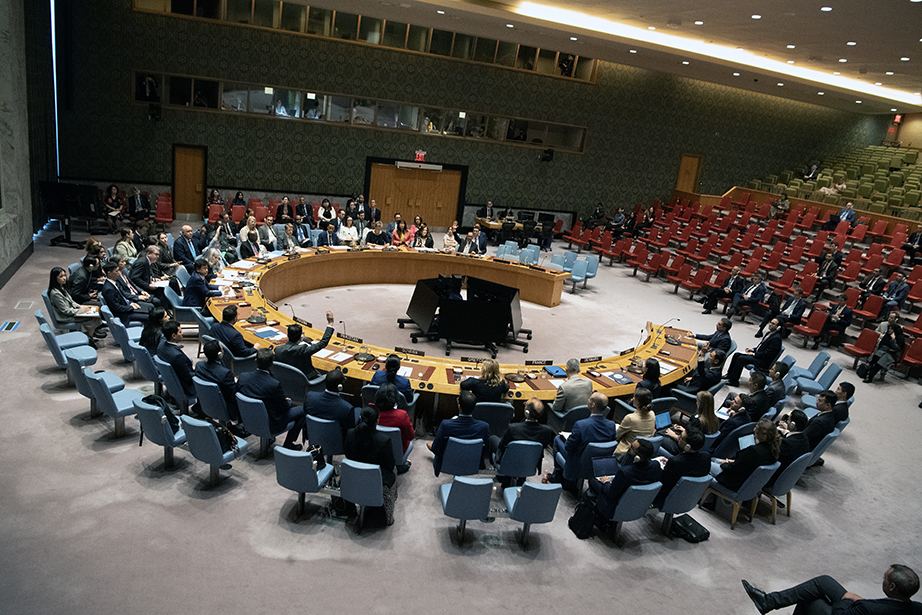
To explore how European divisions play out inside the U.N. system, I recently asked Italy’s new ambassador to the United Nations, Giorgio Marrapodi, about one of the most sensitive institutional debates in global diplomacy: the reform of the Security Council.
The issue is particularly delicate for Europe. Germany, through the Group of four (G4), is trying to get a permanent seat on the Council together with Japan, India, and Brazil. Italy, by contrast, leads the Uniting for Consensus group, which opposes the creation of new permanent seats and instead advocates expanding elected representation.
Marrapodi cautioned against interpreting these differences simply as a European rivalry.
“The differing positions regarding Security Council reform go beyond the purely European sphere and concern the entire membership of the United Nations,” he said. The Council, he noted, was created in 1945 and “no longer reflects current geopolitical realities.”
Italy’s proposal, promoted through the Uniting for Consensus (UfC) group, seeks to make reform more inclusive. “A reform for all, and not only for a select few, is the guiding principle of our proposal,” Marrapodi said.
Expanding permanent seats, he argued, could risk creating new privileges without necessarily making the Council more representative or accountable. “The principles at the core of the UfC model are democracy and accountability,” he said.

Could Europe One Day Have a Security Council Seat?
I also asked Marrapodi about an idea occasionally raised in diplomatic circles: could the European Union itself one day hold a permanent seat on the U.N. Security Council?
The ambassador urged caution. One of the structural problems of the Council today, he noted, is already the veto power held by its permanent members. “Introducing new permanent seats would simply create new privileges without solving the problem of effectiveness,” he said.
There are also institutional constraints.
The U.N. Charter recognizes only states as members of the organization, while the European Union currently holds observer status. “We should be pragmatic about what can realistically be achieved in the short to medium term,” Marrapodi said. At the same time, he pointed out that European cooperation inside the U.N. system is often stronger than it appears.
EU ambassadors and experts in New York meet several times a week to coordinate positions on issues ranging from human rights to sustainable development and the war in Ukraine. “In many areas the European Union already speaks with a single voice,” Marrapodi said.
Cherchez la France
Any discussion about Europe and the future of the Security Council cannot seriously begin without including France’s position. As one of the five permanent members of the Council and a founding member of the European Union, Paris occupies a unique position at the intersection of European integration and global power politics.
France officially supports the G4 for permanent seats on the Council. In January 2025, a French representative said that position is intended to “increase the representativeness of the Security Council,” and Paris also backs permanent African representation. While France’s support for the G4 is a longstanding position, it also avoids more politically fraught questions about France’s own permanent seat, including periodic calls for it to be pooled at the European level.
Any hypothetical scenario in which the European Union might one day gain a permanent seat would inevitably raise delicate questions about how France’s current role might evolve. I asked the French Mission to the United Nations how France views the possibility of a more unified European representation on the Security Council, particularly if such a development were ever to intersect with France’s own permanent seat. By the time this article went to press, no response had yet been received.
A Moment of Strategic Clarity?
Back at the reception on Third Avenue, conversations resumed after Lambrinidis’s speech. Diplomats returned to their quiet discussions. Journalists did not take notes, as the evening was understood to be off the record.
Yet the brief moment of surprise lingered.
I had filmed the speech and later asked the ambassador’s spokesperson, Christopher Matthews, whether his remarks could be used. “I don’t think so, Stefano. I can try to ask the ambassador, but I can’t promise anything.”
A few hours later, a positive answer arrived.
If Trump’s return has produced a geopolitical shock, it may also have created an unintended experiment: forcing European governments to ask whether they can truly act together on the global stage.
Whether that moment of realization will translate into a lasting geopolitical shift remains uncertain. But at the United Nations—where diplomacy constantly tests the gap between rhetoric and power—the question is no longer theoretical.
And perhaps that is why, on that evening high above Manhattan, a room full of seasoned diplomats briefly looked at Europe as if it had discovered something new about itself, or perhaps something it had long hesitated to become.
About The Author