With a new defence agreement in place, Greenland is reviving a proposal to bring its North American Arctic neighbors together—and shift the conversation from military bases and minerals to shared regional challenges.
With Greenland’s lawmakers having ratified an updated defense agreement with the United States and Denmark, Greenland’s top diplomat in Washington, Jacob Isbosethsen, used a November 10 talk at Harvard to revive a proposal for an Arctic North American Forum.
Greenland formally proposed a forum with its Arctic neighbors in Alaska and northern Canada in early 2024 as part of its “Nothing about us without us” foreign, security and defense policy for 2024-2033. But US noise about taking control of Greenland overshadowed discussion of such a panel in 2025 and most of 2026.
In its foreign, security and defense policy document, Greenland framed the envisioned forum as a group that would meet regularly with the goal of building and maintaining stronger ties among North American Arctic neighbors and relations, and collaborating on shared challenges.
Greenlandic leaders were quoted throughout 2024 speaking publicly about the Arctic North American Forum. They even mentioned it in a November 2024 statement, following the U.S. presidential election, that thanked outgoing U.S. President Biden and congratulated then-U.S.-President-elect Trump.
While the proposal appeared in a few academic and policy reports in 2025 and 2026, I found no news coverage of Greenlandic leaders raising it again before Isbosethsen’s Harvard talk this November.
Much of the coverage, understandably, instead focused on Greenland’s security and sovereignty, given the desire by President Trump to purchase or take control of the world’s largest island, a self-governing territory of the Kingdom of Denmark with about 57,000 people. As he entered his new term in 2025, Trump had declined to rule out taking the Arctic territory by force.
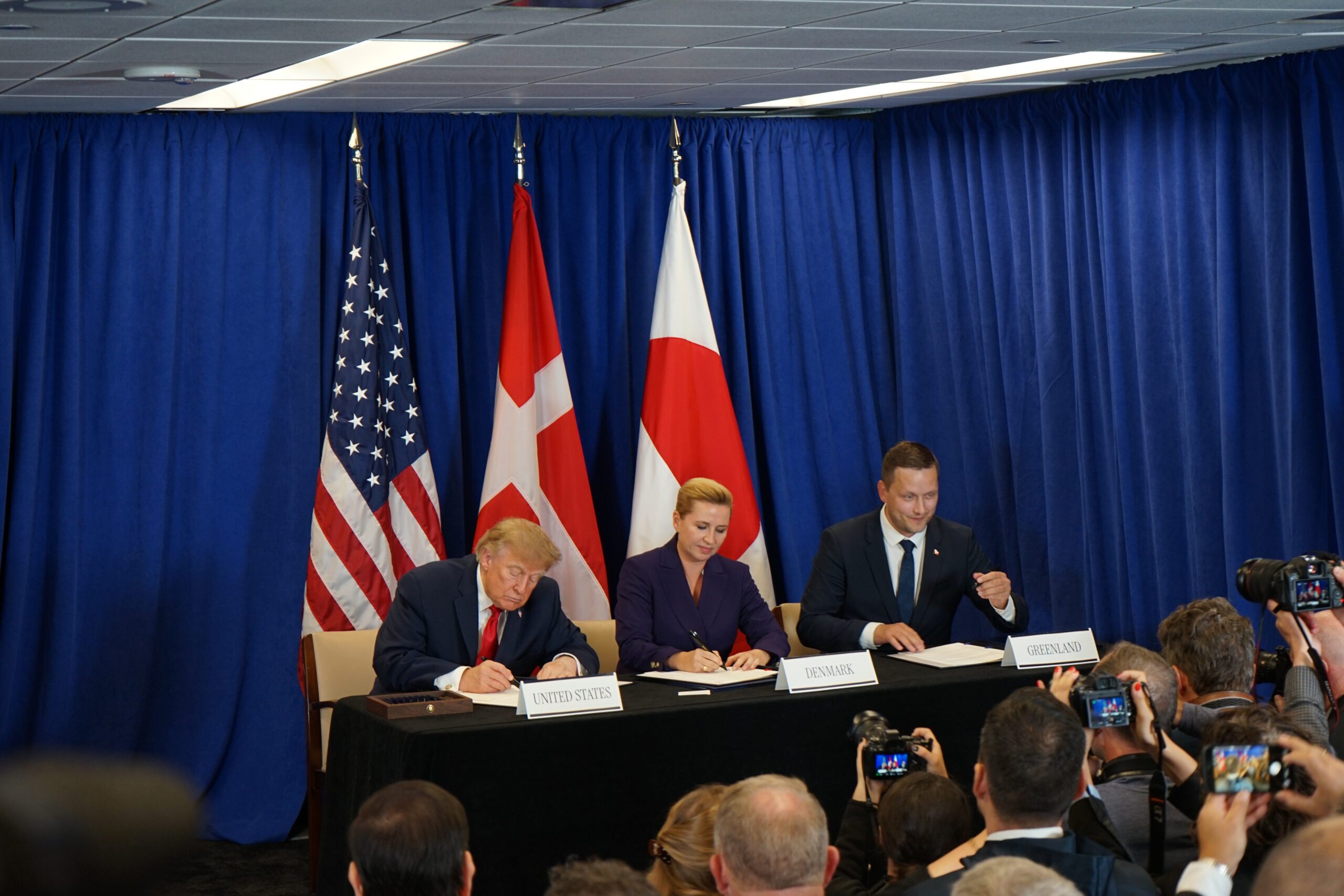
In September 2026, however, Greenland, Denmark and the US signed an agreement on defense and security in New York. And in November, Greenland and Denmark ratified it. Already signed by Trump as an executive agreement amending and updating the existing 1951 defense and security framework, it does not require further action in the US government.
“Trust in a friend of more than eighty years has been challenged,” Isbosethsen said at the event. “But we indeed stood together, and we chose dialogue and diplomacy. It is how responsible nations find common ground, especially when the pressure is high. And the result, as our foreign minister put it, is that Greenlanders can lower their shoulders again.”
With the security agreement with the US and Denmark now in place, Isbosethsen said it is time to rebuild trust and increase partnership. And in that vein, he revived public discussion of an Arctic North American Forum as a place for the governments of Alaska, the Yukon, the Northwest Territories, Nunavut, Nunavik and Greenland to collaborate on solving shared challenges. Greenland’s foreign, security and defense policy document includes among those challenges: “climate change, changes in snow and ice conditions, and changes to the environment and wildlife.”
These challenges have further resulted in infrastructure issues such as housing and roads built on thawing permafrost as well as “social issues, healthcare problems, educational challenges, ‘brain drain’ and new migration routes for animals,” the policy says.
“When people in Washington talk about Greenland, they mostly talk about bases and minerals,” Isbosethsen told the Harvard audience. “But when people in Greenland talk about America, they typically talk about connectivity, education, jobs, and research. Our task is to bring those conversations together.”
An intergovernmental forum that convenes Arctic decision-makers to discuss these challenges and potential solutions as one collaborative body could drive broader understanding among all parties and create opportunities for cooperation, development and solutions that more broadly address parties’ needs.
Katie Merx is a journalist and corporate communications executive whose research focuses on Arctic public diplomacy. She leads Merx Communications and the Arctic Narrative Lab.
About The Author