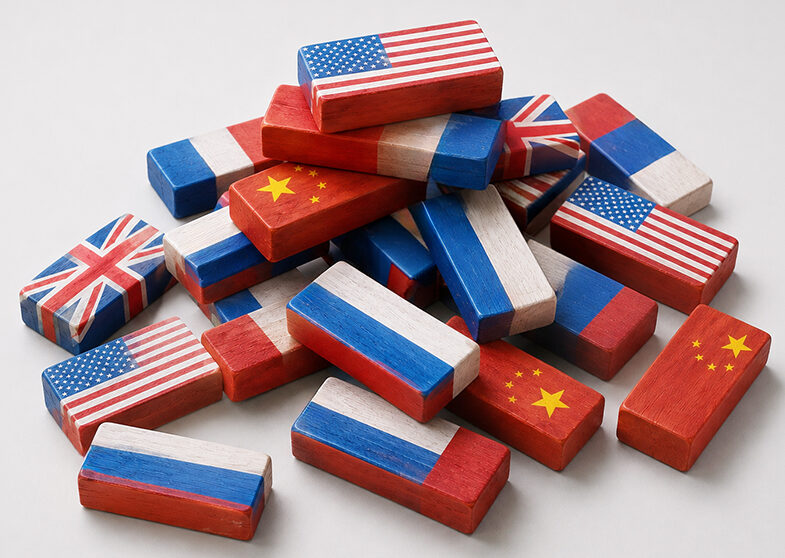
At a moment of profound geopolitical rivalry, Ecuador’s UN ambassador makes the case for persistence, bridge-building and greater responsibility from the P5.
In July 2023, consultations on Haiti had come to a hard stop and a veto was looming. Inside the Consultations Room, the divisions were clear. Ecuador, serving with the United States as co-penholder on the file, faced a difficult task: building enough support not only among the Council’s elected members, but also among the powerful P5.
The question before us was larger than the negotiations themselves: If the Security Council could not respond to the violence and suffering inflicted by armed gangs in Haiti, how could it hope to address even larger conflicts elsewhere? What followed helped shape the negotiations that eventually led to the authorization of the Multinational Security Support mission. It also served as an important lesson for us: elected members are not merely spectators to great-power diplomacy; they can identify common ground, bridge competing positions and help turn disagreement into workable compromise. Building those bridges does not mean abandoning principles. It means understanding where others stand while remaining anchored in the purposes and principles of the UN Charter.
As the international system is navigating one of the most challenging periods since the founding of the UN, there is a growing perception that the Security Council has limited room to operate effectively. Yet, the work of the Council reminds us that disagreement does not eliminate responsibility. On the contrary, it makes dialogue even more essential. The more relevant question is where they can still find common ground and translate their shared responsibility into meaningful action.
The value of the Security Council lies in its ability to provide a permanent forum where dialogue remains possible. It remains one of the few places in the international system where the world’s major powers meet regularly, exchange views, negotiate differences and, when political will exists, reach decisions that have a direct impact on international peace and security.
Today’s international environment is marked by a growing credibility gap and a persistent trust deficit. Bridging both requires every Member State to fulfil its responsibilities and every institution to deliver on its mandate – and that’s especially true for the powerful permanent five members.
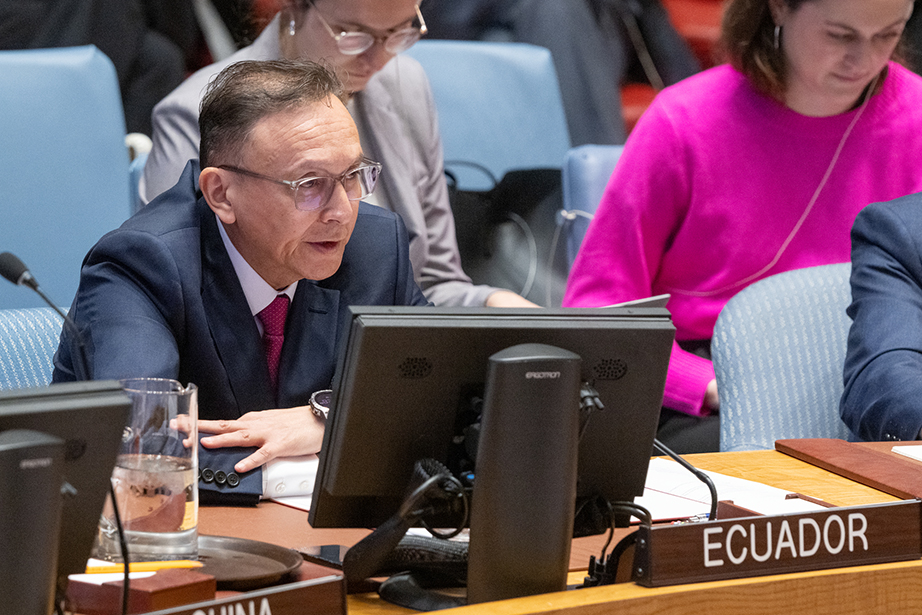
What Ecuador Learned on the Council
When Ecuador prepared for its term on the Security Council, we understood that geopolitical pressures would inevitably arise. We also understood that many circumstances affecting the Council’s work would remain beyond our control. What remained within our control was acting with our own voice, guided by the Charter and our assessment of each situation. Our objective was to contribute actively to solutions consistent with international law, principles and the purposes of the United Nations.
Ecuador’s election to the Security Council with 190 of the 192 votes cast in the General Assembly represented both confidence and responsibility. The result reflected the expectation that Ecuador would contribute to the work of the Council on behalf of the broader membership of the United Nations. Throughout our term, we sought to maintain dialogue with all members, facilitate communication, and contribute to consensus whenever possible. Our approach was guided by the understanding that diplomacy is measured not by the volume of one’s voice, but by the ability to foster understanding among different perspectives.
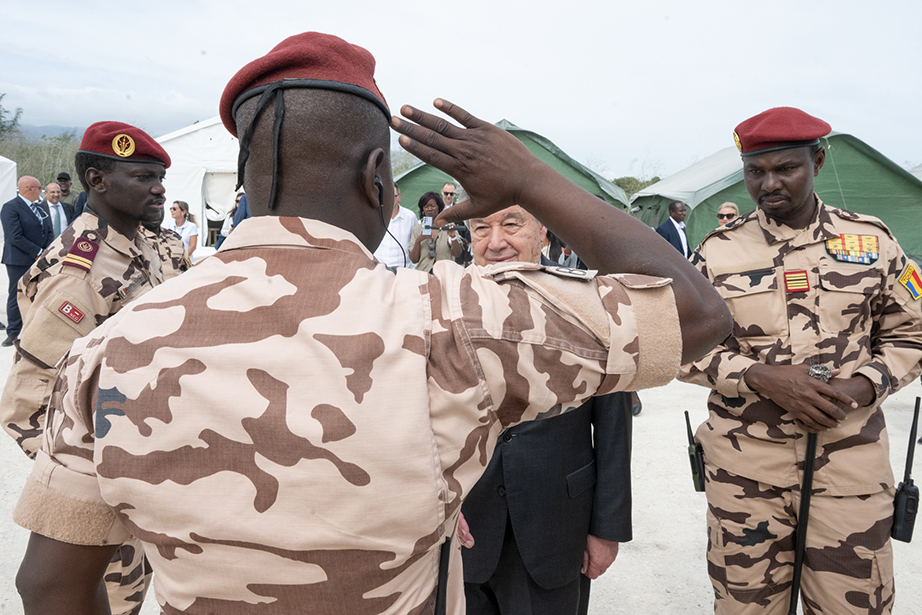
The Quiet Power of Elected Members
In many respects, this reflects the contribution of the elected members of the Council. While public attention naturally focuses on the permanent members, much of the Council’s daily work depends on the efforts of the ten elected members. They engage across regional and political lines, identify areas of convergence, and support negotiations that move discussions forward. Much of this work takes place away from public attention but is indispensable to achieving outcomes.
Ecuador sought to serve as a bridge-builder. We maintained communication with all members of the Council, regardless of political alignment, because we believed that dialogue should never become a casualty of disagreement.
One lesson from our experience deserves particular emphasis. In diplomacy, it is not enough to be right. One must also persuade others and build support for proposals across the broader membership. For countries that do not possess the political weight of major powers, progress depends on building confidence, credibility and trust. Ecuador understood that its role was not to impose solutions, but to help create the conditions under which solutions could emerge. This requires patience, consistency, and a willingness to listen as much as to speak.
Meaningful outcomes in the Security Council are only possible through cooperation among all fifteen members. Differences among them are inevitable. Negotiations extend beyond the Council table to capitals, regional groups, and other stakeholders. Empathy, mutual respect, and continuous communication are essential. Even when positions appear irreconcilable, diplomacy requires preserving channels of communication and continuing the search for areas of agreement.
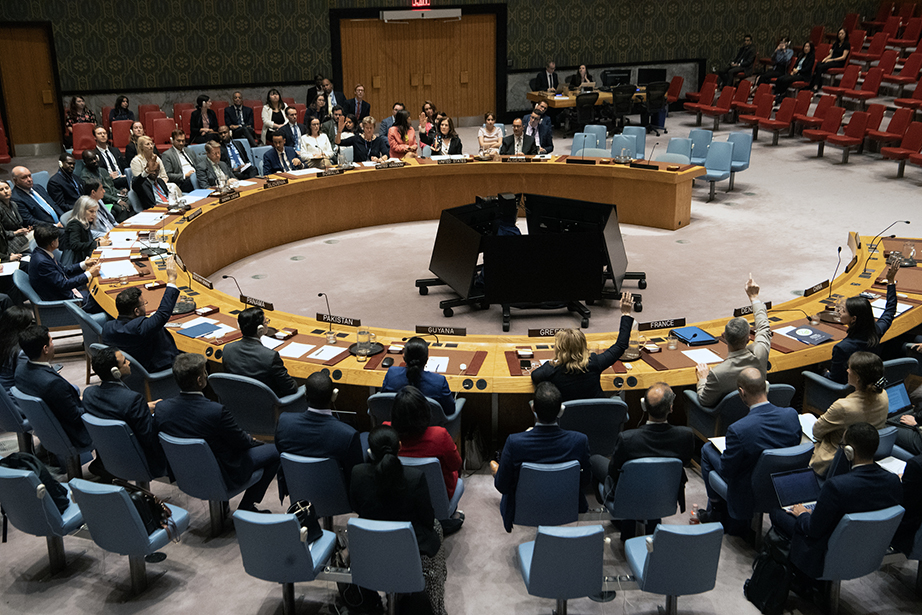
For the P5, Power Comes With Responsibility
This experience also reinforced a broader conclusion regarding the role of the permanent members. Permanent membership was never intended to be an exclusive privilege. It carries a permanent responsibility for the maintenance of international peace and security. The authority entrusted to the P5 should be reflected in concrete efforts to preserve dialogue, reduce tensions, and advance practical solutions. Leadership is demonstrated not only through influence, but also through the willingness to seek compromise.
This responsibility extends beyond the Council’s daily work. As the UN marks its eightieth anniversary, the Security Council will also undertake one of its most important responsibilities under the Charter: recommending to the General Assembly the next Secretary-General of the United Nations. That recommendation will shape the leadership of the Organization during a period of profound geopolitical change. It should therefore be approached with a long-term vision, an appreciation of the purposes and principles of the Charter, and a clear understanding of the responsibility entrusted to the Council by the broader membership of the United Nations.
The UN Charter emerged from political compromise at the end of the Second World War. The veto formed part of that compromise and remains one of the defining characteristics of the Security Council. While views on its use continue to differ, today’s challenge is to ensure that political differences do not prevent cooperation where common interests exist. There remain areas where collective action is both possible and necessary, including conflict prevention, peacekeeping, humanitarian assistance, counter-terrorism, non-proliferation, and the protection of civilians.
Even at moments of profound geopolitical confrontation, the Council ensures that communication among major powers never completely disappears.
One of the lessons I will carry from Ecuador’s service on the Council is that, behind formal statements and negotiated texts, there remains a shared awareness of the human consequences of conflict. No delegation is indifferent to the suffering caused by war. Public positions may differ significantly, yet private conversations often reveal a common understanding of the costs of violence and the importance of preventing further escalation. Those moments reaffirm the value of diplomacy and the responsibility of all Council members to continue engaging, even under the most difficult circumstances.
Persistence is therefore an essential element of diplomacy. The Security Council never stops working, even during periods of profound disagreement. Neither should its members abandon the search for common ground.
Peace has never depended on complete agreement. It has depended on the willingness to continue talking despite disagreement. That is why the Security Council continues to matter. The responsibility of the P5 is not simply to exercise influence, but to exercise leadership through dialogue, restraint, and a commitment to the purposes and principles of the United Nations Charter. In fulfilling that responsibility, they strengthen not only the Council itself but also the multilateral system upon which all Member States, large and small, ultimately depend.
My experience serving as Ecuador’s Deputy and Permanent Representative to the United Nations reinforced my conviction that every Member State, regardless of its size, geography, or level of influence, has the capacity to contribute to international peace and security. The effectiveness of the multilateral system depends not only on the influence of a few nations, but also on the commitment of all Member States to uphold the principles of the United Nations Charter. Above all, our experience taught us that if agreement is not possible today, it may become possible tomorrow.
Ambassador Andrés Montalvo Sosa is the Permanent Representative of Ecuador to the United Nations. A career diplomat since 1993, he has held several senior positions at Ecuador’s Ministry of Foreign Affairs. He has also served in diplomatic postings in Washington, D.C., Brussels, Bogotá, and at the Organization of American States. He was Ecuador’s Deputy Permanent Representative to the United Nations. He is a lawyer from the Pontifical Catholic University of Ecuador and holds graduate degrees from Georgetown University and the University of São Paulo.
About The Author