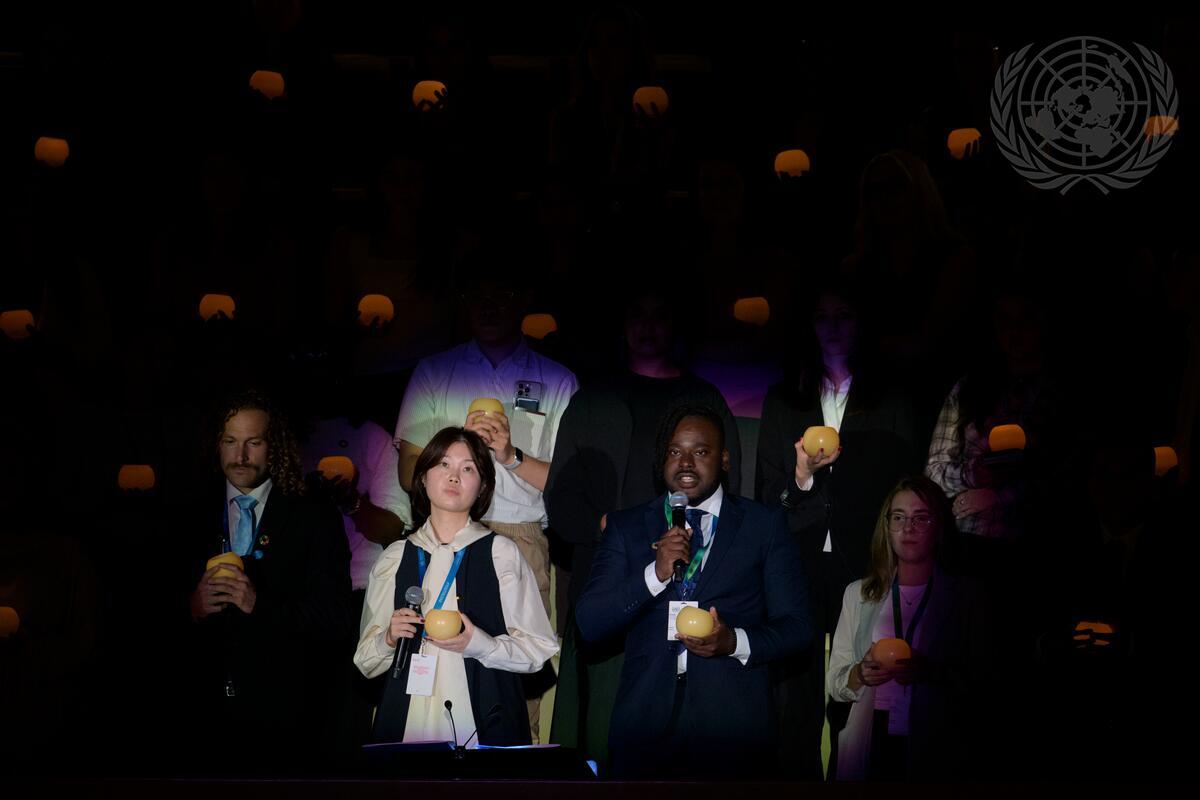
Young attendees tell Envoy what the actual costs—in money, access, and credibility—of being included in the world’s highest-level rooms are.
As world leaders headed to New York for the UN General Assembly last week, young people flocked here too to try to secure a seat at the world’s table, only to find out that getting into the room is only the first hurdle to getting one’s voice heard as a young advocate.
“Under the current secretary-general, the UN has really championed youth,” said Climate Cardinals Executive Director Hikaru Hayakawa, who has been involved in UN-related activities since he was 15.
Whether the secretary-general who will succeed António Guterres will prioritize young voices in the same way remains an open question, but the young people who attended this year weren’t waiting to find out. They showed up anyway, raising a more pressing set of issues: what it actually costs to be at UNGA, who gets to be here, and whether anyone truly listens once you are.
A Question of Privilege
Let’s start with cost. Justina De Pierris flew in from Buenos Aires for her first UNGA. As a Youth Advisory Council member at Comic Relief, she raised the issue directly with the UN Youth Office, asking how young people might participate meaningfully in ways compatible with their realities back home. “If we want to be here, we need to cover many, many costs,” she said.
These costs are compounded by the fact that much of UNGA’s grunt work is carried out by young, unpaid interns, a privilege in itself in a city this expensive. Envoy was told that some interns even use volunteer programs like Workaway or HelpX to avoid paying high rent.
Beyond the Financial Cost
Cost determines who’s in the room. Once you’re there, the next hurdle is being heard. Now 21, Anais Clermont has worked with UNICEF France for six years and attended this year as UN Youth Representative at GloCha and Senior Policy Coordinator at the MESA Institute. “The voices that we hear at the UN are always the same,” she said, “because they have the opportunity to be there.”
Nathan Guma, a data journalist and Dag Hammarskjöld Fellow from Zimbabwe, put it more plainly: “I really wish that many young people could also get this opportunity to be here to be part of the diplomatic discussions that are happening.”
The inability to get a foot in the door can lead to despondency. For many young people, being heard boils down to knowing how to get into the right rooms. Guma said that in developing countries like Zimbabwe, “most people just know that there is the United Nations; they do not really have much information on what the United Nations does or how they can be involved in the United Nations’s works.” According to him, the information gap is exacerbated by high data and internet costs.
Too Young to Be Taken Seriously?
Even once you’re in the room, age can sometimes work against you. “I’ve definitely been in rooms where everyone is speaking, and then I start speaking, and they’re like ‘this person looks young—who is this person?’” Hayakawa recalled. “And, you know, their brains just turn off. Like they’re on their phones, they start speaking to each other instead of listening.”
Kal Glanznig, a COP31 Youth Ocean Advocate who flew 22 hours to New York from Sydney ahead of Pre-COP in Fiji next week, said he knows the feeling. “It’s easy as a young person to feel like, ‘Aw, I’m just a tick-in-the-box young person.’ I’ve definitely been there before.”
Clermont has seen the flip side of that tokenism when sitting across from youth ministers well over 60. “If we want to talk about youth,” she said, “we need to have youth at the table.”
Glanznig echoed this: “You need to realize that you’ve got so much inherent value. The fact that you haven’t been on this planet for that long so you do have all of these different ideas and all of these new ways of thinking that the world really needs to listen to and learn.”
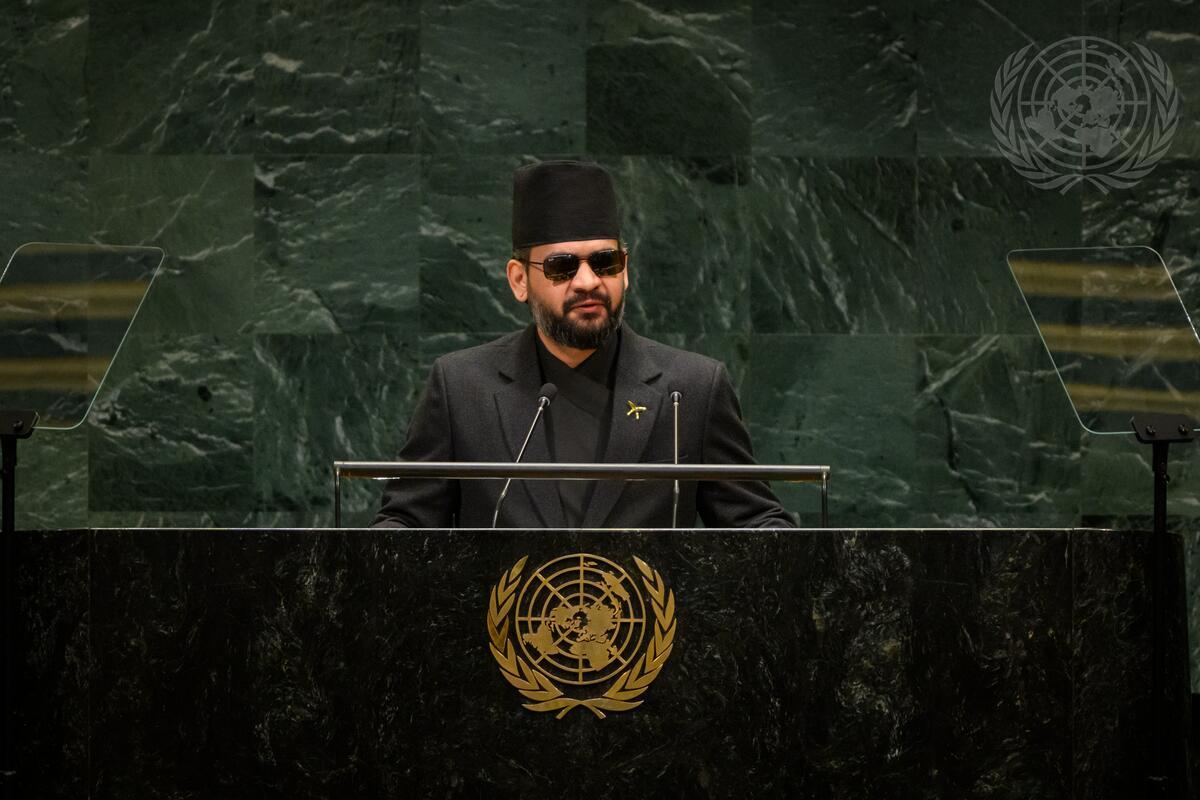
Not everyone is waiting for a seat to be offered. Prime Minister Balendra Shah of Nepal, the youngest head of government to address the Assembly this year, was elected, in the words of MESA Institute Executive Director Adam de Picot, by “a young generation who were disenfranchised to the point of rebellion.”
If the UN won’t always make room, Gen Z has shown it’s willing to create it.
About The Author