The Quiet Work of Diplomacy
Looking back through UNGA photographs, I found myself reflecting less on individual events than on the movement of the process itself. Undoubtedly, the past few years have been the most intense in recent history and the shift in coverage, focus and angle on geopolitics has become wide and the key points sometimes feel overlooked.
Today, with the quickening pace of our lives, our attention is constantly drawn to the next development. Yet speed is rarely the reality of diplomacy. It is a constant moving mechanism which requires a fine and delicate tending to, and open dialogue. But that being said, if there wasn’t pressure, it could take too long, so we need it also… but the question I ask myself is; what is the right speed? For another time.
What can be said here is that discussion, deliberation, agreement and implementation is key to our human disposition, whether it is welcome or not, we have to embrace that, and in this selection is my intention, to show that process, the human side, which technology cannot replace.
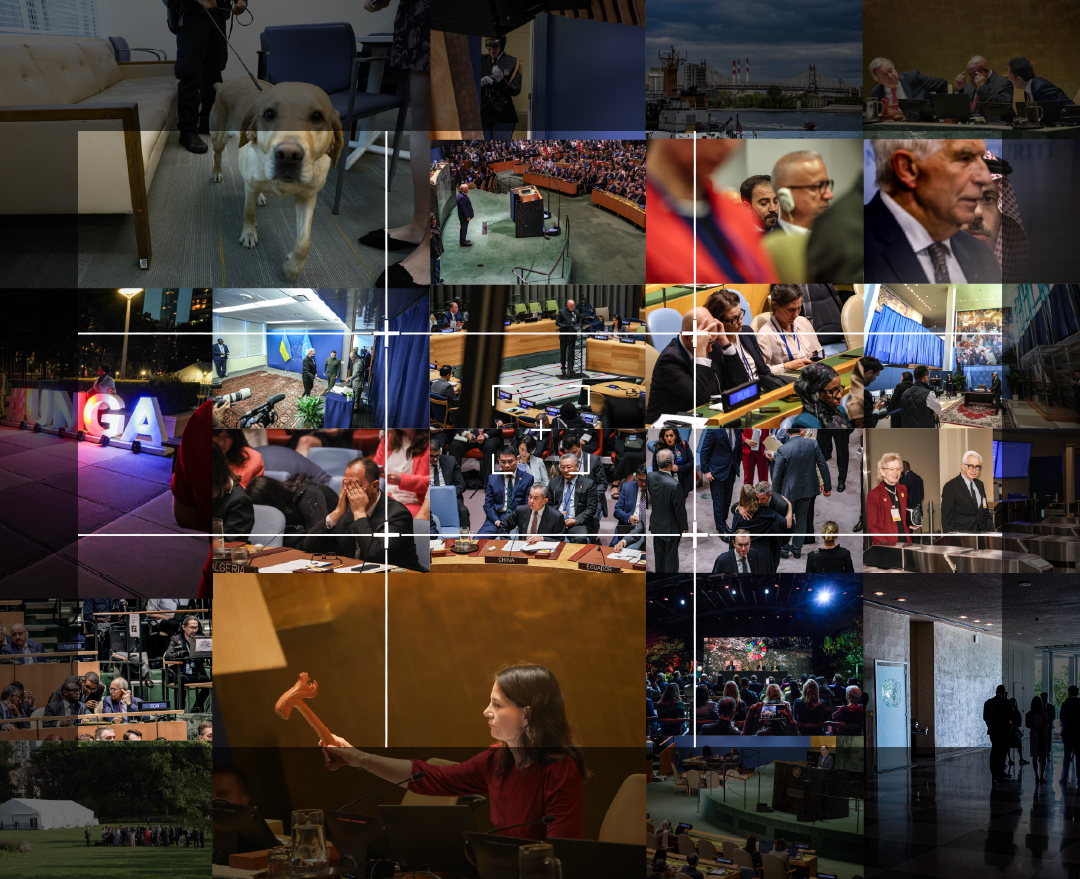
In this selection my intention is to show what we don’t get to see so often, the part that isn’t always the quick sell or the “money shot” but more the organic perspective of people trying to make a difference within a polarized and pulling world. More often than not, diplomacy is found in the quieter moments between decisions, in the conversations, the preparation, the waiting and the persistence that rarely reaches the headlines but forms the substance of diplomacy. Alongside the negotiations are moments of concentration, warmth, humour and genuine connection. These moments are as much a part of diplomacy as the decisions themselves.
Out in the Open
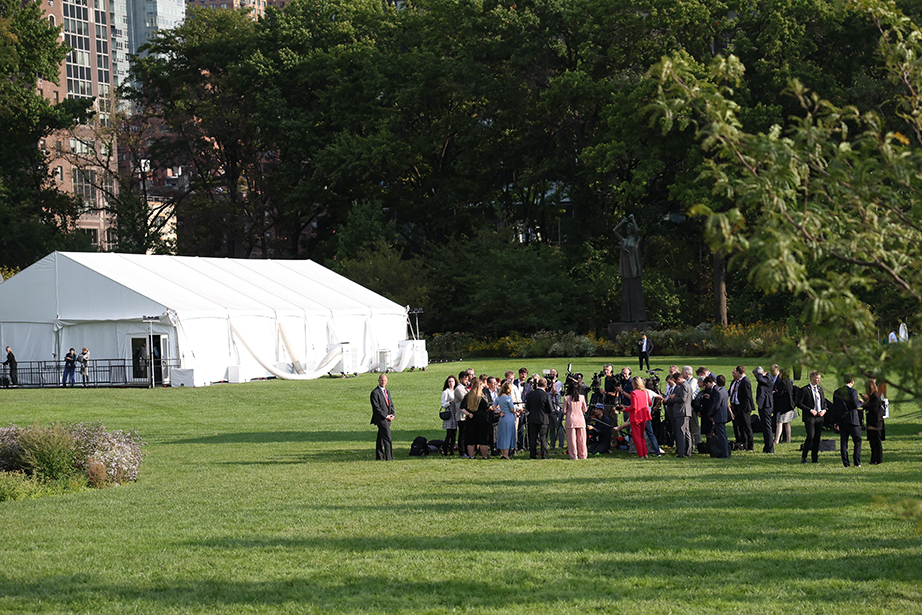
A delegation holds a press conference on the grounds of the United Nations. Between meetings and negotiations, delegations regularly brief journalists from their own countries, keeping governments and the public informed as events unfold. Set against the Secretariat building, the scene conveys the scale of the institution and the global context in which these conversations take place.
The Quiet Impact
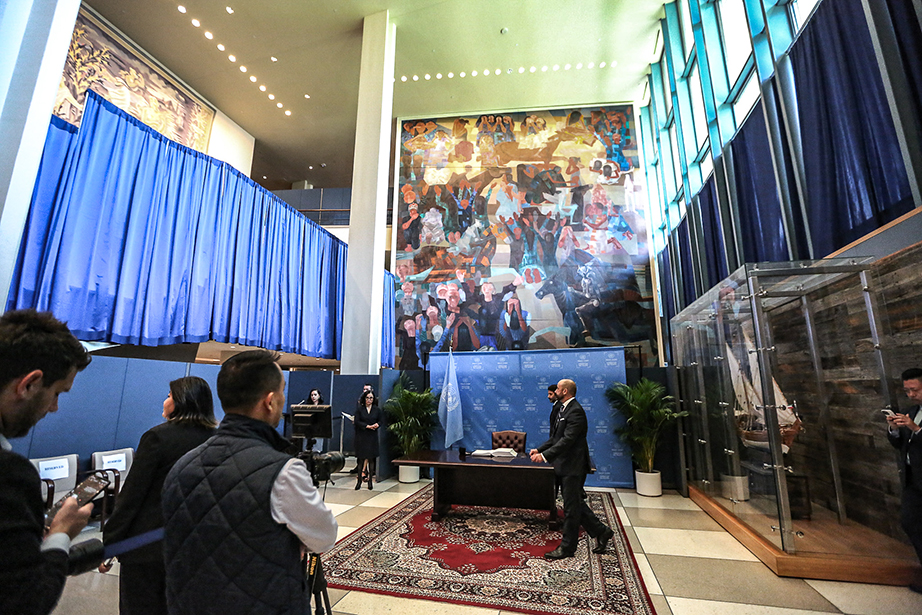
A quieter moment, but one of my favorites. The treaty process is an essential part of UNGA, where support for international agreements is often expressed away from the spotlight of the General Debate. This photograph shows the signing area for the BBNJ Agreement, or High Seas Treaty. Between ceremonies, staff wait for the next delegation, a reminder that diplomacy is built not only in speeches, but through the steady work of negotiation, agreement and implementation. The treaty entered into force on 17 January 2026 after years of negotiations, with its first Conference of the Parties (COP1) scheduled for January 2027.
Another Way of Looking at It All
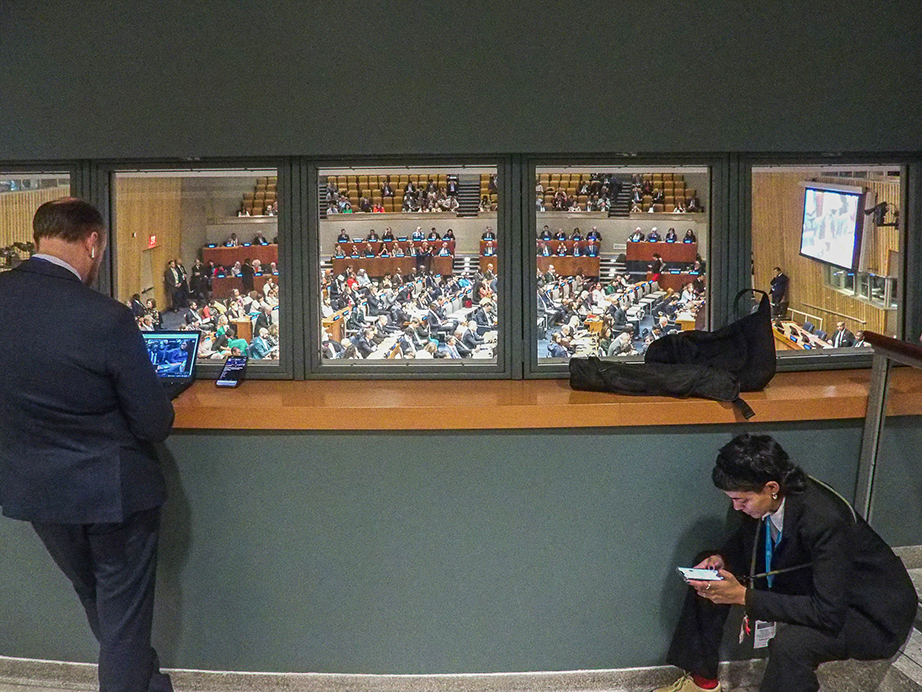
Not everyone who comes to UNGA is a diplomat. Many attendees represent civil society, NGOs and other organizations seeking insight into issues they care about. Here, UNGA attendees observe proceedings in Conference Room 4 from the public gallery. While the meeting continues below, one attendee listens to the live audio feed as another takes notes on a mobile phone. Beyond the conference room itself, much of the work of following discussions, documenting developments and engaging with the process continues throughout the building.
Subtle Security Measures
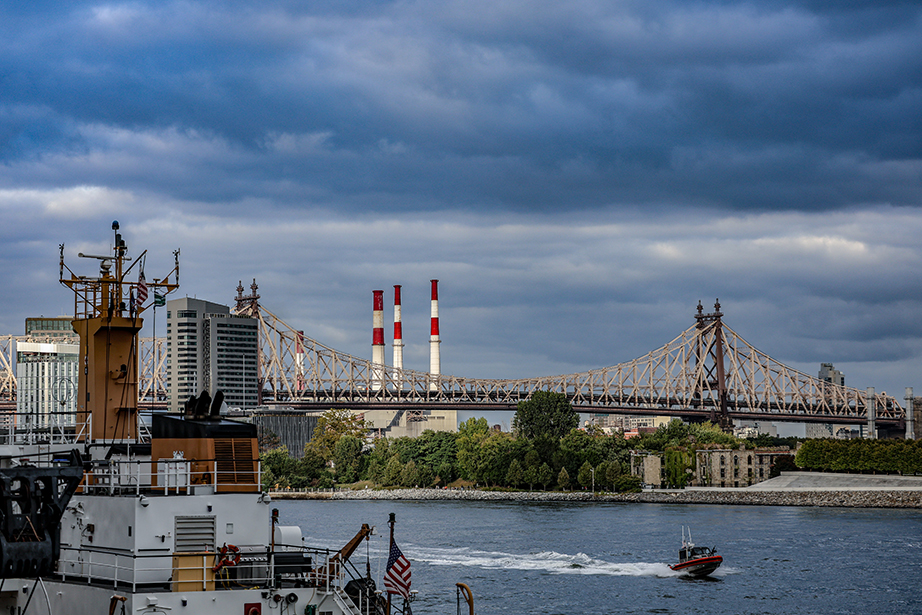
At first glance, this appears to be an ordinary view across the East River. Yet it reflects part of the extensive security surrounding the high-level week of the United Nations General Assembly. With more than 130 heads of state and government in attendance, UNGA79 required one of the largest and most complex multi-agency security operations in New York City’s history. Many of these measures remained largely unnoticed, quietly supporting the safe conduct of the Assembly.
The Friendliest Security Detail
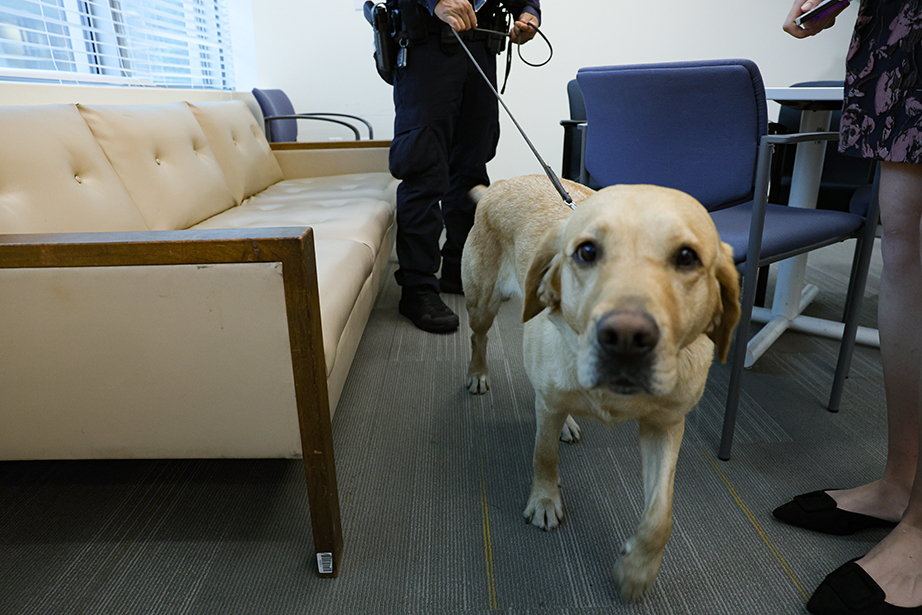
Amid the intensity of UNGA, the K9 units often provide a welcome moment of warmth. Behind their friendly faces are highly trained working dogs that play a vital role in the security operation, screening for explosives and helping to keep delegates, staff and visitors safe.
Presentation of Peace
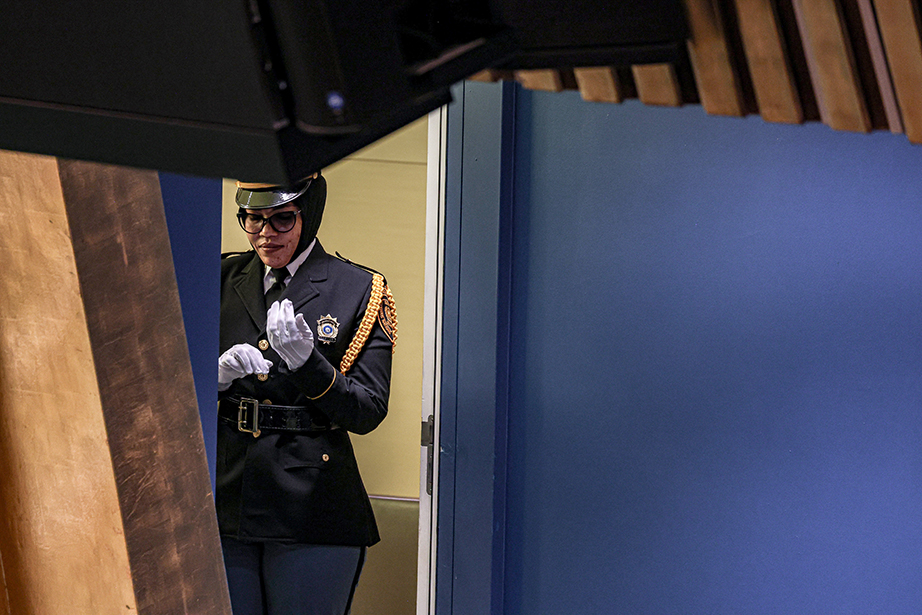
This has long been one of my favorite photographs. Taken during a rehearsal beside the General Assembly Hall, a UN Security Officer adjusts her gloves before taking her position. The small gesture conveys the professionalism, discipline and composure that define the role. Among the most recognizable faces of the Organization, UN security officers provide a constant presence throughout UNGA, helping ensure that one of the world’s largest diplomatic gatherings runs safely and smoothly.
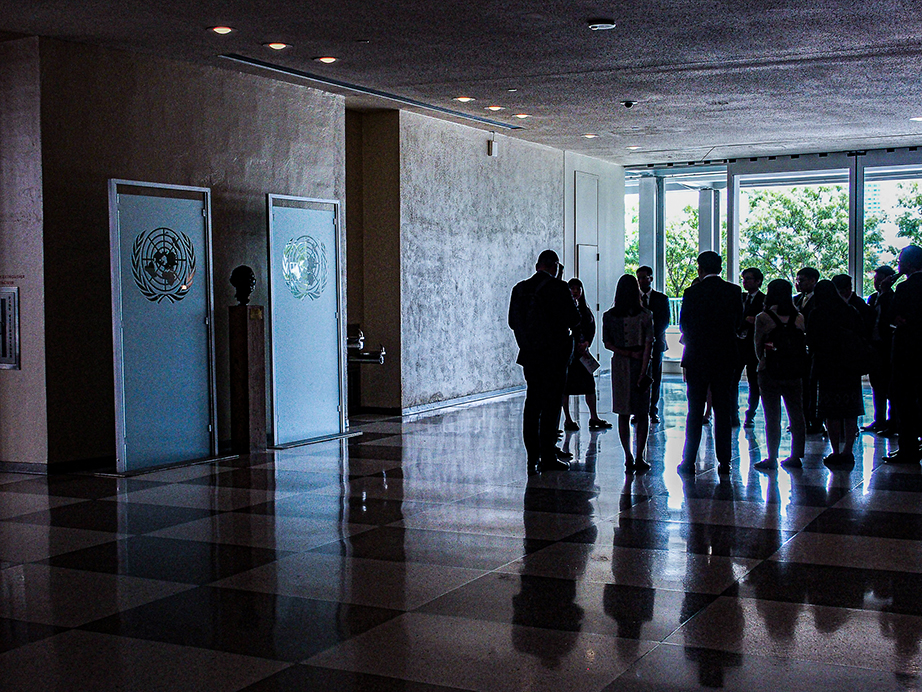
Conferring Before Bilaterals
Silhouettes gather outside the bilateral meeting rooms before a scheduled meeting. Between formal sessions, conversations, consultations and exchanges continue as delegates prepare for the discussions ahead. These final moments often shape the tone, priorities and approach before the bilateral meeting begins.
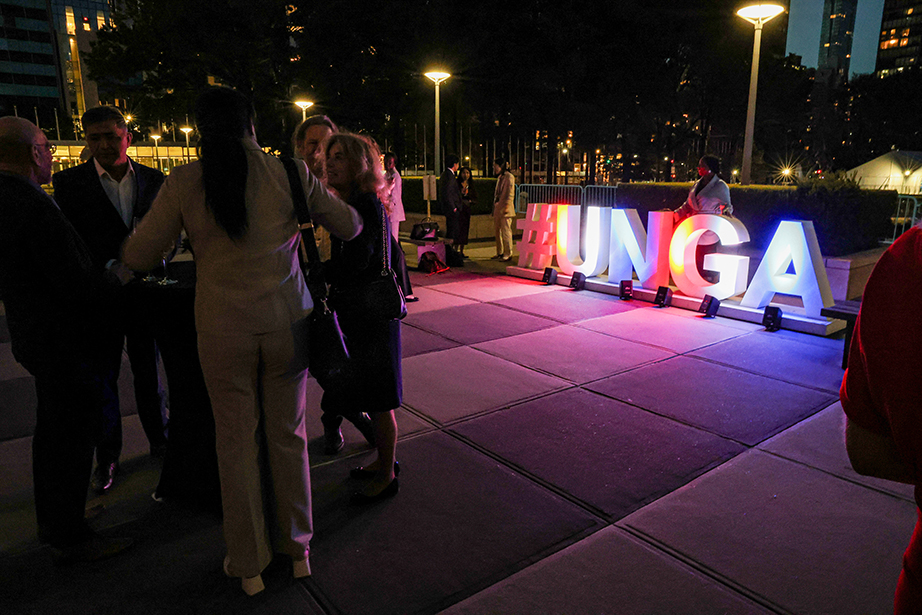
The Lighter Side of UNGA
Here, an evening reception beneath the illuminated UNGA sign provides delegates with an opportunity to continue conversations in a more informal setting. Diplomats are human, just like everyone else, and long days of discussions can be exhausting. The serious vernacular gives way to more natural conversation, where personality, humour and informal exchanges become part of building trust.
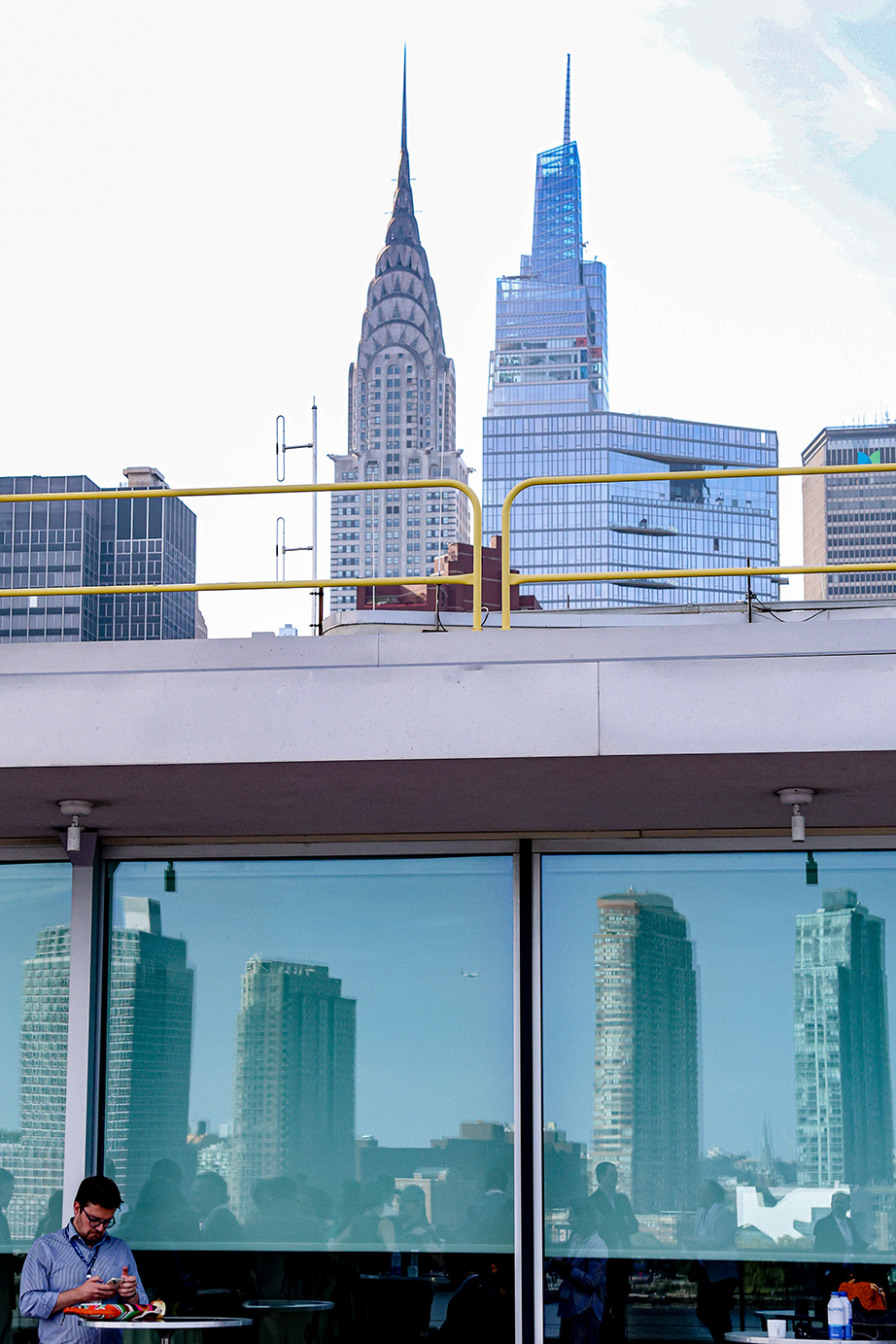
Reflective Perspectives
A man checks his phone on one of the terraces of the United Nations Secretariat Building. The Chrysler Building rises in the background while the skyline of Long Island City is reflected in the Secretariat’s windows.
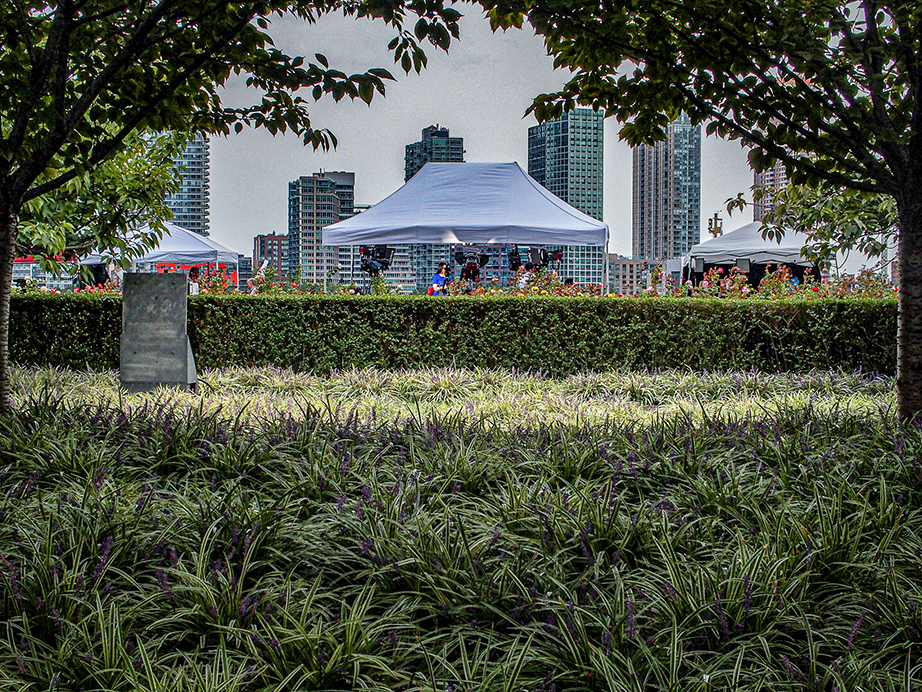
Broadcast Row
Temporary news tents are erected on the North Lawn overlooking the East River during UNGA. Located beside the Rose Garden, they become workspaces for broadcasters and journalists covering the General Assembly as events unfold throughout the day. The tents are used by broadcasters and journalists, including some of the world’s leading international correspondents covering the General Assembly.
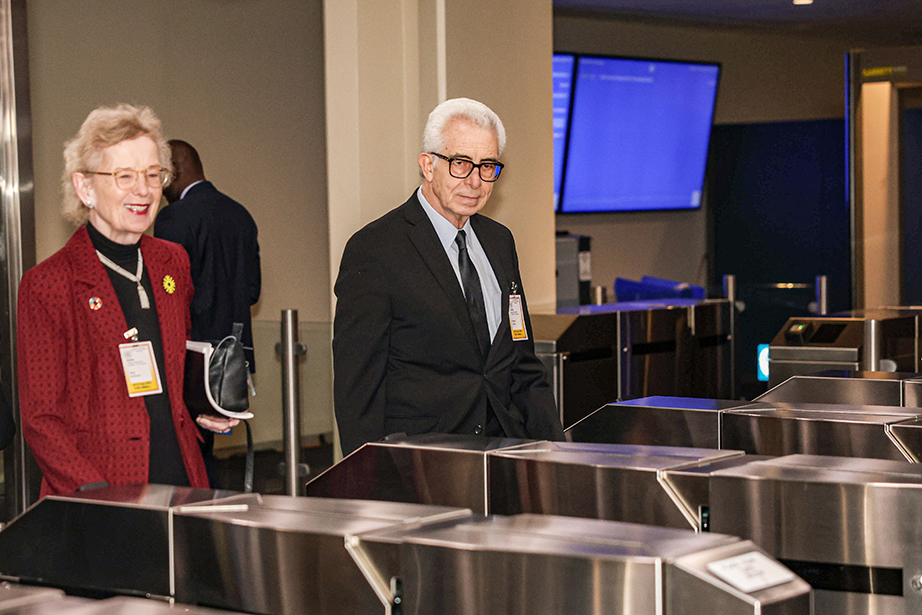
Service Beyond Office
Former Mexican President Ernesto Zedillo enters the Delegates Entrance alongside Ireland’s former president Mary Robinson at UN Headquarters during UNGA. Now members of The Elders, they are among the former heads of state who continue to contribute to international discussions and high-level meetings held alongside the General Assembly. Founded by Nelson Mandela in 2007, The Elders is an independent organization of former global leaders and statespersons working to promote peace, justice and human rights.
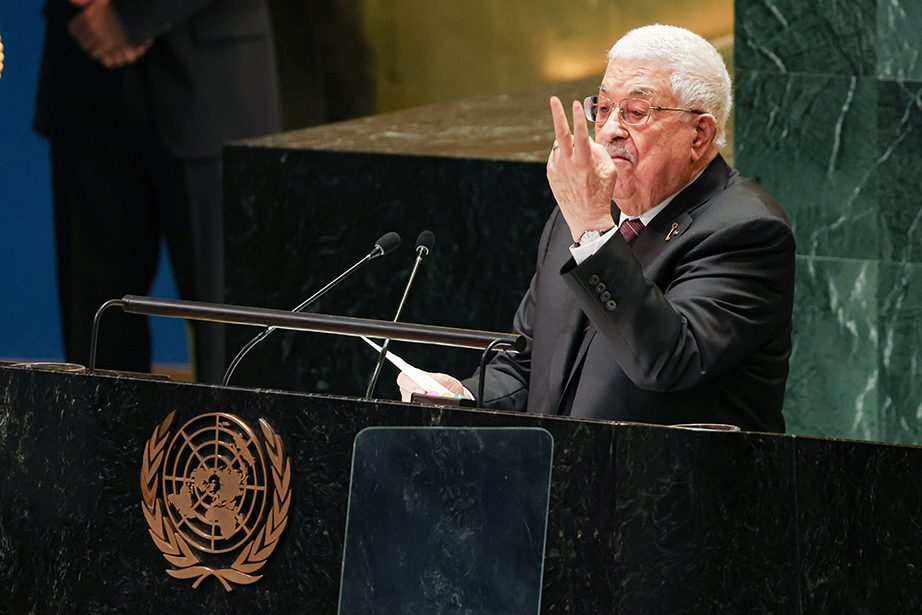
A Symbolic Gesture
Palestinian leader Mahmoud Abbas addresses the United Nations General Assembly during the High-Level Debate. He raises two fingers, referencing the long-standing call for a two-state solution, one of the central issues before the international community. While much of diplomacy takes place beyond public view, the General Assembly Hall is where world leaders publicly present their positions, priorities and messages before the international community.
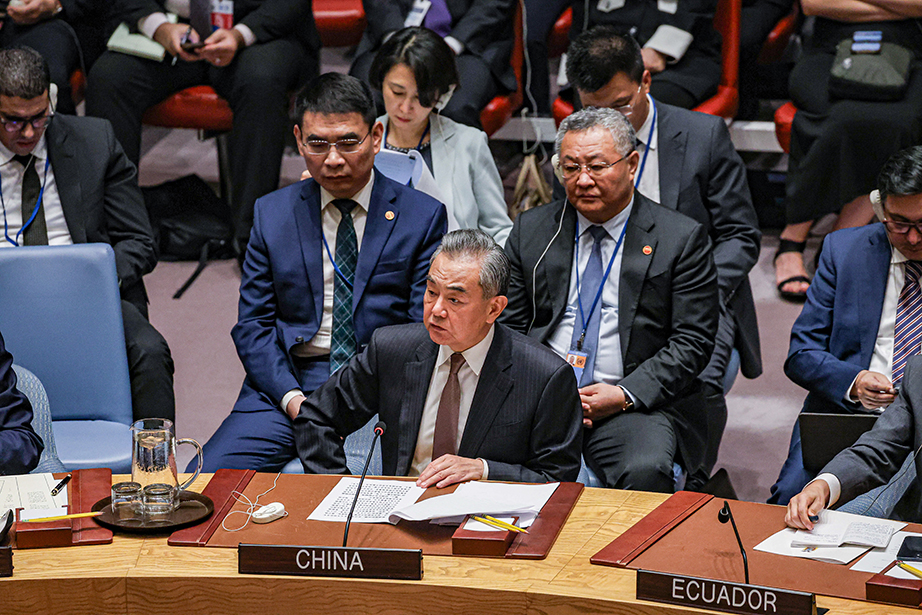
The Ripple Effect
As one of the P5 countries, China’s approach to diplomacy has a deeply rooted historical aspect, informed by the continuity and longevity of its civilization. Here, Chinese Foreign Minister Wang Yi addresses the Security Council on the situation in the Middle East, discussing not only the implications for the region but also the wider effects on other parts of the world. China’s position consistently emphasizes the interconnected nature of international affairs while maintaining its own firmly held positions, highlighting how conflict in one region can create ripple effects across the world.
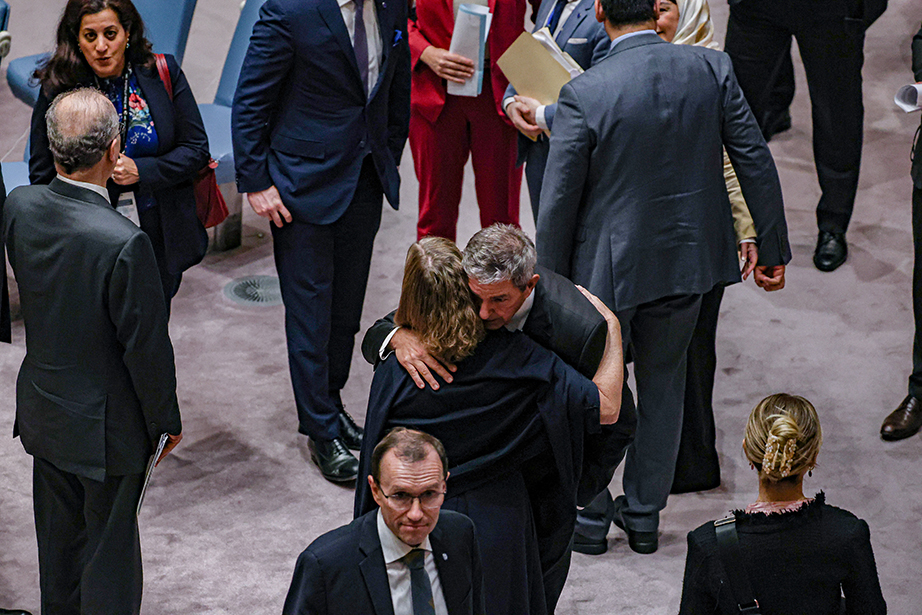
The European Embrace
The European Union occupies a unique place in international diplomacy, bringing together nations with different histories, languages and cultures under a shared political framework. Compromise and consensus are central to its decision-making, requiring constant dialogue while allowing Member States to maintain their own national identities and positions. Here, EU Permanent Representative Stavros Lambrinidis embraces a visiting delegate, a gesture reflecting the openness and relationship-building that are an important part of European diplomacy, even as the EU continues to navigate increasingly complex global challenges.
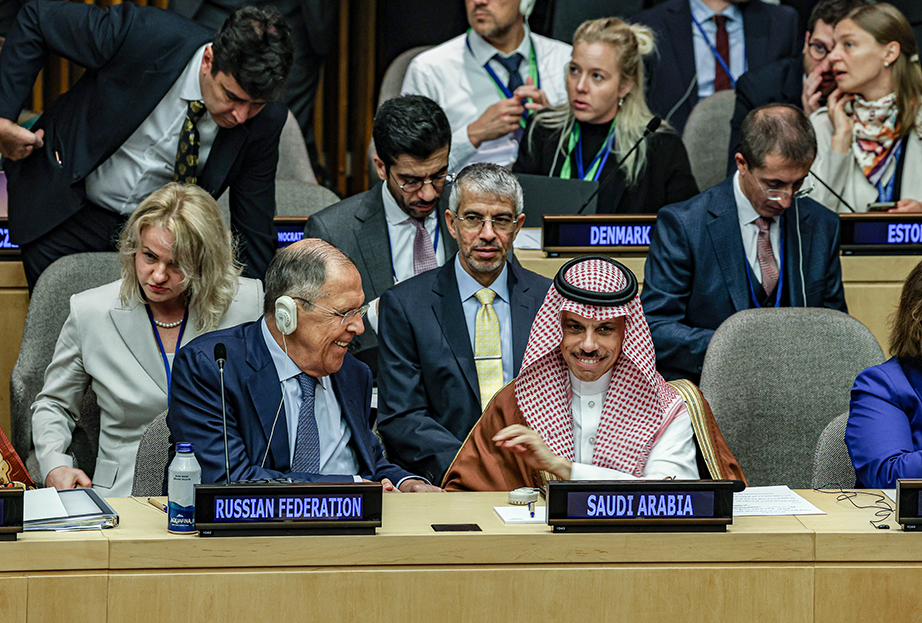
Multi-Layered Relationships
Russian Foreign Minister Sergey Lavrov smiles at Saudi Arabian Foreign Minister Prince Faisal bin Farhan Al Saud during the G20 Foreign Ministers’ Meeting at UNHQ. As members of the G20, both countries play important roles within the forum through their respective strategic and economic influence. Recent conflicts and geopolitical shifts have often drawn attention to their respective positions, yet diplomacy continues across multiple levels. International relations are seldom one-dimensional; disagreement and cooperation often coexist, requiring continued engagement where mutual interests remain.
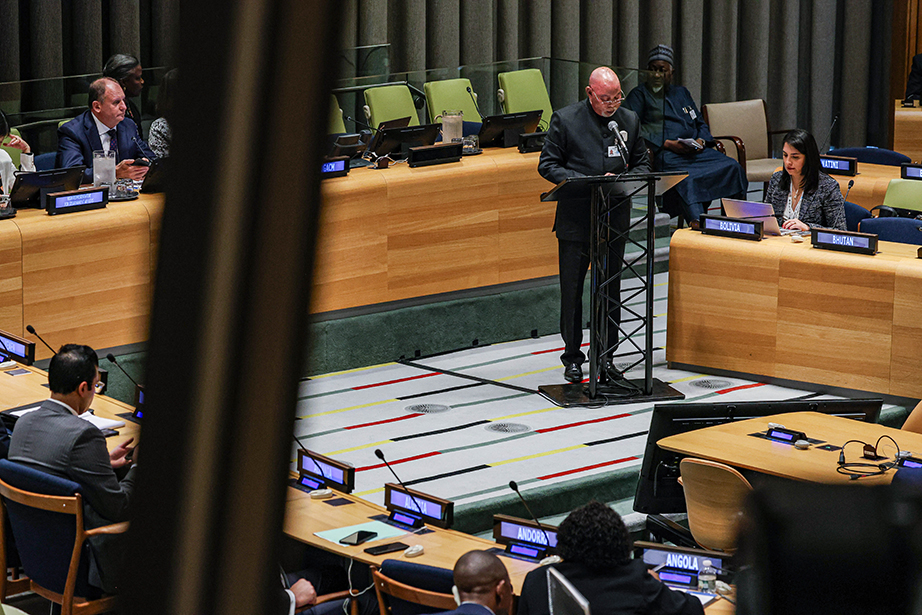
The Evolving Convention
Here, Ugandan Foreign Minister Jeje Odongo speaks during a UNGA High-Level Meeting marking the International Day for the Total Elimination of Nuclear Weapons. Traditionally, nuclear disarmament is not an issue the public readily associates with Africa, yet this meeting reflects the continent’s engagement in global issues beyond those with which it is more commonly associated. Odongo’s humility and modesty in presentation are qualities that quietly define his diplomatic style.
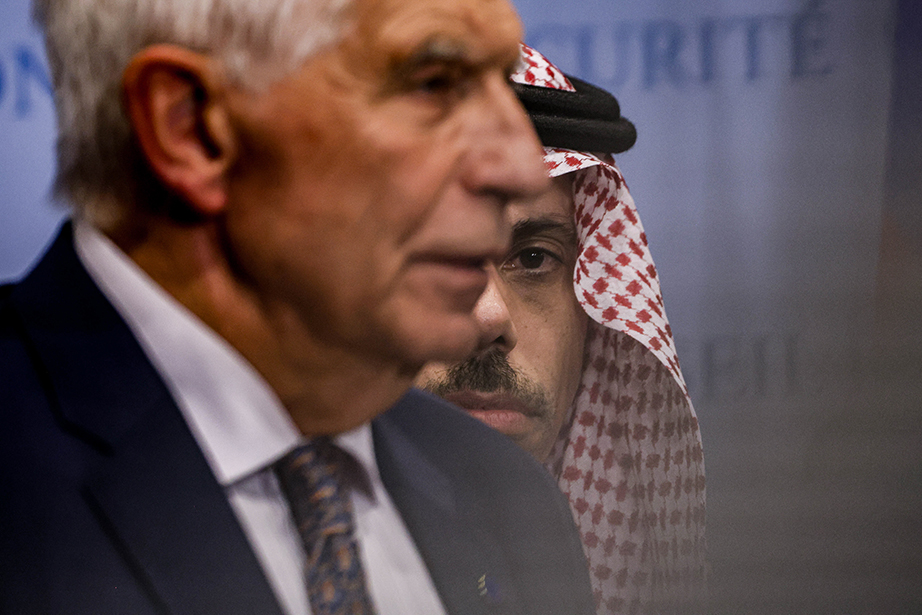
Looking In, Looking Out
Though there is often a passive awareness of media presence, and at times delegates speak directly to the camera, there are moments of quiet consciousness when they become aware of being observed. Here, Saudi Arabian Foreign Minister Prince Faisal bin Farhan Al Saud looks into the camera as Josep Borrell, the European Union’s former High Representative for Foreign Affairs and Security Policy, addresses the press at the Security Council stakeout.
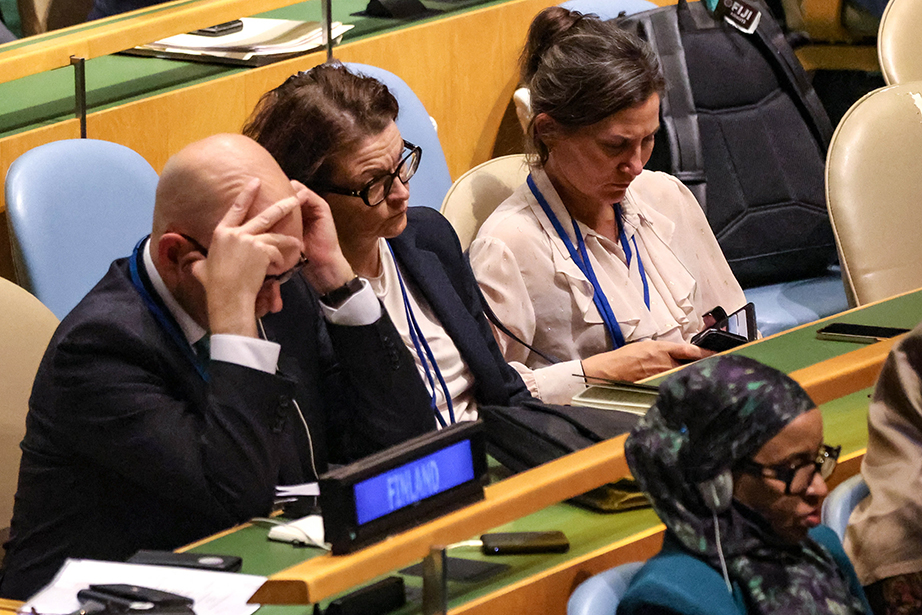
Constant Adaptation
The strain of war and negotiation demands constant focus. Here, Finland’s representative takes a moment to review a document as the General Debate continues. As speeches progress, delegates often revise their remarks or adjust their approach in response to new developments or points raised by previous speakers. Every moment is an opportunity to remain present as diplomacy unfolds in real time. It requires constant awareness, thoughtful decision-making and precision and in this case, rewrites.
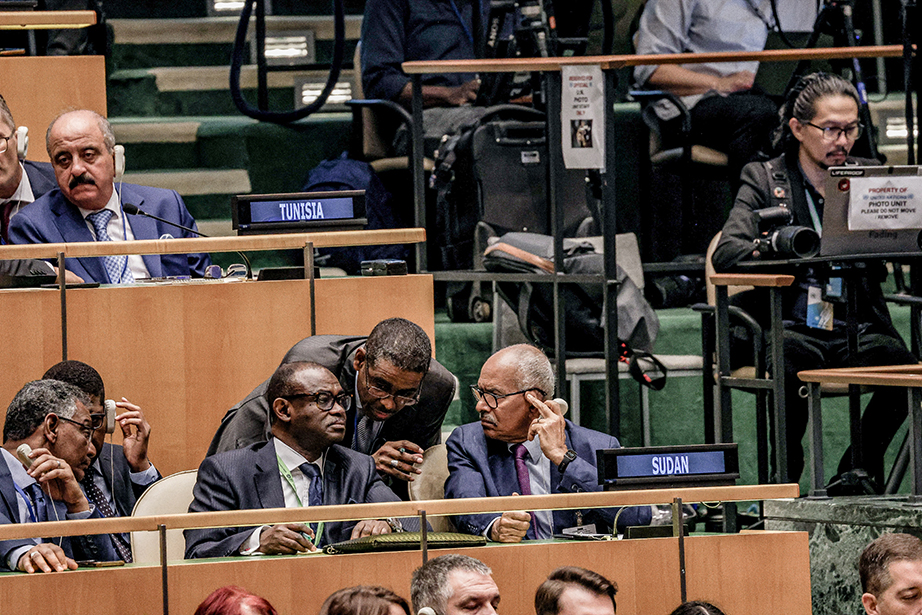
The Proximity of Trust
Members of Sudan’s delegation confer during the General Debate as proceedings continue around them, with the press behind and Tunisia visible in the background. Over the years, I have noticed that different delegations confer in different ways. Some maintain a more formal distance, while others naturally draw closer together in conversation. Sudan is one delegation where I have often observed that closeness. There is a natural ease to the exchange that suggests familiarity and trust, allowing the conversation to continue despite the activity unfolding around them.
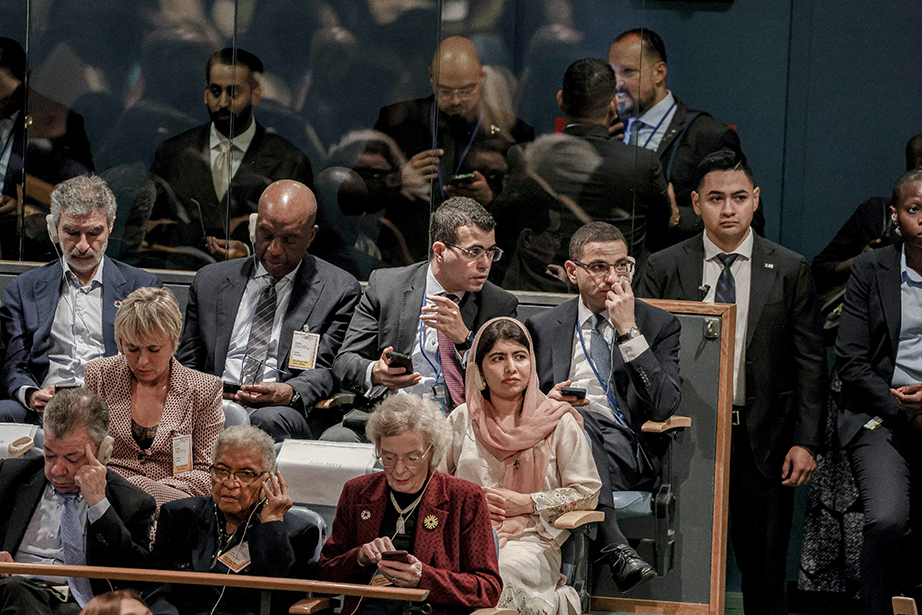
Generational Purpose
When I took this photograph, my attention was entirely on Malala Yousafzai. It wasn’t until I reviewed the image later that evening that I realised what else it contained. Sitting in front of her were members of The Elders—Juan Manuel Santos, Ellen Johnson Sirleaf and Mary Robinson. The photograph unexpectedly became a convergence of generations of leadership and international advocacy, each contributing their own experience and perspective to the same conversation.
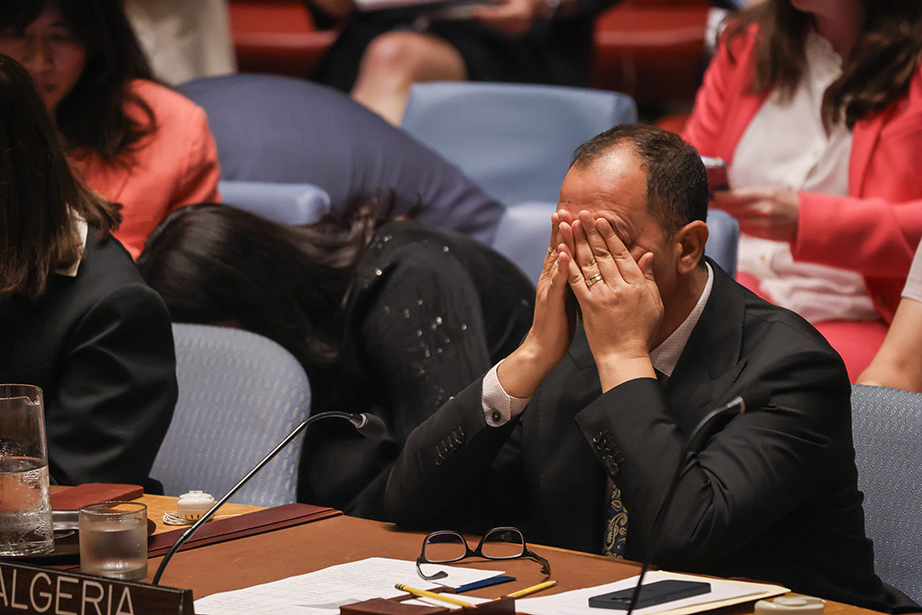
A Private Public Moment
An Algerian delegate covers his face during a United Nations Security Council meeting as proceedings continue around him.
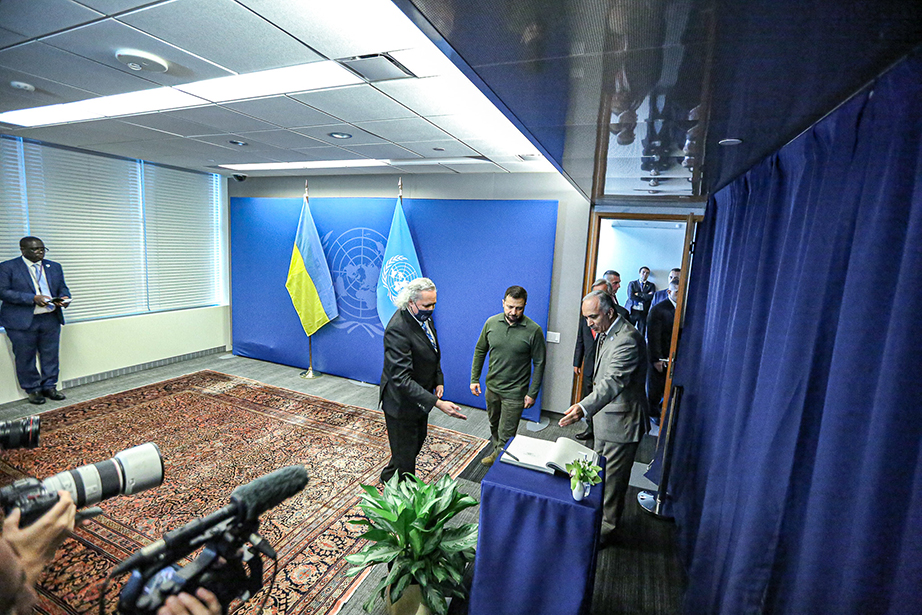
The Guest Book Tradition
Ukrainian President Volodymyr Zelensky is shown the United Nations guest book before being greeted by Secretary-General António Guterres ahead of the official photo opportunity. The arrival ceremony is a familiar part of UN protocol and one of the standard moments photographers are there to document. In the context of an ongoing war, however, the brief pause to sign the guest book highlighted the contrast between diplomatic tradition and the urgency of the moment.
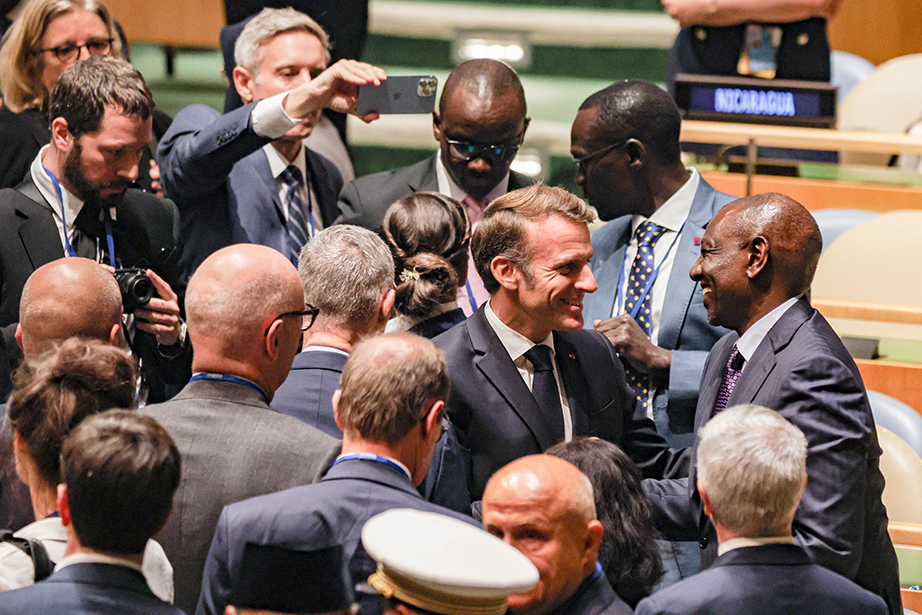
Familial Diplomacy
French President Emmanuel Macron and Kenyan President William Ruto greet one another as Macron walks through the General Assembly Hall during UNGA. There is a natural ease and familiarity between the two that extends beyond protocol. As Macron moves through the Hall, delegates and diplomats often gather to greet him or wait for the opportunity to do so, creating a moment that draws people naturally into the exchange. It is a reminder that diplomacy is built not only through formal negotiations, but also through the personal relationships that develop between leaders.
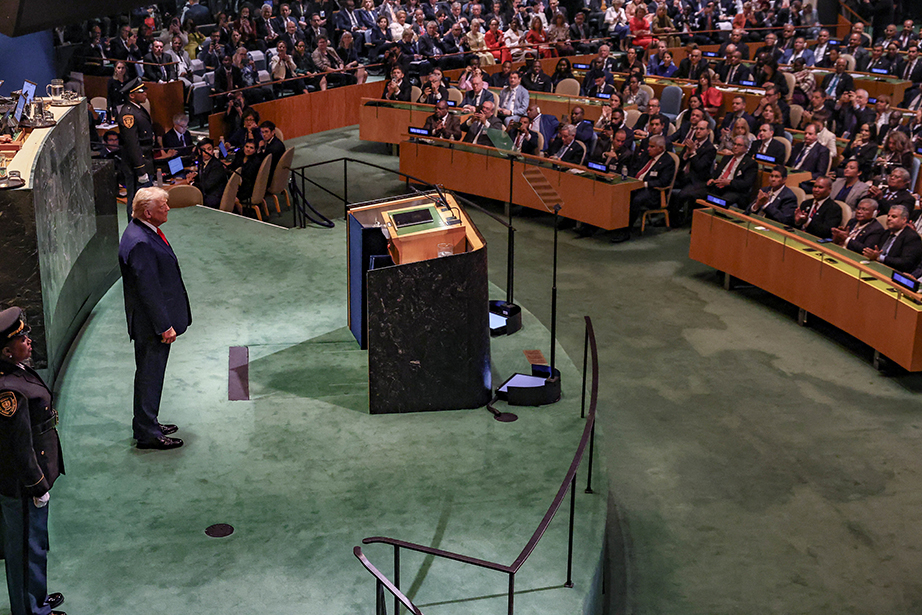
The Whole World in One Hall
I have a million images of President Trump and narrowing them down was one of the hardest edits to make. It was either the typical podium photograph or the familiar image of him speaking. Instead, I chose this one. Here, Trump stands on the stage looking out towards the world. To me, that is what this moment is really about. The global circumstances are represented in this one image: Trump standing before the world for all to see.
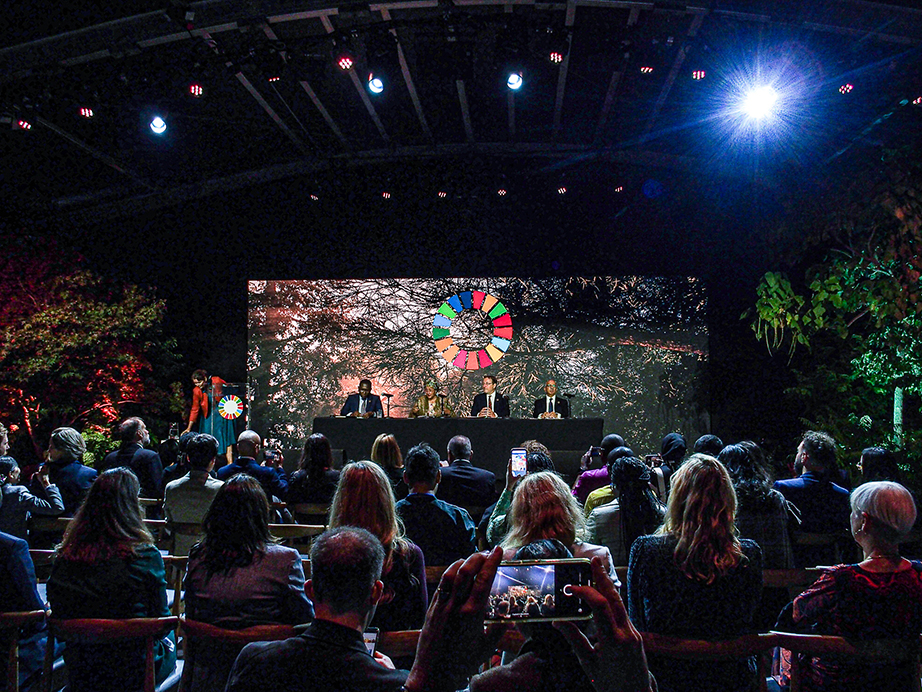
Sustainable Futures
The Sustainable Development Goals (SDGs) are one of the most important parts of the United Nations and the General Assembly, yet they are often overshadowed by war and political crises. The 17 Goals focus on the foundations of everyday life, from poverty and education to health, gender equality, climate and human rights. Here, Deputy Secretary-General Amina Mohammed attends an SDG event in a pavilion transformed into a natural setting, reflecting many of the themes at the heart of the Goals.
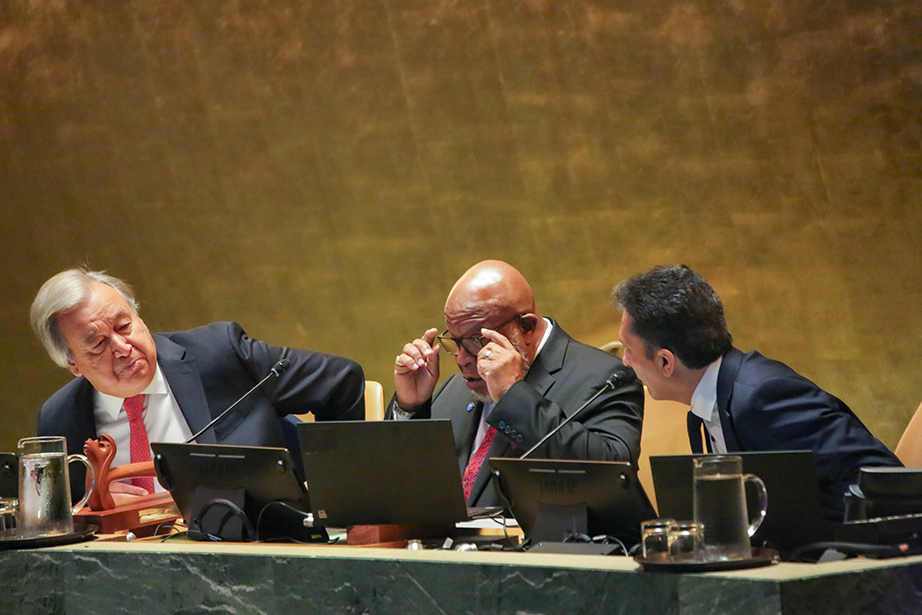
Nothing to See Here
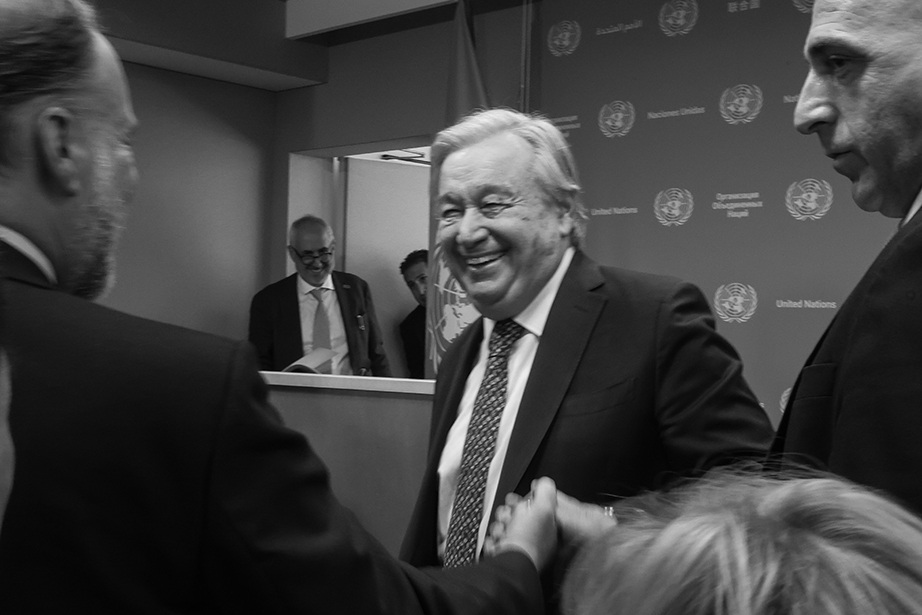
United Nations Secretary-General António Guterres, former President of the General Assembly Dennis Francis and Under-Secretary-General Movses Abelian share a light-hearted moment before proceedings begin. I have always liked this image because nothing extraordinary is happening. A simple gesture, a smile and a quiet moment of reassurance remind us that, behind every title, there are still people.
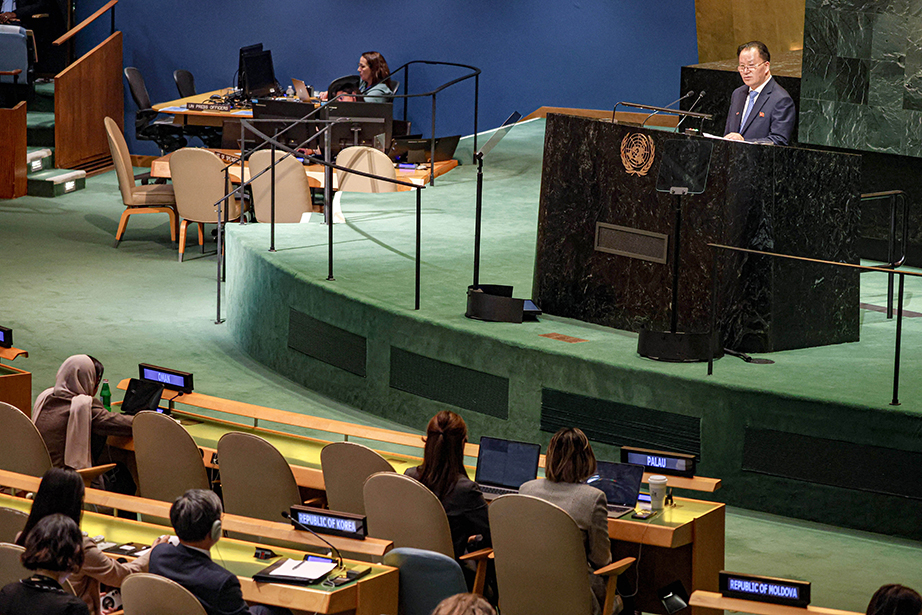
Historical Context
You might not see anything in this image at first, but every time I show it and explain it, there is always an “ahhh.” The Democratic People’s Republic of Korea (DPRK) addresses the General Assembly while looking towards the Republic of Korea delegation, which sits just below in the second row, listening and looking back. There are so many moments like this throughout the General Assembly. With everything happening in the world, historical context is so important and often necessary. Otherwise, subtleties like this are unfortunately overlooked, yet they often say more than words ever could.
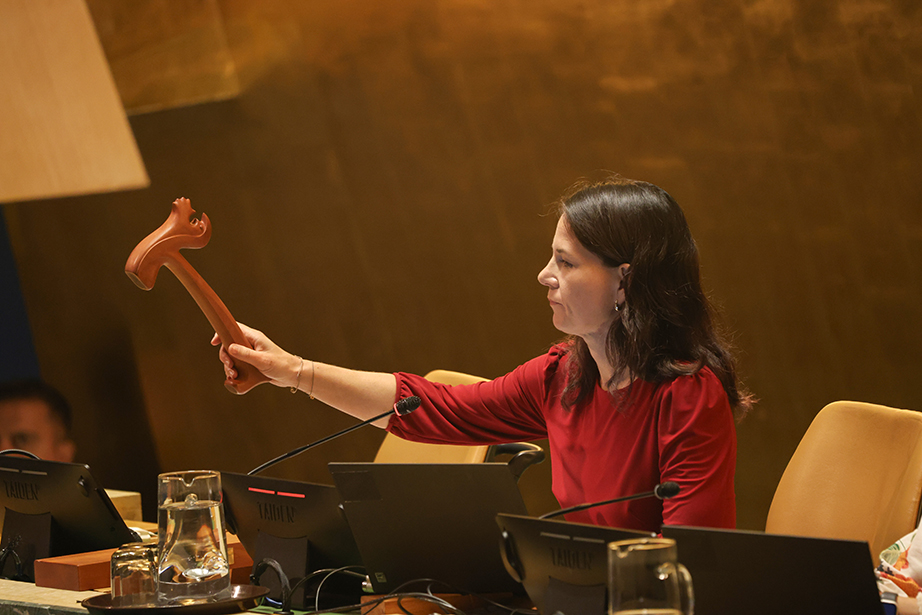
One Chapter Closes, Another Opens
As General Assembly 80 officially comes to a close with the opening of UNGA 81, it is difficult not to reflect on Annalena Baerbock’s presidency. As only the fifth woman to serve as President of the General Assembly, it was refreshing to have her presence in the Hall. The dynamics of multilateral diplomacy are undoubtedly a vast adjustment from the precision of German politics, yet her upbeat, inclusive and witty approach, balanced with quiet firmness, felt like exactly what was needed. Thank you, President Baerbock. Here is to the next round.
About The Author