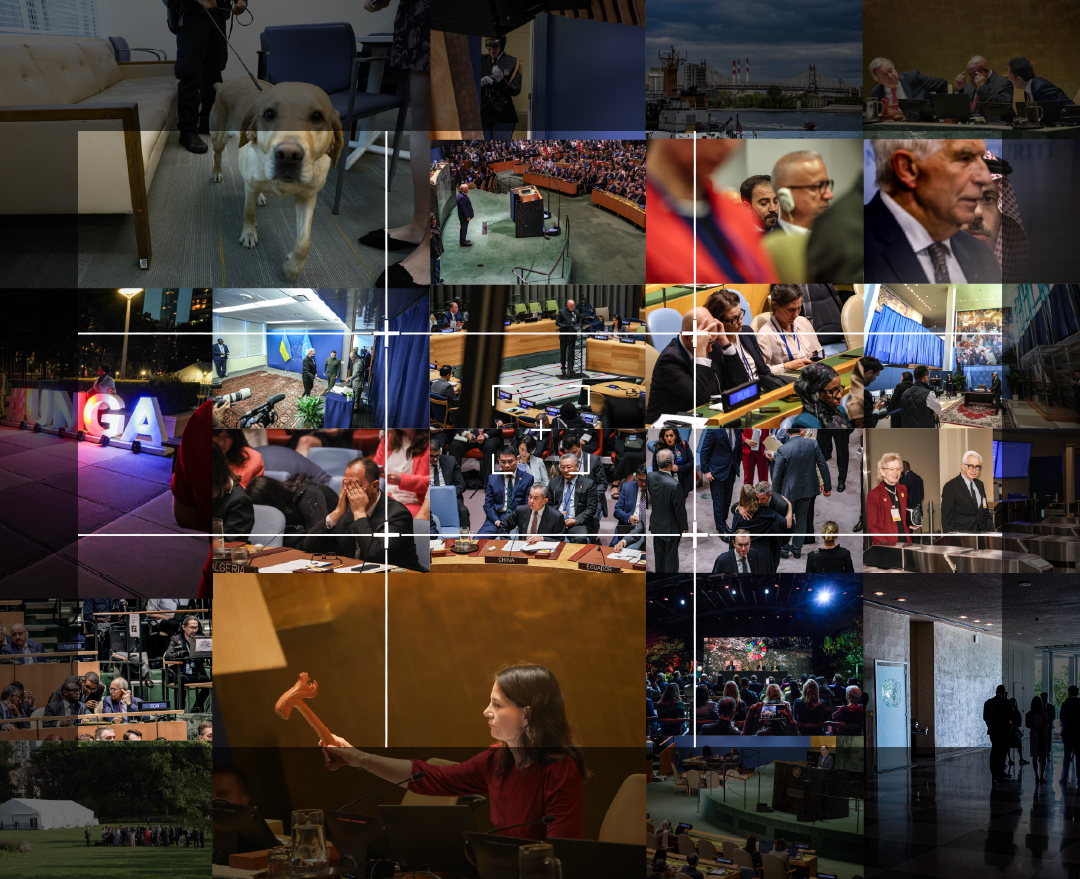
Through a photographer’s eyes, a portrait of António Guterres emerges in moments of pressure, humor, fatigue and quiet resolve.
For years, I have photographed Antonio Guterres in the formal spaces where the world usually sees him: at podiums, in Security Council chambers, at press stakeouts and high-level meetings. But photographing the UN Secretary-General day after day has shown me something beyond the official frame.
Through the lens, I have come to see not only the public face of the United Nations, but the person moving through its daily pressures, rituals and relationships. There are moments of discipline and fatigue, but also warmth, humor, curiosity and deep resolve. Some unfold in front of cameras; others appear quietly, in a glance, a handshake, a pause between meetings, or the ease of a familiar exchange.
This photo spread is my attempt to capture that human machinery of diplomacy: the interpreters, spokespeople, deputies, delegates and quiet rooms that keep the institution moving even when the world feels fractured. Taken during a period of crisis, reform and reflection, as the United Nations marks 80 years and looks toward its next chapter, these images trace the weight and continuity of the role.
More than a record of official moments, this is a portrait of endurance — of showing up, listening hard and carrying on.
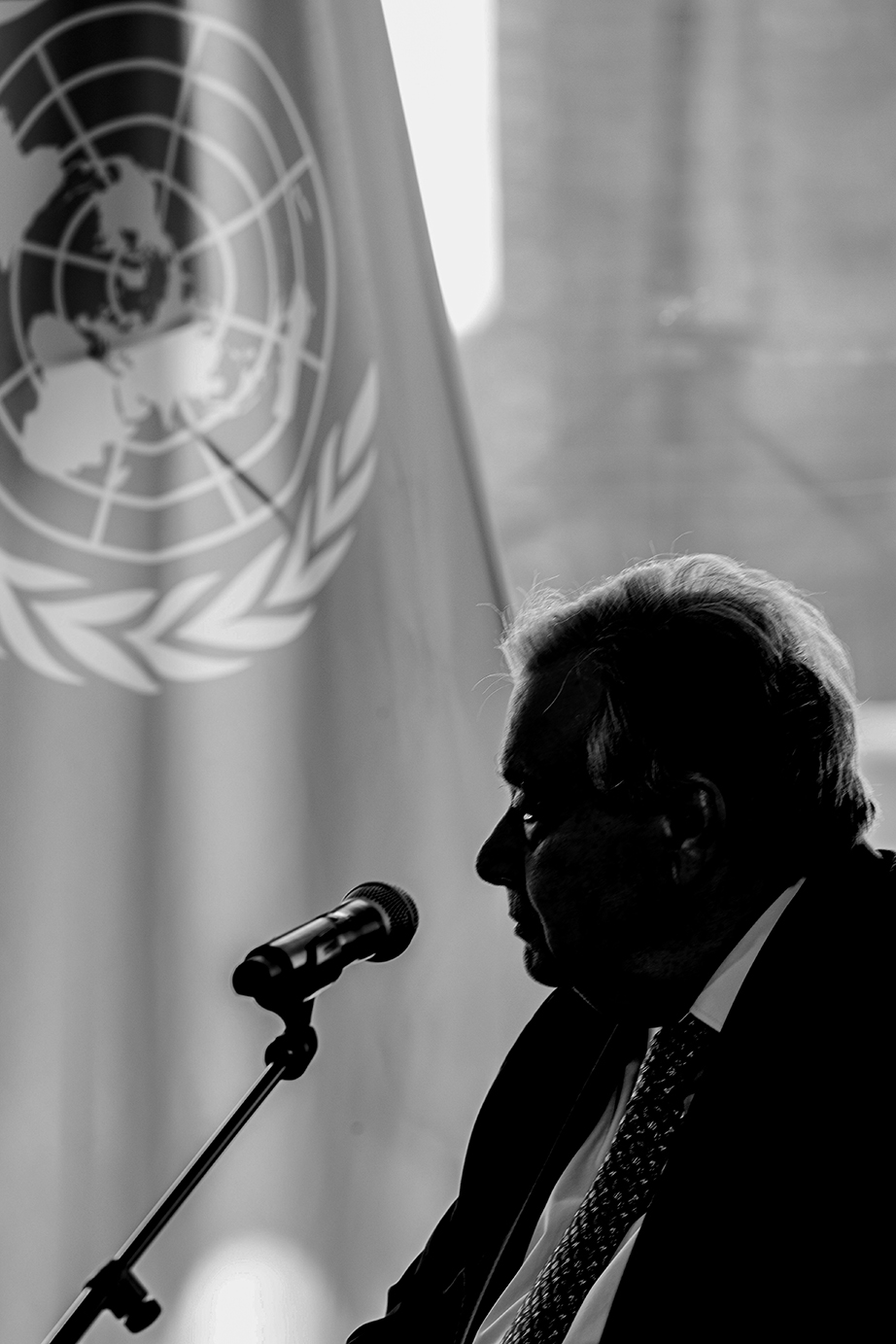
A silhouette of the Secretary-General Antonio Guterres during climate and Pact for the Future discussions. I find these moments important because his push for change and reform never seems to waver. For all the building flak, he remains a reminder to stay with the purpose and carry on through the difficult and the easier parts alike.
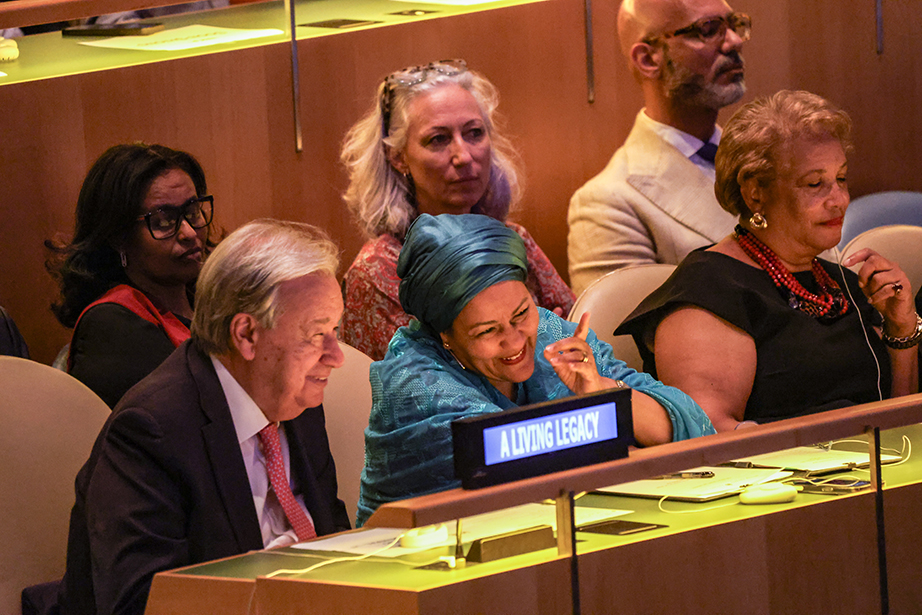
I have always enjoyed the relationship between the Secretary-General and the Deputy Secretary-General Amina J. Mohammed. There is a warmth and ease between them that comes through in small moments like this. The “A Living Legacy” sign felt especially fitting, because in many ways that is what he is.
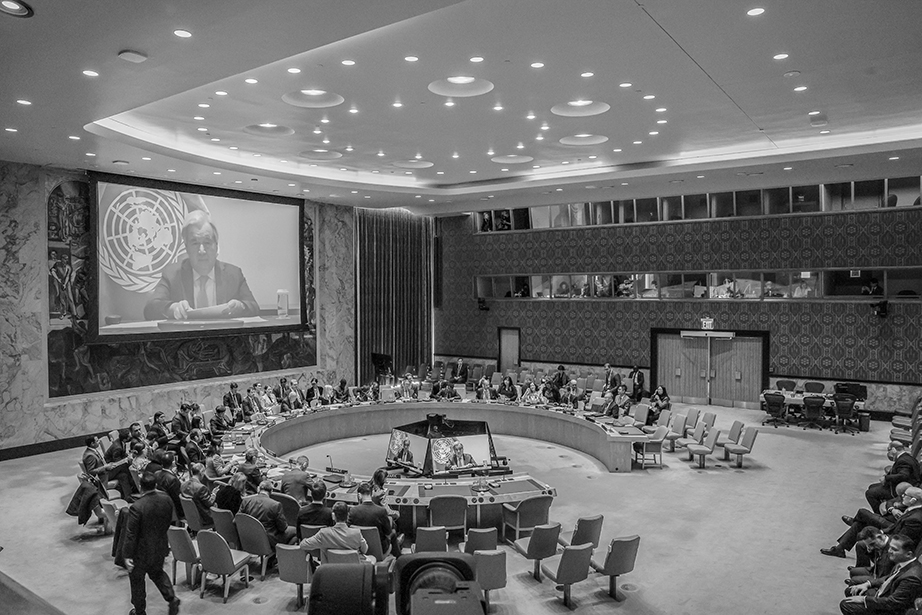
Meetings in the Security Council can feel as though they hark back to the Cold War, or at least to the version of it seared into the minds of my generation. When I see the Secretary-General on the screen in those moments, it carries more subconscious meaning than I can easily put into words. There is a strange comfort in it too: the sense that there is still effort, guidance, witnessing, and some form of oversight in trying to get through something we already know too well.
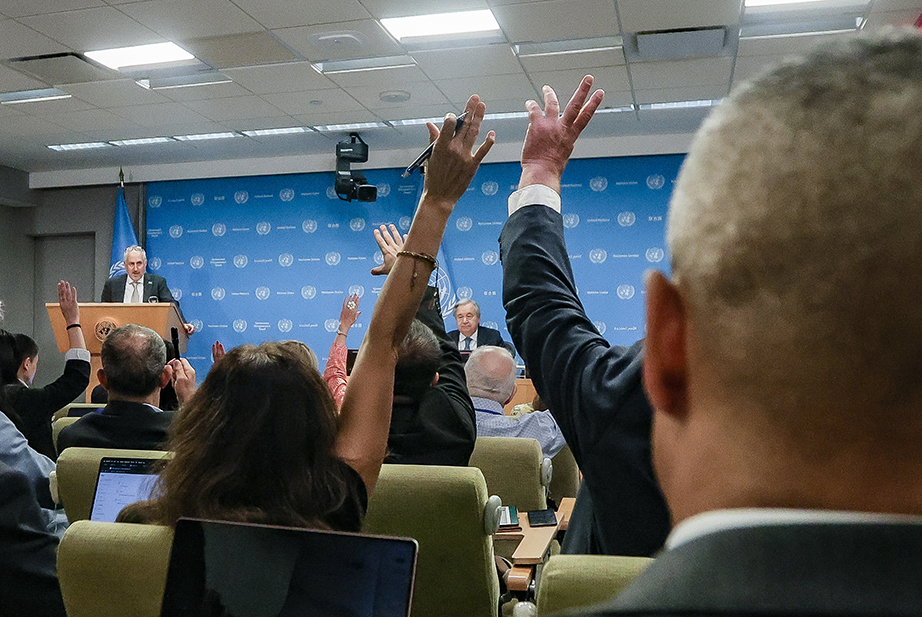
The Secretary-General’s relationship with the press is a great one. I have not seen quite the same dynamic elsewhere. There is respectful familiarity, even a first-name basis from him, that makes him feel more approachable, less distant, and more human. At the same time, no matter the pressure, his answers are usually clear. From the outside they may sound repetitive, but perhaps the point is to listen more carefully. The answers are often there. Following them requires less ego, more discipline, and a willingness to simply get the work done.
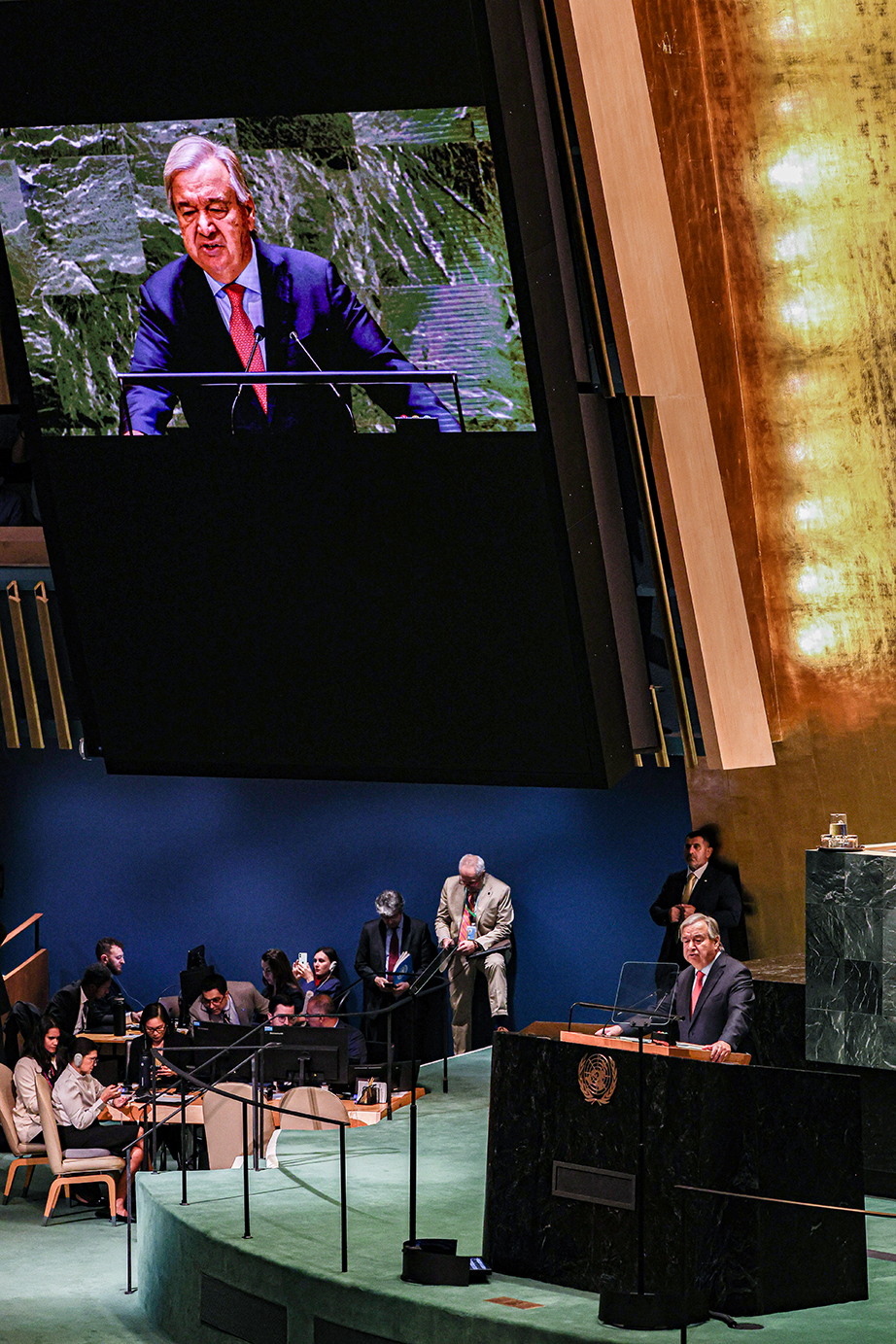
Just a simple photograph of him speaking from the rostrum of the General Assembly Hall, though I have always found something slightly surreal about that space. It reminds me a little of a bird perched on a branch, exposed yet composed. The scale of the room, and the screen behind, adds to the theater of it all, though beneath it there is still a real sense of honor in witnessing it.
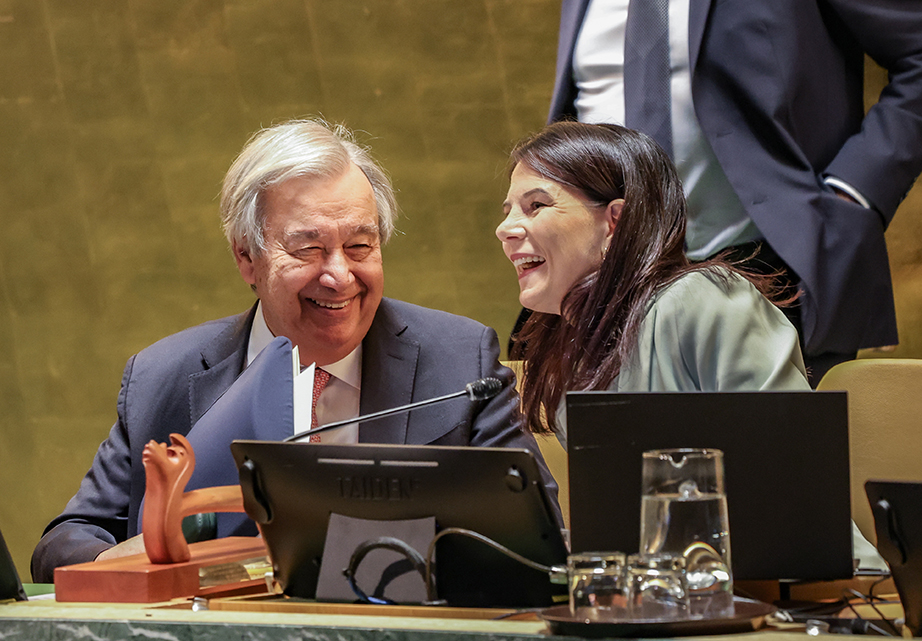
This felt like a fresh and uplifting image of the Secretary-General and Annalena Baerbock on her first day as President of the General Assembly. It was taken during a period of major shifts and crises, yet the moment I photographed it and looked back at it, I immediately felt lighter somehow and sensed others would respond to it as well. Instinct proved correct.
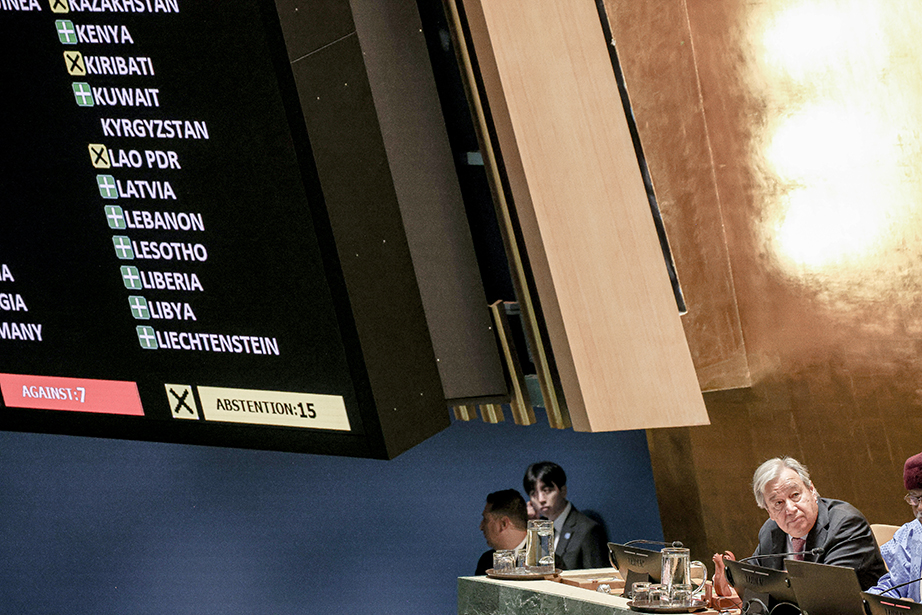
Voting in the last few years has become an ordeal, for lack of a better word. There is a heaviness to it, and at times people really do seem to hold their breath. The results reveal where people and nations stand, and the divisions are laid bare for everyone to see. Here, the Secretary-General is watching, and to me it almost feels as though he is looking at the world and taking in where it all stands.
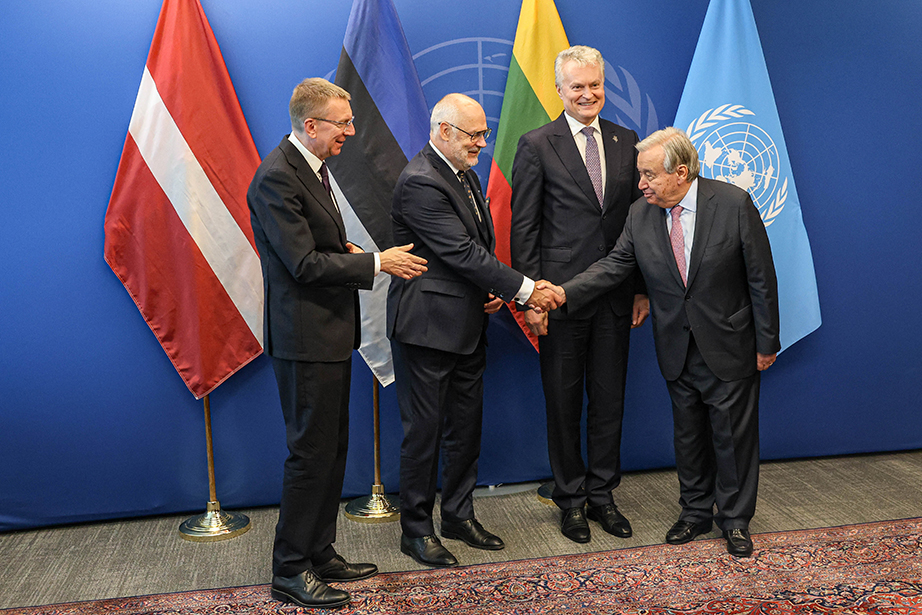
I have always enjoyed the relationship among Latvia, Estonia and Lithuania — a Baltic familiarity that is both comforting and quietly amusing. In this moment, that dynamic comes through as the three presidents take turns greeting the Secretary-General. From left: Edgars Rinkevics, president of Latvia; Alar Karis, president of Estonia; and Gitanas Nauseda, president of Lithuania.
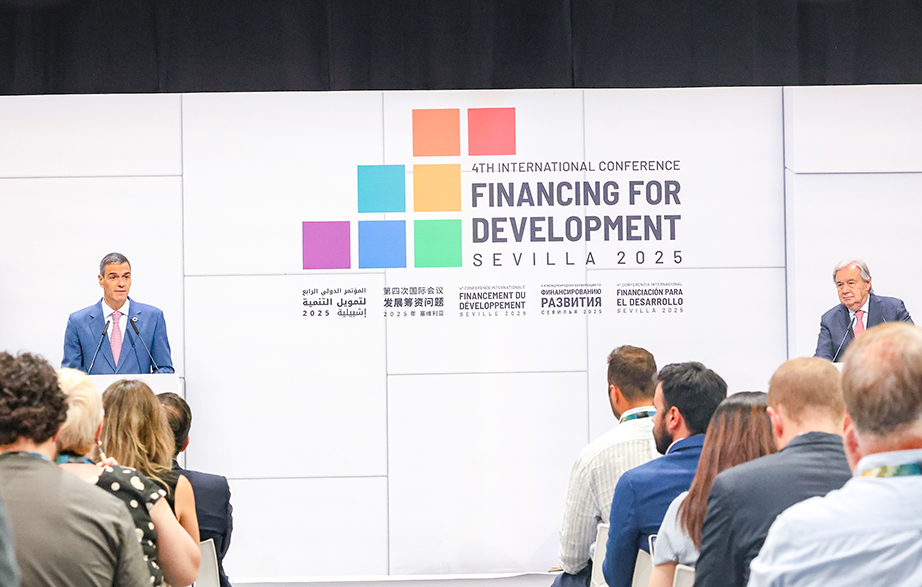
FfD honestly feels like something that should happen more than every four years. There was so much to iron out that, personally, I could not quite see how it could all be done. But later, covering the process at headquarters, one sees the push. Here in Sevilla, the Secretary-General and Pedro Sanchez, prime minister of Spain, gave a press briefing while it was 48 degrees Celsius outside and, alas, the show had to go on. My camera was not fond of the heat either.
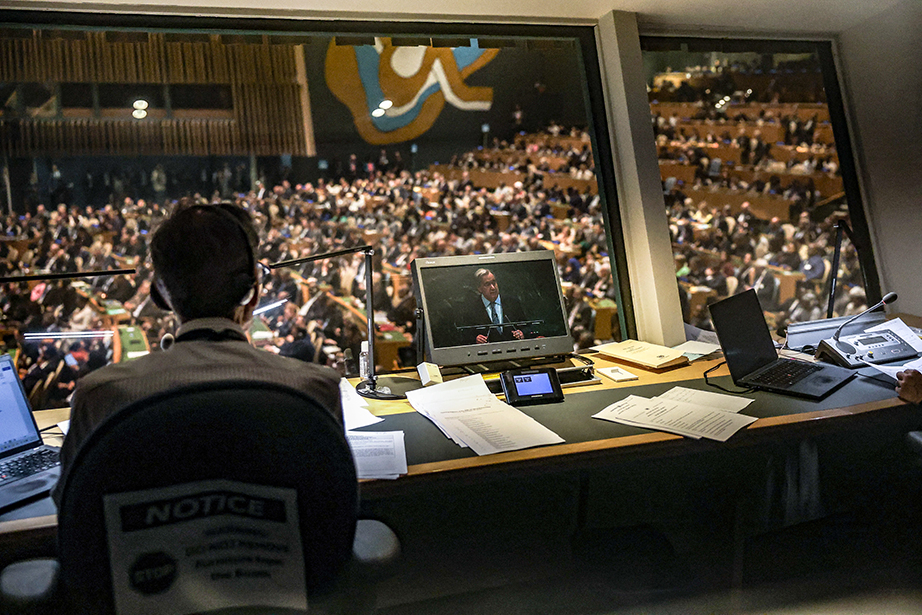
The reliance on interpreters is far greater than most people realize. It is not simply translation, but the carrying of meaning, tone and essence from one language into another. Here, the Secretary-General appears on an interpreter’s screen during his opening remarks at the General Debate on the first day of High-Level Week at UNGA80, as the United Nations marked 80 years since its founding and faced some of its gravest challenges since the Second World War.
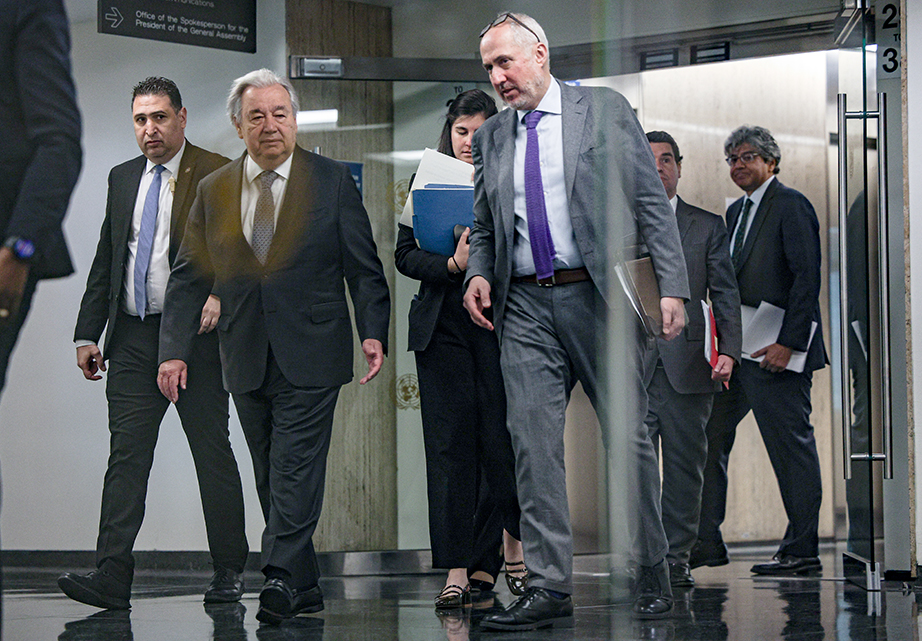
Stephane Dujarric, (R) the Secretary-General’s Spokesperson, is someone I truly admire. The role requires a rare kind of steadiness and the ability to take on layers of pressure of all kinds and from all sides. He is the conduit to the outside world for what the Secretary-General is thinking, hearing and responding to, that requires a true synergy. In many ways, he is the oil in the machinery. The pressure he carries can seem immense, almost like a pilot holding steady under G-force.
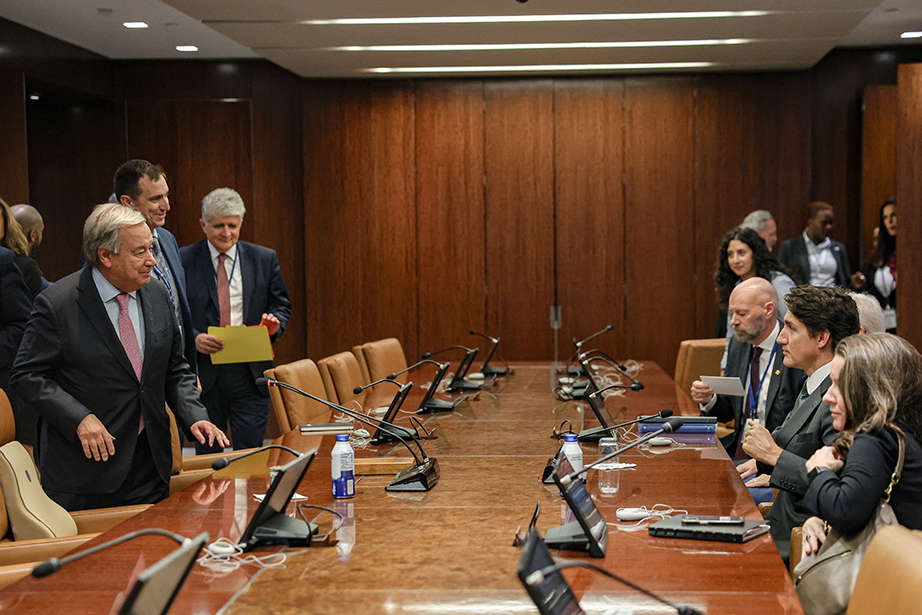
The Secretary-General meeting former Canadian prime minister Justin Trudeau on 38, otherwise the Secretary-General’s conference room. This was one of those moments when Trudeau brought in a freshness and spring in his step that felt both needed and welcoming. I have always preferred trying to see the good alongside the difficult, most especially during complicated times.
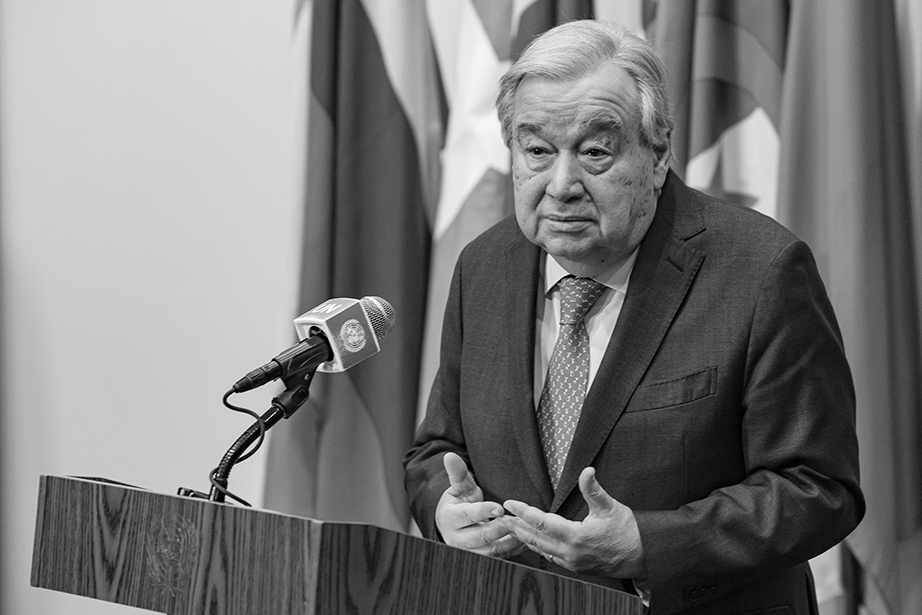
Here, he answers questions at the Security Council stakeout, where that balance often comes through most clearly: direct, no-nonsense, and still deeply empathetic.
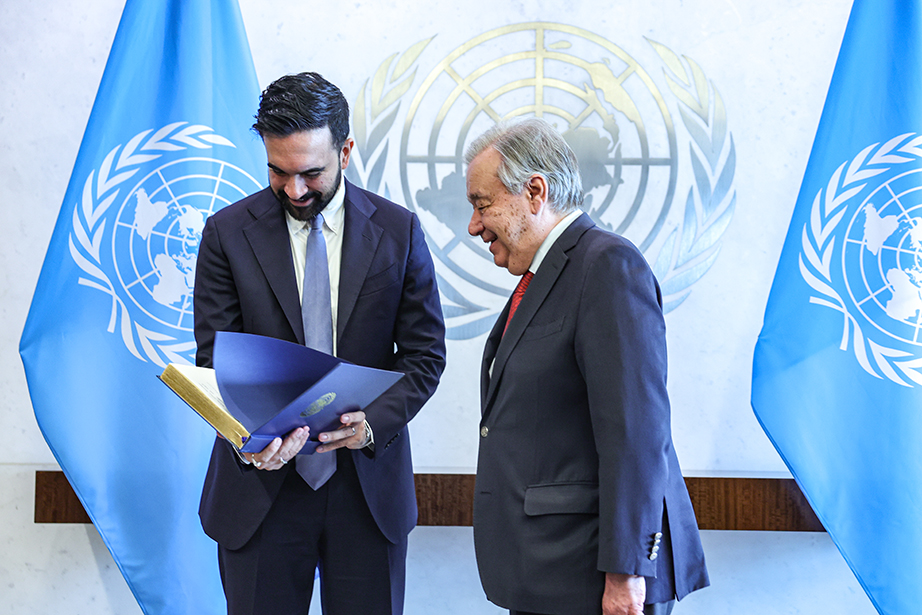
Sharing is caring. Here, the Secretary-General presents NYC Mayor Mamdani with a special edition of the UN Charter in six languages. This was the first time the Mayor, in both public and private life, had ever been to the United Nations. I hope the impression for him was as strong and symbolic as it was for the UN.
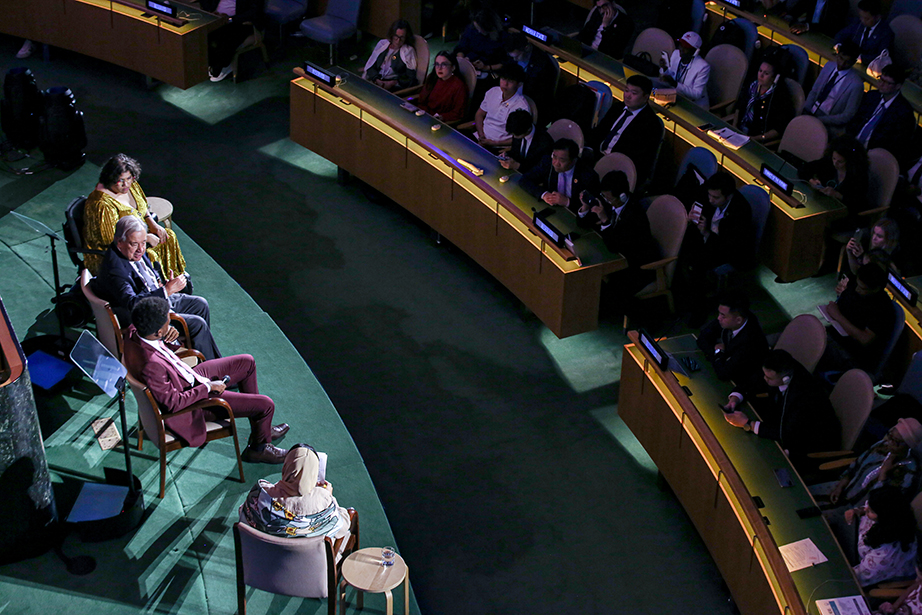
A fireside chat during the Summit of the Future Action Days, where civil society, youth, local and regional authorities, the private sector and academia came together around the work of building a better future. Civil society is vital. Inclusivity is real, but there is a layer people have to cross to truly recognize that. Otherwise, they are standing behind a cause they cannot fully commit to.
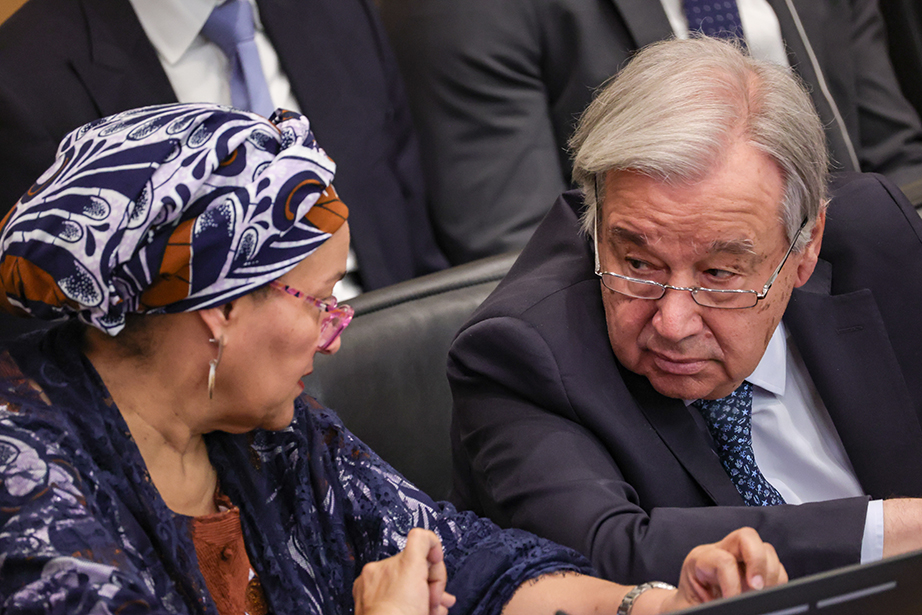
The reliability of support, and I mean truly synchronized support, is something I see between the Secretary-General and Deputy Secretary-General every time. Here, I almost see them like siblings discussing the right approach to something that needs guidance, not humiliation.
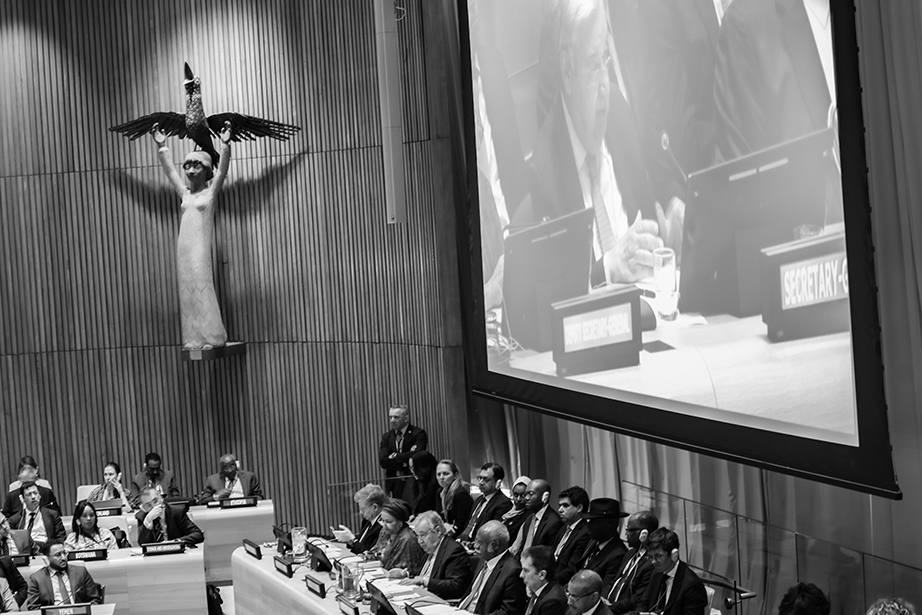
This was the first meeting on UN80 reform, and to watch it unfold was really something to behold and cover. There was eagerness and urgency in the room. Representatives, delegates, the chairs, the Secretary-General, the Deputy Secretary-General and others all seemed ready to find solutions as the challenges came to a proper head. It was a great feeling to be part of. The Trusteeship Council Chamber is a personal favorite. Mankind and Hope, a sculpture by Henrik Starcke, reminds me of a guardian angel, just there, holding the room and the feeling in it. I really love it.
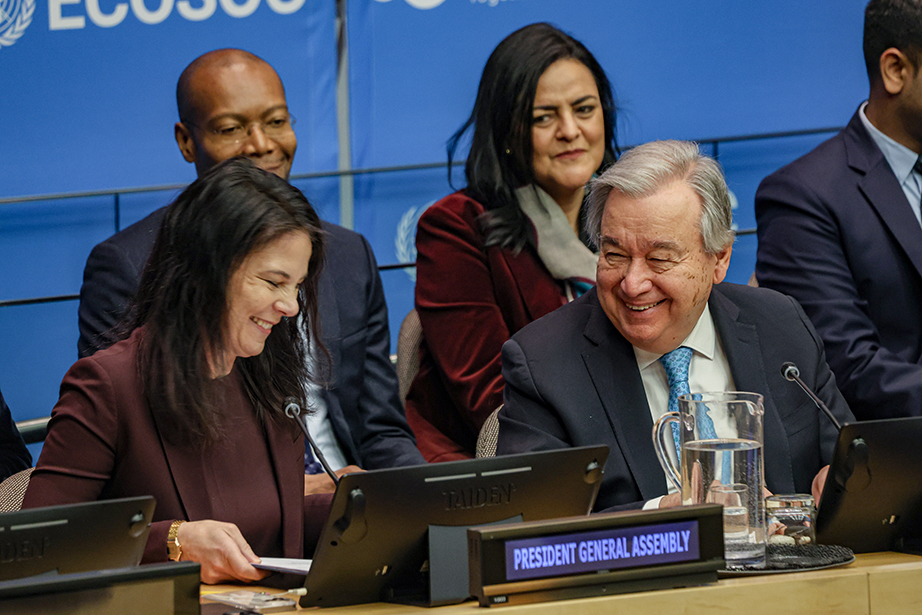
This is not just a job. It is a shared purpose and a deep mutual respect.
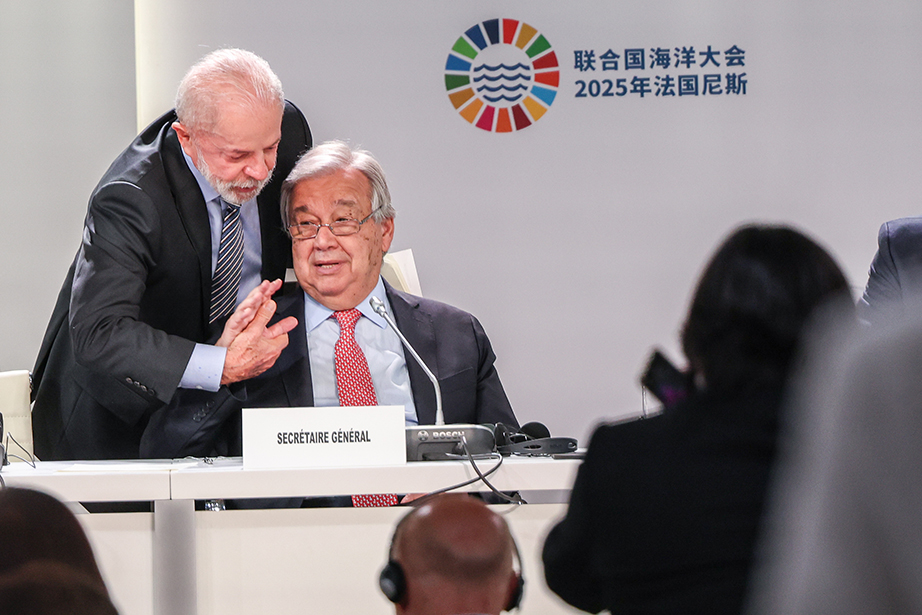
Despite all that we see and all the problems, I personally still like the human relationships behind it all. Brazil’s President Luiz Inacio Lula da Silva and Guterres share not only language, but age, history, generation, humor and friendship, and that comes through very naturally between them.
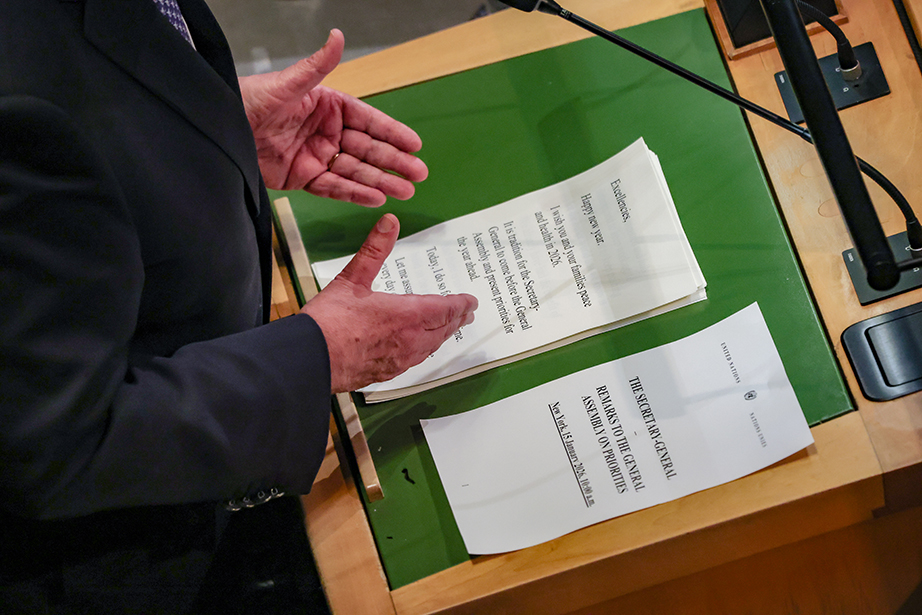
I put this here because 2025 was a brutal year, perhaps the most brutal for the Secretary-General, though I may be speaking too soon as 2026 is already intense. This was his last January address as Secretary-General, and it felt like a moment of setting the stage. With UN80, reform, and so much of his legacy already underway, he was laying out what 2026 would have to face. The road is there, but it still needs to be reinforced so it does not get diverted.
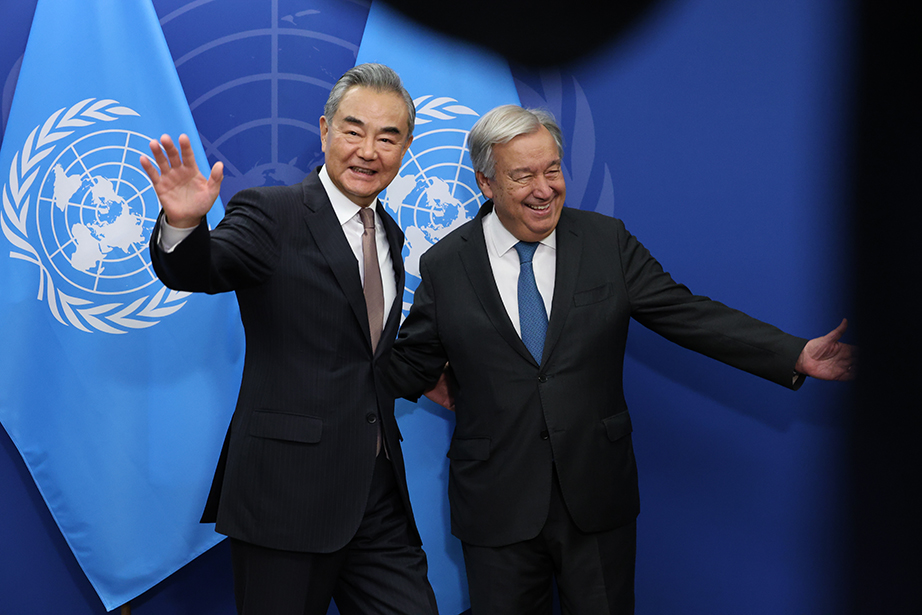
In this shot, this is the most Hollywood / Cannes that the UN can ever get. The Secretary-General meets Chinese Foreign Minister Wang Yi during UNGA80. They always look like they are going to paint the town when they are together.
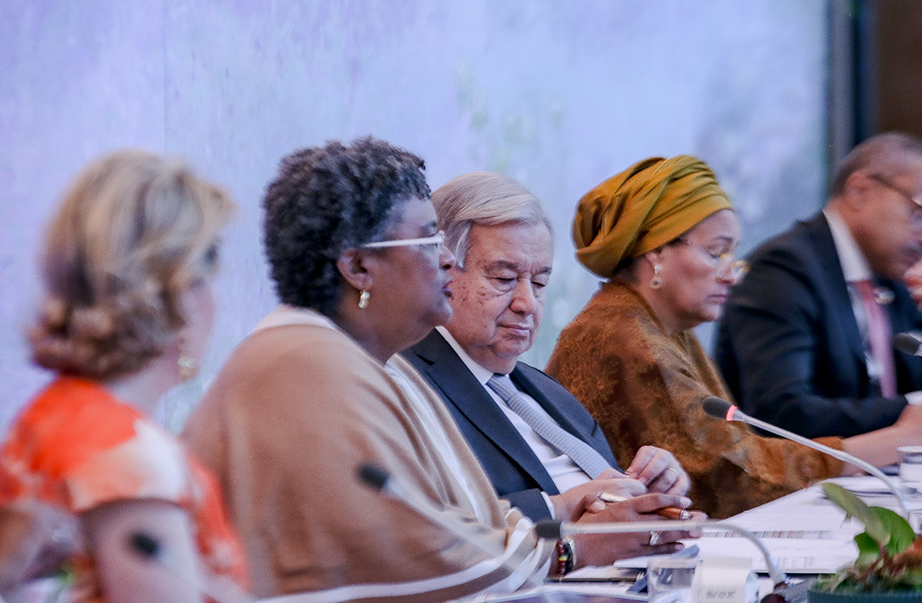
I selected this because it is a closed-off and peaceful space, away from the view of spectators, where people can actually speak openly, calmly and with ease. Everyone involved in this discussion is involved in some way with the selected Sustainable Development Goals (SDG) delegates, chosen by the Secretary-General himself, who bring influence from very different industries and backgrounds. Here, they shared a meal and sat around the table discussing how to move things forward through their influence, ideas and connections. It really can be as transparent and simple as that in those rooms. To me, these moments feel sacred. This is what I would call a soft-strong kind of strength, one that is long lasting. The opposite is hard aggression, humiliation or bullying, quick but short-lived and destructive. This is, not the latter, not even an atom of it.
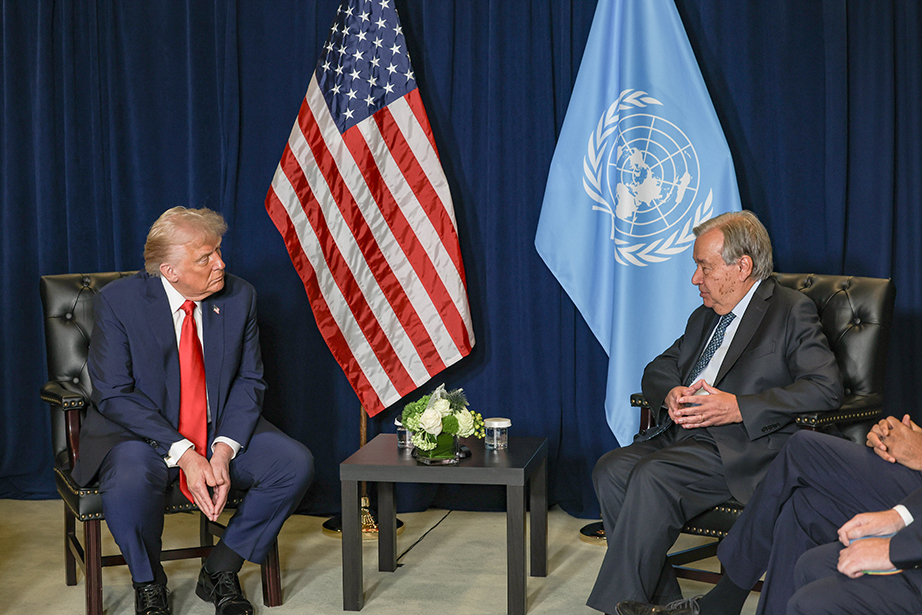
The Secretary-General and President Trump actually have a deep respect for one another. I suppose one could say that if you cannot laugh at yourself, you cannot really enjoy the world. I like how they listen to each other. Despite everything around them, almost like the imagined chaos of flying sheets of paper, there is respect underlying it all. I suppose that is my favorite part of my coverage, the respect, because such a huge part of diplomacy is built on it.
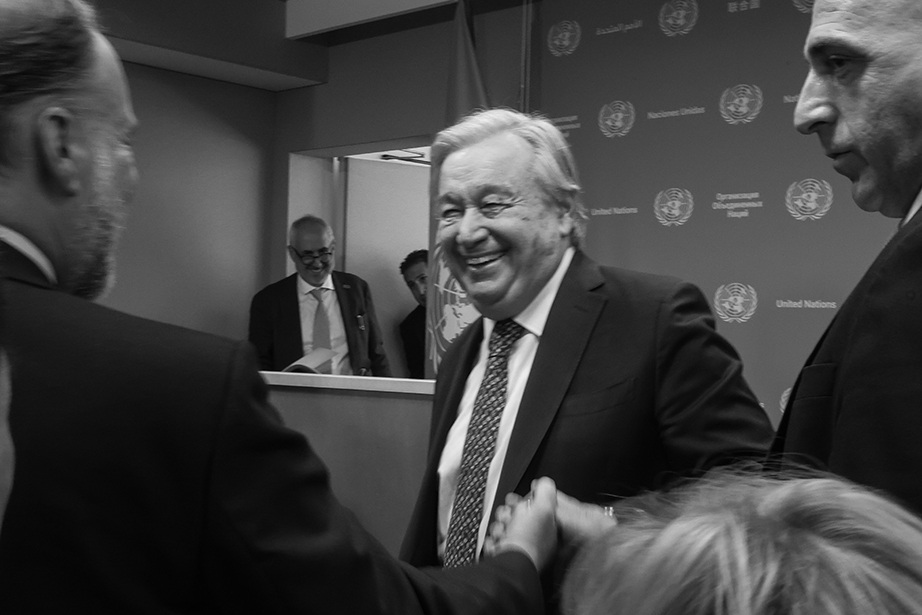
Sometimes there is a moment where the Secretary-General simply lights up. Here, after a press briefing as he stopped for a moment, he ran into James Bays, a former UN Al Jazeera correspondent, whom he had not seen in a while, a familiar face that goes back some years, and there is something very genuine in his reaction, one of genuine joy and happiness.
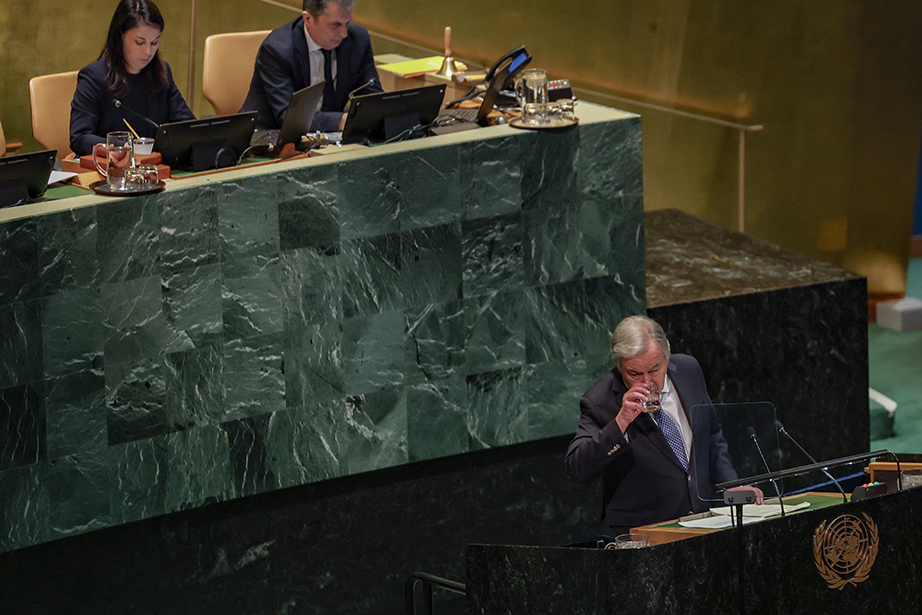
I always joke that there must be about ten versions of him somewhere in a dispensary and they simply switch them out. He speaks constantly, moves constantly and gives an enormous amount of energy. Moments like this are rare, which is probably why I read it as a slight sign of tiredness or overexertion.
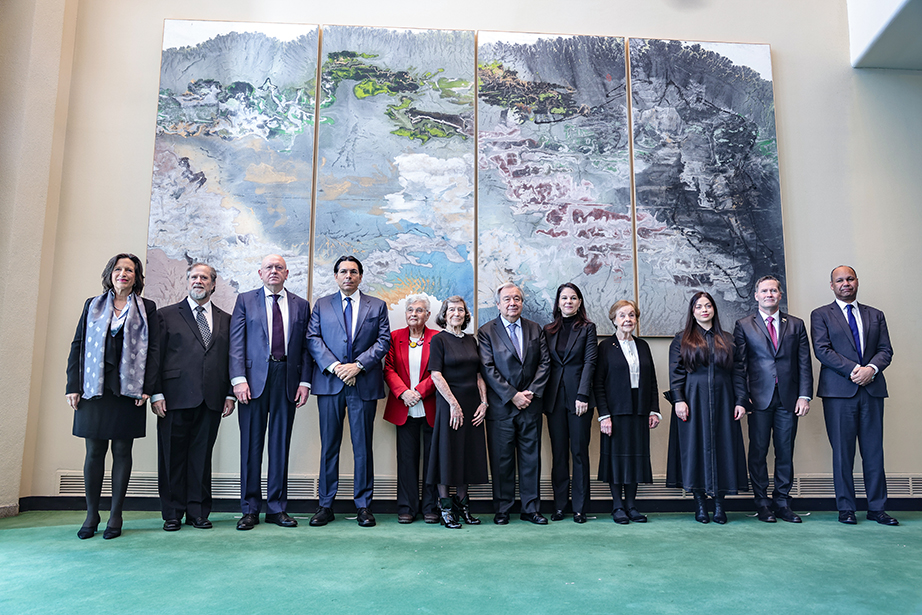
Family photo on Holocaust Memorial Day with Holocaust survivors, the President of the General Assembly who is from Germany, and representatives of Israel, the US, UK, and Russia. There is a weight to moments like this that does not need much explanation. History is present in the room, not as something distant, but as something living, witnessed and carried.
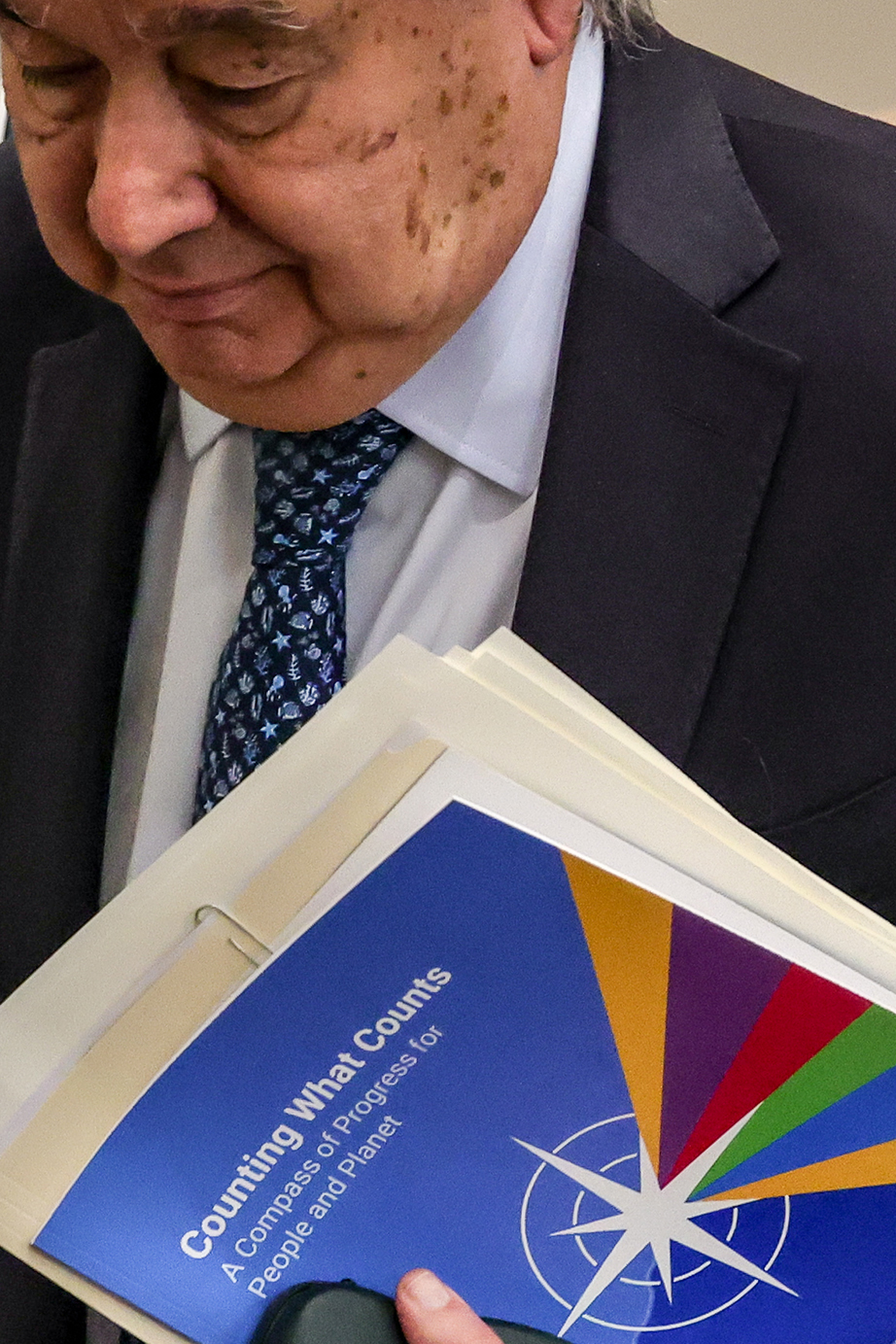
That is pretty much the motto and the mantra of today. As budgets and finance are front and center, this initiative created by Secretary-General is the most recent upon finishing this collection for print, and his final in tenure, through the incredible feats and commitments he has made over the decade. As he lays the proper foundation for the future Secretary-General, there is no doubt, he will make for a smooth transition in.
About The Author