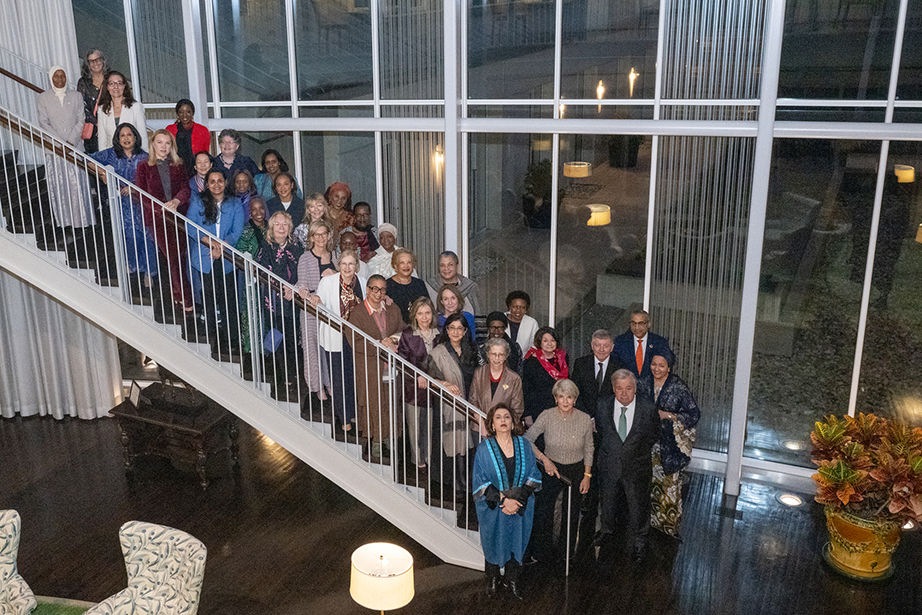
A female secretary-general would not automatically transform the UN’s record on women’s rights, Lisa Marie Vickers argues, but after 80 years of male leadership, her appointment would carry urgent symbolic weight for an institution built on equality.
Campaigning is in full swing as nominated candidates compete to be the tenth Secretary-General of the United Nations. General Assembly, or UNGA, resolution 79/327 set out the process for selecting the next UN chief. Whoever is selected will succeed António Guterres who has led the UN for the past decade and has been lauded as a champion of women and their rights. In Guterres’s first year in office, he made history by reaching gender parity in the UN’s senior leadership group. Throughout his tenure, Guterres has positioned himself as a gender champion, emphasizing the importance of gender equality and women’s empowerment and vowing to address the global backlash against women’s rights.
The selection of a new secretary-general raises the possibility that the first woman will be in the role. This is necessary, not because a woman would automatically act on behalf of women or make better decisions for the organization. Rather, the selection of a female secretary-general would act as a symbol of fairness and equality in the UN system.
Feminist campaigns for the first woman secretary-general
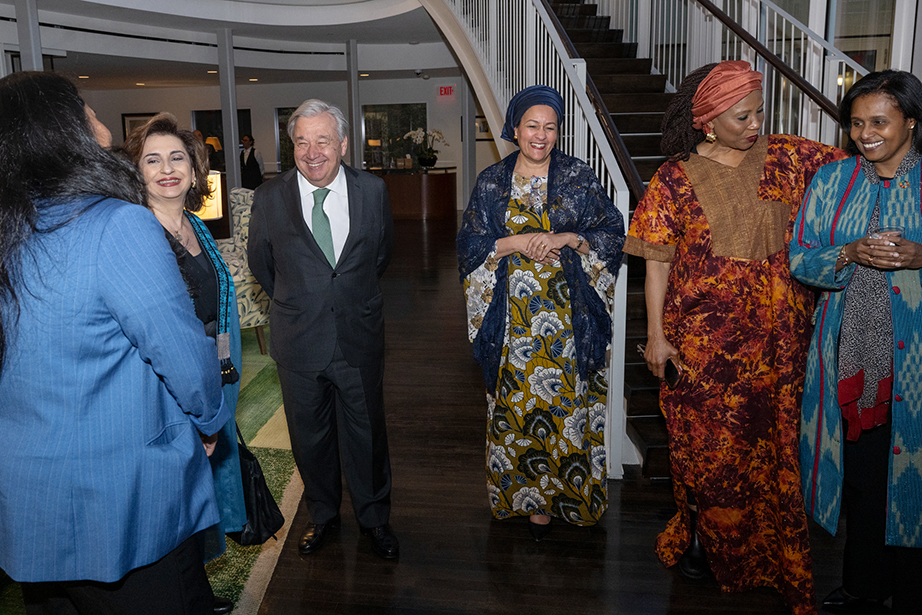
Even with a self-avowed “proud feminist” currently at the helm of the UN, women’s and feminist civil society have continuously pushed for the first woman to be selected at the head of the organization. In this selection cycle, the 1 for 8 Billion campaign has explicitly called for a woman secretary-general, arguing that “we need a feminist woman leader who reflects the future we want and the UN we need to get there.” The Woman SG campaign has similarly avowed that now is the time for a woman to lead the UN.
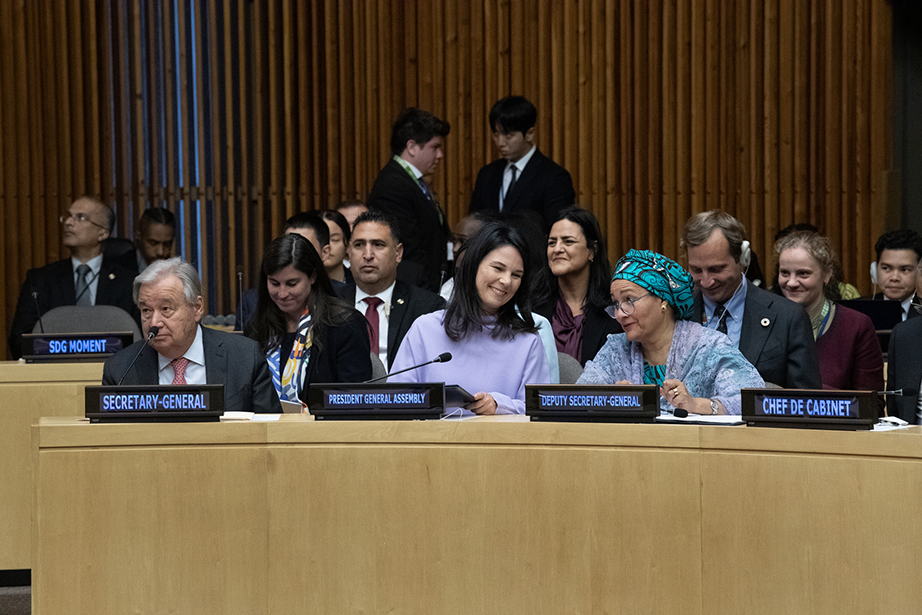
Advocates such as UNGA President Annalena Baerbock have argued that “for an institution standing up for these principles—human rights, sustainable development, and peace and security—it’s hard to explain that, in over 80 years, there has never been a female secretary-general. It’s also a question of living up to your own principles, your own values.” Others have positioned a strong female secretary-general as necessary to revitalize the UN as a credible leader of global governance and collective action. While advocates have conceded that one woman alone cannot reform the UN, they have argued that decision-making is improved when women are at the table.
Role of the secretary-general: An impartial advocate?
These arguments that a female would revitalize the UN and improve decision-making—implicitly on behalf of women—do not fully consider the mandate of the role of the UN chief as an impartial actor, however. Chapter XV of the UN Charter details the office of the Secretariat. Specifically, Article 97 stipulates that the secretary-general acts as the chief administrative officer of the UN. Further, the secretary-general must act to uphold the UN Charter, a task that all four nominated candidates pledged to do during their interactive dialogues with the UNGA.
The secretary-general does not directly represent any particular demographic or region. This is evidenced by Article 100 of the charter, which explicitly states that the secretary-general and their staff “shall not seek or receive instructions from any government or from any other authority external to the Organization,” are “responsible only to the Organization,” and must undertake responsibilities of an “exclusively international character.”
While the role of the secretary-general is to be an impartial administrator on behalf of the UN, they are permitted some latitude in their ability to act for the good of others. By upholding the UN Charter, one must reaffirm—among other principles—“faith in fundamental human rights, in the dignity and worth of the human person, in the equal rights of men and women and of nations large and small.”
The UN further clarifies the role as “[e]qual parts diplomat and advocate, civil servant and CEO” and “a spokesperson for the interests of the world’s peoples, in particular the poor and vulnerable among them.” While the UN chief must listen to the concerns of all member states, they “must also uphold the values and moral authority of the United Nations.” Although not a direct representative, the secretary-general is given some agency to decide how and when to act on behalf of segments of the population.
There is a baked-in tension within these parameters, which demand impartiality while also asking the secretary-general to uphold principles of integrity and speak on behalf of the most vulnerable.
How the candidates see the role of secretary-general
It is evident that, to a certain extent, the secretary-general molds the position. It is therefore critical to assess how each candidate describes their obligations and role in relation to women.
Rafael Grossi, director general of the International Atomic Energy Agency (IAEA), used his CV to tout his role in achieving gender parity in the IAEA Secretariat’s professional staff positions and launching programs to increase the number of women in the nuclear field. In his dialogue with the UNGA, Grossi recognized that while progress has been made in advancing women’s rights, “it is a permanent effort and … we should continue and do better” without making any concrete pledges.
Macky Sall, former president of Senegal, used his vision statement to highlight the importance of fighting violence against women and girls and encouraging their empowerment. In his dialogue with the UNGA, Sall identified as a “he for she” and made the bold pledge to appoint a female deputy secretary-general in an effort to “empower women within their organization and the world.”
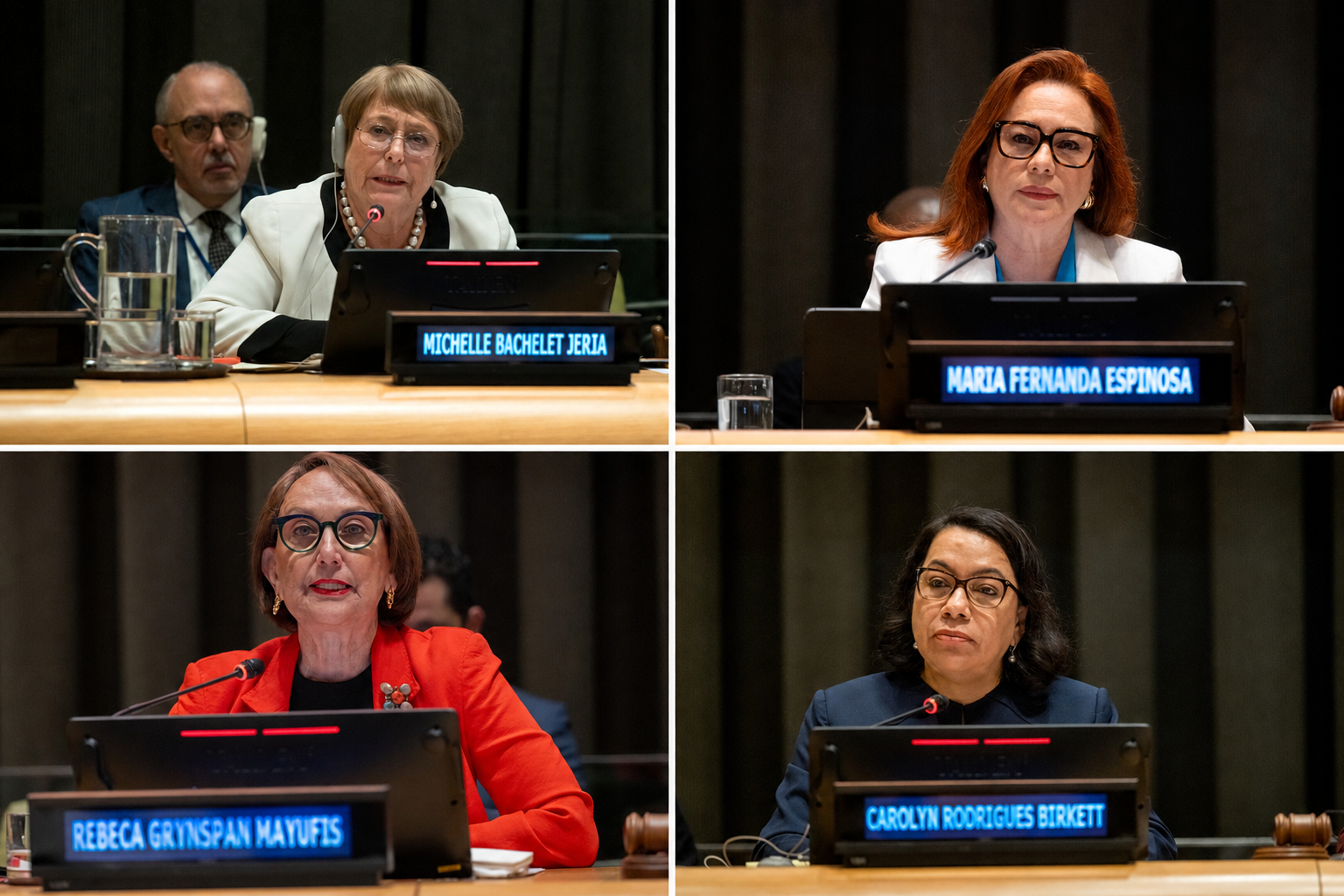
Rebeca Grynspan, former vice president of Costa Rica, argued in her vision statement that “the rights of women and girls are inseparable from these foundations [on which peace and security depend].” In her dialogue with the UNGA, while Grynspan pointed to the importance of women’s development and inclusion, she did not discuss her positioning as a woman.
Michelle Bachelet, former president of Chile and founder executive director of UN Women, has a long history of promoting gender equality. In her vision statement, she articulated the importance of integrating a “gender perspective” into “peacebuilding and prevention strategies” and depicted women as “key actors in building peaceful and resilient societies.” Unlike Grynspan, however, in her dialogue with the UNGA, Bachelet asserted that a woman secretary-general would use dialogue to resolve conflict, and followed that if selected, “that will be one of my biggest commitments.”
[Carolyn Rodrigues Birkett, Ivonne A-Baki and Olara Otunnu announced their candidacies after this story was drafted.]
Does the UN need a female secretary-general?
UN secretary-generals are not a representative in the traditional sense of the word. They do not directly act for a specific segment of the electorate. They are chief administrators of an international institution and are selected to uphold the UN Charter. With all candidates giving some consideration to the importance of upholding the rights of women and girls, there is little concrete evidence to suggest that a female UN chief would make more progress in ending gender inequality than a male.
The case for a first female secretary-general rests on other merits, however, chiefly the symbolic value of her appointment. As feminist campaigners have pointed to, the UN has operated for 80 years without a woman in the top job. This signals a lack of fairness and inequality as women make up over 50 percent of the world’s population. For the UN to reestablish itself as a forward-looking institution, it must be seen to reflect the world’s diversity.
Does the UN need a female secretary-general? Yes, but not because she will represent women and girls and not because she may advocate for their rights more readily. Instead, a woman would act as a symbol of diversity, fairness, and equality, principles at the heart of the UN Charter.
Lisa Vickers is a Research Assistant at the Centre for Geopolitics at the University of Cambridge where she focuses on women in governance and security in the Global Geopolitics Research Strand. She is a graduate of the University of Cambridge, having earned a PhD in Multi-Disciplinary Gender Studies. She is from Connecticut, USA and resides in Cambridge, UK.
About The Author