Dear readers,
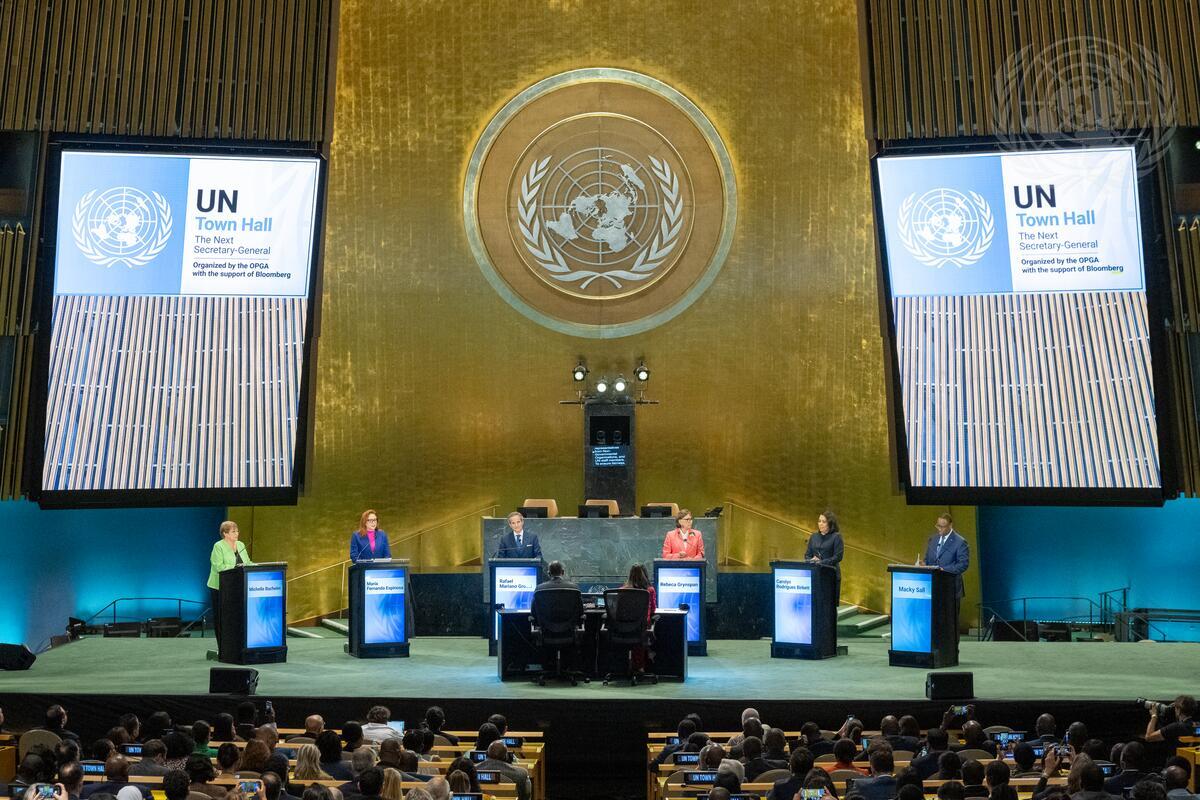
In its 80 years of existence, the United Nations has had nine secretaries-general. This year, the Security Council and, ultimately, the General Assembly will decide who becomes the tenth.
The UN’s first secretary-general, Trygve Lie, understood the burden of the office early. When he handed the job to Dag Hammarskjöld, he famously told him: “You are about to take over the most impossible job on Earth.”
Lie led an organization that had just over 50 member states. The Second World War had only recently ended, and diplomats were still trying to imagine what a truly global institution could become. The Cold War was already taking shape. The United States and the Soviet Union were moving into opposing camps. Britain and France remained major powers. China’s place in the international order was still unsettled.
Much has changed since then. The UN now has 193 member states, a vast humanitarian and development system, and responsibilities that stretch from war and peace to climate, migration, technology, and human rights. Yet the basic architecture of power has changed far less. The five permanent members of the Security Council still hold the keys to the office.
Over the past decade, those fault lines have only deepened. China has become more assertive in its diplomacy at the UN. The United States has withdrawn from parts of the multilateral system while trying to redefine its relationship with the organization. Russia has launched a full-scale invasion of Ukraine, striking at the very principles the UN was created to defend. France and the United Kingdom have curtailed their use of the veto in some circumstances, while still resisting a deeper rethinking of the system that gives them that power.
That is the world in which the next secretary-general will be chosen.
For this special issue, I made a simple call for submissions: I wanted to hear from people around the world about every possible angle of the coming race. The response was overwhelming. Ideas came from diplomats, journalists, scholars, civil society leaders and writers across continents, each asking what kind of leadership the UN needs now, and what kind of person could still make the office matter.
We did not approach this issue lightly. After 80 years, the organization stands at a crossroads. Covering this race means covering more than a personnel contest. It means covering the future of multilateralism itself.
In these pages, you will find stories from UN Headquarters and beyond: from Senegal, Nigeria, Chile, Brazil, Ireland, Germany and elsewhere. You will read about high-level diplomacy and civil society pressure, regional ambitions and institutional constraints, gender, age, legitimacy, reform and power. Above all, we tried to listen to voices as diverse as the UN itself.
I am proud to present this special issue of Envoy on the race for the next secretary-general. Starting today, we’ll publish one story from this issue every other day, right here.
As António Guterres once said: “I don’t think miracles are possible. I think politics is the art of trying to make what is necessary possible.”
At this moment in the UN’s history, that may be the task ahead.
About The Author