At first, the Trump administration seemed torn between weakening the UN and using it to advance the MAGA agenda. Its maneuvering over Cuba suggests Washington still sees the institution as worth capturing, not just weakening.
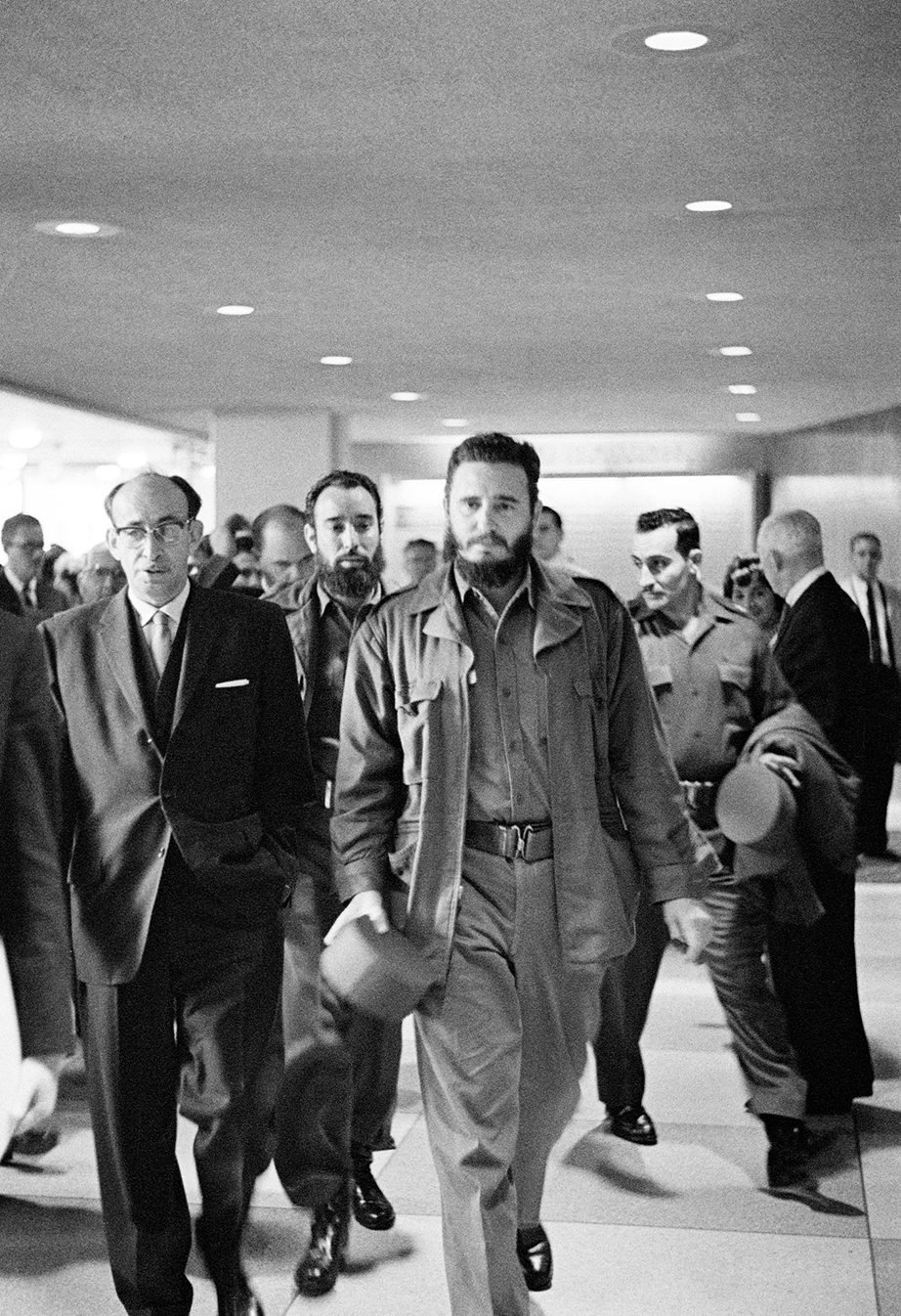
By September 1960, during his first address to the General Assembly, Cuban Prime Minister Fidel Castro had already sized up the United Nations. “Although we have a reputation for speaking at length, you need not worry. We will do our best to be brief,” he said as he stepped up to the podium. He took two sips of water and then spoke for four hours and twenty-nine minutes. To this day, no one has broken that record in the General Assembly.
He was 34, and his sardonic, provocative nature was already fully on display, playing with the expectations of his audience. So was his understanding of the role the UN would play in global geopolitics and Cuban diplomatic strategy. The commander of the Revolution stood confidently before world leaders at the height of the Cold War as the representative of a small Caribbean island that had proudly decided it belonged among them. He invoked the importance of the UN and peaceful coexistence among nations and lectured the room on the exclusion of countries like China, which at the time had no voice or vote in the organization. “Let the philosophy of plunder disappear, and the philosophy of war will disappear with it!” he said.
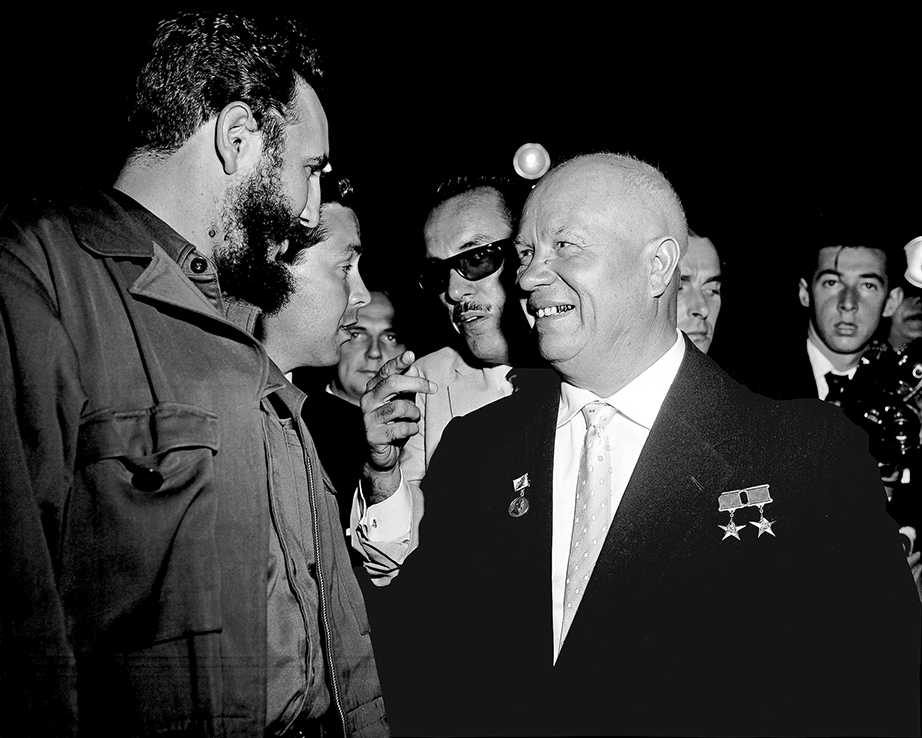
When the Shelbourne Hotel demanded an exorbitant deposit from his delegation, Castro threatened to camp in the courtyard of the UN compound. “When I told the Secretary-General, he was horrified at the idea of a delegation camping in tents,” he later recounted with amusement. The Secretary-General was spared when American revolutionary Malcolm X offered to house the Cuban delegation at the Hotel Theresa in Harlem, where Soviet leader Nikita Khrushchev visited him. The masterstroke of settling in the heart of Black Manhattan, surrounded by the poor and the marginalized, was pure gold in the choreography of the Cuban revolution. The UN had given Castro the microphone for his declaration against the powerful; Harlem gave him the stage.
The institution that underpinned the new world order born from the ashes of the Second World War quickly became the only international forum where small and poor countries could compete on equal terms with the superpowers and even steal the spotlight from them. More than six decades later, it’s being tested again.
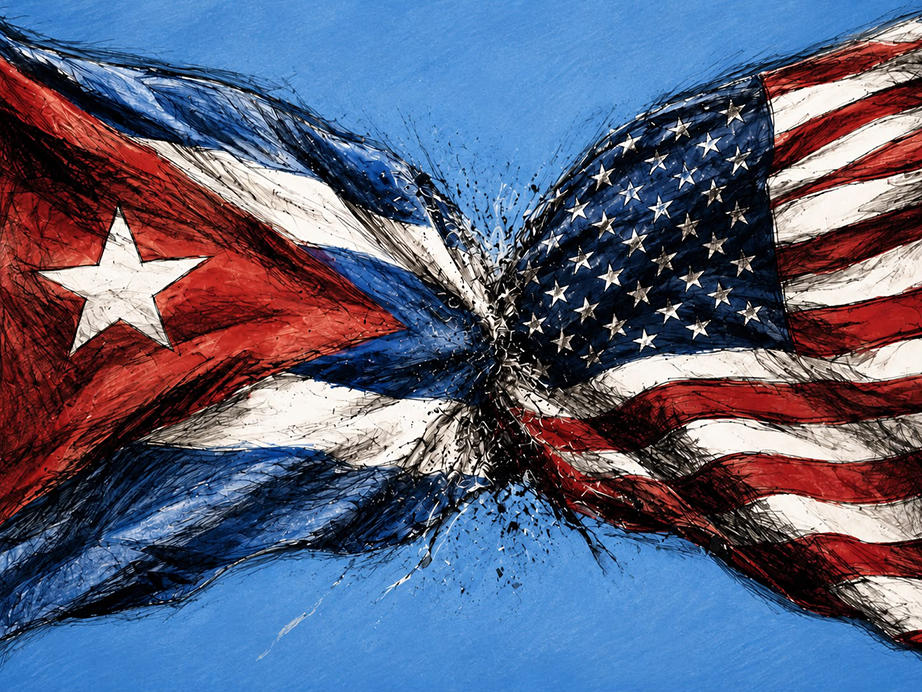
At the height of the Cold War, Havana understood that multilateralism was its great equalizer: a space where any country could accumulate diplomatic capital, build coalitions, and leave Washington in the minority before the world. Now, as Trump shakes up the global equilibrium, Washington’s maneuvering over Cuba at the UN has turned the island into a testing ground for a new kind of American influence.
That strategy played out year after year, as Cuba has cornered Washington with its embargo condemnation resolution held in the General Assembly since 1992. The world’s support for lifting the embargo has been overwhelming. The climax came under the Obama administration, when even the United States joined the collective outcry against its own policy. The result: 191 in favor, zero abstentions.
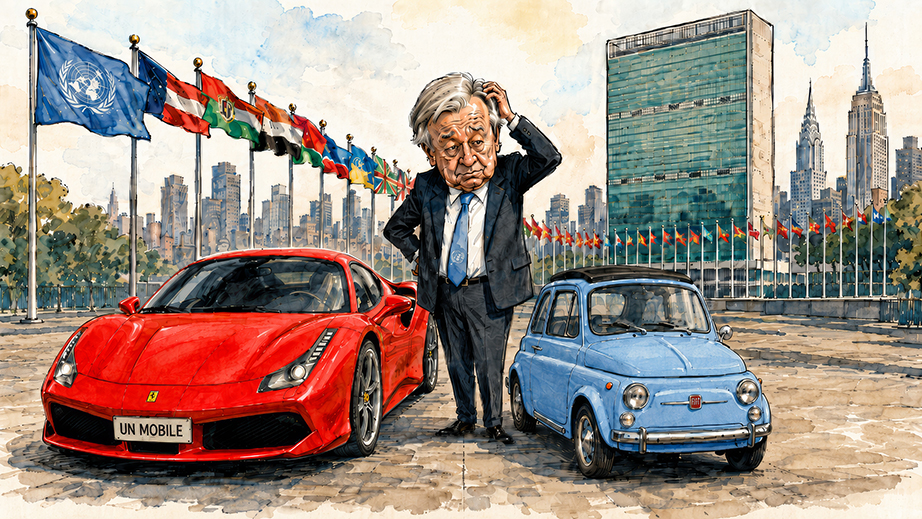
The detente did not survive the election. The Trump administration cut short Obama’s opening, and Cuba has not been the only casualty. The UN itself has suffered under a government that has slashed more than a billion dollars in funding essential to its survival. “Previous Democratic administrations believed greater US influence would flow from first paying its bills and rejoining institutions. The Trump administration may be testing an inversion of this strategy: weaken first and reengage later,” wrote Laurel Rapp, director of the US and the Americas Programme at Chatham House.
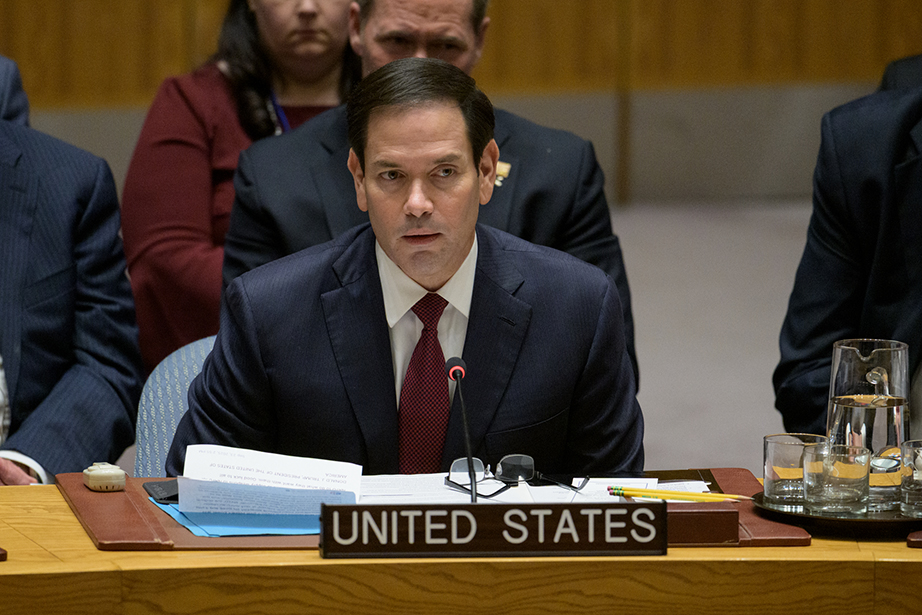
The Cuba case has shown that Washington no longer views the UN as an uncomfortable stage where it is forced to deal as equals with what Trump infamously called “shithole countries.” Trump believes the UN has underperformed, “but it also has tremendous potential,” he said last September during his address, without further explanation. “I’m confident we can Make the UN Great Again,” Ambassador Mike Waltz told US senators during his confirmation hearing. Diplomats quietly confirm that the US is not absent from the UN and remains very present across different agencies, pushing an ideological agenda. Washington has withdrawn from 31 UN bodies that Secretary of State Marco Rubio described as “anti-American, useless, or a waste.” Last October, Rubio, who is Cuban-American, decided to use the power of the organization—and of his government’s propaganda machine—to send a message to Cuba and the world. Rather than ignore the traditional anti-embargo vote, which the US has always lost, he decided to do something it had “never bothered to do: twist arms,” William LeoGrande, associate vice provost for academic affairs and professor of Government at American University in Washington, told Envoy. “There is no doubt about it.”
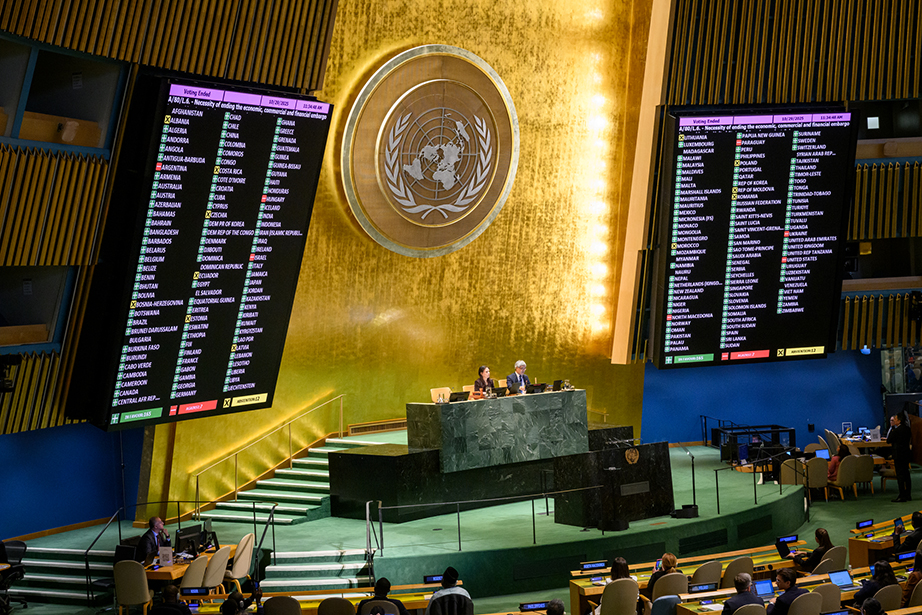
The diplomatic maneuver, which caught experts off guard, produced the lowest result in the 33 votes held since 1992 to condemn the embargo: 165 in favor, seven against, and 12 abstentions. That allowed Washington to frame it with a word that has no place in Cuban vocabulary, nor does it match reality: the “collapse” of support for Cuba.
A 165-country majority was still a victory for Cuba, but the resolution had never received more than four votes against it since it was first introduced in 1992. This time there were seven. Jeff Bartos, the US ambassador for management and reform at the UN, said the vote sent “a message to the regime that the international community will no longer tolerate its lies.” LeoGrande believes the message was aimed at the world. “I think they did it as a threat,” he said. “If this is what we’re willing to do on a vote that doesn’t mean anything really to our interests, when we come to you on something we really care about, you better be in line for help.”
For 30 years, Cuba used the vote to build moral consensus. Now the US uses it to send a warning to every country watching.
The vote was a reflection of a new world order in which the US no longer aligns with its traditional Western allies, but with ideological partners such as Argentina, Paraguay, North Macedonia, Hungary, and, of course, Israel. Ukraine’s presence in that bloc revealed the lengths to which the US was willing to go to impose its agenda inside the UN itself.
“Their contempt for international organizations and multilateral institutions is pretty obvious,” said LeoGrande. “They’re not participating in good faith. They participate to the extent that they think it advances their interests, and not one inch more.”
A week before the vote, Cuban Foreign Minister Bruno Rodríguez Padilla denounced at a press conference a “brutal campaign of political-diplomatic pressure” on countries across several regions, especially in Europe and Latin America, orchestrated by senior US officials. In an internal cable obtained by Reuters ahead of the vote, the State Department informed its embassies that it also saw “value” in abstentions. European diplomatic sources confirmed to Envoy that the pressure included tariff threats and potential visa restrictions. “If that’s what they do to European countries, imagine what they do with Latin American ones, which they consider their backyard,” one source said. Several Eastern European governments, for whom the Cuba-Ukraine mercenary accusation provided the perfect alibi, joined the abstentions alongside the conservative governments of Costa Rica, Ecuador, and Morocco.
The “intimidating and deceptive pressure” denounced by Rodríguez included the accusation that Cuba was funneling mercenaries to Russian forces fighting in Ukraine. A State Department cable dated October 2, 2025, described Cuba as “the second largest contributor of foreign troops to the Russian aggression after North Korea,” estimating that between 1,000 and 5,000 Cubans were fighting alongside Russian forces, and instructed US embassies to “persuade allied governments and international partners to vote against or abstain.” Ukraine’s Defense Intelligence Agency said it had verified the names and personal details of 1,028 Cubans who signed contracts with the Russian Armed Forces in 2023–2024.
Cuba’s Foreign Ministry issued a formal denial, stressing that “none of them have the encouragement, commitment, or consent of the Cuban State.” Russian investigative reporting found that two women—a travel agent and a hairdresser—ran one recruitment scheme using false pretenses, promising construction work paying $2,000 monthly, only for Cubans to have their passports confiscated on arrival and be pressured into military contracts.
The accusation of mercenary activity was never conclusively proven. But it did not need to be. It had done its work.
On the day of what should have been a routine symbolic vote, Ukraine’s ambassador called Cuban nationals “the largest group of foreign mercenaries in the Russian army.” The session broke from tradition when US Ambassador Waltz took the stage to accuse Cuba of supporting terrorist organizations, trafficking weapons, and sending mercenaries to Ukraine. Rodríguez shot back: “Mr. Waltz, this is the United Nations General Assembly, not a Signal group chat”—a pointed reference to the Signalgate scandal in which Waltz had inadvertently included a journalist in a classified chat about military operations. The outburst drew a rebuke from General Assembly President Annalena Baerbock.
Among the Latin American allies who either voted against or abstained, one country was notably absent: El Salvador. The country issued no explanation of the vote. While Cuba still received overwhelming support, the campaign had real consequences. On that very same day, October 29, 2025, Ukraine closed its embassy in Havana.
“The problem is not the UN,” Yuri Gala, Cuba’s deputy ambassador, said. “It is the disregard for international law by those who impose unilateral coercive measures on other countries.”
Roughly two months later, without any attempt to gather support at the UN, American forces abducted Venezuelan president Nicolás Maduro, killing at least 32 Cubans and 80 Venezuelans. There were no political consequences. Since the abduction of Maduro, Latin American analysts have noticed a shift: the sense that international law no longer functions as a constraint. Some of them think the irrelevance of the organization started with the brutal Israeli war in Gaza. “Since October 2023, the United Nations can no longer exercise power or influence,” Alex Aviña, a historian specializing in Mexico’s drug war at Arizona State University, said to Envoy. “There is nothing to stop a president like Trump if he wants to violate international law or the sovereignty of a Latin American country. Nothing.”
After the removal of Maduro in January 2026, Mexican President Claudia Sheinbaum’s government took Trump’s threats seriously enough to cooperate with Washington in a new phase of the war against the drug cartels, despite setting the Aztec country ablaze. The UN has ceased to be the last defensive barrier for the world’s weaker nations, and without it, everyone is on their own.
“Today the United Nations is under brutal siege by the United States,” Gala warns. “It’s not a perfect organization, but it remains the most legitimate, inclusive, and universal space for international coordination. The international community faces an unavoidable challenge: to define whether a crime of this nature will become the template for what is to come, or whether reason, solidarity, and the rejection of aggression will prevail.”
About The Author