A vocal critic of Israel’s wars and Europe’s military buildup, Sánchez brings a defiant record to the UN’s development campaign.
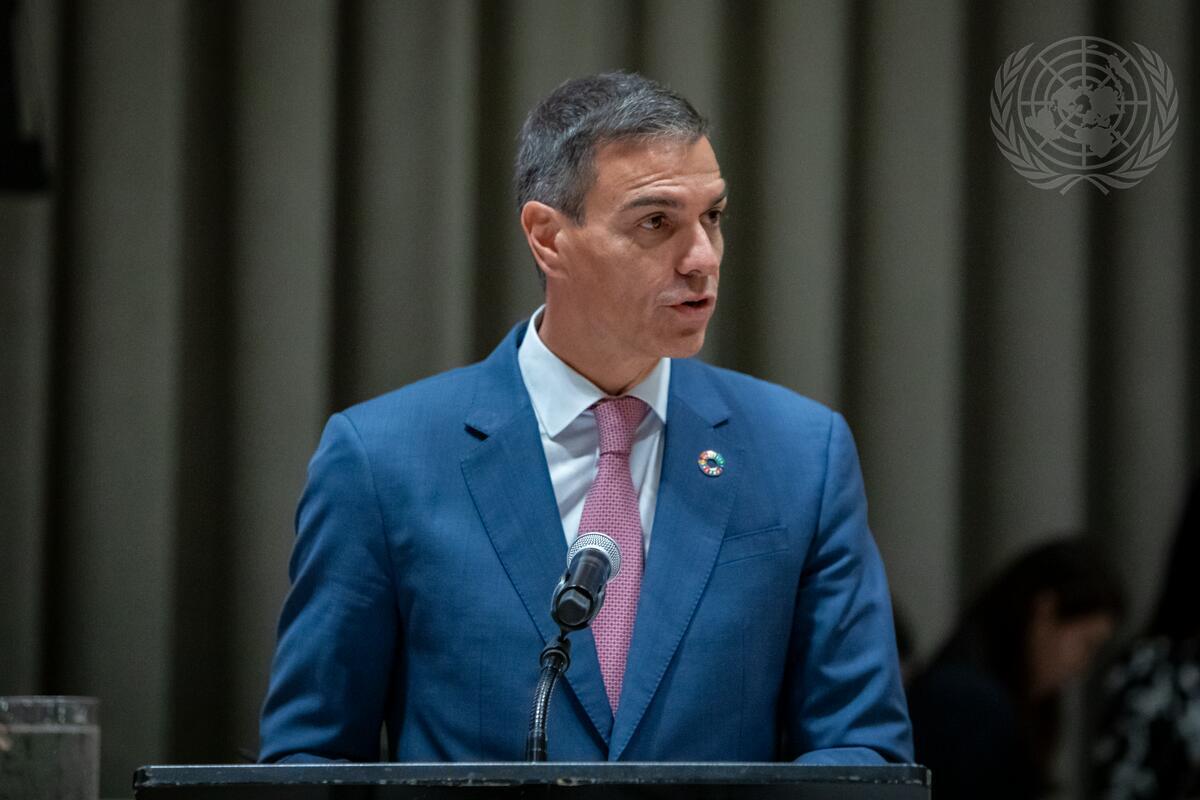
As multiple real-world crises slow development across the globe, UN Secretary-General António Guterres today announced Prime Minister Pedro Sánchez of Spain as co-chair of the Sustainable Development Goals (SDG) advocates group.
In a press release, Guterres welcomed the prime minister, who will serve alongside fellow co-chair Mia Mottley, the prime minister of Barbados. Her previous co-chair was former Prime Minister Justin Trudeau of Canada.
“The Sustainable Development Goals are at risk of slipping out of reach,” added Guterres. “Our mission is clear: to accelerate progress at scale and speed.”
Sánchez, who has served as Spain’s prime minister for just over eight years, added, “The Decade of Action is not lost—it is in our hands, and we must act.”
“I am committed to continuing to work to ensure that the implementation of the 2030 Agenda translates into opportunities, well-being, and prosperity for all people,” said Sánchez in a press release. No one can be left behind, he added.
Sánchez’s appointment places one of Europe’s most outspoken leaders at the center of the UN’s struggling development agenda. Appointed by the secretary-general, the advocates are a group of high-profile figures—including artists, academics, advocates and political heads—who use their global platforms to accelerate progress on the SDGs and foster awareness. Established in 2015, the 17 SDGs provide a critical developmental blueprint designed to eliminate a wide range of global challenges, including poverty, hunger and inequality, by 2030. Co-chairs Mottley and Sánchez are tasked with leading and directing the work of the group.
However, despite some notable achievements including increased digital connectivity, a decrease in maternal and infant mortality rates and a boost in renewable energy, a recent 2026 SDG report claims that overall progress towards the 2030 deadline remains “uneven and insufficient” due to “the collapse in development assistance, to growing debt burdens in developing countries, rising conflicts, slowing global economic growth, climate chaos,” and most recently, the war in the Middle East—between the United States, Israel and Iran—which has severely disrupted maritime traffic that is critical for the transport of food, fertilizers and energy through the Strait of Hormuz.
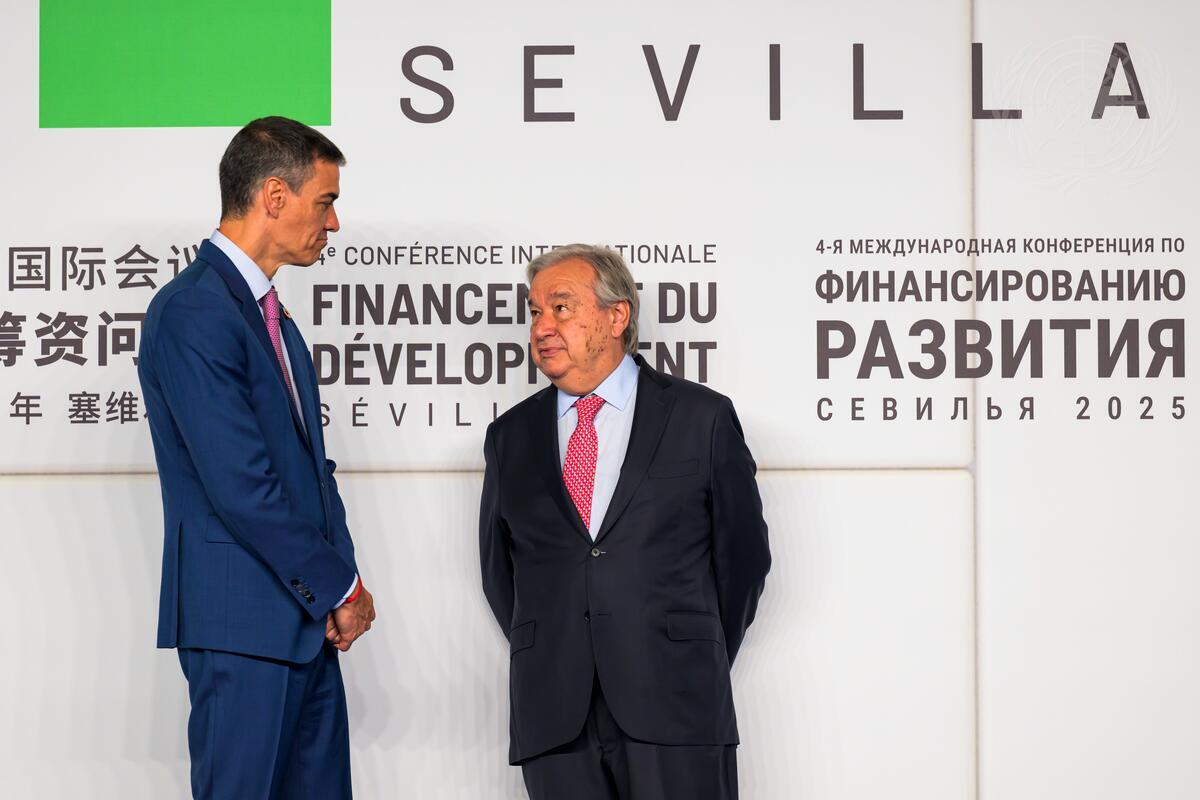
The 4th International Conference on Financing for Development (FFD4), is taking place from 30 June to 3 July 2025 in FIBES Sevilla Exhibition and Conference Centre, Spain.
As a result, according to the report, only “36 percent of the 139 assessable SDG targets are on track or making moderate progress, and 15 percent have gone into reverse.” And the global situation remains increasingly unstable. In recent news, after a brief reopening of the Strait, President Trump announced the return of a full blockade on all ships traveling to and from Iranian ports or carrying Iranian cargo. The Strait is otherwise open to all other traffic, he said.
Support for the development goals met another blow in March 2025 when the Trump administration rejected the 2030 agenda and the SDGs as a “globalist endeavor” that is “inconsistent with U.S. sovereignty and adverse to the rights and interests of Americans.”
Another potential setback that could manifest during the ongoing selection process for the UN’s next secretary-general. While each of the six current candidates vying for the job acknowledges the SDGs, pressure from the P5, the five permanent members of the Security Council—which includes the United Kingdom, China, Russia, the United States and France—could further derail or stall progress.
Still, what remains unclear is how Prime Minister Sánchez will tackle his new role as co-chair of the SDG advocates group as the 2030 deadline quickly approaches. Much like the UN, the prime minister has been repeatedly criticized by President Trump, most recently at the NATO summit in Ankara, Türkiye, for not bumping up its defense spending. At a press conference, Trump called Spain a “terrible partner,” a “wasted cause,” and threatened to cut off all trade between the countries. “I don’t want anything to do with Spain,” he added. At a press conference after the Summit, a smiling Sánchez downplayed the tension, saying he had an informal and “friendly” conversation with Trump afterward.
Notably, increases in government defense spending have contributed to the widening funding gap for development, especially among developing countries, according to the recent SDG report. According to a separate report by the Secretary-General, published in 2025, “global military spending reached an unprecedented $2.7 trillion in 2024.”
Sánchez has also been one of Europe’s most outspoken critics of Israel’s military action in Gaza after October 7 and most recently in Lebanon. In 2025, he consolidated an embargo on the sale of weapons to Israel and a ban on the use of Spanish ports and airspace to transport fuel and weapons that support the Israeli army.
While Sánchez has won praise from supporters of stronger European action against Israel, on the domestic front the prime minister has faced criticism over corruption allegations involving close family including his wife. According to media reports, his brother, David Sánchez, has recently been banned from holding public office as a result. The prime minister has maintained that the allegations are part of a politically motivated smear campaign.
About The Author