The race to choose the next Secretary-General has no shortage of qualified women. The question is whether the UN’s most powerful states are prepared to support a woman to lead.
In 2016, seven of the 13 candidates for secretary-general were women. The UN still chose a man.
This year, as the UN marks its 80th anniversary, the stakes are even higher. The organization was created at the end of World War II, and it now faces a host of critical challenges, reflecting political stress, economic disparities and a crisis in leadership. The next secretary-general must have the strength and ingenuity to take up these challenges.
Nevertheless, despite the demand for equality and justice, the renewed tensions between the organization’s survival and the need for equal representation between men and women beg the question: Is the UN ready to take the step to elect a woman to the helm, or will politics and discrimination prevail once again?
An Unusual Job Description
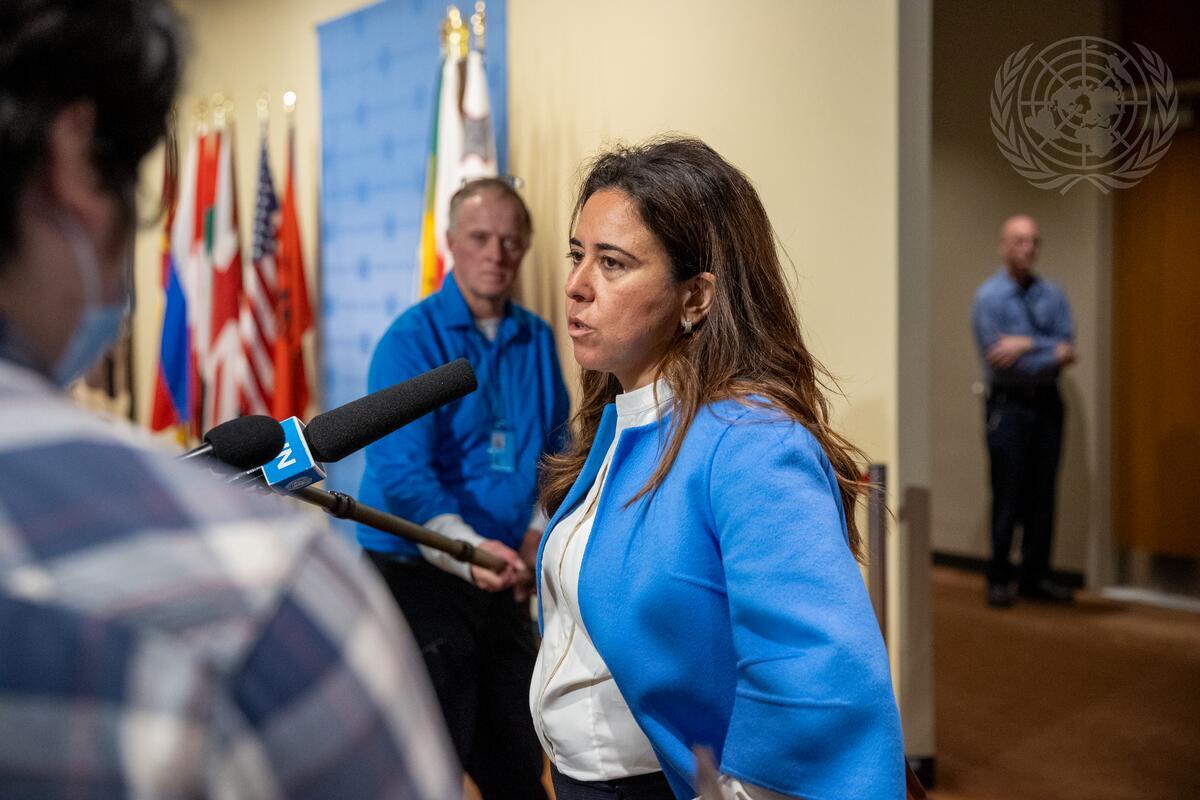
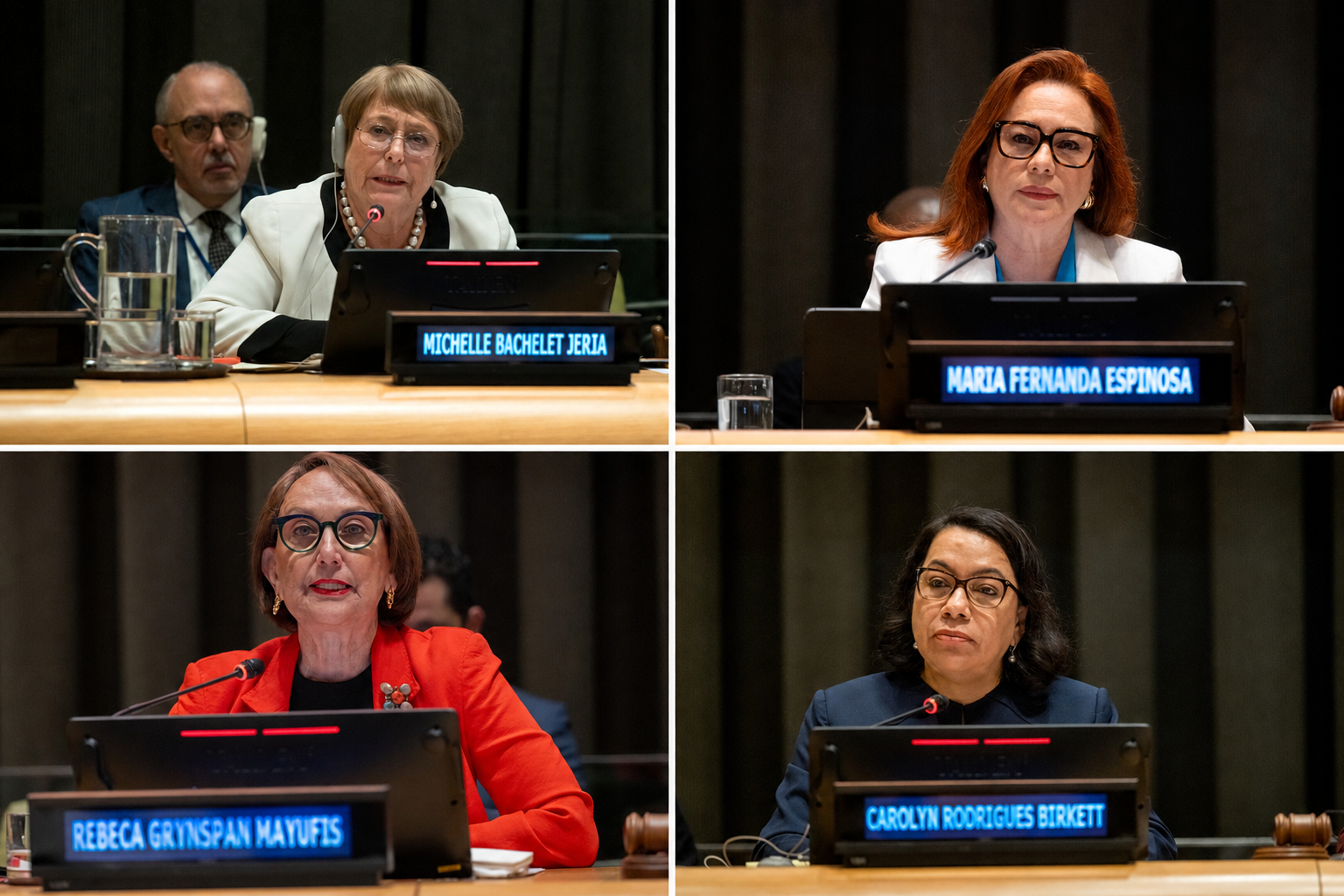
By mid-June, six candidates had announced their bids to run for UN secretary-general. The first group of four—two women and two men—presented their campaign arguments to the UN’s General Assembly on April 21 and 22. A third woman, joining Michelle Bachelet of Chile and Rebeca Grynspan of Costa Rica, is María Fernanda Espinosa of Ecuador, who was asked to deliver her presentation on June 15, laying out her agenda to the UN General Assembly. The sixth candidate, nominated June 13, is also a woman, Carolyn Rodrigues-Birkett of Guyana,
increasing the odds that a woman could be chosen.
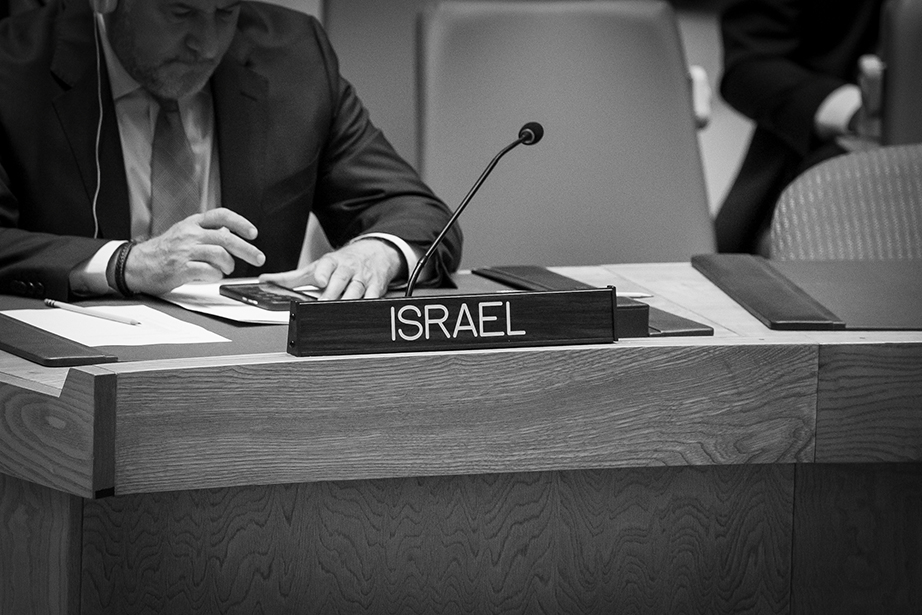
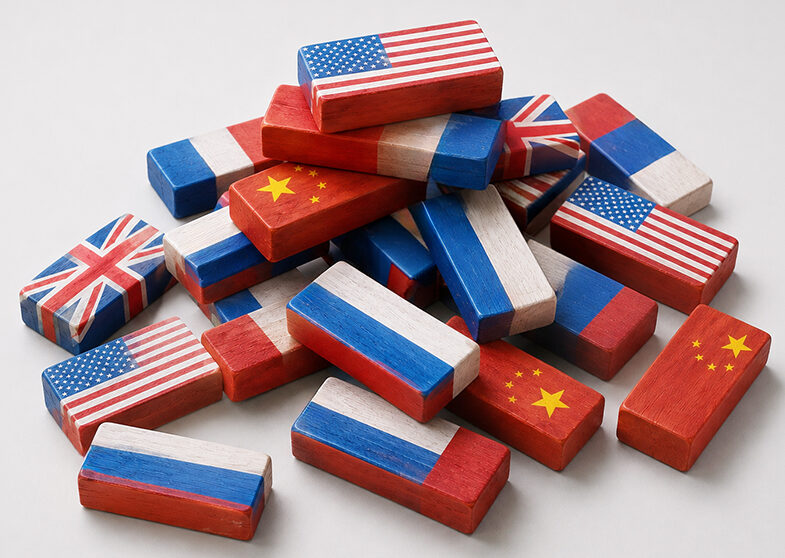
The selection of the next secretary-general will be confirmed prior to December 2026, with the new leader taking office on January 1, 2027. Previous secretaries-general, all men, have come from Norway, Sweden, Burma, Austria, Peru, Egypt, Ghana, South Korea and Portugal. With the search underway for the next leader, many believe that it should be a woman, for the first time. There is no formal search process or job description other than what is stated in the UN Charter: that the General Assembly shall appoint the secretary-general “upon the recommendation of the Security Council.” In truth, the decision is ultimately made by the Security Council, where the Permanent Five—the United States, United Kingdom, France, Russia and China—have the power of veto. But there is widespread interest in both the diplomatic world and civil society that the time has come for a woman leader.
In this role, deep knowledge of foreign affairs, eloquence and strong communication skills, dedication to peace, justice, human rights, development and diplomacy are key. There are many distinguished women leaders with precisely these qualifications, including presidents, prime ministers, foreign ministers and career diplomats. Hence, there is no paucity of experienced women as candidates and no excuses.
Prior to the 2016 selection process, deliberations were cloaked in secrecy among Security Council members. However, UN reforms brought about by active General Assembly members in 2016 introduced several new transparency requirements, including publicly announced nomination letters from UN member states and presentations by candidates to a broad UN General Assembly gathering and civil society.
For the 2026 process, the president of the General Assembly, along with the Security Council, included additional provisions: only member states can nominate candidates, a member cannot nominate more than one candidate, and someone can be nominated by a country other than the person’s origin.
Additionally, more than one country can nominate the same candidate, as we have seen with the nomination of Michelle Bachelet by Mexico and Brazil. Chile, her country of birth, had joined the other two initially but rescinded its nomination. Bachelet remains a candidate due to her foresight in having a backup plan with the continued support of Brazil and Mexico.
Other female candidates include Rebeca Grynspan, nominated by her country of Costa Rica; Carolyn Rodrigues-Birkett, nominated by her country, Guyana; and María Fernanda Espinosa of Ecuador, nominated by Antigua and Barbuda, again demonstrating the creativity and stresses of this mind-spinning nomination process. Virginia Gamba of Argentina had been nominated by the Maldives. However, due to political pressure placed upon the Maldives, the country rescinded Gamba’s nomination shortly thereafter. Why? Politics!
Hence, is the UN really ready for a woman?
Our campaign to elect a woman UN secretary-general supports a woman and, of course, someone of high merit. The campaign offers several criteria we feel the next secretary-general must encompass. She must have demonstrated experience in leadership within multilateral institutions, have skills in strategic analysis and decision-making and must be committed to the goals of the UN, providing a moral compass in peace, security, human rights and humanitarianism. In this role, she must also have shown a dedication to women’s empowerment, equality, empathy and inclusiveness.
Paramount among these qualities is charisma and powerful communication abilities, a skill necessary to interact with the media and educate the public toward understanding the goals and work of the UN, be it UN peacebuilding, diplomacy, dialogue or norm-building. This comes at a critical time when many have lost faith in our institutions. However, we argue that a woman could bring the resolve and courage to take on this task and help rebuild trust. Women have long had to work against the tide to reach levels of senior leadership, and those who have risen to the top have developed resilience and skills to lead through adversity.
Ultimately, electing a woman leader would reflect the UN’s own commitment to advance the rights, health, education and safety of women and girls, alongside encouraging the appointment of women in all aspects of the UN’s work, both at headquarters and on the front lines.
Support for a woman secretary-general is emerging from a vast range of interested groups, including academics, historians, business leaders, politicians and thousands of
university and high school students.
Having a woman at the helm of a world organization with its universal membership would send a message to all aspiring young women and girls that they, too, can achieve their highest goals.
It would serve as a dramatic statement that women can lead and reconstruct the UN to be better fit for today’s challenges. Women have demonstrated that they can hold high offices with both diplomatic and managerial skills, yet they also bring along a set of experiences that in many ways differ from those of men. With over half the world’s population women, they need a voice in the decision-making process.
While member states have begun to nominate gifted female candidates, the hope now is that the Security Council will recognize what a woman secretary-general could represent: fresh ideas, interest, excitement and renewed enthusiasm for the United Nations. The remaining question is whether politics and special interests will cloud that vision. But if not now, when? Momentum is here, the qualifications are clear, and the opportunity should not be allowed to slip away again. The time is now! But is the UN ready?
Gillian Sorensen, former Assistant Secretary-General, United Nations
Jean Krasno, UN Scholar, Political Science Department, City College of New York and Columbia University
About The Author