Long divided by ideology and rival candidacies, Latin America has struggled to unite behind a single person to lead the UN. But the late entry of the UAE’s Lana Nusseibeh is suddenly giving the region something to rally around: the threat of losing its turn at the top.
Mayra Lopes
This could have been an extraordinary year for Latin America. Bad Bunny made history at the Super Bowl, and the FIFA World Cup drew global attention to Mexico and its North American neighbors.
On top of that, the region has a rare opportunity to lead the United Nations for the first time in nearly 35 years: Peru’s Javier Pérez de Cuéllar remains the first and only Latin American to have served as UN Secretary-General.
Yet Bad Bunny’s performance, watched by more than 128 million people, appears to have generated more public debate than the race to lead the world’s largest multilateral organization. It may seem strange; for those following the region’s political developments, it is not entirely surprising.
While millions of fans gathered across the region to cheer for their teams and watched Lionel Messi in tears after Argentina was defeated by Spain in the final, the region remains divided over the Secretary-General race, both among political leaders and in public debate.It took the challenge posed by an outsider, Lana Nusseibeh of the United Arab Emirates, for Latin America to unite and demand that member states choose someone from the region. Still, agreement on a single name is delayed, making it harder to have a case before the global organization.
A Disunited Region Makes for a Disunited Race
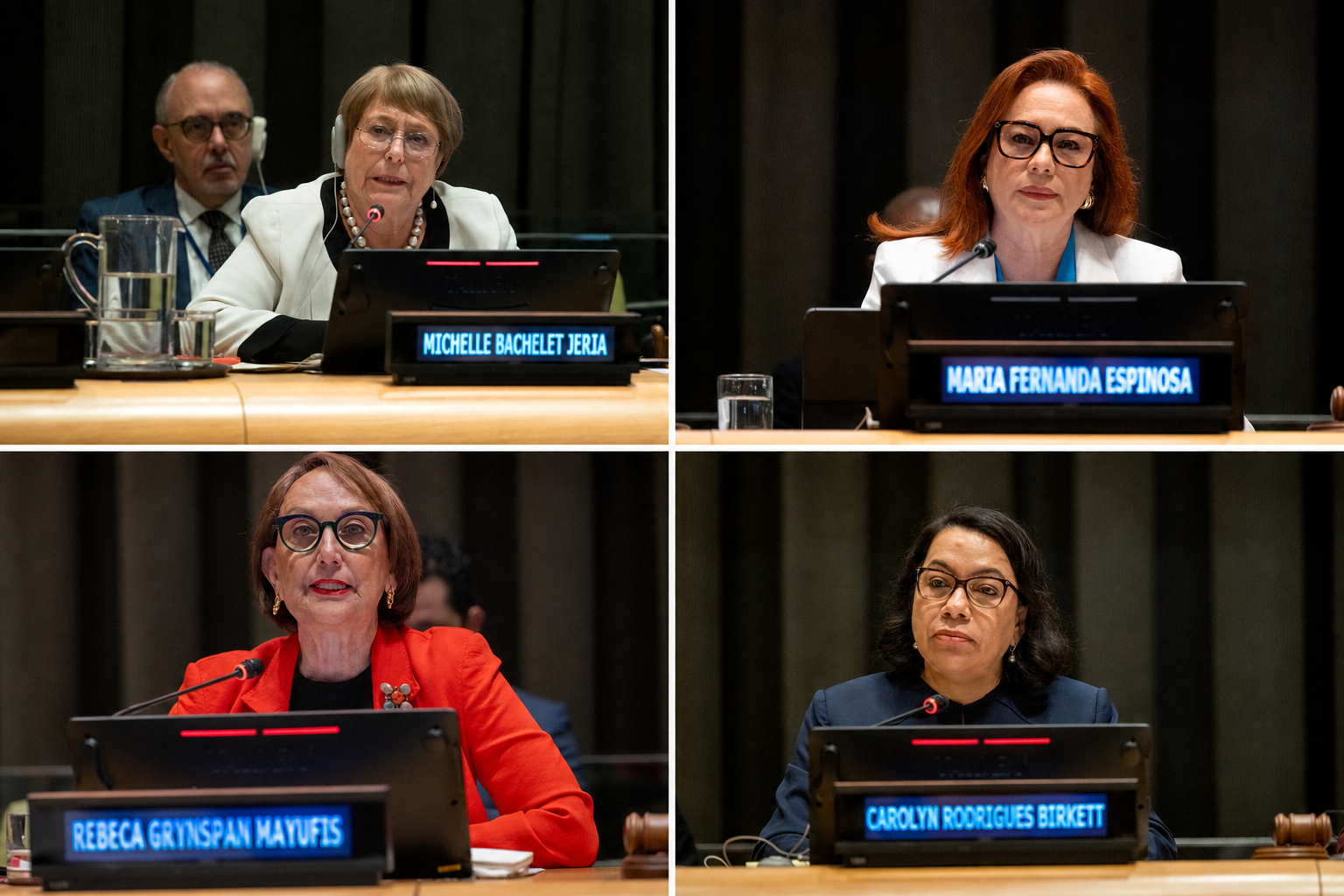
Consider Ecuador. Two Ecuadorian women, both with extensive international experience, entered the race for UN Secretary-General. Neither was nominated by their own country. María Fernanda Espinosa, former president of the UN General Assembly and foreign minister, was nominated by Antigua and Barbuda. Ivonne A-Baki, a former diplomat and trade minister, was nominated by Tonga.
This is more than a diplomatic coincidence. Espinosa served under left-wing governments, making her an unlikely choice for President Daniel Noboa’s administration. A-Baki, whose political background might be closer to the current government, failed to secure Ecuador’s endorsement following a reported falling-out with senior officials. In a competition where national support can help establish diplomatic credibility, Ecuador has two candidates seeking the world’s most prominent diplomatic position without Quito’s backing.
Chile offers another illustration. Gabriel Boric joined Brazil’s Luiz Inácio Lula da Silva and Mexico’s Claudia Sheinbaum to nominate former Chilean president and UN High Commissioner for Human Rights Michelle Bachelet, in an alliance that appeared to demonstrate a renewed diplomatic ambition in Latin America. However, Chile’s political transition changed the scenario. Following the arrival of conservative President José Antonio Kast, Santiago dropped its support. Brazil and Mexico maintained their positions for months before withdrawing their nominations in September, bringing Bachelet’s candidacy to an end. In informal polls, the Security Council had already signaled little support for her, but the end of the South American alliance exposed how quickly domestic political changes can impact international cooperation.
The lack of consensus could weaken Latin America’s long-term foreign policy interests. It is not new that ideological polarization influences the region’s foreign policy, and fragmentation is not exclusive to one side of the political spectrum. Right-wing governments have sought closer partnership with Washington. The left-wing has pursued different alliances and approaches to global governance. But over the past decade, the pace of these transitions has made coordination more and more fragile.
There’s some consensus, though, but not enough to get anyone excited. In July 2025, MERCOSUR members, from Argentina’s Milei to Brazil’s Lula, agreed that the next UN leader should come from Latin America or the Caribbean. The Community of Latin American and Caribbean States (CELAC) stated the same ambition in October 2026, arguing for geographic balance and representation, as well as the region’s historical contributions to peace, sustainable development, and human rights. Neither declaration suggested a unified candidacy.
The region is not short of qualified candidates. Costa Rica’s Rebeca Grynspan, Argentina’s Rafael Grossi and Guyana’s Carolyn Rodrigues Birkett remain among those competing for the role. Grynspan has appeared as a particularly competitive contender in informal Security Council voting. She also has experience from within the UN, having led UN Trade and Development for the past five years.
United Against an External Threat?
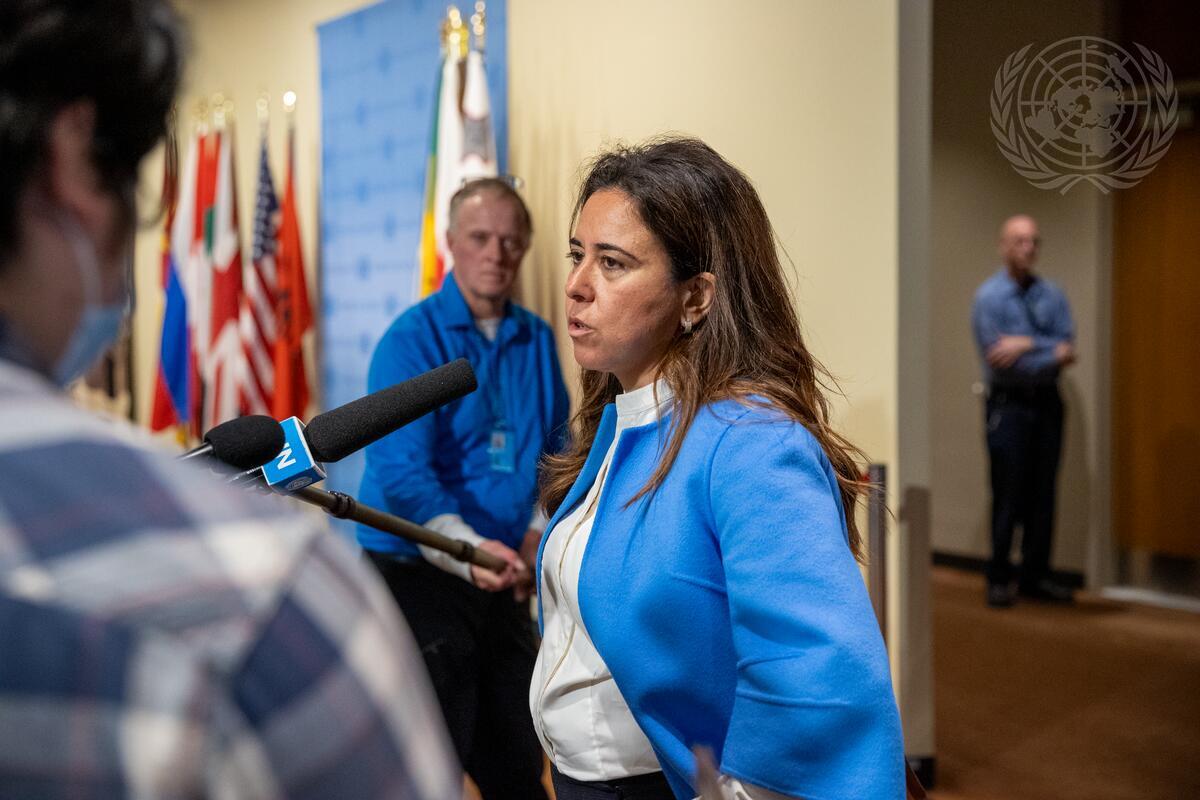
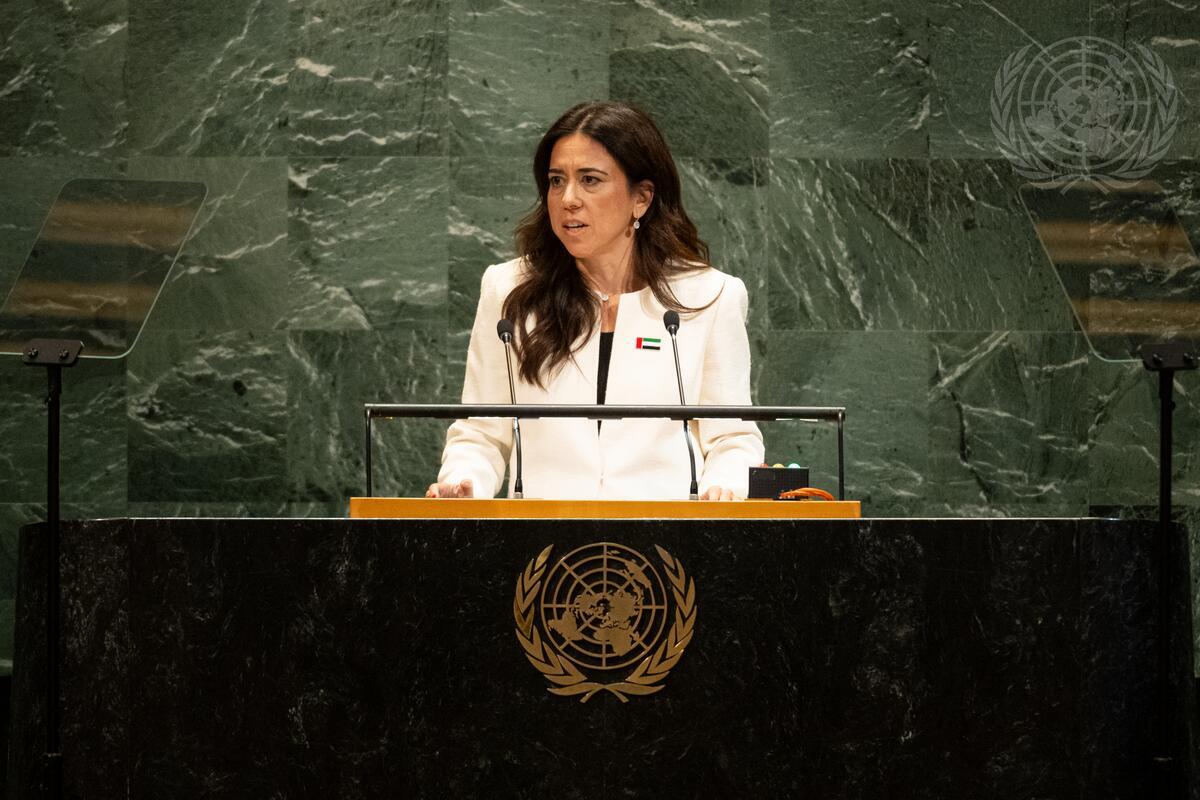
Meanwhile, the late nomination of Lana Zaki Nusseibeh, the former United Arab Emirates ambassador to the UN, adds another experienced diplomat to an already crowded field. Her candidacy also speaks to what many regard as an overdue priority: choosing a woman as the next UN leader.
Latin America has no exclusive claim to the position. Candidates from other regions may just as well join the race if endorsed–as Senegal’s Macky Sall, who has already withdrawn, and Uganda’s Olara Otunnu, a known face in the UNHQ corridors. Geographic rotation is an established diplomatic expectation, not a binding rule, as the Secretary-General mandate is to serve the entire international community, not a single region. Even so, competition from elsewhere raises an uncomfortable question: if Latin America cannot coordinate around one of the most consequential international appointments, what does that say about its capacity to shape the global agenda?
The answer matters beyond the region. At a time when the UN is struggling with issues about its relevance, effectiveness and legitimacy, Latin America could offer helpful perspectives to the institution’s leadership.
More recently, Laura Dupuy Lasserre, Uruguay’s mission chief to the UN, delivered a new statement on behalf of CELAC. She said that “the time has come for a national of Latin America and the Caribbean to assume the responsibility of holding the position of Secretary General of the United Nations.” The claim stated not only geographic rotation but also their contributions to peace, sustainable development, and human rights. Though the declaration again praised the region’s candidates, it still did not endorse a single name.
According to the United Nations Environment Programme (UNEP), the region is home to approximately 40 percent of the world’s known species and a quarter of its forests. This means that its environmental future is inseparable from the world’s ability to address climate change and biodiversity loss. It has also developed influential traditions of civil society mobilization, democratic resistance and human rights advocacy, often in response to abuses committed by its own governments. Apart from the green agenda, Latin America established the first nuclear-weapon-free zone by signing the 1967 Treaty of Tlatelolco, proving that countries outside the major military powers could help shape international security policies.
It doesn’t mean that Latin America has resolved its own contradictions. Democratic backsliding, inequality, organized crime and political polarization continue to challenge the region. Its governments have struggled to unite on recent crises, like Venezuela, Gaza, Cuba and Ukraine. It also doesn’t mean that a Latin American Secretary-General would automatically rescue the UN from its institutional difficulties. We cannot ignore structural challenges and the power dynamics of the Security Council, where its five permanent members can veto decisions and appointments. No Secretary-General, regardless of nationality, can overcome those limitations alone. But leadership and support matter.
The UN chief can influence which crises receive attention, which voices enter defining conversations, and which issues stay on the international agenda after momentum fades. As we see armed conflicts spreading and competition among major powers intensifying, climate change, decolonization, sustainable development, and human rights risk being squeezed out by other hot topics. Experience navigating the challenges of the Global South could help the next Secretary-General to keep these issues on the agenda.
It also matters to multilateralism itself. When Latin American governments allow regional divisions to shape foreign policy, they weaken the institutions that give smaller and middle-income countries a voice. For those, multilateralism is not an ideal; it is a safeguard against global disparities. Alignment with Washington may bring short-term advantages for some governments, just as talks with Beijing or other powers may serve the interests of others. The risk is that if foreign policy becomes an extension of domestic political identity, countries risk trading diplomatic autonomy for ideological allegiance. And that is precisely when regional cooperation becomes most valuable.
The surprise of 2026 is the gap between Latin America’s cultural reach and its political divisions. Bad Bunny’s Spanish-language halftime performance before a massive American audience prompted a global conversation about language, identity and belonging. Soccer–or football–too, united audiences across borders even as governments disagree on trade, migration and international affairs. The region’s artists and athletes have demonstrated an ability to master global attention without waiting for political consensus. Its governments have not been as successful.
Thirty-five years after Javier Pérez de Cuéllar left office, Latin America has another opportunity to lead the United Nations. Whether one of its candidates ultimately succeeds remains to be seen. The race has already revealed something more consequential than the outcome of a single appointment. Latin America does not lack a global voice. What it increasingly lacks is the political ability to speak together.
Mayra Lopes is a global communicator. Beyond newsroom experience in Brazil and at the UN, she has worked closely on Latin American issues across sectors, from agriculture to healthcare.
About The Author