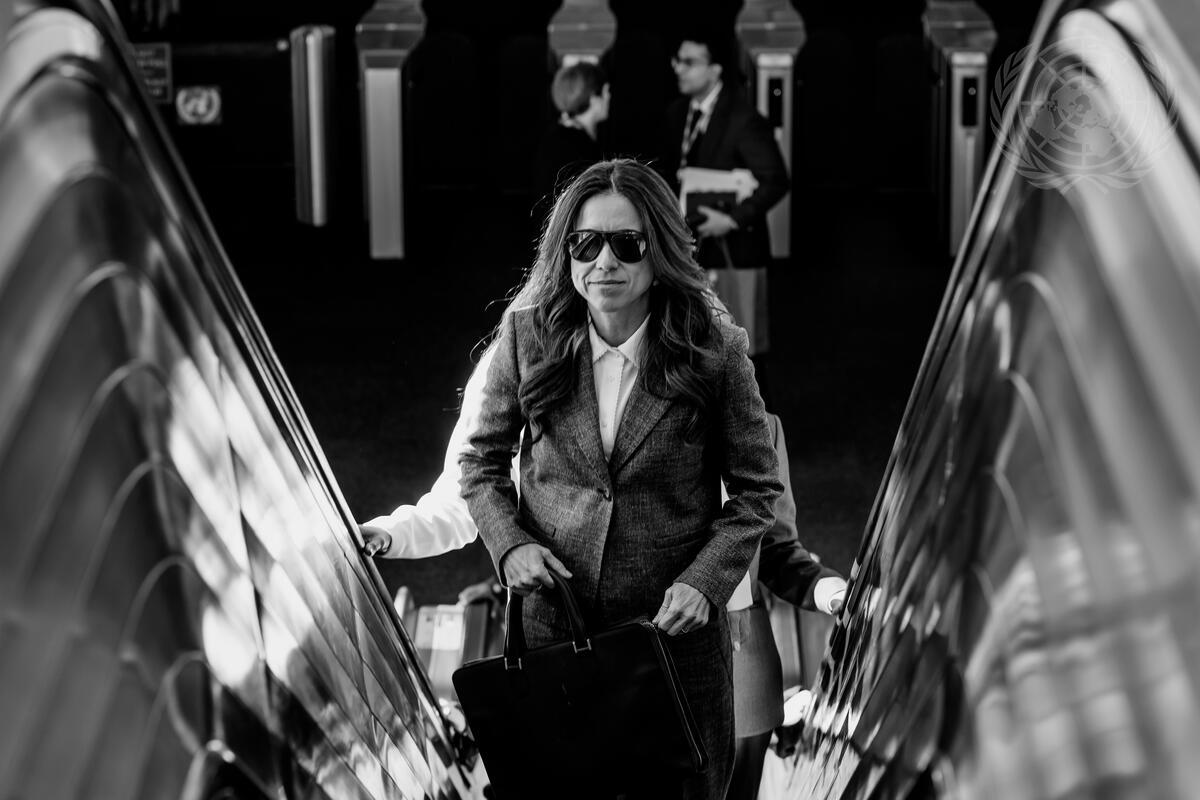
Ahead of Friday’s Security Council straw poll, Envoy examines how late entrant Lana Nusseibeh is positioning herself in the race to lead the UN, the diplomatic support she is attracting, and the challenges that could stand in her way.
With just two months to go, before current UN chief Antonio Guterres said he will be heading to relax in Portugal, the race to be elected the 10th Secretary-General has not yet gelled. Security Council straw polls to date showed no clear leader among the six active candidates, when Emirati diplomatx Lana Nusseibeh, the former UN Ambassador and Minister of State in the Foreign ministry, threw her hat in the ring on October 21.
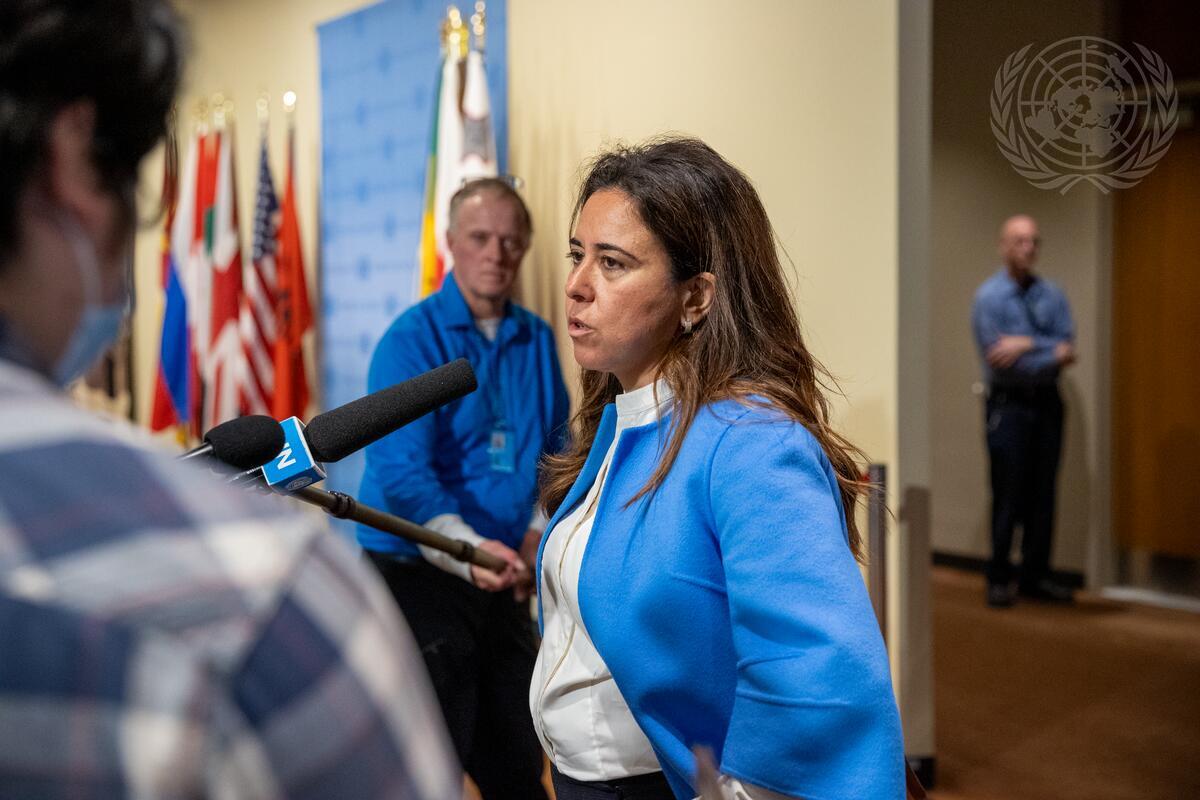
So far, three candidates have withdrawn, seven remain including late entrant Nusseibeh with a few more names being sounded out. In a press stakeout after her interactive dialogue with nations at the General Assembly, Nusseibeh explained what she sees as the power of the office of the UN chief.
“The Secretary-General has no army and no vote, but the Secretary-General has one incredible attribute and asset, she said, and that’s trust in this organization and the trust that member states and people around the world have in the credibility of the principles of the UN Charter …” She added, “The second thing is the power of the Secretary-General in terms of … mediation efforts and good offices, and that is something that I have committed in my interaction with member states today to pursuing relentlessly and as a first order of business.”
With no candidate yet emerging as a clear consensus choice, the race to succeed António Guterres remains wide open. Nusseibeh’s late entry has added a new dynamic to an already unpredictable contest, raising questions about whether she can challenge Rebeca Grynspan’s apparent lead—or whether additional candidates could further complicate the Security Council’s calculations. Ahead of Friday’s straw poll, much remains uncertain, particularly where the five veto-wielding powers stand.
Nusseibeh’s Case for a Bolder UN
Some of Nusseibeh’s proposals hit very close to the current leadership in her critique (more in the corridors of the UN than in public) of the past decade. One veto-wielding diplomat, who declined to be named, asked rhetorically when the last time ambassadors were summoned to Sutton Place (the Secretary-General’s residence) for other than a party–the answer was ‘not in recent years.”
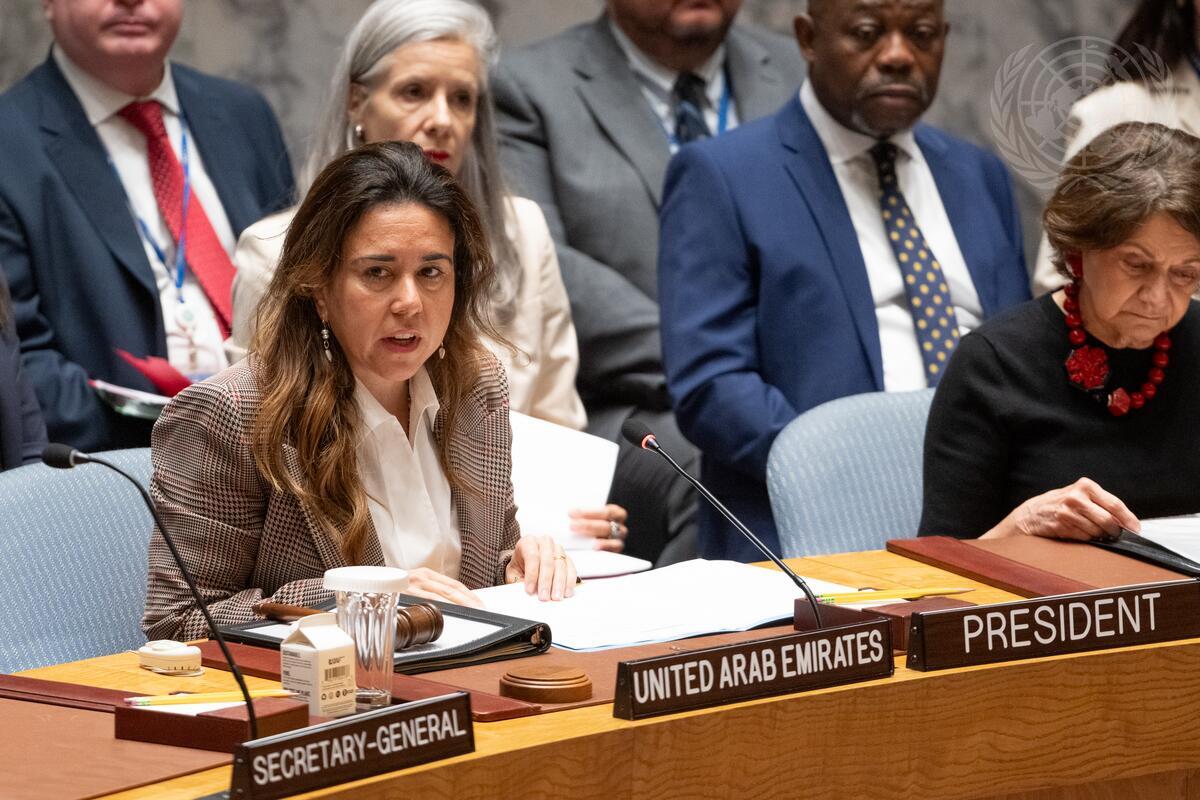
Nusseibeh appeared to address this power directly: “I plan to be a Secretary-General that engages frequently with the Security Council to work together as a team to try and resolve some of the world’s worst conflicts and worst humanitarian crises for the people who are suffering the most. And I think that does have power.” She cited a recent study that concluded that 55% of the world’s population still believes in the UN (with the youth demographic the highest number in that grouping).
And because Nusseibeh has served in high levels of the foreign ministry of the United Arab Emirates (as Ambassador, As Minister of State, in Policy Planning), she is answering questions from human rights groups on the UAE position on Sudan. Her answer: Sudan will be her “number one priority” if elected and would support an independent UN investigation for the “atrocious” crimes committed there.
Her positions in the Middle East did not come up much in the General Assembly, partly because she has support (if unstated officially) from Israel because of the UAE policies (and the Abraham Accords) and from the Palestinian delegation at the UN (because of her family background and support for aid.) During the UAE’s 2022–2023 term on the Security Council, Nusseibeh was instrumental in securing the adoption of Resolution 2720, which established the framework for a UN mechanism to accelerate humanitarian aid deliveries into Gaza.
Nusseibeh pledged to be a “political risk taker for peace,” something sorely needed by most nations’ accounts.
A Race “Heading Toward a Crash?”
At this point, the front-runner appears to be (on leave) Secretary-General of the UN trade agency (UNCTAD) Costa Rican Rebeca Grynspan, who spoke to the Council on Foreign Relations this week. Policymakers, she said, “…don’t see the U.N. as an important actor in any of the scenarios of conflict that we are living through today, and it’s because I really believe the UN has become very risk averse,” adding, “reforming the UN is urgent. It’s not an option; it’s a necessity.” But there are still two months – and hours of negotiations–to go.
A few more names have been in the wind as possible candidates including Turkish diplomat Feridun Sinirlioğlu, Guterres’ current Chef de Cabinet Courtney Rattray, who is from Jamaica, and the former Prime Minister of Hungary Victor Orbán. Orbán’s candidacy appears far-fetched since the current French Foreign Minister Jean-Noël Barrot told the French Senate on Wednesday that France could not accept it. “The position of Secretary-General of the United Nations is not intended to be a consolation prize for a leader defeated at the polls.”
If more candidates join the race in the last few weeks, it could cause confusion, says International Crisis Group’s Richard Gowan. “This whole race could be heading towards a car crash rather than an endgame,” he said.
“For now it looks like a two-horse race between Lana Nusseibeh and Rebeca Grynspan…. although there were rumors that the US has been bolstering Rafael Grossi in recent weeks,” he said, adding, “ If Feridun joins the race, we also enter a situation where two hefty middle powers, Turkiye and the UAE, are contesting the race….That creates some interesting political dilemmas for diplomats.”
A candidate for UN Secretary-General must receive at least nine votes from elected Security Council members and not receive a veto from any of the five permanent members (China, France, Russia, the UK, and the US). More straw polls are coming and perhaps more candidates, but for now the P5 are (for the most part) holding their cards close to their chests and the future is still fluid.
About The Author