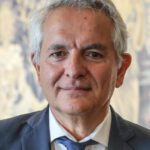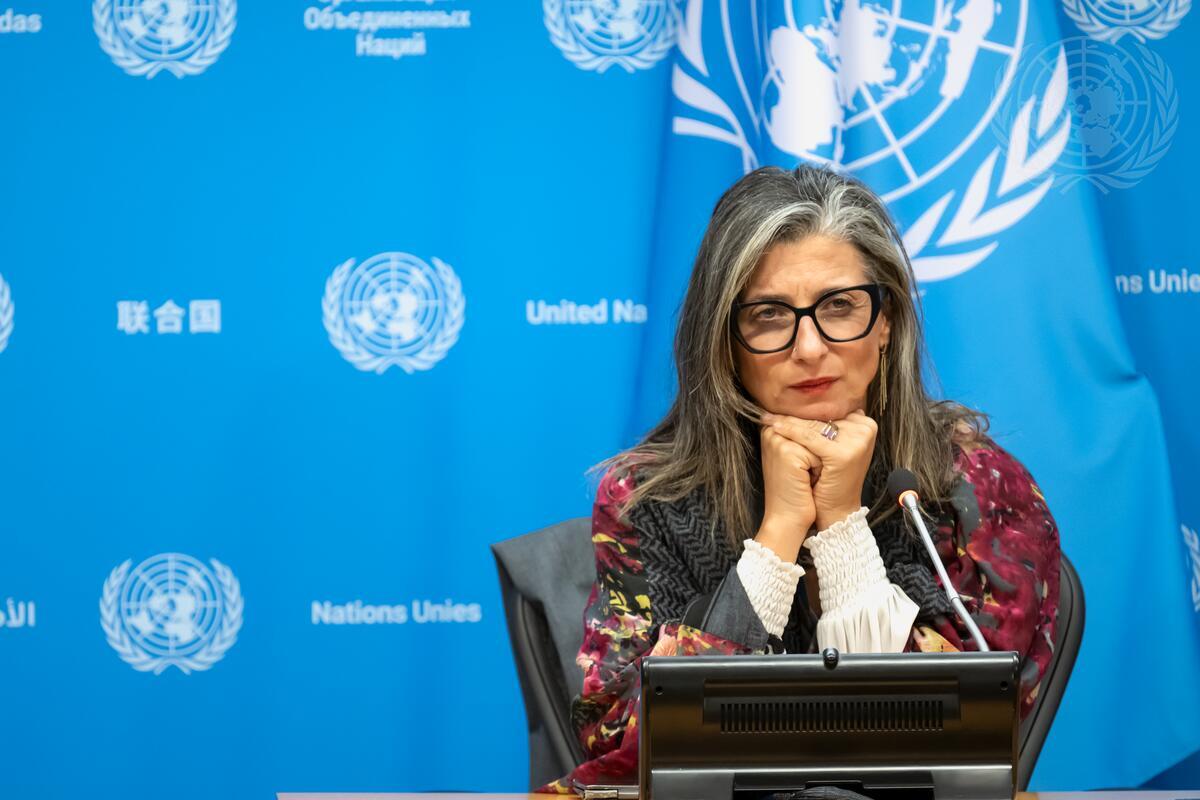
Former UN torture rapporteur Alice Jill Edwards accuses colleagues of neglecting Israeli victims. Reem Alsalem fires back, exposing a bitter dispute over impartiality, accountability and the credibility of the UN human rights system.
A bitter public confrontation has erupted among United Nations human rights experts over the atrocities committed by Hamas on October 7, 2023, and Israel’s subsequent war in Gaza.
The controversy took a new turn on October 19, when Alice Jill Edwards, who served as UN Special Rapporteur on Torture from August 2022 until July 2026, published an opinion piece in Britain’s Telegraph titled As a UN envoy, I saw my colleagues’ anti-Israel obsession first-hand.
Edwards accused two fellow rapporteurs, Francesca Albanese, Special Rapporteur on the occupied Palestinian territories, and Reem Alsalem, Special Rapporteur on violence against women and girls, of failing to adequately document sexual violence and torture committed against Israelis during the October 7 attacks and the subsequent captivity of hostages. She also criticized UN secretary-general Antonio Guterres directly for not doing enough to address the issue.
Both Albanese and Alsalem pushed back in social media posts. Alsalem said she was “saddened” and “shocked” by Edwards’ piece, and Albanese bluntly responded Edwards was lying.
Beyond the competing accounts of how UN experts responded to the October 7 attacks and the war in Gaza, the public disagreement raises broader questions about how the UN’s independent human rights mechanisms operate, how experts address allegations of bias among their colleagues and what such disputes mean for the credibility of a system tasked with documenting abuses and protecting victims.
Longstanding Grievances
Edwards’s account begins with a visit to Kibbutz Kfar Aza, where she met the mothers of two women abducted by Hamas, Emily Damari and Doron Steinbrecher, where she said she witnessed the suffering of families who had spent months wondering whether their daughters were alive.
Edwards said the experience reinforced her conviction that hostage-taking should be understood as a form of torture, affecting not only those held captive but also their families. She also wrote that she felt ashamed of the UN’s response and accused Albanese and Alsalem of producing reports she considered one-sided, failing to give sufficient attention to Israeli victims.
She described attempts to discourage or obstruct her work on documenting Hamas atrocities, suggesting that political agendas had compromised the independence expected of UN human rights experts.
Edwards had already made serious allegations against fellow UN experts several months earlier, while she was still serving as Special Rapporteur on Torture. In June 2026, The Forward, a New York-based Jewish publication, reported on remarks she had delivered during an event at University College London, where she described what she called a coordinated campaign to prevent the publication of a January 2024 communication documenting allegations of torture and sexual violence during the October 7 attacks. “There was a campaign to prevent that letter going out,” she said, claiming that for weeks she had been bullied and pressured by colleagues who disputed the evidence.
Edwards said the draft was considerably reduced following objections from other mandate holders, and in the end only one colleague, Special Rapporteur on Extrajudicial Executions Morris Tidball-Binz, agreed to sign it. She also alleged that other experts who had initially expressed interest in supporting the communication were discouraged from doing so.
At the time, the UN office supporting the Special Rapporteurs responded to The Forward by stressing that participation in joint communications is entirely at the discretion of each independent expert.
The Pushback
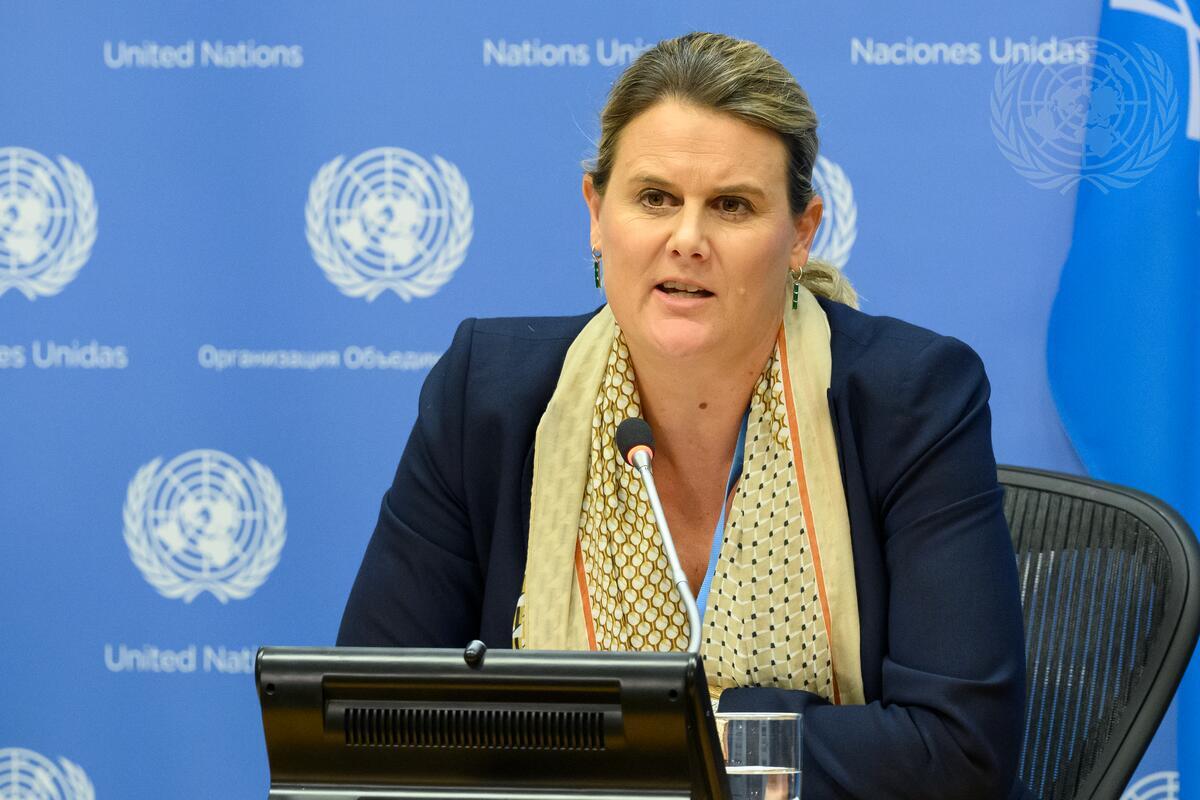
In a lengthy statement published on X, Alsalem said she was saddened and shocked by Edwards’s article, accusing her former colleague of misrepresenting both her work and that of the UN’s independent human rights mechanisms. She rejected the allegation that she had failed to condemn sexual violence against Israeli women and girls and insisted that she and other experts had repeatedly denounced sexual violence committed on and after October 7, including abuses against hostages.
Alsalem also challenged Edwards’s account of their professional exchanges. She wrote that when Edwards invited her to join a formal communication concerning the October 7 atrocities, she reviewed the document and submitted written suggestions on December 3, 2023. She also requested access to the primary evidence and testimonies collected by Edwards, but claims Edwards refused to share that material without explanation.
Alsalem also disclosed that she first met a former Israeli hostage who approached her in June 2026, and that she subsequently began handling the case through established procedures requiring the survivor’s informed consent.
She warned that Edwards’s accusations could contribute to broader efforts to discredit UN experts investigating Israeli violations of international law.
Francesca Albanese, responding to Alsalem’s post on X, wrote: “When lies is all one has left to stay relevant.”
An Attack on the Whole System
Beyond the personal accusations, Edwards’ article raised broader institutional questions.
She described a system in which special rapporteurs work with limited resources, insufficient staff and financial arrangements that can create concerns about political influence. Special rapporteurs are independent experts appointed by the Human Rights Council, not employees reporting to Guterres.
Edwards argued that funding should be centralized and distributed more equitably, rather than allowing individual governments to support particular mandates. She also criticized Secretary-General António Guterres, accusing him of failing to exercise sufficient leadership in addressing the UN’s institutional weaknesses and international conflicts.
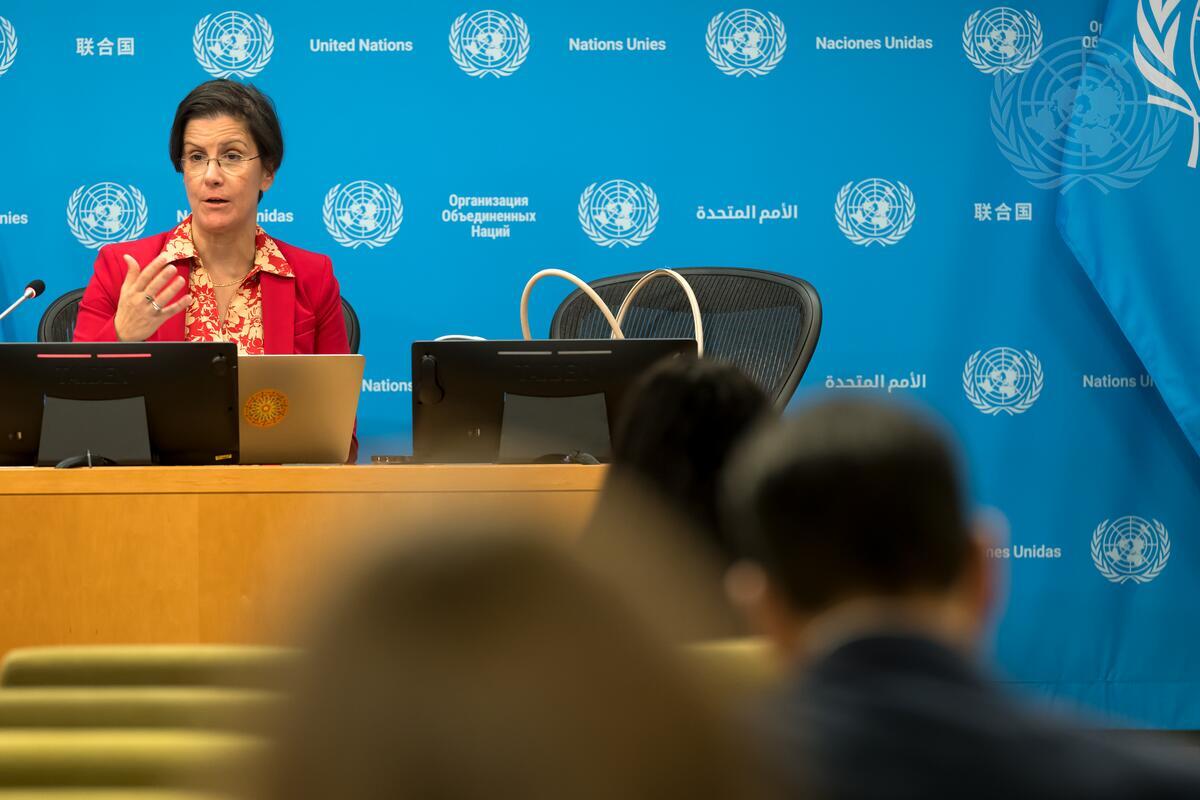
When asked on October 20, during the UN’s daily press briefing in New York, if Edwards had raised her concerns to Guterres, whom she has written had known professionally as UN High Commissioner for Refugees, the Secretary-General’s spokesperson, Stéphane Dujarric, said he did not know whether such conversations had taken place. Acknowledging that he had not read Edwards’s article yet, Dujarric firmly rejected the suggestion that Guterres could be held responsible for the conduct of independent UN human rights experts.
“You cannot accuse the Secretary-General of lack of leadership on managing people that don’t report to him and that he doesn’t appoint,” he said, stressing that responsibility for overseeing Special Rapporteurs rests with the Human Rights Council rather than the Secretary-General. Dujarric also defended Guterres’s record on the Israeli-Palestinian conflict, affirming that his statements had been “firmly anchored in international law” and in the principles of the UN Charter.
On whether the increasingly public accusations of political bias among current and former UN experts risked undermining the credibility of the entire UN human rights system, Dujarric declined to characterize the confrontation as damaging: “Dialogue and people expressing their opinion is always a good thing,” he said, describing the institution of Special Rapporteurs as “a critical cog in the international human rights system,” while reiterating that responsibility for administering and overseeing individual mandate holders belongs to those who appoint them.
Envoy contacted Francesca Albanese before the publication of this article.
About The Author