
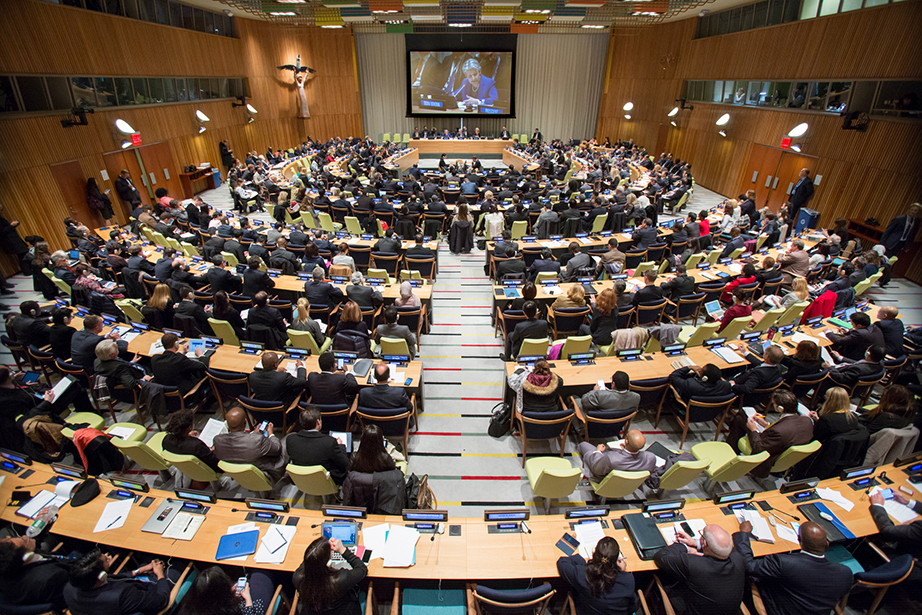
A decade after the UN’s most open secretary-general race, former candidates Susana Malcorra and Irina Bokova say the contest remains less an election than a diplomatic selection—one shaped by public scrutiny, private bargaining, and the veto power of the Security Council’s permanent five.
The concept is eerily familiar: candidates gather in a television studio, talk about their campaign’s vision, and debate their opponents. But the resemblance is misleading. The event has little impact on the outcome. The United Nations has 193 member states, but arguably only five votes really matter. As in 2016, candidates to become the next United Nations secretary-general have taken part in dialogues with member states and a televised debate in Geneva. Still, much of the process is for show.
Unlike a national election, there is no electorate in the ordinary sense. There are no campaign rallies or public votes. The decisive conversations happen largely behind closed doors, inside the Security Council, where the five permanent members (the P5)—the United States, China, Russia, France, and the United Kingdom—retain the power to block a candidate. The General Assembly ultimately appoints the secretary-general, but it does so on the recommendation of the Council.
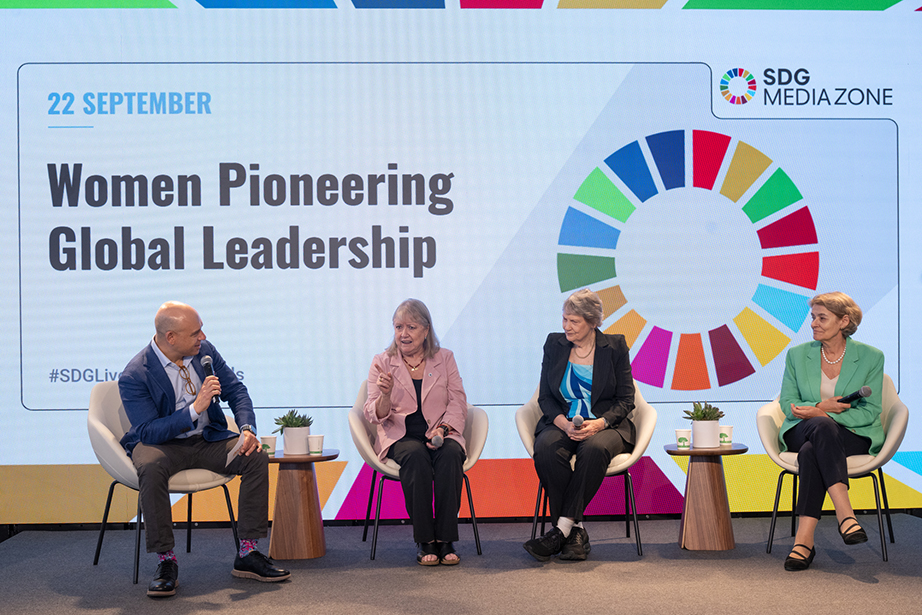
“There are different systems, but this is not an election,” Susana Malcorra, Argentina’s former foreign minister and a candidate for UN secretary-general in 2016, said. “This is a selection process.” Almost a decade ago, Malcorra and Irina Bokova, the former director-general of UNESCO and Bulgaria’s candidate for the post, were two of seven women who ran to lead the organization. The race was more crowded at the time; so far, only five have declared, three of them women. Yet, the fundamental nature of the process has remained unchanged.
The 2016 race was widely described as the most transparent selection process in UN history. For the first time, candidates submitted vision statements, appeared in public hearings before the General Assembly, and faced questions from member states and civil society. Many governments and advocacy groups also pushed for the UN to choose its first woman secretary-general.
In 2016, António Guterres emerged as the consensus choice, but the process around his selection changed expectations. It gave the public a rare view of candidates’ ideas and performance, even if it did not change where the real decision lay.
Now, as the UN prepares for another transition, both Malcorra and Bokova said the lessons of 2016 are essential to understanding what comes next. While the public dialogues matter, they are only one layer of a much more complicated diplomatic contest.
“In the end, everything is … decided by the fact that there are, or there are not, any vetoes from the permanent five,” Malcorra said.
A Unique Campaign
The documentary My Year with Helen captures the peculiar nature of a race to lead the UN. Helen Clark, former prime minister of New Zealand and a fellow 2016 candidate, was filmed for a year during her campaign to become UN chief.
The documentary follows Clark through the public and private rhythms of the campaign, from UN headquarters in New York to diplomatic travel abroad, while making clear that the decisive audience remained the Security Council’s permanent five.
As this year’s candidates did during this year’s public dialogues, Clark is shown answering questions from ambassadors during the 2016 process.
“I have never been an establishment candidate,” Clark said at the time.
Everybody knows how the documentary will end even before watching. But it gives an insider’s look into a selection process built to take place behind closed doors: a conversation with stakeholders that is mostly for show, and an outcome that might not reflect the result if “we the peoples” got to vote for the winner.
Once the dialogues and public debate are over, the real process begins.
The Security Council is expected to begin deliberations in July, including what is known as the “straw poll” process. In this phase of the selection, Council members indicate whether they “encourage,” “discourage,” or have “no opinion” on each candidate. Later rounds typically distinguish between the five permanent members and the 10 elected members, making clear whether a candidate faces a veto. The results are not officially public, but they often leak, shaping perceptions of momentum and pressuring weaker candidates to withdraw.
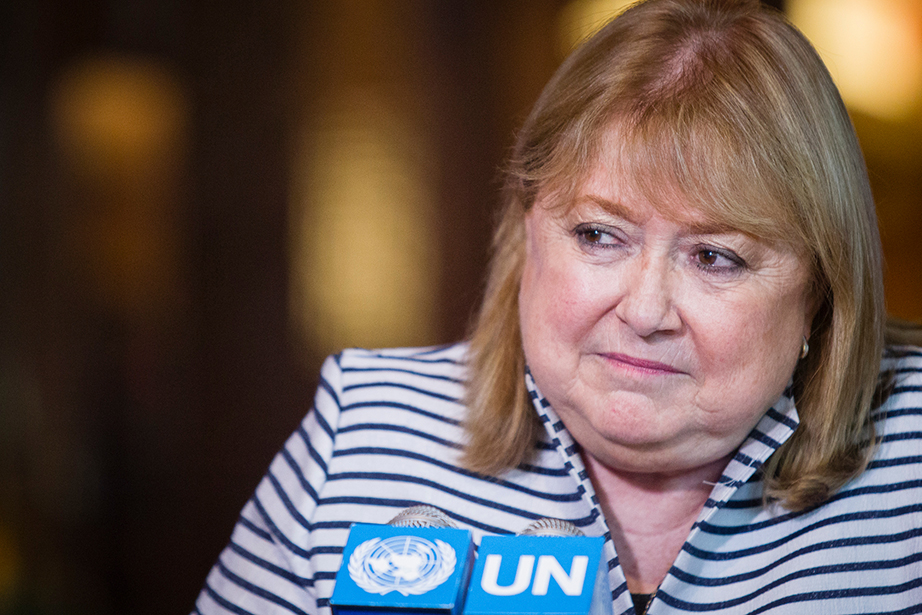
“It’s a selection that is essentially in the hands of a few, [the] 15 members of the Security Council, and here I want to make a point that, to me, is important, then the 10 non-permanent members do have a role to play,” Malcorra said, adding that ultimately the permanent five do have an outsized influence because of their veto.
The Council has become increasingly divided since Russia’s invasion of Ukraine, and observers believe it will be difficult for the P5 to agree on a single candidate.
“The straw polling … has two effects,” Malcorra said. “One is to discourage people who know that the result of the straw polling has not gone in their direction, and second, to test how the different candidates are performing.”
The 1 for 8 Billion campaign, an advocacy group, has warned that despite this year’s public hearings and new disclosure requirements, the process still risks reverting to closed-door Security Council bargaining. After the dialogues, the group argued that the General Assembly had no clear or empirical way to register its views on candidates before Council deliberations began, leaving the Council to rely on “guesswork and informal conversations behind closed doors.” The campaign has called for mechanisms such as General Assembly straw polls, co-nominations, or public endorsements, as well as transparency around the timing and results of Security Council straw polls, to prevent the race from being decided through opaque P5 dealmaking.
Once the Council agrees on a candidate, it makes a recommendation to the General Assembly for formal appointment.
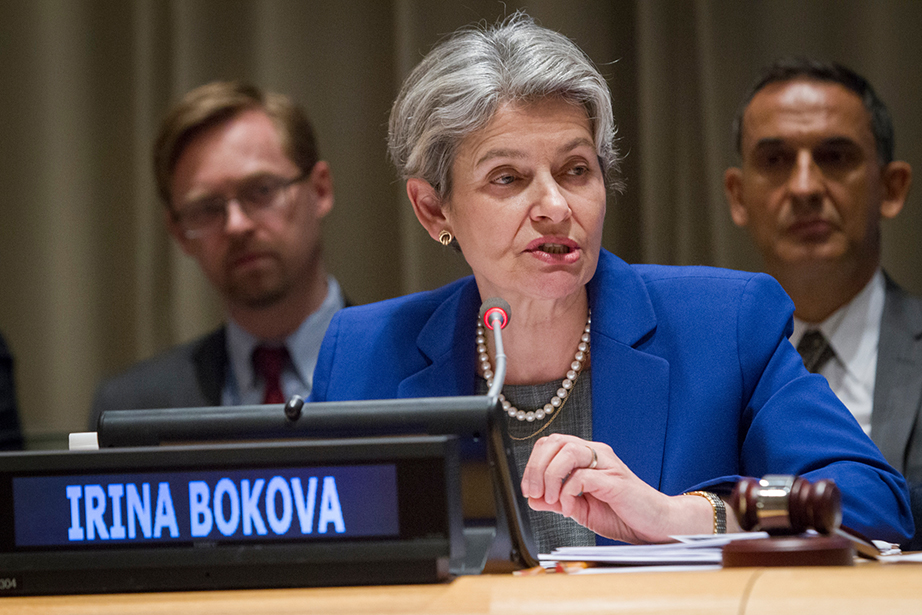
For Bokova, the process is “very different” from a national campaign because the next secretary-general must satisfy several audiences at once. A candidate has to demonstrate a clear value system, she said, and a commitment to the UN’s principles of inclusivity, rights, freedoms, and multilateral cooperation. But the same candidate must also be able to play big-power politics.
Malcorra made a similar point. The environment today, she said, is more difficult than it was in 2016. The next secretary-general will need to “steer the house” in a way that restores capacity, reconnects the institution with people and member states, and rebuilds confidence in global cooperation.
But Malcorra also noted a key change from 2016: the current process appears to have narrowed the formal public exposure of candidates. In 2016, there was not only engagement with member states but also more structured interaction with civil society and public debates among candidates. This time, she said, member states chose to limit the formal public face of the process mainly to the dialogues.
That shift has disappointed both former candidates.
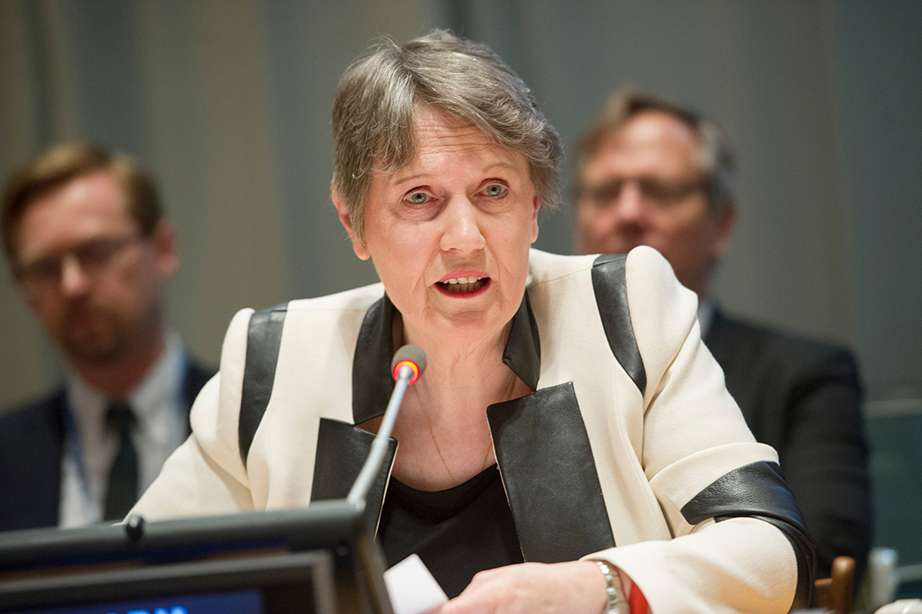
Bokova said the 2016 race created a broader global conversation about multilateralism and the future of the UN. For her, the value of the process was not only in determining who won, but in opening a platform for ideas about peace and security, development, climate, human rights, technology, and the place of the UN in a fragmented world.
“Any election of the secretary-general of the United Nations opens the possibility of a debate, a global debate,” Bokova said. “It is not just whether you win or don’t win elections, It is really about putting forward a debate, ideas, assessments, formulating risks and maybe solutions even to the future. ”
That debate, she said, is especially needed now. The UN is under strain from multiple directions: wars in Gaza, Ukraine, and Sudan; deepening divisions among major powers; questions over humanitarian access; skepticism from governments and the public; and pressure to reform an institution founded in 1945 for a very different world.
The UN80 process has also raised questions about how the UN works from an institutional standpoint. The next UN chief will not only be responsible for the diplomatic aspects of the job, but will also serve as the general manager of the organization. That, too, Bokova said, should be at the heart of the discussion.
“Guterres has launched this type of discussion about the United Nations’ 80th year already. We know that we need reform,” Bokova said. “We did the reform of not just, I would say, in terms of structural changes, but we need to reform into the approaches. We need to find the right place for the United Nations in the current global environment.”
The Gender Question
The question of gender remains central. The UN has never had a woman secretary-general. In 2016, the campaign to select a woman reached unprecedented visibility, aided by a strong field of female candidates from several regions. Yet the outcome underscored the limits of public advocacy when the Council coalesces around another choice.
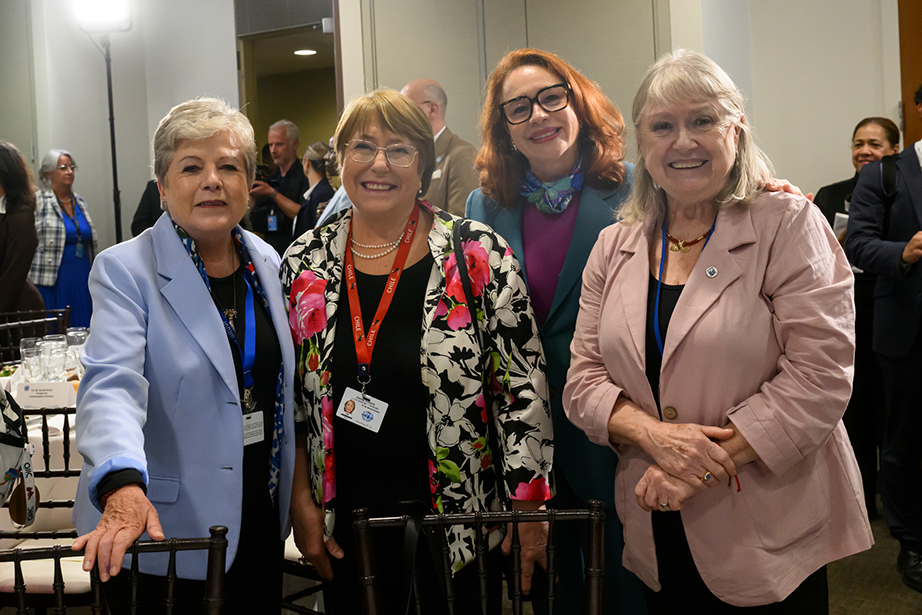
Following their unsuccessful campaigns, Malcorra and Bokova helped found GWL Voices, an organization that seeks to empower more women in politics and has made the selection of a woman secretary-general one of its central goals.
Bokova said she is “not confident” that a woman will be chosen this time, but believes it is “high time.” Her argument is not that women should be considered symbolically, but that half of humanity should be fully included in the leadership of an organization founded in the name of “we the peoples.”
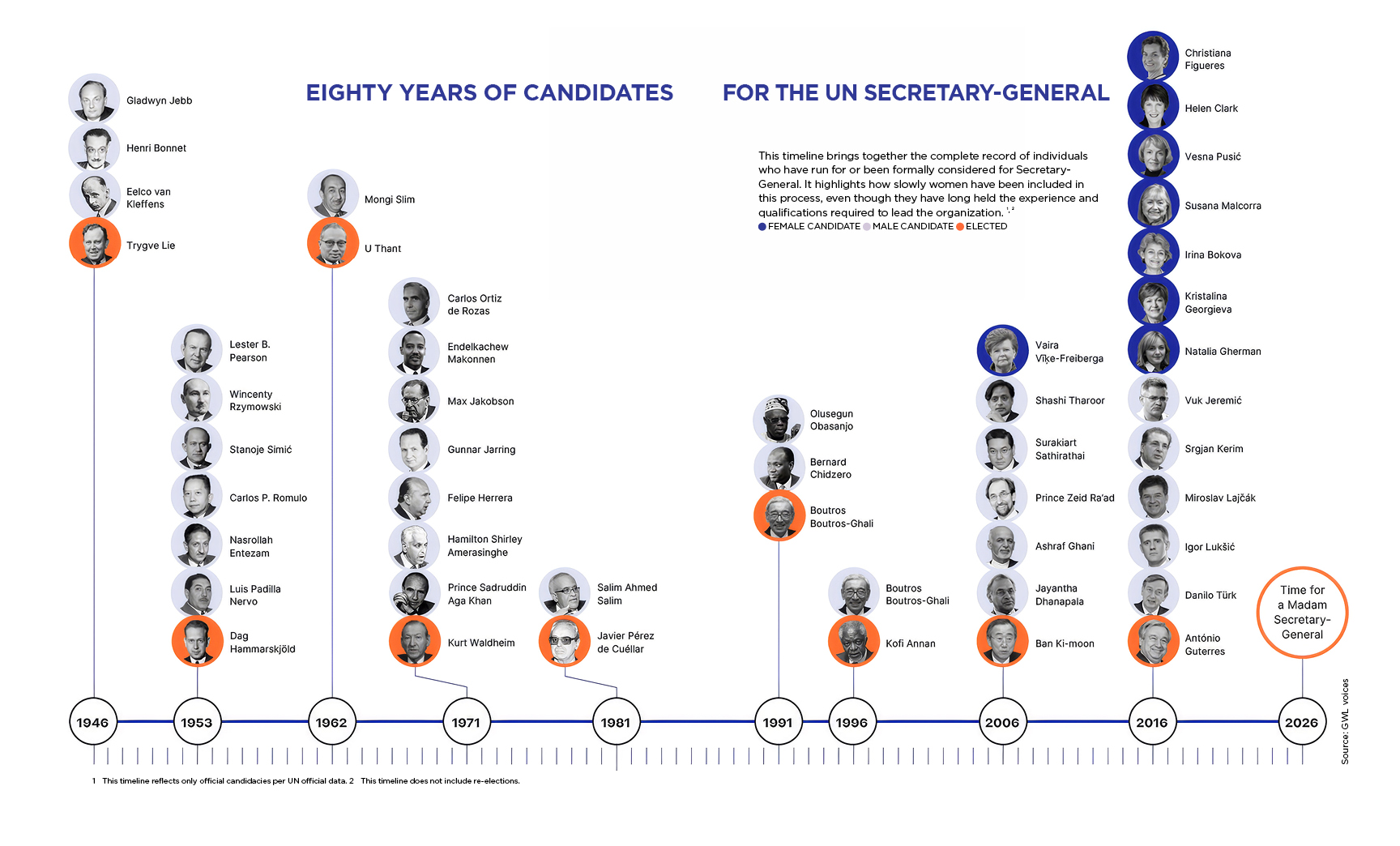
“Very often they ask us, why women?” Bokova said. “And we always respond, why not?”
Malcorra, who is involved with efforts by women leaders to encourage the selection of a female secretary-general, also expressed hope that the process would end with “Madam Secretary-General.”
But both former candidates were careful to stress that gender alone is not enough. Bokova said the UN needs not just any woman, but a woman committed to multilateral values.
They both believe that five candidates—including former General Assembly President María Fernanda Espinosa, who was nominated by Antigua and Barbuda in May—are not enough to provide a sufficiently diverse field for this race. Last time around, there were 13. They both hope more people will throw their hats in the ring.
“There is still time for more candidates to come,” Malcorra said. “That’s the other thing about this process. It doesn’t have a time limit. So we could have a candidate coming in December, you know, and if the Security Council hasn’t taken the decision by then, that would be perfectly fine.”
Beyond the question of women, Malcorra is worried about the division within the UN and believes this process will be much more tenuous than the previous one. Some experts and diplomats have even expressed concern about the possibility that the P5 may not agree on a single candidate.
“We know that nowadays, geopolitics is very complicated,” she said. “I would say broadly, the United Nations system is under strain, enormous strain, sometimes marginalized from the seeking of solutions to some problems. And I think one of the biggest challenges today is restoring trust in the United Nations.”
About The Author
