The latest report from the World Meteorological Organization paints a clear picture: the Earth’s climate system is increasingly out of equilibrium. As it explains, “the amount of incoming radiation exceeds the amount of outgoing radiation… [and] heat is accumulating in the Earth’s climate.”
This imbalance is intensifying. “In 2025, the observed Earth energy imbalance (EEI) reached the highest value since the observational record began in 1960,” highlighting not just warming, but accelerating heat accumulation across the system.
Heat Records That No Longer Surprise
Global temperatures remain at near-record levels. The report states that “the annually averaged global mean near-surface temperature in 2025 was 1.43 °C above the 1850–1900 average.”
More telling is the persistence of this trend: “the past eleven years, 2015–2025, were the eleven warmest years on record.”
Even with the cooling influence of La Niña conditions, 2025 remained among the hottest years ever observed—evidence that long-term warming now outweighs short-term climate variability.
Greenhouse Gases at Unprecedented Levels
The underlying driver remains clear. According to the report, “the atmospheric concentration of carbon dioxide reached its highest level in the last 2 million years.”
Carbon dioxide levels reached 423.9 ppm, while methane and nitrous oxide also set record highs. Crucially, “real-time data… show that levels of these three main greenhouse gases continued to increase in 2025.”
These rising concentrations are directly fueling the growing energy imbalance and reinforcing long-term warming.
Oceans Absorbing the Heat
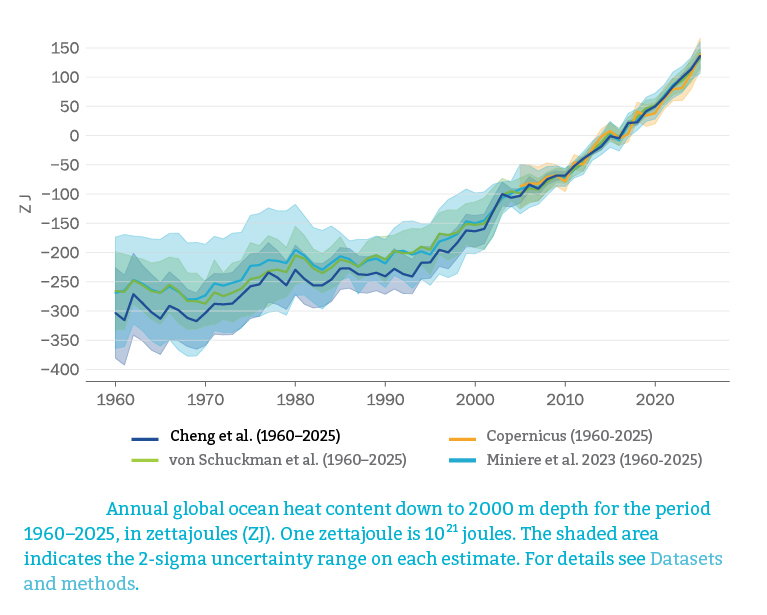
The oceans continue to act as the planet’s primary heat reservoir. The report emphasizes that “around 91% of the excess energy… has been absorbed by the ocean in the form of heat.”
This has driven ocean heat content to new extremes: “the highest level in the 66-year observational record.”
At the same time, oceans are absorbing carbon dioxide, which “reduces the pH in a process known as ocean acidification,” altering marine ecosystems and threatening biodiversity.
Melting Ice and Rising Seas
The cryosphere is undergoing sustained decline. The report notes that “eight of the ten most negative annual glacier mass balances since 1950 have occurred since 2016.”
This ongoing ice loss is a major contributor to sea-level rise. Since the beginning of satellite records in 1993, “the global mean sea level was around 11 cm higher,” with the rate of rise increasing in recent years.
Cascading Impacts Across Systems
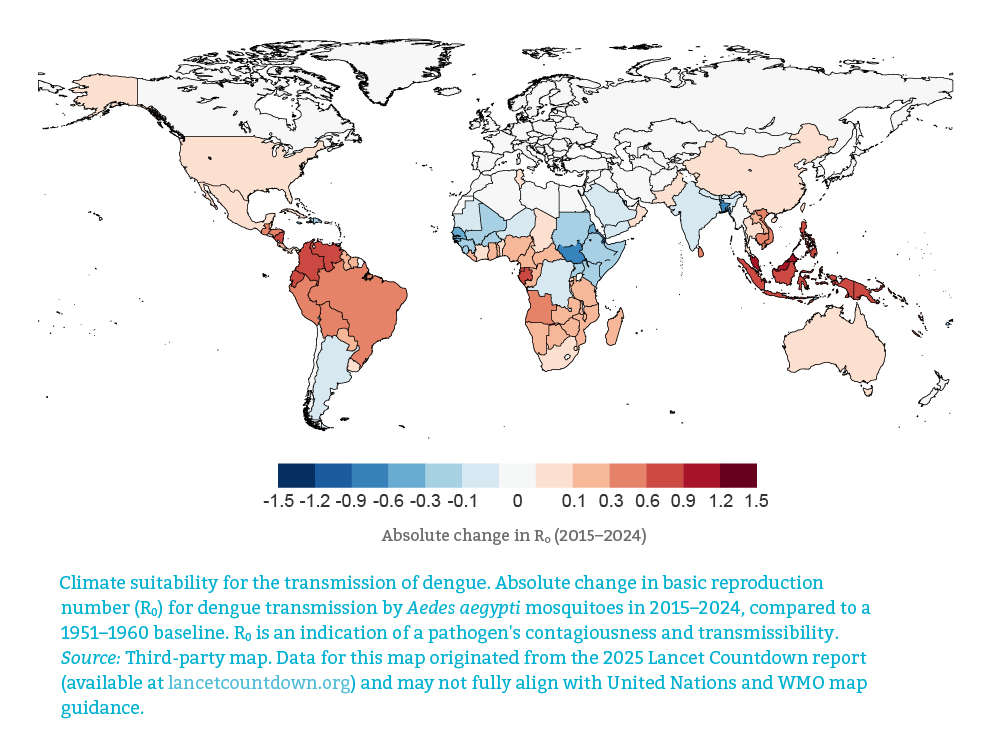
The consequences extend well beyond physical indicators. The report warns that “rapid large-scale changes in the Earth system have cascading impacts… contributing to food insecurity and displacement.”
Climate change is now a systemic risk—affecting economies, ecosystems, and human security simultaneously.
The Era of Acceleration
The defining message of the 2025 report is not just change, but speed. As it concludes, “the total amount of heat stored on Earth is not just increasing but accelerating.”
This acceleration marks a critical turning point. The science is clear, the trends are consistent, and the window for effective global response is narrowing.
About The Author