A UNITAR-backed platform is bringing surgical training to frontline health workers around the world.
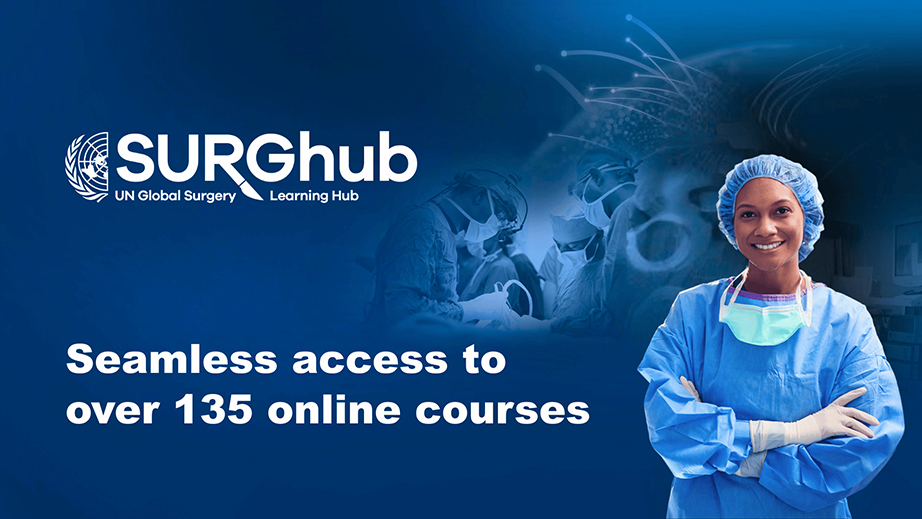
An online training platform developed with UNITAR is seeking to widen access to surgical education for health workers around the world. Launched in 2023, SURGhub now has more than 30,000 users and offers courses ranging from speaking up in the operation room to troubleshooting epidural procedures.
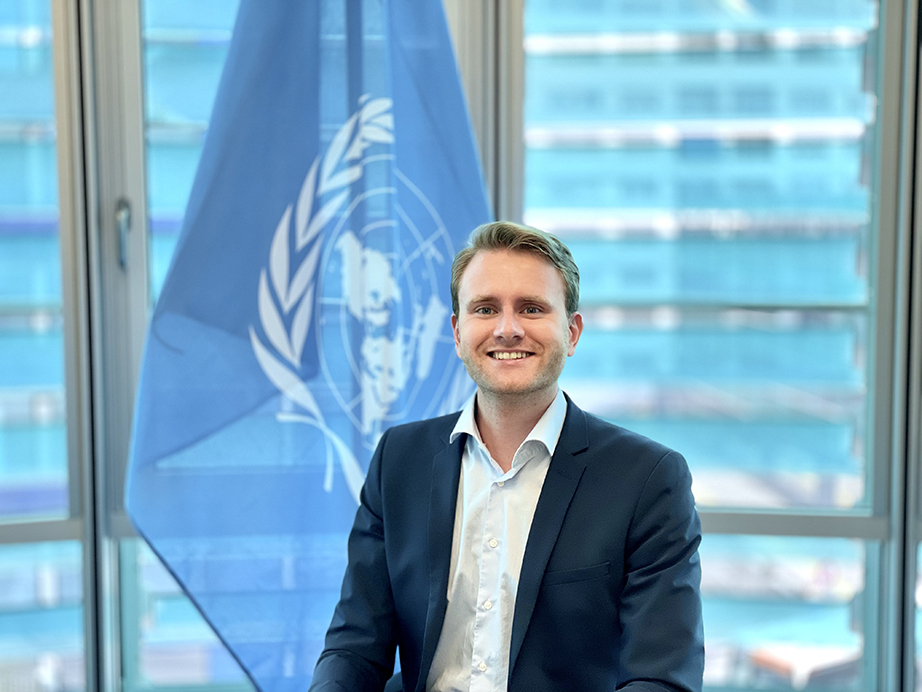
“There is a lot of training on non-technical skills, such as teamwork and leadership, so anyone working as part of a surgical team could benefit,” Sebastian Hofbauer, Program Manager at the Global Surgery Foundation (GSF), the organization behind SURGhub, said. Hofbauer leads the program at the foundation.
The platform was created by the Global Surgery Foundation in partnership with the United Nations Institute for Training and Research (UNITAR), and supported by the Royal College of Surgeons in Ireland. Every course undergoes structured review for scope, clinical accuracy, and learning design. While courses remain owned by their original providers—including leading academic and humanitarian institutions—they are brought together within one trusted system and hosted on the LearnWorlds platform.
“Every course on SURGhub includes a UNITAR certificate of completion, which is very important to us and is one of the most meaningful outcomes of the partnership,” Hofbauer said.
According to Hofbauer, the platform can benefit a wide range of users. Many nurses, he said, take the courses to better understand the complexities of their work. More broadly, the aim of the hub is to “improve surgical care.”
Hofbauer talked to Envoy on March 19. His remarks have been edited and condensed for clarity purposes.
In your own words, what is this new project about?
SURGhub was launched in June 2023 as a learning platform for the surgical care workforce on the front lines. It provides a single platform for surgical care workers who want to train and strengthen their skills. It is designed to make it easy to create an account, find courses, and take training that helps them do their jobs better.
Can you give some examples of what is available on the platform?
Since launch, the platform has grown very rapidly. We were pleasantly surprised by its success. It is an important topic, but also a relatively specialized one, so we did not expect to reach several thousand users so quickly. By the end of 2025, we had more than 30,000 users, and now we have the confidence and strategy to scale further. We want to reach 100,000 users by the end of this year.
In terms of content, we work with more than 35 leading organizations globally that provide material for SURGhub. The platform covers five categories: surgery, anesthesia, nursing, obstetrics, and non-technical skills. So it really spans the broad themes of surgical care.
Who is your main audience? Who are the main people you are targeting?
That is a very good question, because there is often a misconception. When we talk about surgery, people immediately think of the operating room, which makes sense. But surgical care is broader than that. It is about the patient’s full continuum of care and their journey. It can start at the community level, may include the operating room, and then continue with referral and follow-up. That is all part of surgical care.
So our approach at the Global Surgery Foundation, which we also apply to SURGhub, is to focus on surgical teams. That includes surgeons and anesthesiologists, but also nurses, clinical officers, and non-clinical staff. That is very important. In fact, one of the largest user groups on SURGhub is nurses. Many nurses use it to strengthen their skills and improve patient care.
How could someone who is not a doctor use it, aside from nurses?
There is a lot of training on non-technical skills, such as teamwork and leadership, so anyone working as part of a surgical team could benefit. We have also heard from learners that many are medical students, or even students preparing for medical school, who use SURGhub to build their profile and show they are going the extra mile. Those were some of the more surprising use cases. But really, anyone working in healthcare in the broad sense can find something useful on the platform.
Can you tell me how this project came about? Where did the idea come from, and how did it come together?
The origin story is tied to the creation of the Global Surgery Foundation. SURGhub is an initiative of the Global Surgery Foundation and the United Nations Institute for Training and Research, or UNITAR. We are also supported by the Royal College of Surgeons in Ireland and associated with the Johnson & Johnson Foundation.
The idea for the Global Surgery Foundation started to take shape in 2019, when our Executive Director, Dr. Geoff Ibbotson, was invited to incubate the foundation at UNITAR. That is where the close partnership between the UN and the Global Surgery Foundation began. I remember when Geoff first joined UNITAR and presented the idea. From the beginning, one of the foundational concepts was a global surgery learning hub, because training is such an important piece of the puzzle.
There are 5 billion people in the world who do not have adequate access to surgical care. That is a huge number. There is also a gap of 2.2 million surgical healthcare workers worldwide. So training was central to the idea from the start.
We approached it by starting with the learner. What do they need? We wanted to break their isolation. If you are a surgical care worker in a low-resource setting, you may be doing many jobs at once, often with limited support. You may face very challenging situations without the tools or knowledge you need. So we wanted to create a platform that gives learners easy access to the knowledge they need, in a way that is relevant to low-resource settings and the equipment they actually have available.
Can you explain how you work with UNITAR?
The Global Surgery Foundation was originally incubated at UNITAR, though we have since become a standalone Swiss foundation. But we maintain a very strong partnership with UNITAR. As the UN institute responsible for training and research, UNITAR has a clear mandate for capacity-building and education, so it is a very natural fit for SURGhub.
We have been building SURGhub together with UNITAR from the beginning. The concept started in 2022. Every course on SURGhub includes a UNITAR certificate of completion, which is very important to us and is one of the most meaningful outcomes of the partnership.
Is there one story you can share about a user who benefited from the platform, especially in the developing world?
We hear consistently from learners that the platform makes a real difference to them. With 135 courses and 30,000 learners, we receive a lot of feedback, and it is overwhelmingly positive. We hear things like, “This has made a huge difference in my day-to-day practice,” or, “I had been looking for a course like this,” or, “It changed how I think about this topic.”
One example we recently published on our website is a story from a surgical trainee in Bangladesh. He described how SURGhub helped him approach a specific patient case with confidence. I believe it involved a patient with burns. He had taken a course on acute and essential burn care on SURGhub beforehand, and that gave him the confidence to handle the case.
Those are the stories that really matter. Because it is an online platform, you sometimes wonder how the courses are affecting people in practice. So we have started reaching out to learners more directly to understand how SURGhub is helping them make a difference. Ultimately, that is what this is about. It is not just about courses or certificates. It is about helping a surgical care provider care for a patient more effectively.
What is your vision for the future? How do you want the platform to grow?
The platform is still relatively young. As I mentioned, the growth has been surprisingly strong in a very positive way. We now believe we can scale it to 100,000 users by the end of this year. That is ambitious, but we think it is achievable.
We are a very small team, but we are supported by a large network of contributors, including content partners, advisors, and committee members. That is what makes this growth possible. Reaching 100,000 learners is our 2026 target. Beyond that, I believe every healthcare worker on the planet could ultimately find something useful on SURGhub. Over the next five years or so, the vision is that every healthcare worker takes at least one SURGhub course over the course of their career.
What is the most surprising course or area on the platform?
I do not think there is one single course that best answers that. What tends to surprise people is that the platform goes beyond the operating room. It is not only for surgeons. And while anesthetists and others are obvious users, nurses also play a huge role in surgical care, and that can still be overlooked.
So what may be most surprising is that the second-largest group of learners on SURGhub is nurses. That is also probably the group where there is the most potential, because they are such an important part of the team. We have very strong courses for nurses. One example is Exploring Perioperative Nursing, which is for nurses interested in taking the next step in their career and becoming perioperative nurses.
Is there anything I did not ask that you would want to mention?
Yes. There are really three key problems in surgical training globally, especially in online training. The first is cost. A surgical care worker may find a course, but it may be behind a paywall and simply too expensive.
The second is fragmentation. Historically, training in surgery has been scattered across many organizations and platforms. If you want to learn something, it is often difficult to know where to start. You may have to create multiple accounts, learn how different systems work, and keep track of logins and passwords.
The third is quality. You may find a course that is free and accessible, but still not know whether it is high quality or trustworthy.
We built SURGhub to address all three. On quality and trust, that is part of why working with the UN matters. It is a neutral platform recognized globally. Learners really value receiving a UN certificate at the end of each course. In addition, we have three committees that ensure every course, and the platform itself, meets high standards and is appropriate for learners in low-resource settings.
On cost and user experience, SURGhub solves the fragmentation problem by bringing everything together in one place. Users create one account, entirely free, and at the moment all of our courses are free. The platform is designed to be user-friendly, and the next course is always just one or two clicks away. I think that is why users seem to love it.
About The Author