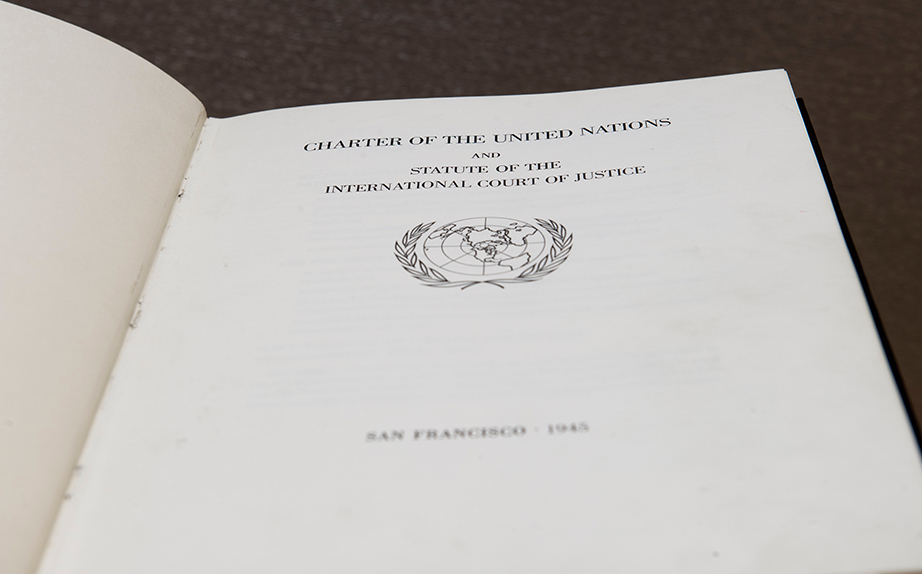
The current international order is under strain. Article 109 offers a chance to renew it by updating the U.N. Charter.
World leaders are ringing the death knell of the international order. The current order’s largest backer, the United States, seems to have abandoned it – instead seeking to reshape international relations in a new image. Concomitantly, Russia continues to violate international law in Ukraine while the ongoing conflict in the Middle East is the latest example of diplomacy being sidelined in favor of military might. These come on top of the violent flouting of human rights in Gaza, Sudan, Myanmar and beyond.
This new era of disorder leaves Europe exposed. It must reinvent its role in the world as international law and familiar alliances shift beneath its feet. But the best way to secure Europe’s security and prosperity is to build a fresh, stable world order; one that reflects current geopolitics, challenges, as well as atones for the historical exclusion of the Global South.
Europe must now help write the next chapter of international relations, and there is a pathway to do so that is gaining momentum. Countries, and civil society, are increasingly turning to reviewing the Charter of the United Nations in line with its Article 109. And who is better placed to share how to adapt international integration with the times? It was through new treaties, amendments, and enlargements that the modern European Union came into being, after all.
Multilateralism’s past
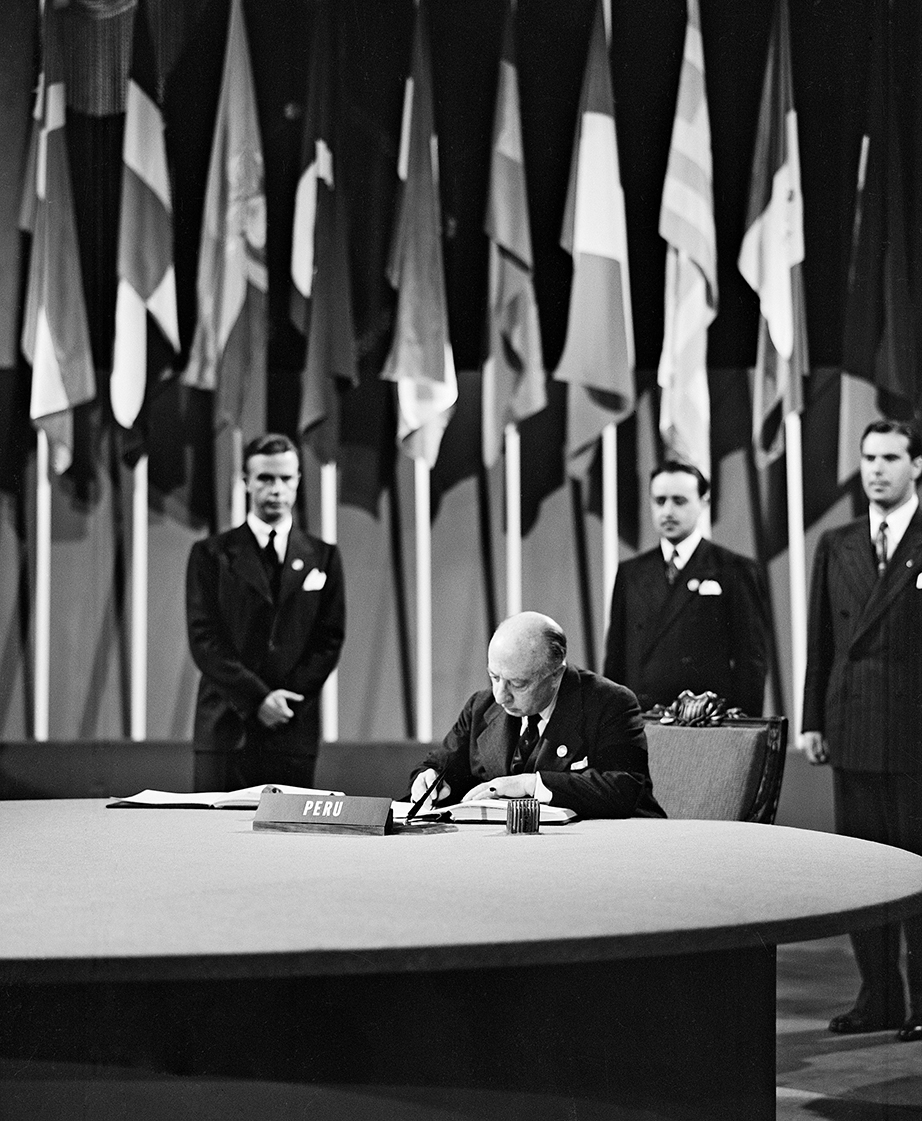
The international order was created with the adoption of the United Nations Charter in 1945. Beyond establishing the U.N., the Charter codifies the basic legal norms and practices of our current international relations.
This system was never a true level-playing field, nor was it perfectly ordered. But the “indispensable” nation, the US, was committed to upholding an imperfect system. The world stepped into line – and no one more so than the Europeans.
European integration is predicated on a functioning multilateral system. But the next international order looks more dangerous, less stable; one in which Europe, as a group of small nations (and nations who haven’t realized that they’re small yet), risks becoming a piece on the chessboard of the more powerful. This is something the Ukrainians are experiencing already – and Greenlanders may, too.
The very idea of universal institutions is being questioned. Earlier this year, the Board of Peace was established to ensure “enduring peace in areas affected or threatened by conflict” yet, only certain countries were invited while membership comes with a price tag.
Rather than consign the imperfect promise of international rules to the dustbin of history, however, some of Europe’s leaders argue for revitalization, not resignation.
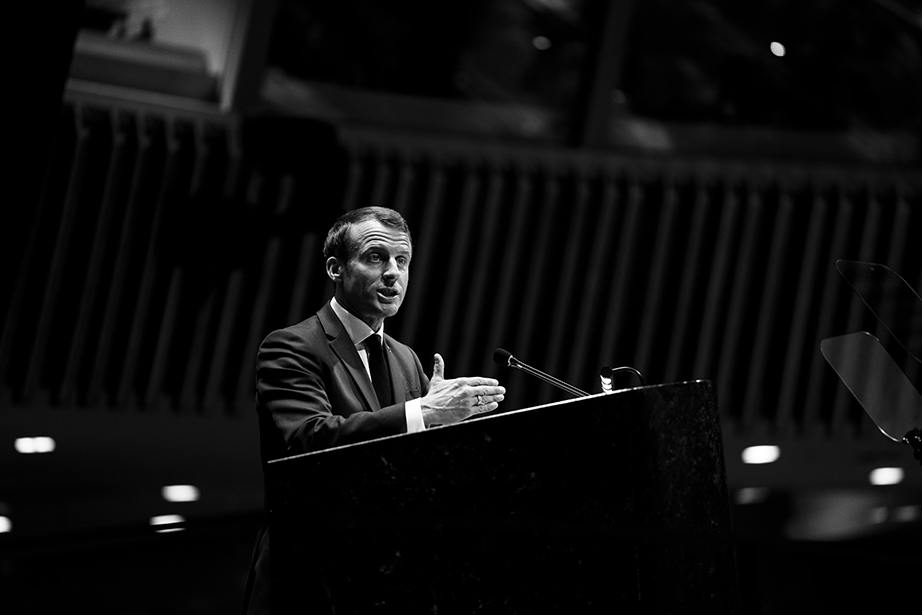
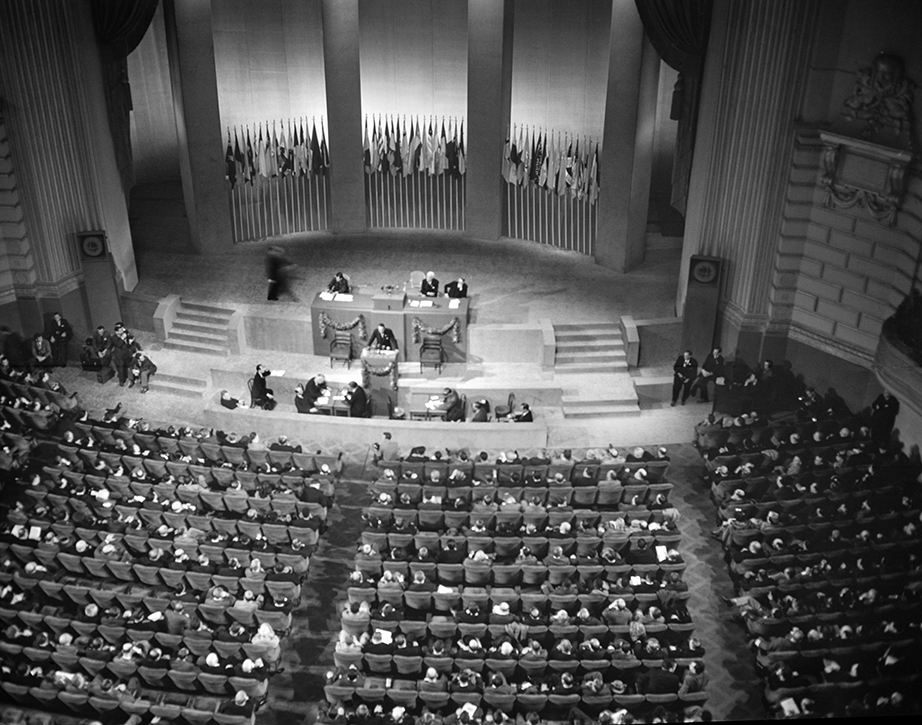
Finland’s president, Alexander Stubb, has written that “international institutions must be reformed” and that this “begins at the top, namely, in the U.N.” Recently, Stubb called for a “New Delhi moment” to do so – whereby India would gather leaders to “rebalance the world order” akin to the spirit of optimism and dialogue that led to the San Francisco Conference and the signing of the U.N. Charter. At the 80th session of the U.N. General Assembly, France’s president, Emmanuel Macron, also compelled countries to “restore the spirit of cooperation that prevailed” after World War Two.
In Munich, Germany’s chancellor Friedrich Merz said the old order “no longer exists” – and that now is the time to work with like-minded partners to deliver something new. And the EU’s high representative, Kaja Kallas, called for the world to “use this opportunity” to push for U.N. reform (making international institutions “fit for today’s world” is a priority for European Commission president Ursula von der Leyen).
Europe is not alone. In Davos, Canada’s prime minister, Mark Carney, said that while “the old order is not coming back”, this “rupture” is a chance to build something more just.
In fact, most countries still believe in international cooperation. So do the world’s citizens. And the calls from the Global South are the loudest when it comes to reforming the current order; for decades, they have been making the case that decision making at the U.N., and the selective application of rules, was unfair.
The multilateralism yet to come
Countries are increasingly backing the invocation of Article 109 of the U.N. Charter. This clause allows for a review conference to update the Charter; a chance for all 193 U.N. Member States to reaffirm its principles, rethink the rules, and ensure the organization is more effective and reflects modern geopolitics.
Brazil, The Gambia, Honduras, India, Kazakhstan, North Macedonia, and South Africa have backed renewing the U.N. Charter to date, while over 50 civil society organizations are now part of a coalition mobilizing for this.
Two-thirds of the U.N. General Assembly (and any nine members of the Security Council) need to support Article 109 in order to hold a review conference. To get there, European countries should work in tandem with those who back this pathway already to present it as an alternative to the current chaos.
Acting on countries’ concerns about representation at the U.N. is an opportunity to strengthen geostrategic partnerships at a time Europe needs new friends. The EU could build on its recent trade deals with Mercosur and India, for example, which is something Brazil has indicated it is willing to do. In parallel, Europe could advance the agenda with its like-minded partners, such as Australia, Canada, Japan, New Zealand, and South Korea.
In turn, a revitalized U.N. Charter could contribute to European security: “since the start of this decade, the EU has experienced the most severe pandemic in a century; the bloodiest war on European soil since the Second World War; and the hottest year in recorded history” a Commission report reads.
But let’s not also forget that it is the current architecture, codified in the Charter, that prevents condemnation, and accountability, of Russia over its invasion of Ukraine because of its special status as a permanent member of the Security Council. As Ukraine’s President Volodymyr Zelenskyy put it: “the U.N. must be reformed… so the right of veto is not a right to kill.”
The U.N. Charter, drafted 80 years ago, also fails to mention key challenges we face today, namely the climate crisis, pandemics, and advanced technologies (the word “environment” does not appear in the Charter at all). It needs an upgrade to reflect these.
“Europe will not be made at once” were the words of Robert Schuman in 1950. Five years earlier, US President Harry Truman said that the U.N. Charter “will be expanded and improved as time goes on. No one claims this is now a final or a perfect instrument”. But while Europe has adapted with the times, the U.N. has not. It’s time for this to change – for the benefit of both.
Saul Kenny is an EU foreign policy researcher and is the communications manager at Article 109, a coalition mobilizing to review the U.N. Charter.
About The Author