As the Donroe Doctrine shakes up Latin America, Brazil rethinks its longtime security policy.
The capture of Nicolás Maduro in Venezuela last January sent political shockwaves in Brazil, some of which may reverberate for years to come.
Hours after the military operation, President Luiz Inácio Lula da Silva ordered his generals to assess the country’s potential vulnerabilities. In the corridors of the Presidential Palace, Lula’s direct advisers confronted a dilemma: “Are we just going to observe or are we also going to prepare?” one of them said.
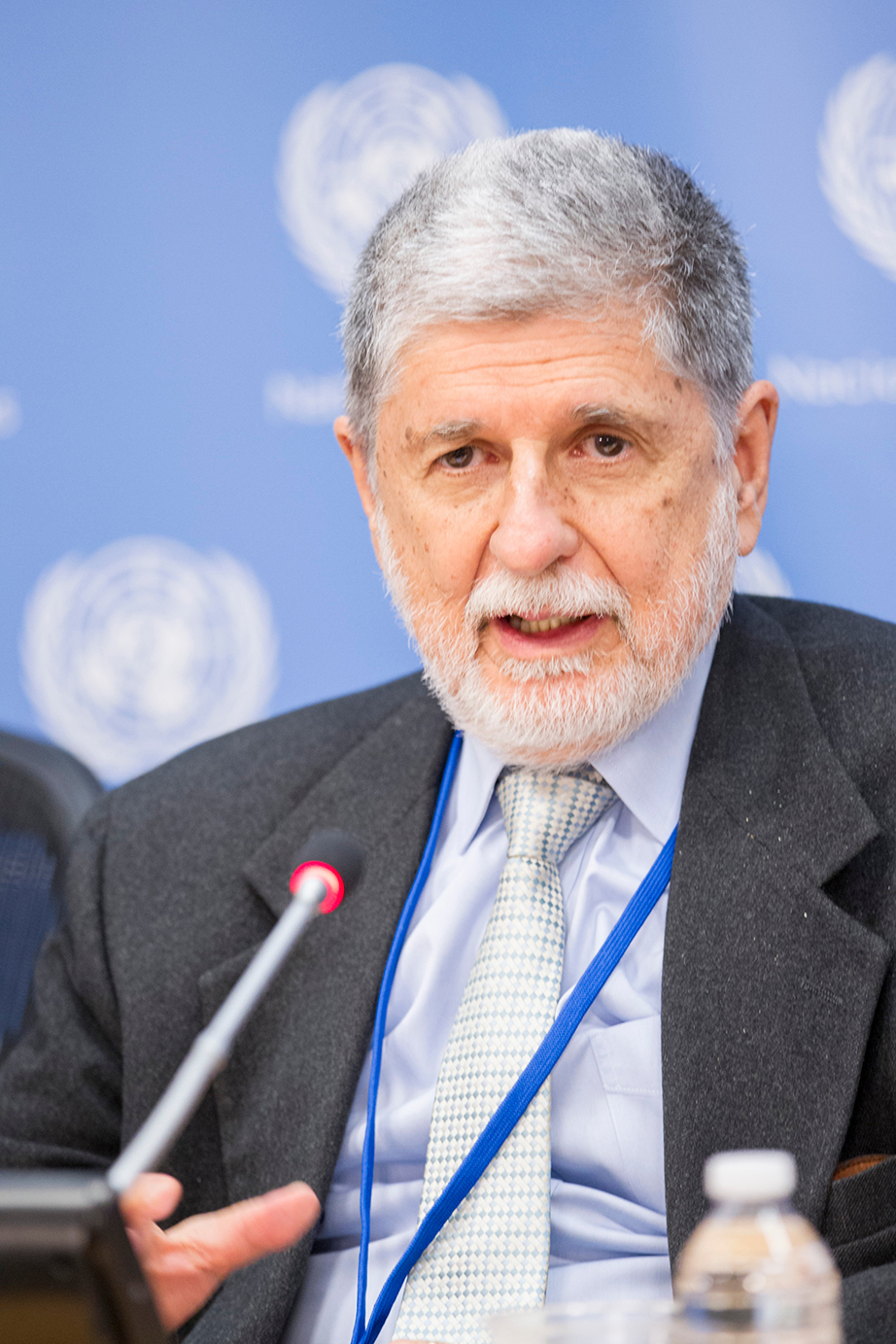
A month later, Lula’s special adviser for foreign affairs, Celso Amorim, confessed to me that it was time to take the incident in Caracas as a cautionary tale. “What happened is condemnable, it was completely wrong,” he said. “It serves as a warning. I’m not saying this would happen to Brazil. But we can’t spend our whole lives trusting that because we are a peaceful country, nobody will attack us or create a problem for us. We cannot be a defenseless country.”
US President Donald Trump’s new strategy for Latin America is forcing Brazil—and the region—to reconsider its own foreign policy, its values, and its place in the emerging new order. After decades of Latin America priding itself on being a zone of peace, Brazil and its neighbors now face a difficult paradigm: sticking with tradition or adapting to a harsher reality in which deterrence may require some spending, coordination, and, for some, weapons.
Shaking Up a Zone of Peace
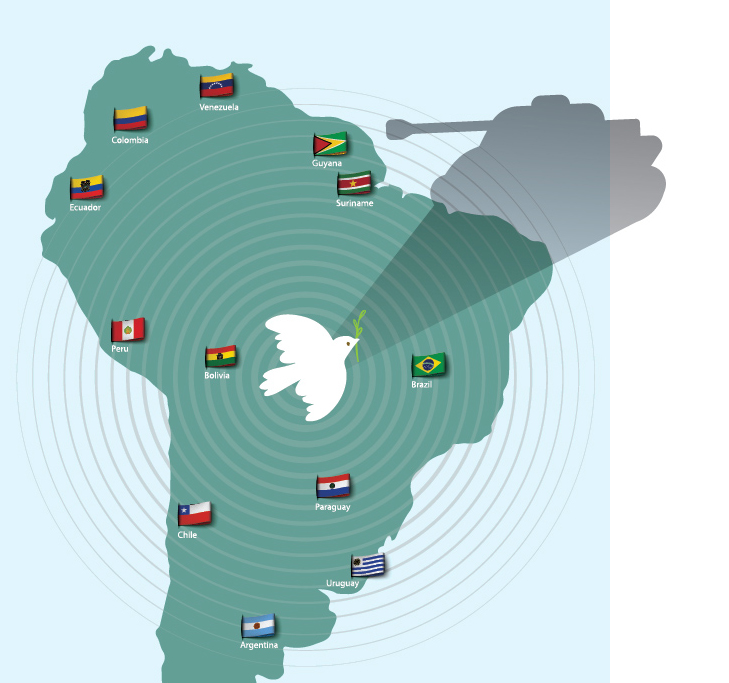
This was not what Lula had in mind a few years ago. Days after he won the 2022 election, he assembled a team to reassess Brazil’s foreign policy, deeply shaken by the far-right government of Jair Bolsonaro. One of the priorities of that transition group was to chart a new path to re-establish South American integration as a viable regional project. As a basis for the plan, the Brazilian government recovered a cornerstone principle of the region: South America as a peace zone. The concept was coined at a time when the continent was awakening from decades of military dictatorships and mutual distrust. It has since become a key element in the regional approach to protecting sovereignty, the stability of border regions, and the negotiated resolution of conflicts.
In 1986, at the initiative of Brazil and Argentina, the South Atlantic Zone of Peace and Cooperation was established, based on a resolution of the United Nations General Assembly. The objective was to promote regional cooperation and maintain peace and security among 24 coastal states in South America and on the west coast of Africa. Among the main points was the commitment to the non-proliferation of nuclear weapons and weapons of mass destruction.
In 2000, South America went a step further, launching a process to create a Zone of Peace. Two years later, twelve countries established a ban on the use or threat of force between states in the region. The development, manufacture, possession, or use of all types of weapons of mass destruction, including nuclear, chemical, biological, and toxic weapons, was also prohibited. The continent also committed to the total elimination of anti-personnel mines.
Lula, hoping to revive those ideas after years of paralysis in regional integration efforts, brought together the presidents of every country on the continent in Brasília in 2023—but the political winds were blowing in the opposite direction.
In Argentina, Javier Milei’s victory opened a significant fracture in the heart of Mercosur, South America’s common market, and in 2024, Donald Trump’s reelection in the US would dismantle Brazil’s ambition to rebuild the idea of a united South America. The White House declared the region its priority, pressuring, blackmailing, and forging new alliances.
The Donroe Doctrine, unveiled in December 2025, openly advocated White House control of the Western Hemisphere and the expansion of military positions across the continent. The policy is Trump’s version of the Monroe Doctrine of 1823, aimed at securing political, military, and economic hegemony in the region.
In less than a year, Washington’s far-right diplomacy closed military agreements with Paraguay, transformed Argentina into a kind of economic protectorate, secured tacit support for security projects in Ecuador, and, behind the scenes, came out in support of like-minded movements in the elections in Chile and Bolivia.
The ultraconservative shift had taken hold, and regional autonomy was threatened. And, as if that weren’t enough, 2026 began with the arrest of Nicolás Maduro and the transformation of Delcy Rodríguez’s government into a puppet of US interests.
Many believe Cuba is the next potential target for US intervention, and in early March, Trump convened a summit in Miami with his most loyal allies in Latin America, including Paraguay, Argentina, Bolivia, Honduras, El Salvador, and Ecuador.
This new regional reality forced the main architects of Brazilian foreign policy to ask themselves: does it still make sense to speak of a zone of peace in South America, given the threats to the region’s sovereignty and the militarization of Latin America by the Donald Trump administration?
In the Brazilian government’s assessment, the capture of Maduro was not an isolated act. While threats against Cuba and Colombia had become constant following the Venezuelan operation, what still worried Brasília was the beginning of a broader troop deployment in the region.
In Brasília, some fear that the United States could use Venezuela as a gateway to the Brazilian Amazon, an area that is strategic for Brazil’s military leadership and the country’s sovereign ambitions. The two South American countries share over 2,200 kilometers of border and a vast rainforest.
Lula’s advisers are also concerned about the Southern Cone. In December, US Secretary of State Marco Rubio and Paraguayan Foreign Minister Rubén Ramírez Lezcano signed the Agreement on the Status of Forces, which establishes the legal and operational framework for the presence of US military personnel in Paraguay.
“The historic agreement establishes a clear framework for the presence and activities of US military and Department of War civilian personnel in Paraguay, facilitating bilateral and multinational training, humanitarian assistance, disaster response, and other shared security interests,” Rubio’s Deputy Spokesperson, Tommy Pigott, said on Dec. 15, 2025, after the agreement was signed.
Pigott also highlighted that the signed text “reflects the United States’ commitment to closely coordinate with Paraguay on regional security issues and the growing importance of Paraguay as a regional leader and defender of security” in the hemisphere, emphasizing the strategic role of the South American country.
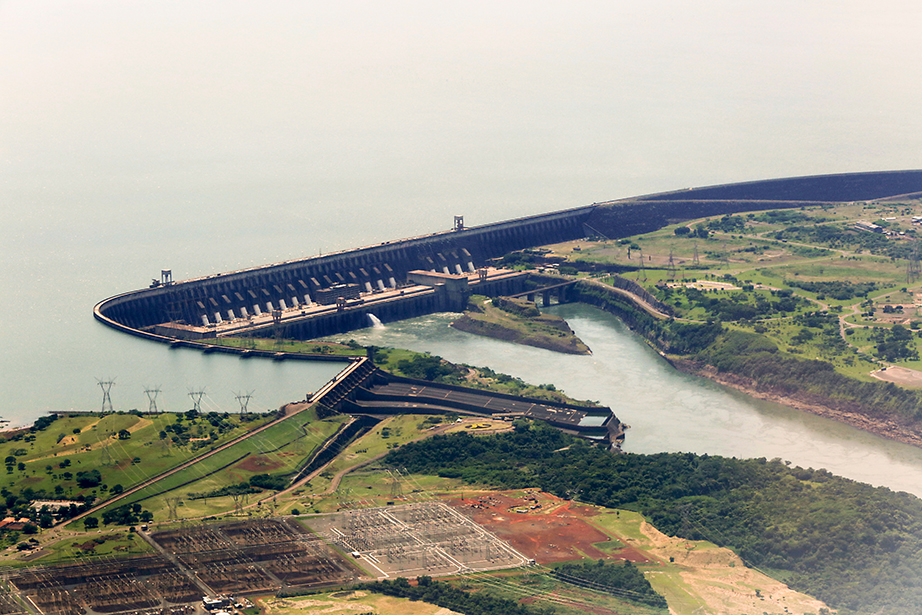
It is this strategic role conferred on Paraguay that draws scrutiny in Brazil and Uruguay. A possible American military base near the Itaipu Dam—one of the largest in the world and on the border between Brazil and Paraguay—is a source of concern for Brasília. Itaipu provides around 90% of the electricity consumed by Paraguayans and 10% of Brazil’s. It is the single plant that has produced the most energy in history: more than 3 million gigawatt-hours since 1984, enough to supply the world for 43 days.
Potential coordination from Paraguay with far-right allies in Argentina, Chile, and Bolivia is another source of instability for Brazil.
Even before Trump took power, a delegation of Brazilian diplomats traveled to Washington and reported back that the main objective of the US was to neutralize China’s influence in the region and regain hegemony on the continent.
In January 2025, the White House pressure on Panama over the Canal and the country’s decision to distance itself from China was considered a message that the US would not simply sit back and watch Beijing’s presence in key locations in the region. Brazilian diplomats have also heard from members of the Republican Party that the Trump administration would oppose the expansion of ports and railways in the hands of Chinese companies.
New Doctrine
Among Brazilian diplomats and military personnel, the outbreak of a new chapter between the US and Latin America has generated intense domestic debate.
A change in Brazil’s strategy and a possible rearmament, however, would have to involve a review of the country’s military budget. According to data from the Stockholm International Peace Research Institute (SIPRI), Brazil ranked 21st in the world in military spending in 2024, down three places from a year earlier. Brazil sits behind Spain, the Netherlands, and Algeria in national spending.
With a budget of US$20.9 billion that year, Brazil allocated about 1% of its national GDP to the defense sector. According to the SIPRI survey, there was also a 14% drop in the Brazilian military budget between 2015 and 2024, relative to the size of the country’s economy. If the US accounts for 37% of global military spending in 2024 and China about 12%, Brazil accounted for only 0.7%.
Concern over Brazil’s vulnerable situation is not limited to voices within the government. The former director of the IMF, the Brazilian Paulo Nogueira Batista Jr., points to the same issue.
“What became clear in 2025 is that the Trump administration only respects countries that have brute force and the capacity to retaliate, that is, fundamentally China and Russia,” he said.
According to him, even traditional allies in Europe have been disrespected and even publicly humiliated. Batista Jr. argues that a possible occupation of Greenland by the US would crown this humiliation.
These are, according to him, the elements Brazil must consider when reviewing its defense strategy. “In the face of the international context, our military vulnerability has become an existential risk,” he said. “We urgently need a complete review of foreign defense policy and an increase in military spending.”
The risk, he concludes, does not come from Brazil’s immediate geographical surroundings, but from an “ambitious and aggressive imperial superpower.”
Arms Race
Brazil is not the only country reopening a delicate debate about its military budget. Colombia’s government announced that it will allocate US$12.5 billion to the defense sector in 2026, the largest budget in its history. The objective is to modernize the capabilities of the Armed Forces and the National Police.
The plan calls for the acquisition and updating of weapons systems, the modernization of air and naval fleets, the strengthening of strategic intelligence, and the renewal of logistical and technological infrastructure. As indicated by the government, through this program, Colombia seeks to guarantee its operational and deterrent capacity in the face of new internal and regional security challenges.
Part of the strategy also involves greater development of the national industry. Foreign providers participating in the tenders must invest at least 10% of the value awarded in the national industry, as part of a policy aimed at boosting reindustrialization, innovation, and technology transfer.
The Argentine government also announced a 10% increase in military spending for 2026 and secured second-hand F-16s that will enter service in 2026, aircraft that had once been considered for Ukraine.
Peru, despite its never-ending political crisis, is considering new investments in defense and weighing Gripen, Rafale, and F-16 jets as new acquisitions for its Air Force. Uruguay is buying six Super Tucanos from Brazil, while Paraguay is acquiring the same number through credit financing. Ecuador, meanwhile, is restoring six Super Tucanos retired 15 years ago, boosting its fleet to 24.
New Integration
A more traditional wing of Brazilian diplomacy, however, insists that an arms race would be disastrous for a region that still needs to address hunger and poverty.
Behind the scenes, Lula’s order was to implement a strategic action to demobilize far-right forces and neutralize what could be foreign interference in Brazil’s election at the end of the year. The priority of foreign policy became preserving democracy.
To this end, a process of “de-ideologization” of foreign policy was instituted, something many see as a reflection of Lula’s own political history of accommodating positions to achieve a greater objective.
This is what came to be called, within the government, “possible integration,” the idea that when projects of mutual interest, not ideology, are placed as the basis of the relationship, the relationship can prosper.
Within Lula’s government, the motto is simple: a bridge built is neither left nor right. But it can serve Brazil’s strategic interests by helping preserve the country’s status as a regional leader.
The first step was to save Mercosur and prevent it from imploding. The tool Lula’s government used was to expedite the trade agreement with the EU. It was established that, for privileged access to European markets, Javier Milei’s government would have to remain in the bloc, despite all the criticism. The defensive move seems to have worked, at least for now.
Another gesture was to approach Ecuador’s President Rafael Noboa, whose government has a strong ultraconservative streak. Still in 2025, Lula received the Ecuadorian for the first state visit between the two countries in 18 years. On the agenda, a concrete plan: the resumption of Brazil’s purchase of shrimp and bananas from the South American country. Furthermore, Lula offered police cooperation to combat drug trafficking, and the creation of police units in the embassies of the respective countries was established. Physical connections between the port of Manta and the city of Manaus were also discussed, breaking a deadlock that had existed on the subject since 2007.
This year, Foreign Minister Mauro Vieira toured several South American countries, including Peru, Bolivia, and Ecuador.
Lula’s strategic rapprochement with right-wing governments also had an important chapter with his visit to Panama in February. Lula received the highest honor bestowed by the Panamanian state from the president of the Central American country, José Raúl Mulino.
“We consolidated a very important relationship as politicians and as friends, which today translates into the beginning of a bilateral cooperation mechanism between Panama and Brazil,” Mulino said at the ceremony.
Lula has already offered to advance negotiations on the preferential tariff agreement to support Panama’s accession as an Associate State of Mercosur, signed cooperation agreements in tourism and port management, and also defended the neutrality of the Panama Canal.
Some work also took place behind the scenes. Lula met with the president-elect of Chile, José Antonio Kast, an ally of Milei and a leading figure of the far right. The Planalto Palace did not miss the opportunity to release a video on social media in which Kast and Lula converse in a relaxed manner and even exchange flags of their countries on their suit lapels, an image that might seem improbable given the political trajectory of each of the leaders.
On the agenda, the Brazilian president made a point of raising concrete issues of cooperation with the future Chilean president, despite the profound ideological distance. “This transcends any political or ideological differences, because what motivates us is improving the quality of life of our compatriots,” Kast argued, after an hour and a half of meetings with Lula.
The fight against organized crime, a flagship policy of the Chilean president, was also on the agenda. Brazil also signaled that both countries have an interest in stabilizing Venezuela, since both Brazil and Chile receive significant numbers of immigrants. Kast won his election promising to control immigration in his country.
Another meeting Lula had in early 2026 was with Rodrigo Paz, the Bolivian president who defeated the left and was widely celebrated by Trump. In this case, the focus of the debate was the project of “routes for South American integration and alternatives to guarantee Bolivia’s access to ports and the outflow of its production.” Lula also invited Paz to make a state visit to Brazil, with business leaders, scheduled for mid-2026, once again pursuing a strategic rapprochement with a government coveted by the White House.
Among Latin American and even Brazilian diplomats, the move is seen as an attempt by Brazil to offer an alternative to the “Donroe Doctrine.”
Brazil hopes that, with this counter-operation, the country can create a space for autonomy, curb the US defense strategy of controlling the Western Hemisphere, and also preserve the idea of South America as a zone of peace.
About The Author