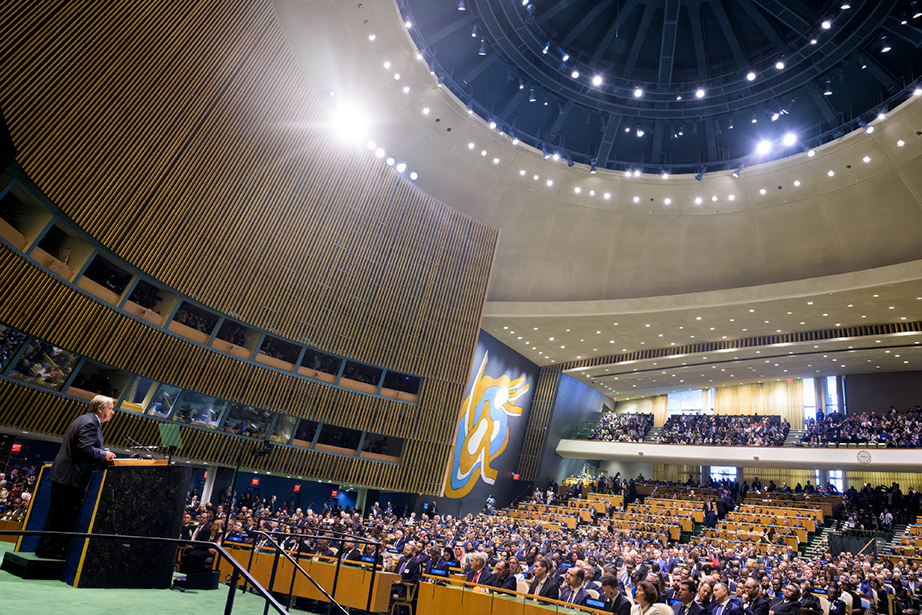
What happens when the United Nations borrows the simplicity of a jury-duty lottery and hands young people the power to review — and even overwrite — global decisions? A new model of civic intelligence is taking shape, one that asks the next generation to prove what they’ve long claimed: they can do it.
Imagine receiving an unexpected email from the U.N.: “You have been selected to serve in the Global Youth Jury.” No campaign. No application. Just a democratic lottery.That is the entry point to the Youth Overwrite, a proposal that would assemble a small, temporarily constituted, diverse group of citizens under 35 — a newly selected cohort for each individual “overwrite,” with one member drawn from every member state, language and background — and task them with reviewing, learning about and reshuffling the outcome of U.N. decisions when a policy is questioned or when innovation is needed. Their docket could range from a climate financing framework to a new peacekeeping mission, even a request to overwrite a veto decision. The initiative describes itself as “a jury-duty model for global accountability designed to insert civic rotation into the heart of multilateral decision-making and bring the U.N. closer to everyone’s lives.” Its goal is to create a responsive structure rooted in the U.N. Charter that can scale globally while supporting both citizens and member states. “It is not a protest movement or a token consultation,” the proposal states. “It is a bet placed on young people — on their capacity to deliver what they say they can, by providing them with the right tools to prove it.”
The Youth Overwrite sits alongside the UN80 reform effort launched by Secretary-General António Guterres. The initiative aims to make mandates and budgets more efficient and leaner, but advocates argue that efficiency alone cannot address the deeper challenge: disconnection. “Many see global decisions as remote and bureaucratic,” the text warns. The mechanism, they argue, would help introduce the U.N. to people “as something they can interact with.”
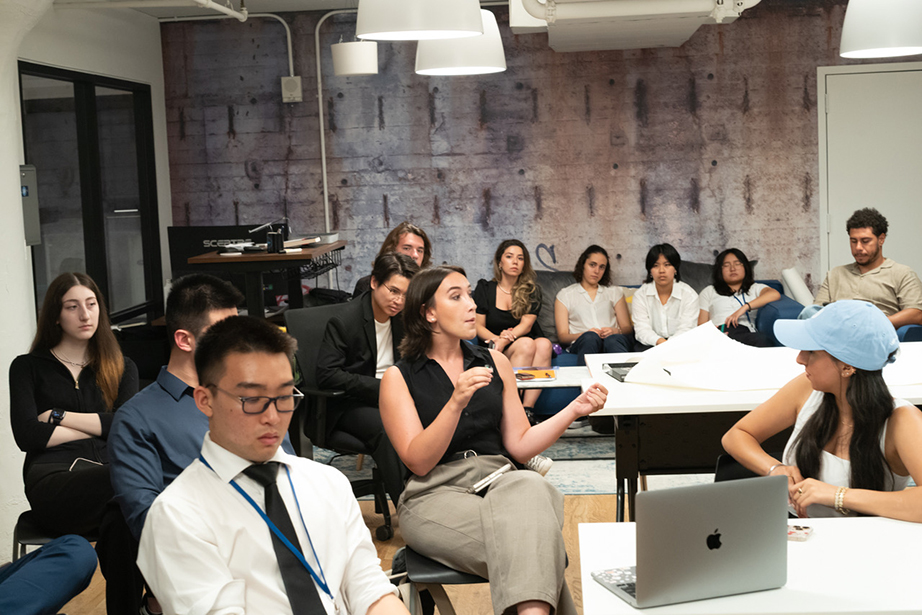
The idea draws from a long civic tradition. The Youth Overwrite “builds on the ancient civic lottery — the foundation of modern citizens’ assemblies.” These assemblies have shown that ordinary people, when given fair facilitation and accurate information, can deliberate on complex issues “as effectively (or even more effectively) than elected officials.” France’s Citizens’ Climate Convention, the U.K.’s citizens’ assemblies, and the Global Citizens’ Assembly at COP26 all demonstrate what the idea calls a “proven model for deliberation.” Several reasons are offered for why the mechanism is worth pursuing. It is cost-effective, relying on a digital infrastructure “done through blockchain encryption.” It is pedagogical, educating young people on policy and ethics while creating awareness that “anyone might be called into this mechanism.” It is bridge-building, connecting generations and sectors “in real time, restoring a sense of shared agency.” And it reframes global decision-making “from consultation to collective oversight.”
Institutionally, the model could operate under ECOSOC as a fourth-generation participatory mechanism following the High-Level Political Forum, Major Groups and Voluntary National Reviews. It could also sit as a special mandate of the Youth Office or the Executive Office of the Secretary-General, or even be designed externally to avoid bureaucratic delays. Its principal advocate is simultaneously building a digital platform to prototype the model — alongside other real-time tools and features — with a single mission: to rebuild the foundations of global solidarity by bringing people and action closer to one another.
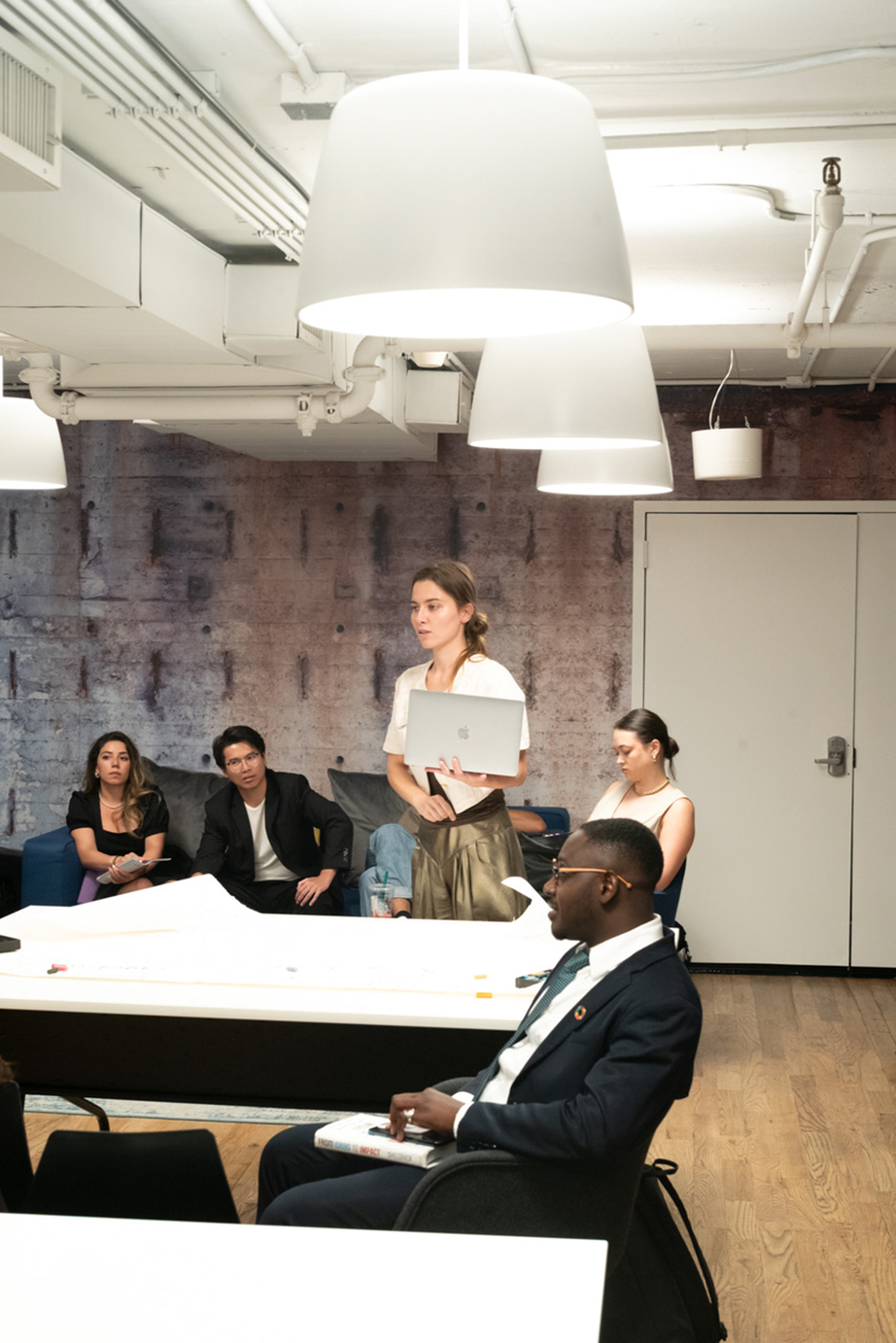
The implementation blueprint would begin with a U.N. entity, or a cohort of ECOSOC youth organizations, signaling that a decision or situation requires review. Participants would then be selected through a secure algorithm ensuring gender parity and geographic diversity. They would then undergo a short collective online orientation, co-led by academics and practitioners, to ensure that every participant has the same foundational understanding of the issue and that anyone can be brought into the process. A complementary “UNTV for the People” platform would also be created to train interested citizens on core global topics and support this learning ecosystem. Depending on the nature of the overwrite, members would either vote immediately after training or participate in a three-day virtual deliberation with expert briefings from U.N. agencies, universities and civil society. A civic platform would allow the resulting decisions to feed into broader collaboration mechanisms. Compensation would be provided to ensure equitable participation.
The proposal emphasizes that AI can accelerate and strengthen the process. “With AI, there are many opportunities for perfect matchmaking — we just need to accept our human limits at scale and embrace what we are good at: creating new ideas.”
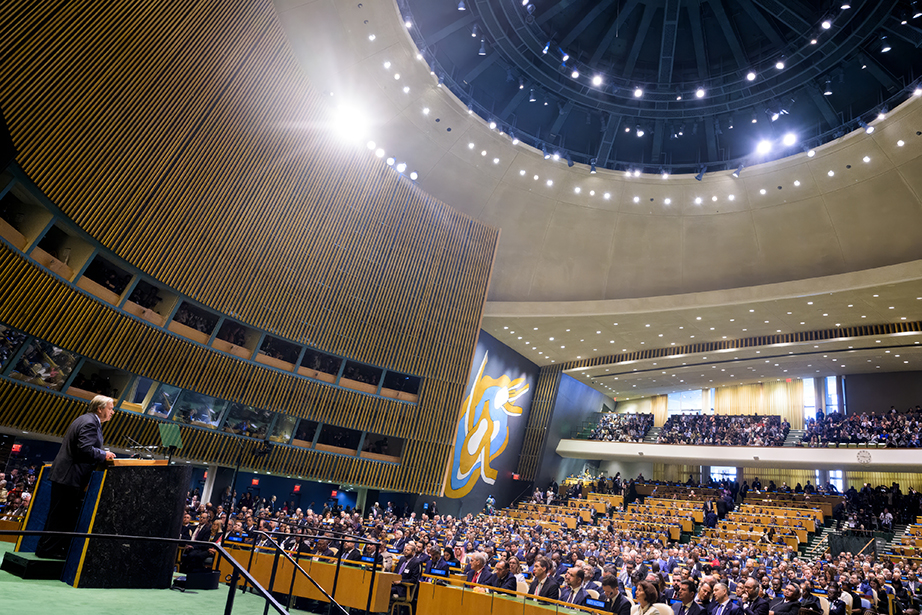
Youth feedback from two tests — including on the margins of HLPF and UNGA — underscores the perceived value of the mechanism. From Tanzania, Khadija Nkya said: “Youth are not just victims of climate change; we are potential leaders in the fight against it. With the right support and platforms, we can turn our creativity, energy and knowledge into real impact.”
From Canada, Rochelle Prasad said the initiative “transforms youth engagement from dialogue into accountability — giving us the chance to collectively refine, challenge and strengthen global decisions.” Liberia’s Francis Masaline argued that initiatives like the Youth Overwrite allow youth to “co-create solutions for sustainable development” and ensure that “the next generation is not only heard but is actively shaping Africa’s future.”
Bolivia’s Paola Pozo stressed that true participation “means dismantling systemic barriers that exclude Indigenous youth and local actors whose daily actions sustain our forests, food systems and cultural resilience.”

And Canada’s Li Yu Chen said the critical task is “enabling equal, fair and supported representation to youth worldwide — not just countries with supportive youth programming.” India’s Indrapramit Roy pointed to the biggest challenge: “The hardest part will be designing the mechanism […] but once built, it can prove that anyone has the potential to make the right decision.” The idea has also drawn attention from senior leaders. Zeid Ra’ad Al Hussein, president and CEO of the International Peace Institute, said: “The idea of a Youth Overwrite on veto is mind-blowingly good.”
If successfully piloted, the Overwrite could expand beyond youth. Future Global Citizen Juries could review climate targets, debt relief frameworks or digital governance policies. Ultimately, the tool is envisioned as the foundation of a global mobilization system in which individuals feel connected to the U.N. and can participate in real decision-making. “The next U.N. must use technology to become a U.N. of the People — solving inefficiencies while delivering for member states,” the text concludes. “Yes, the U.N. wasn’t created to bring people to heaven but to save them from hell. And yet — nothing that doesn’t adapt, survives.”
About The Author