
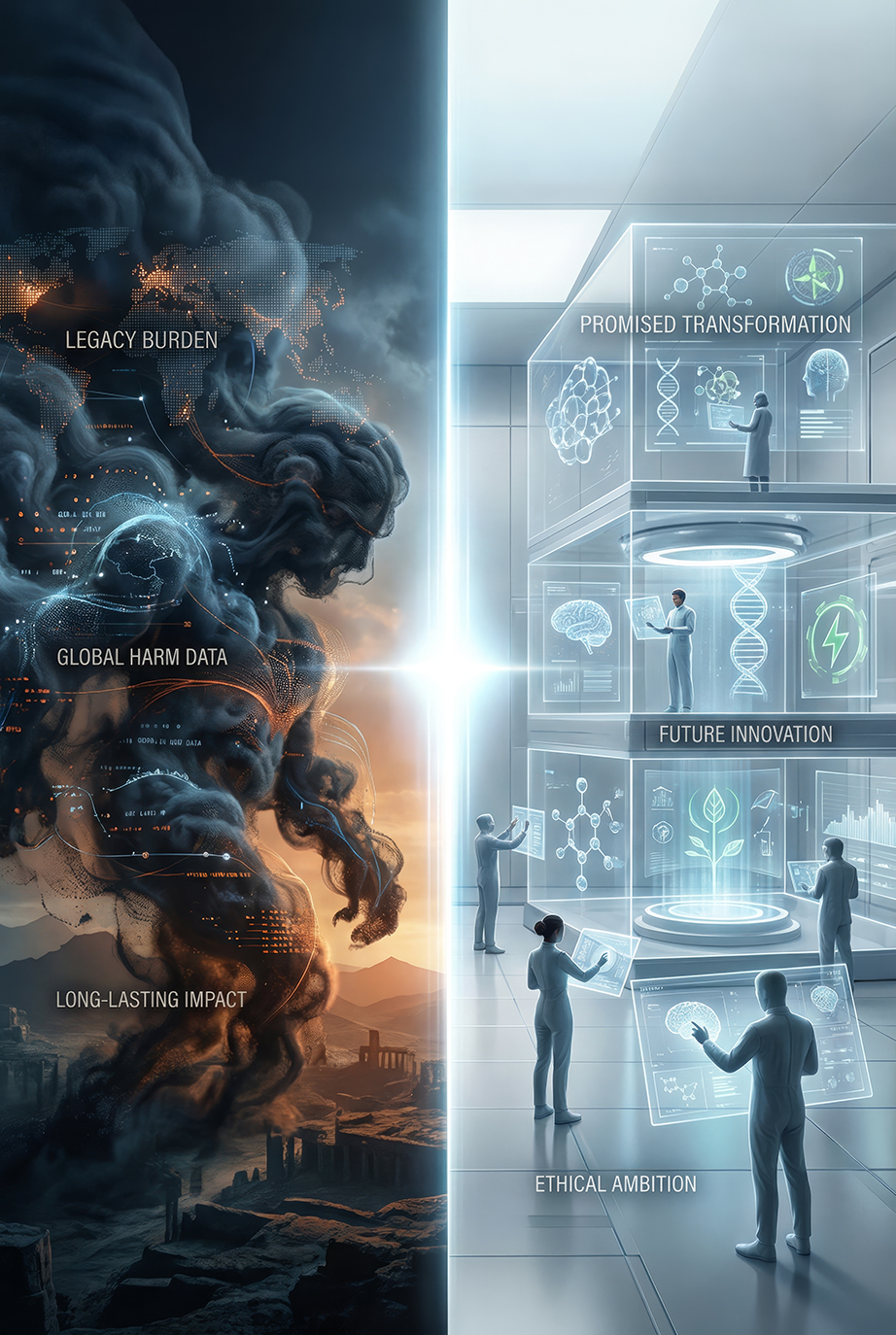
The world’s biggest manufacturer promises to end cigarettes. Public-health experts aren’t persuaded.
I have never smoked a cigarette in my life, but I’ve spent years trying to make the two people I love most, my mother and brother, quit smoking. I’ve failed. I’ve failed with logic, case studies, statistics, all tools a journalist knows how to use. None of them worked. There is a particular frustration in watching addiction overpower love, reason, and fear. There is anger, too, not only at the people I care for who are poisoning themselves, but also towards an industry that peddles a product designed to be addictive.
So, when Philip Morris International (PMI) began describing itself as a company working toward a “smoke-free future,” a harder question surfaced: How does the world’s most famous cigarette manufacturer promise a future without the very product that built its empire? And what will that future actually look like?
PMI now presents itself as a company in the middle of a profound transformation. Executives talk less about tobacco and more about science, innovation, supply-chain transparency, and climate resilience. Nearly a decade into this transition, PMI says the shift is steadily advancing. Smoke-free products, the company says, have reached more than 40 million adults across some 100 markets who now generate over 40% of the company’s global revenue. Moreover, PMI insists it is shifting research and development almost entirely toward products that do not burn tobacco, with a long-term goal of ending cigarette sales altogether.
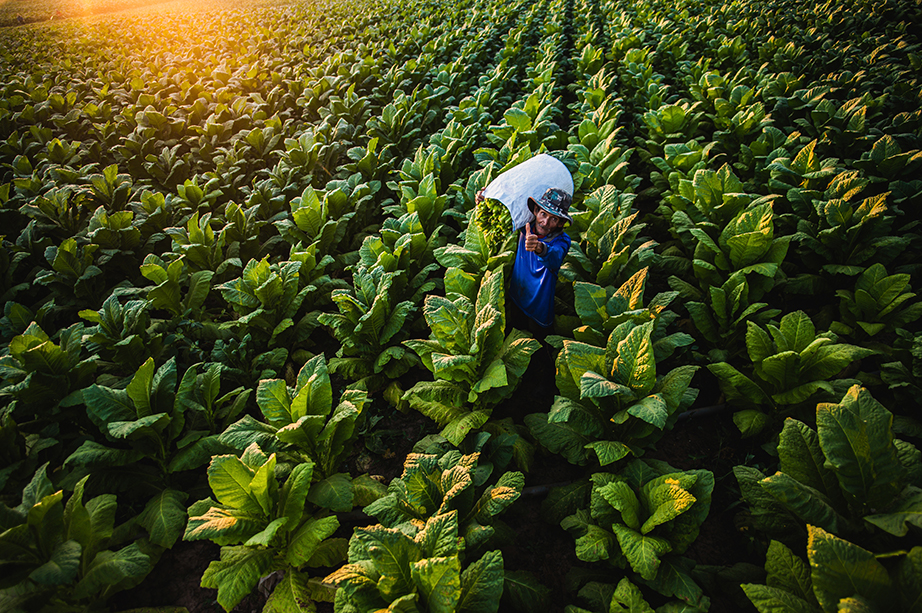
The transformation extends beyond nicotine. In its expansive Climate Transition Plan, a document more commonly associated with energy or technology multinationals, PMI forecasts net-zero emissions across its value chain by 2040. The company calls for a 50% cut in operational emissions by 2030, reductions in land-use and agricultural emissions, and a shift toward renewable energy and more resilient farming systems.
Tobacco remains an agricultural crop linked to deforestation, labor issues, and environmental impacts, and PMI’s sustainability metrics, while detailed, are largely self-reported. Cigarettes, which the company intends to phase out, remain widely available and represent a substantial share of the global tobacco market.
None of this escapes the attention of the World Health Organization. At the WHO’s Geneva headquarters, the assessment is blunt: smoking kills more than 8 million people every year, 7 million from direct use and another 1.3 million from secondhand smoke. Over a billion smokers inhabit the planet, a majority in low- and middle-income countries. For WHO, no amount of rebranding changes a fundamental reality: a company that profits from cigarettes cannot define the terms of harm reduction. The WHO further warns that alternatives like e-cigarettes and heated tobacco products, while less harmful than cigarettes, create alternative pathways to addiction, especially for young people. The WHO argues that such tactics may divert attention from proven tools such as higher taxes on tobacco products and more comprehensive advertising bans.
This dilemma, between a company asking to be judged by its future and public-health leaders judging it by its past, is the space where more than a billion smokers live. It is also the terrain that PMI’s chief sustainability officer, Jennifer Motles, now navigates after years within the U.N. system which rejects engagement with the tobacco industry.
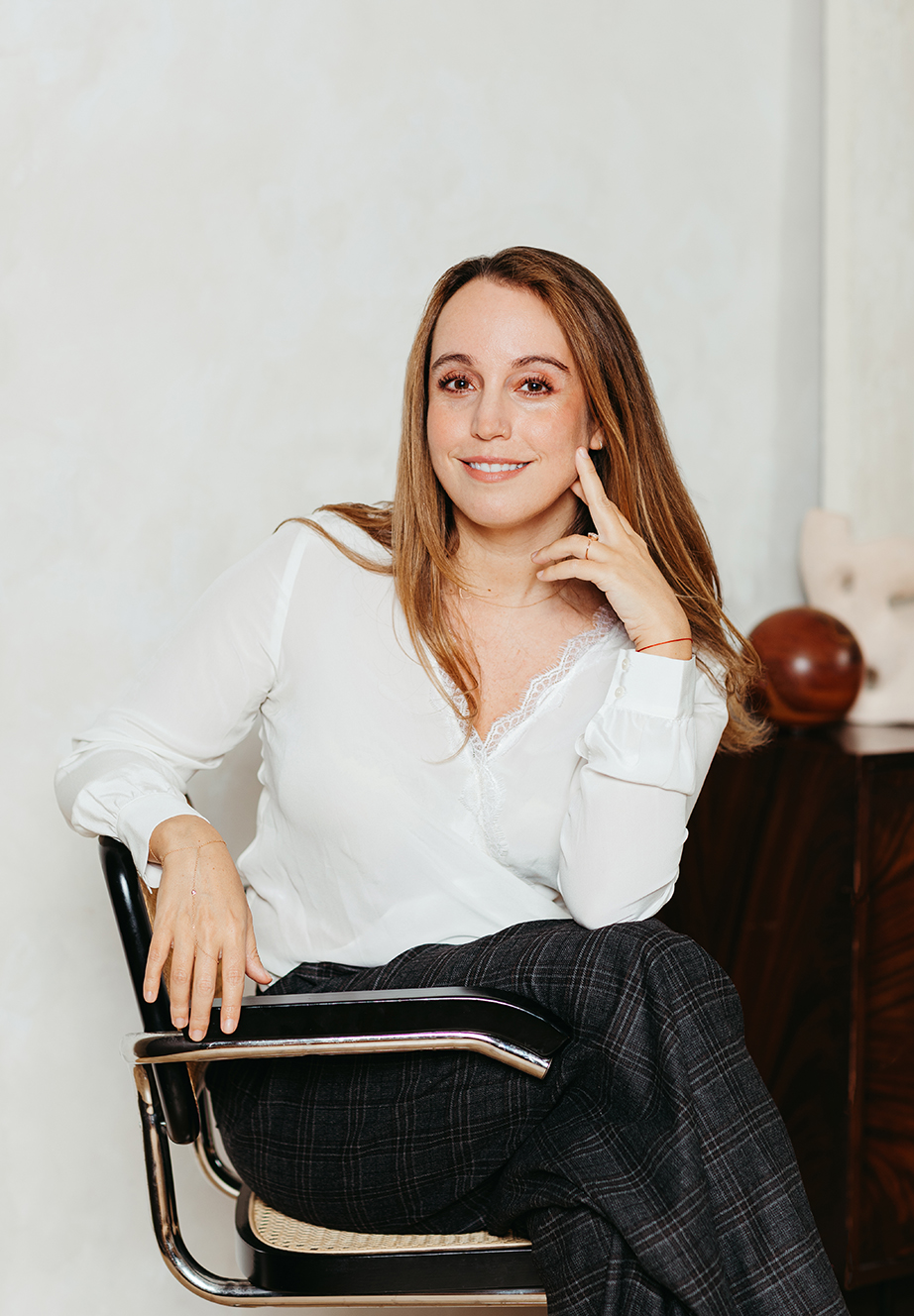
So I asked her directly. What follows is our conversation, one that reveals not just the ambition of PMI’s transformation, but the unresolved contradictions that shape it.
You come from the U.N. system, where working with tobacco companies is off-limits. What persuaded you that PMI’s transformation was authentic?
What drew me to PMI was the opportunity to be part of something genuinely unprecedented – a company making a multi-billion-dollar commitment to phase out its own core product. Coming from the U.N. system, I understood the skepticism. But I also believe that meaningful change requires us to engage with those willing to transform, not just criticize from the sidelines. The conviction came from seeing the infrastructure being built: the science, the investment in smoke-free alternatives, the willingness to be transparent in advancing the smoke-free journey. Transformation isn’t a moment or a feeling; it’s a continuous commitment to showing up, doing the work that is uncomfortable and difficult, challenging the status quo, and seeking to create a new paradigm that is better for everyone.
You say transformation is underway. What concrete milestone should the world judge you by next year?
We recognize that business transformation is a company-specific journey, which sustainability reporting standards and frameworks fail to adequately capture. To address this, we developed our Business Transformation Metrics, a bespoke set of financial and non-financial key performance indicators (KPIs). These KPIs make our progress toward achieving our purpose of becoming a smoke-free business both measurable and verifiable. In doing so, they focus on the core of our sustainability strategy, consistent with the outcome of our sustainability materiality assessment.
They also showcase how we are allocating resources away from our legacy business as we advance toward a future in which we will no longer base our success on making or selling cigarettes. By transparently reporting periodically on these KPIs, sharing both year-on-year and cumulative progress, we enable external scrutiny and allow our stakeholders to assess the pace and scale of our transformation.
So, I would say, judge us by the business metrics that tell the real story of transformation. By next year, you should see smoke-free products continuing to grow as a percentage of our total net revenues – we’re already above 40% and that trajectory has been achieved in less than ten years. Watch our Research&Development spending and capital allocation: where are we investing? In smoke-free R&D, manufacturing, and commercialization. Look at our market-by-market transitions: in places like Japan, smoke-free products now dominate our business. These aren’t marketing claims – they’re fundamental business model shifts that are irreversible.
When a company restructures its entire revenue base away from its legacy product, that’s not window dressing. That’s the transformation you can measure in financial statements, in production facilities being converted, where our future growth is coming from.
WHO says tobacco companies can’t lead harm reduction. What makes your transformation different from what critics call ‘whitewashing’?
I have deep respect for the WHO’s public health mandate, and I understand why trust is difficult to establish.
But here’s where I’d gently challenge the conversation: how far can dogmatic ideology get us in terms of actually driving change? I’m not asking the WHO to like us, I’m asking them to consider the possibility that solutions to complex problems can come from unconventional places.
The WHO, as part of the U.N. system, should understand better than anyone the power of bringing all stakeholders around the table if what we want to create is long-lasting impact and positive change. Excluding voices doesn’t make problems disappear; it just ensures they may be solved without all the information, resources, and commitment we need. History shows us that the most intractable challenges get solved when former adversaries become partners in change.
The difference between transformation and whitewashing is this: we’re not asking for trust based on promises. We’re submitting everything to independent scientific review, regulatory scrutiny, and transparent reporting. We’re restructuring our entire business model in ways that are financially material and publicly verifiable. If we’re willing to be judged by evidence rather than legacy, shouldn’t that at least open the door to dialogue? Distance doesn’t create change; difficult, sometimes uncomfortable collaboration does. And if the goal is truly to reduce smoking-related harm, then we need to be pragmatic about how we get there, even if it means working with partners we didn’t choose.
How do you address concerns that smoke-free products may prolong nicotine dependence rather than reduce it?

This is a legitimate question that requires ongoing research and honest dialogue. SFPs are addictive and not risk-free. Our position is clear: these products are for adults who would otherwise continue smoking. The goal is to offer substantially less harmful alternatives to the billion-plus adults who smoke and aren’t quitting. The evidence continues to evolve, which is why we support strong regulation towards age verification and policies that prevent youth access. We need multi-stakeholder collaboration here: governments, public health authorities, researchers, and industry all have roles to play in getting this right.
What is the realistic timeline for ending cigarette sales, and where would this transition begin? Which countries will cigarettes disappear first?
The timeline varies significantly by market maturity and regulatory environment. We’re seeing the fastest progress in markets with clear regulatory frameworks that enable adult smokers to access better alternatives – places like Sweden, where smoke-free products now represent the majority of our business. The transition accelerates when governments, public health communities, and companies work together rather than in opposition. I can’t predict exactly when cigarettes will disappear, but I can tell you we’re building the business model that makes that endpoint economically viable for us, which is essential for the transition to be sustainable.
How much of PMI’s transformation is still funded by cigarette revenue?
Today, yes, our smoke-free transformation is funded by our existing business; that’s the reality of any major corporate transition. What matters is the direction and velocity of change. Smoke-free products now represent over 40% of our net revenues, and we’ve committed billions to R&D and commercialization of these alternatives. The question isn’t whether we’re fully transformed today; it’s whether we’re making the investments and structural changes that make the endpoint inevitable. The business case for transformation has to work, or it won’t happen. And in our case, it is very clear that it does. It makes sense because it’s the right thing to do: for society and for our business.
What role do you see for governments in reducing cigarette use globally?
Governments are absolutely central. The most effective approaches we’ve seen combine strong regulation with harm reduction principles: making cigarettes less accessible while ensuring adult smokers have access to better alternatives. This means appropriate taxation and marketing restrictions, age verification, and clear regulatory pathways to phase out cigarettes and allow alternative smoke-free products. It also means investing in education and supporting research. No single stakeholder can solve this alone. The countries making the fastest progress are those treating this as a complex public health challenge requiring coordinated action across multiple fronts.
What if the world rejects your smoke-free strategy?
This would have been a valid question in 2016 when we first set ourselves the smoke-free purpose. Almost ten years later, the question isn’t whether the world rejects it. I don’t think they have. The evidence is in the adoption: millions of adult smokers switching, regulators in multiple markets establishing frameworks for smoke-free products, and independent scientists publishing peer-reviewed research on harm reduction.
The question now is: does the world fully understand the potential of this strategy, and what can we do to go faster? PMI operates within a complex system that can both enable and constrain our transformation. While our organization holds significant capabilities and reach, it functions as part of a larger system of intertwined markets, supply chains, and regulations that influence the pace of transformation. Our performance is a testament to our unwavering commitment to transforming our company for good. We excel in areas within our control, such as innovation, operational transformation, and market readiness.
However, uncontrollable factors like regulatory barriers and geopolitical disruptions undeniably impact our progress. Despite these external barriers, the dedication and strategic execution of our teams worldwide position us strongly to continue making progress on our journey towards achieving one of the most ambitious corporate transformations in modern business history.
What partnerships or collaborations could help accelerate progress toward a smoke-free future?
This is where I get excited. We need academic institutions conducting independent research, public health authorities willing to evaluate evidence objectively, governments creating smart regulatory frameworks, and civil society engaged in honest dialogue. I’ve seen the power of multi-stakeholder collaboration in other contexts; this is how we solve complex problems. The prerequisite is mutual willingness to engage, even when we disagree.
Distance doesn’t create change; dialogue does. We’re actively building these bridges, and I’m encouraged by the growing number of stakeholders willing to have substantive conversations about change, progress, and harm reduction. That’s where the real conversation needs to be. We’re not debating whether transformation is happening – the business metrics, the regulatory evolution, the scientific evidence all demonstrate it is. We’re debating how to accelerate it. How do we create regulatory environments that enable adult smokers to access better alternatives while protecting youth? How do we foster the kind of multi-stakeholder collaboration that turns possibility into reality at scale? How do we move from skepticism to pragmatic engagement on what works? We are still operating in silos rather than in genuine partnership, and here is where the real potential lies.
About The Author
