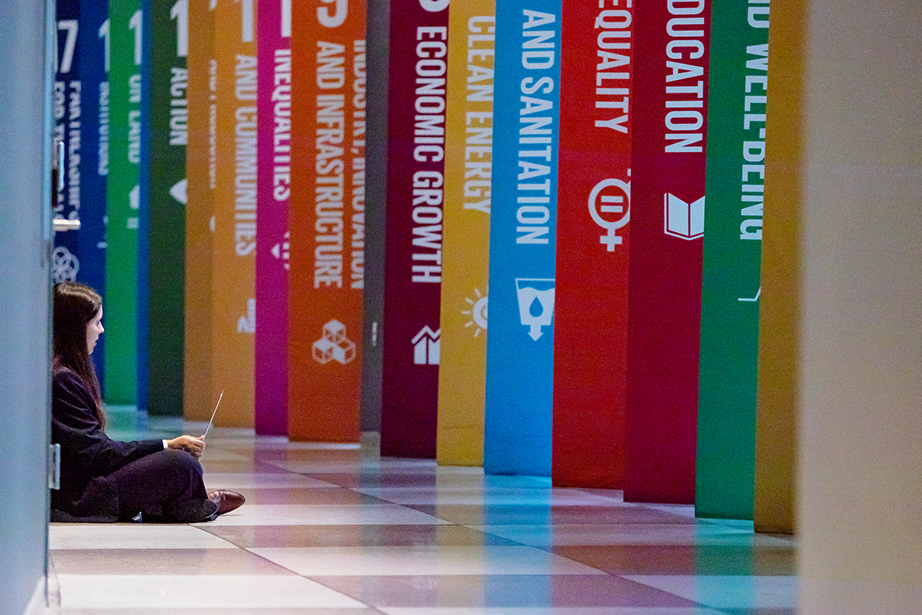
The next U.N. chief will need to develop greater and closer ties with the private sector and build new, more effective partnerships to help manage the resource dilemma.
A growing number of violent conflicts. A never-ending liquidity crisis. A bloated organization rife with antisemitism and facing loud calls for it to be completely overhauled. Ever-increasing demands for resources to manage global humanitarian disasters. An alarming global backlash against refugees, immigrants, and free trade. One permanent member of the United Nations Security Council flagrantly violating the U.N. Charter. Another permanent member seeking to reshape the U.N. in its own authoritarian image. A United States government turning its back on the U.N. and multilateralism writ large. On the 80th anniversary of its existence, the U.N., an organization that has done so much over the decades to improve the state of our world, is at a major inflection point with little optimism about its future to be found. Given this extremely difficult state of affairs, who would want to be the next secretary-general and take on this almost perfect storm of severe challenges? At the end of 2026, a new secretary-general is to be selected who will confront extraordinary demands and equally high expectations at one of the most dangerous times in the post-World War II era.
In line with Chapter XV, Article 97 of the United Nations Charter, the U.N. General Assembly appoints the secretary-general upon the recommendation of the U.N. Security Council. This article of the Charter has over the years frustrated many U.N. insiders and watchers who argue that the permanent members of the Security Council (the P-5), the U.S., United Kingdom, France, China and Russia, will only agree on the candidate who poses the least risk to each country’s political and/or strategic interests at the UN. This P-5 posture, they maintain, inevitably excludes candidates with the bold vision, freedom of action and international stature necessary to make the U.N. more effective in serving the vast majority of member states. Over the last two decades, there has also been mounting public pressure on the P-5 by some U.N. member states and NGOs for the appointment of a woman to the position of secretary-general. There are as well a few unofficial initiatives underway to try to make the selection process more transparent. However, at the end of the day, the P-5, who jealously guard their privileged status under the Charter, will not likely be swayed by international pleas to further “democratize” the selection process.
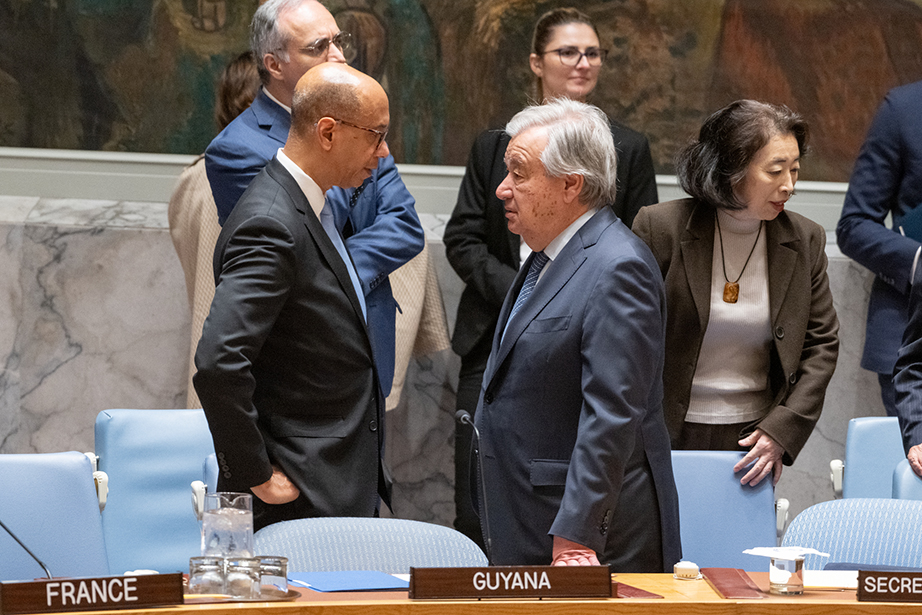
The next secretary-general, who will take office in January 2027, will face a horrific fiscal nightmare primarily brought about through drastic cuts by the United States to its payments to the U.N.’s regular and peacekeeping budgets and its voluntary contributions. Anticipating a possible U.S. presidential victory by Donald Trump, U.N. Secretary General Antonio Guterres began to develop in late summer 2024 a broad initiative, called “U.N. 80,” to streamline and reorganize the world body to try to forestall highly expected demands by the incoming U.S. president for even larger budget cuts and greater reforms. Guterres’ plans for a 15–20% cut in positions, a consolidation of overlapping programs, offices and mandates, and the merger of specific agencies will almost certainly not satisfy the Trump administration’s desire to substantially shrink the U.N., though as of this writing, President Trump has not yet articulated his U.N. reform vision. U.N. 80 has been criticized both internally and externally as a salami-slice approach to streamlining with no clear sense of what the U.N.’s priorities should be. Guterres’ previous reform-based initiative, the Pact for the Future, designed to be a roadmap for a 21st-century U.N., has also been criticized as a compromise document that, in the end, no one wanted. In fairness to Guterres, no matter what kind of reform a secretary-general proposes, there will certainly be U.N. member states and constituencies at the U.N. Headquarters that will reject it and work extremely hard to ensure that nothing is ever fully implemented.
As part of making the case to be the next secretary-general, it will be a matter of great urgency for the declared candidates to put forward to Washington concrete plans for how they would reconfigure the U.N.’s operations to substantially reduce costs, sharply limit the world body’s global footprint, and return the organization to a focus on maintaining international peace and security.
American insistence on the need for the U.N. to better prioritize international peace and security also reflects the views of a number of U.N. member states from both the Global South and Global North. Many U.N. ambassadors with whom I have spoken routinely express deep concern over the increasing number of years-long conflicts, especially in the Global South, and the need for a more active role by the next secretary-general in preventing and mediating conflicts. These ambassadors also contend that going forward, the U.N.’s Department of Political and Peace-Building Affairs (DPPA) and its Department of Peace Operations (DPO) will require additional, sustainable funding to help stabilize countries with very fragile peace processes, like those in Colombia and South Sudan, so that war does not return.
However, resource constraints will force the next secretary-general to prioritize which conflicts deserve their undivided attention and those that do not. The ones that should be prioritized are those which, if not sufficiently addressed, could morph into a larger regional conflagration or possibly a future world war. Ukraine, Sudan, India-Pakistan, and the DRC are examples of conflicts that could escalate and severely threaten international peace and security. While a secretary-general’s direct personal engagement in a particular conflict might not be welcomed by some international actors, that doesn’t mean the secretary-general shouldn’t be prepared to act. In many cases, the secretary-general’s direct involvement can be valuable in focusing world attention on a given situation, and in providing warring parties with an internationally legitimate mediator whose proposals for peace can usefully serve as a face-saving means to facilitate compromise. Finally, given a sharply divided U.N. Security Council, a politically savvy secretary-general may be able to find political space in which to present diplomatic proposals for consideration and generate the necessary international pressure to overcome Council divisions.
The next secretary-general should also begin to engage U.N. Security Council members in a frank conversation about whether/how to wind down the decades-long peacekeeping operations in Cyprus and Western Sahara, two extremely expensive U.N. undertakings that have regrettably fostered political complacency among the opposing sides to each dispute instead of facilitating permanent diplomatic solutions. The reflexive “kick the can down the road” approach to these longstanding U.N. endeavors is fast running out of runway.
Over the last decade, the eruption of new humanitarian crises has left the U.N. and other international partners unable to adequately cope with the resource demands required to tackle them. With many Western donors, led by the United States, now cutting back on overseas development and humanitarian assistance, the outlook for people in desperate need is looking increasingly grim. The humanitarian fallout from conflicts in places such as Gaza, the DRC, Syria, Yemen, Sudan, and Myanmar is severely stress-testing U.N. humanitarian mechanisms like never before. In addition to pressing major donors to provide more humanitarian assistance, the next secretary-general will need to develop greater and closer ties with the private sector and build new, more effective partnerships to help manage the resource dilemma. Another more controversial but critical line of effort will require the next secretary-general to regularly challenge regional organizations to shoulder more of the burden in helping mitigate humanitarian catastrophes unfolding in their respective regions. At a time of serious humanitarian “donor fatigue,” there will simply be no other option but to insist these organizations dig deeper into their funding streams and look for more creative ways to respond to the crises in their midst. No secretary-general wants to deliver this stark message to world leaders; the next one will have no choice but to do so.
The coming decade will no doubt present significant challenges likely to outpace the international system’s ability to overcome them. Issues such as climate change, growing rates of poverty, political and religious extremism, protectionism, and the proliferation of weapons of mass destruction will dominate the future agendas of world leaders. This extraordinarily complicated international environment will necessitate the election of a strong U.N. secretary-general with exceptional international experience, especially in matters of peace and security, who will stand up to the major powers when necessary and command their trust and respect. That individual must also be willing to lead the fight against antisemitism in the world body. Antisemitism is eating away at the organization’s foundational core and undermining American support for the U.N., without which the organization would be cast off to permanent irrelevancy. In this era of tight budgets, the U.N. can no longer try to be all things to all people. This old approach has unfortunately resulted in the U.N. doing too many things and thus few of them well.
Strengthening the U.N.’s peace and security architecture, standing up for human rights, fighting antisemitism, tempering member states’ expectations about the future of humanitarian assistance, and focusing like a laser on reform will not be easy. The diplomatic and administrative hurdles are high, the problem set is ungodly, and many critics stand at the ready to immediately pounce on any miscue by the secretary-general. However, the next ten years also offer opportunities for the next secretary-general to begin to restore faith in a U.N. system that has delivered so much good to so many. By leading the charge to make this unique institution fit for purpose and guiding its return to the fundamental mission of saving succeeding generations from the scourge of war, the U.N.’s 10th secretary-general could go down in history as the first U.N. leader to actually save the world body from itself.
Ambassador (ret.) Robert A. Wood, former U.S. Alternate Representative for Special Political Affairs in the U.N. (2022–2025)
About The Author