
A quarter century after the Palermo Convention, mafias have reinvented themselves online—faster, encrypted, and algorithmic. The U.N.’s new cybercrime treaty may be the world’s best chance to close the widening gap between crime and justice.
The mafia no longer hides in the alleys of Palermo—it scrolls, posts, and recruits through TikTok, Telegram, and encrypted channels where identity is fluid and violence can be monetized. In the algorithmic jungles of the internet, organized crime has found a new terrain. And inside the glass headquarters of the United Nations in New York, diplomats, prosecutors, and scholars are asking a question that no longer feels theoretical: can an institution born in the analog century still protect the rule of law in a world where crime moves at the speed of a click?
Earlier this fall, the Italian Mission to the United Nations and the Magna Grecia Foundation convened a rare gathering under the U.N. flag: prosecutors, parliamentarians, researchers, and diplomats debating how criminal networks have adapted to the digital sphere. Italy, which gave the world not only the word “mafia” but also some of its most innovative anti-crime tools, used the occasion to project a broader concern. Twenty-five years after the signing of the Palermo Convention, the world is facing a mutation of the same phenomenon—this time accelerated by platforms, algorithms, and artificial intelligence. The anniversary celebration in Vienna underscored just how urgently global governance must evolve.
The “mafiosfera”: visibility as power
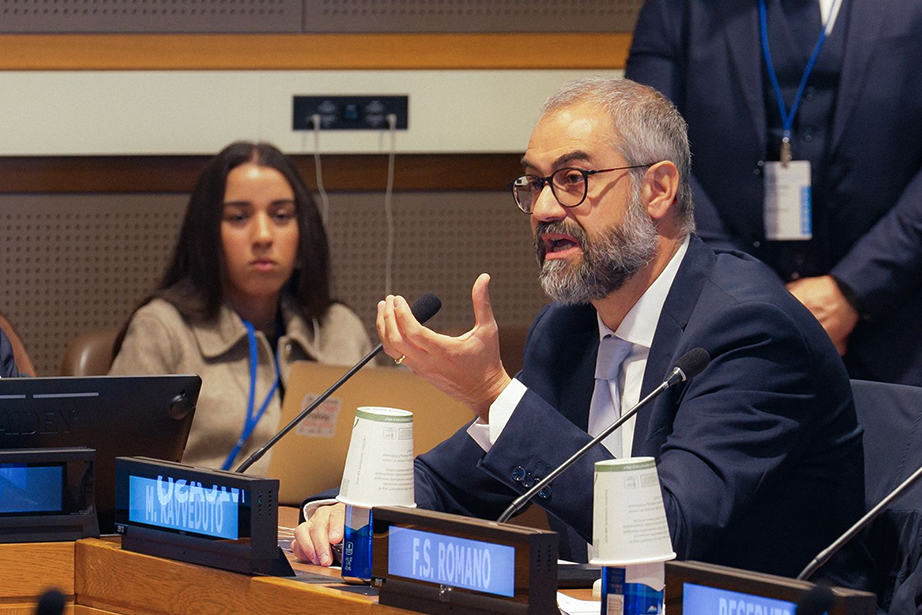
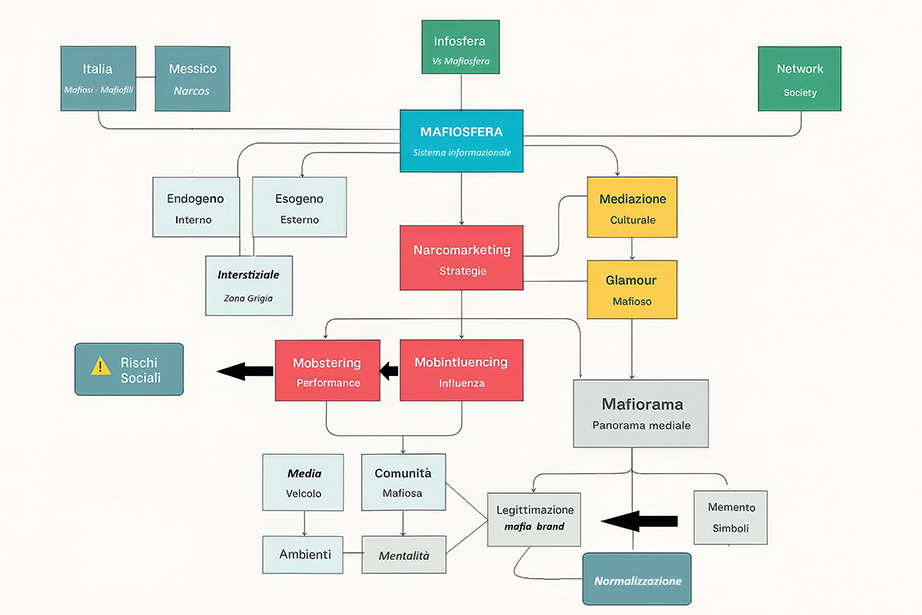
One of the most striking voices at the New York conference was Marcello Ravveduto, professor at the University of Salerno, whose research, supported by the Magna Grecia Foundation, maps how criminal clans have transformed into a media ecosystem. The “Mafiosfera,” as he calls it, is a communicative universe in which visibility becomes power. Mafia-themed videos, rituals of loyalty, extravagant lifestyles, and violent performances circulate on social media with viral force, shaping the aspirations of younger generations and normalizing the language of crime. For Ravveduto, this shift signals that territorial domination is no longer essential. The new battlefield is symbolic and emotional: attention, glamour, influence. He calls for a “digital anti-mafia intelligence”—a global alliance among universities, media experts, and law enforcement capable of decoding symbols and pre-empting the narratives that give organized crime its cultural appeal.
Crime outpacing the law
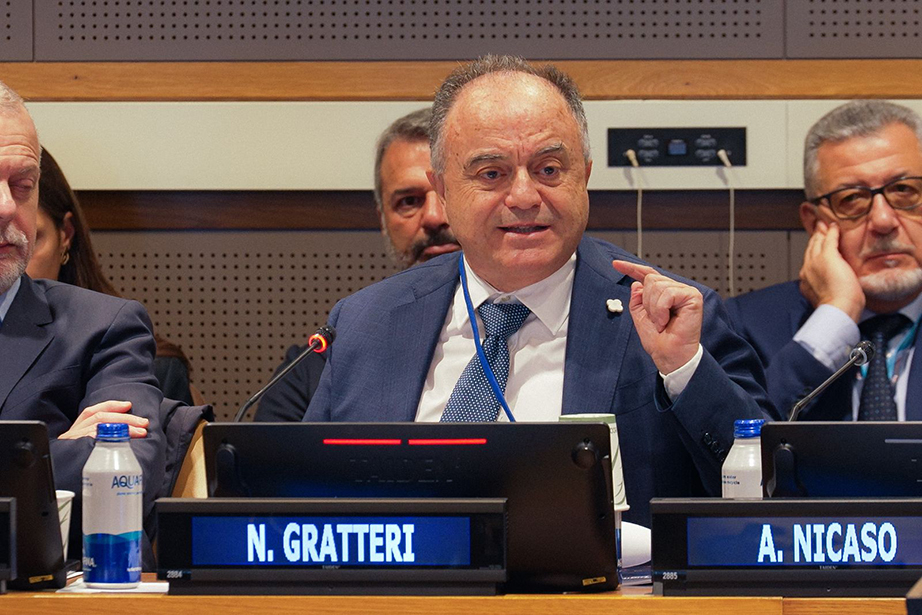
If Ravveduto describes the cultural mutation, prosecutor Nicola Gratteri embodies the institutional alarm. One of Italy’s most prominent anti-mafia magistrates, now leading the prosecutor’s office of Naples after decades in Calabria, Gratteri warned that technology has become both a threat and a shield. Across Italy, mafia bosses continue to exercise authority even from prison, exploiting illicit smartphones and encrypted channels that law enforcement cannot always intercept. His message is blunt: unless institutions adopt faster and more radical mechanisms—such as blocking signals inside prisons or accelerating the exchange of digital evidence—the gap between crime and justice will widen. He sees in the new U.N. Cybercrime Convention, signed in Hanoi in October, an opportunity but also a risk: the danger that it becomes a diplomatic statement without operational consequences. “Mafias operate in the gaps of bureaucracy,” he told Envoy. “If the law does not move as fast as crime, it becomes irrelevant.”
Criminals mastering new tools
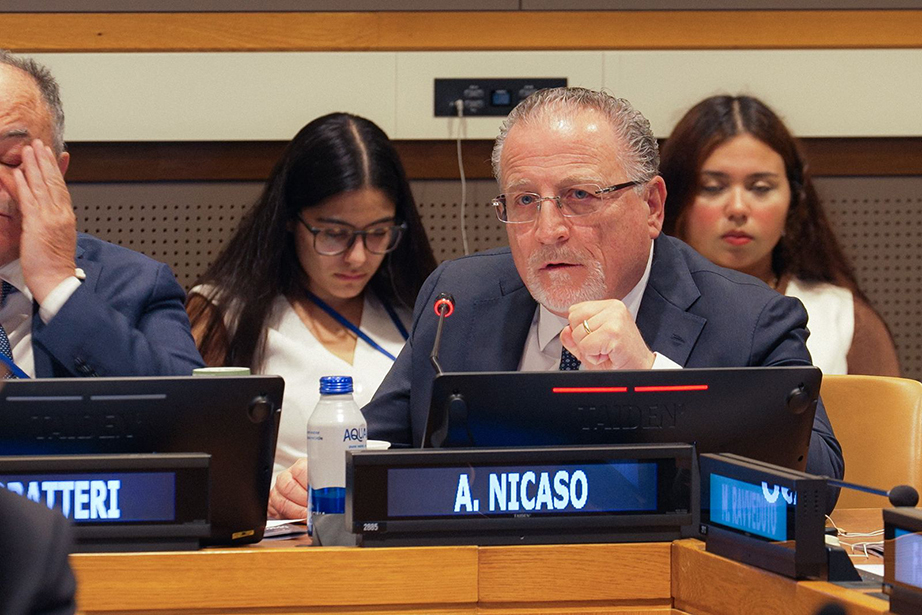
Historian Antonio Nicaso, Gratteri’s longtime collaborator and a professor at Queen’s University in Canada, explored another dimension: the moral tension between security and freedom. While the Secretary-General praised the Hanoi Convention for affirming dignity and safety in the digital age, many civil society groups fear the treaty could be used by authoritarian governments to restrict information and silence dissent. Nicaso warned that digital security cannot become a pretext for political control. The only sustainable balance, he suggested, lies in transparency, oversight, and meaningful participation of independent actors. Criminal organizations are not only adopting new technologies—they are mastering them. Some are already experimenting with AI-enhanced anonymity and automated schemes for money laundering, extortion, or recruitment. If governments do not cooperate in real time, they will always be chasing shadows.
Inside the U.N.’s AI strategy
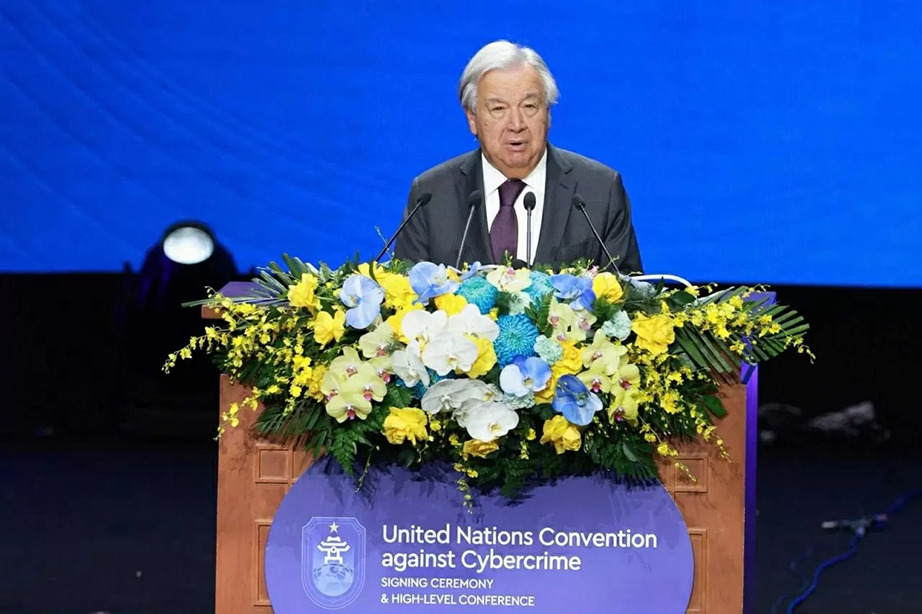
Sixty-five nations have signed a landmark United Nations treaty in Hanoi aimed at tackling cybercrime – a move Secretary-General António Guterres hailed as a historic step toward a safer digital world.
As these warnings circulated at the U.N. event, Envoy submitted questions to the Secretary-General’s spokesperson’s office on how the organization plans to confront AI-enabled crime. The response from Deputy Spokesperson Farhan Haq offers a window into the U.N.’s current strategy.
Although the Hanoi Convention does not explicitly mention artificial intelligence, its “technology-neutral” language ensures that AI-driven offenses fall within its scope. During negotiations, AI was discussed in relation to online child abuse, the non-consensual distribution of intimate images, AI-enhanced malware, and digital forgery and fraud—areas that may expand dramatically as generative systems evolve. The Convention establishes global mechanisms for cross-border cooperation, including the exchange of electronic evidence, joint investigations, and a 24/7 network of national contact points for immediate assistance. UNODC will provide training to help authorities investigate deepfakes, data manipulation, and digital trafficking within human-rights-based frameworks.
The U.N. response also highlights a crucial dimension: safeguarding innovation. The Convention protects legitimate cybersecurity research, recognizing that ethical hackers and security experts are essential allies in defending digital systems. It also mandates that investigative powers remain consistent with international human rights law, requiring proportional safeguards for privacy, dignity, and freedom of expression. In parallel, the Global Dialogue on AI Governance—launched this year by the UN—brings governments, private companies, academia, and civil society into a common platform for transparency and shared standards. The message is clear: global digital legality will not emerge from states acting alone but from a constellation of actors whose expertise and oversight ensure that AI is used responsibly.
The spokesperson’s office added that while the Convention provides a universal legal foundation, implementation will involve regional organizations and tech-power coalitions, each contributing capabilities that the U.N. cannot replicate. The Preamble explicitly recognizes that meaningful cooperation requires states, international bodies, civil society, academia, and the private sector all working together. In practice, this distributed model reflects the very nature of cyberspace: decentralized, interconnected, constantly evolving.
Vienna and the weight of history
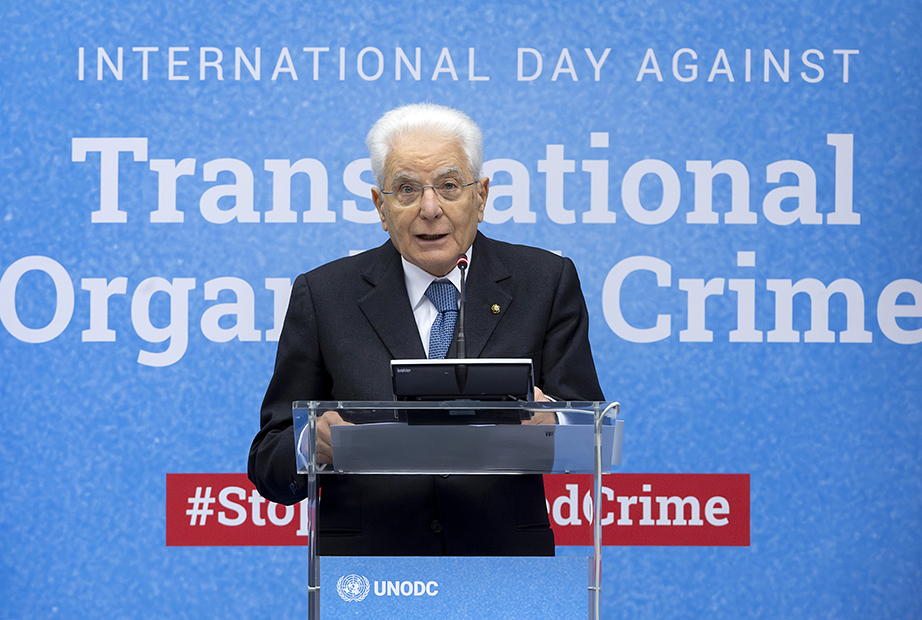
Nowhere was the urgency of this collective responsibility expressed more vividly than in Vienna on November 11, during the commemoration of the Palermo Convention’s 25th anniversary. Speaking before U.N. representatives and Austria’s President Alexander Van der Bellen, Italian President Sergio Mattarella delivered a forceful warning shaped by history and geopolitics. Reflecting on the U.N.’s imperfect but indispensable role, he declared: “The United Nations remains an extraordinary and irreplaceable instrument of peace and stability. Weakening it would be reckless.”
Mattarella stressed that the challenges confronting the world—from Russia’s war of aggression to crises in the Middle East and Africa—demand stronger multilateralism, not its dismantling. He also invoked the memory of Giovanni Falcone, Francesca Morvillo, and Paolo Borsellino, whose assassinations in 1992 marked both the brutality of the mafia’s challenge and the resilience of the Italian state. Their sacrifice paved the way for the Palermo Convention, and Mattarella reminded the audience that organized crime can be defeated only when institutions and societies assume their shared moral duties.
The roots of today’s digital threat
This historical thread extends to another gathering in 2024 at U.N. Headquarters—an event that, like this year’s, existed thanks to the driving force of Nino Foti, president of the Magna Grecia Foundation. Without his persistence and vision, neither the 2024 nor the 2025 conferences on organized crime, AI, and digital transformation would have taken shape in the heart of the U.N. system.
Those earlier discussions anticipated many of the concerns now central to the Hanoi Convention: the dark web as a new frontier, AI-driven laundering systems moving billions in minutes, and the rise of agile criminal networks in Latin America and Asia. Nicaso’s and Gratteri’s warnings have then proven prophetic: mafias are becoming hybrid organisms, blending traditional structures with technological sophistication. If institutions lag behind, criminal ecosystems will fill the vacuum.
Ideas that outlive their makers
In this evolving landscape, one idea from Giovanni Falcone still serves as a compass: “Men pass, but ideas remain, and they walk on the legs of other men.” Applied to today’s digital terrain, his words evoke a paradox. Ideas now travel not only through human networks but also through algorithms, platforms, and automated systems. Yet the principle Falcone articulated endures: justice depends on collective responsibility and resilient institutions. The work of prosecutors, judges, researchers, and diplomats becomes meaningful only when their ideas are carried forward by laws, by cultures of legality, and by international communities that refuse resignation.
Can justice go viral?
The global fight against organized crime, from Palermo to Hanoi, from the memories of 1992 to the anxieties of the AI age, is at a crossroads. The U.N.’s new treaty offers a framework, but its power will lie in how states and societies implement it. Italy continues to press the case that the battle must be fought in courts, classrooms, and digital spaces alike—that institutions must learn to anticipate rather than merely react. As Mattarella argued in Vienna, the dismantling of the U.N. would not only be reckless but fatal for the global effort to confront threats that ignore borders. In a world of infinite connections, justice, too, must learn to connect—globally, rapidly, and with the moral clarity that Falcone and Borsellino embodied. The question is not whether the U.N. can lead, but whether the world will give it the political will and operational tools to do so. The stakes are no longer abstract. They are coded into the very architecture of the digital age.
About The Author