When U.N. Secretary-General António Guterres introduced the 40 members of the Independent International Scientific Panel on AI, I had a sense of déjà vu. As the U.N. touted members “from all five of the U.N.’s regions” and “from various different backgrounds,” I was reminded of my own experience with the U.N.’s vision of diversity.
On paper, yes, the members come from 40 countries and represent diverse backgrounds. But when I looked more closely, I found that most shared a common profile: an education from North American and Europe, and careers spent predominantly in the Global North. For me, it was a stark reminder of my time at the United Nations (UN).
I was struck by an unexpected paradox when I first entered a technical agency of the UN, the International Atomic Energy Agency (IAEA). Around policy and decision making tables sat directors and senior officials from developing and least developed countries. On paper, this appeared to be a triumph of inclusivity. In practice, it revealed a deeper dilemma. I fear the same will happen with the Panel on AI, and, as a result, the Global South will suffer.
In many of the highly technical domains these officials were tasked with governing, the countries they formally represented possessed limited domestic scientific and institutional capacity. Representation existed at the international level, yet the foundations required to fully exercise authority at home were often fragile or underdeveloped.
Nuclear science is far more than uranium enrichment or nuclear power plant operation, safety, and security. It includes isotopic techniques for soil and water management, climate change mitigation, cancer diagnostics and therapy, medical imaging, industrial X ray systems, food safety, and efforts to combat ocean plastic contamination. These applications are central to sustainable development, public health, and environmental resilience.
At the national level, however, many countries lack sufficient trained graduates and specialized experts to cover this wide spectrum. As a result, a limited number of talented individuals from the Global South pursue advanced education and research opportunities in universities across the Global North. Whether they return to strengthen institutions in their home countries depends on structural conditions beyond individual control. Limited research funding, weak infrastructure, and constrained career pathways often make long term return difficult.
Global governance frameworks reinforce this imbalance. The Treaty on the Non-Proliferation of Nuclear Weapons (NPT) was designed to prevent the spread of nuclear weapons while promoting peaceful nuclear applications. In practice, advanced knowledge production and technological expansion remain concentrated in a small group of states, most of them in the Global North. For many developing countries, access to cutting edge nuclear science continues to depend on the priorities and openness of these same states.
The result is a structural bottleneck. There is formal inclusivity but limited substantive capacity. There is representation but constrained autonomy. There is participation without equal opportunity to learn, innovate, and lead.
Despite these constraints, the IAEA has recruited many highly qualified professionals from developing countries into technical and managerial roles, reflecting the excellence and resilience of individuals who navigate uneven global systems. Recently, Director General Rafael Grossi noted in an interview with Al Jazeera that women now occupy about halfof professional positions at the Agency, presenting this as evidence of progress on gender equality.
Yet critical questions remain. How many of these professionals originate from the Global North? How many hold dual citizenship linked to Global North states? And how many reached these roles because their home countries possess strong educational institutions, research infrastructure, and sustained domestic investment? Without such clarity, numerical gender balance risks obscuring deeper geographic and institutional inequities.
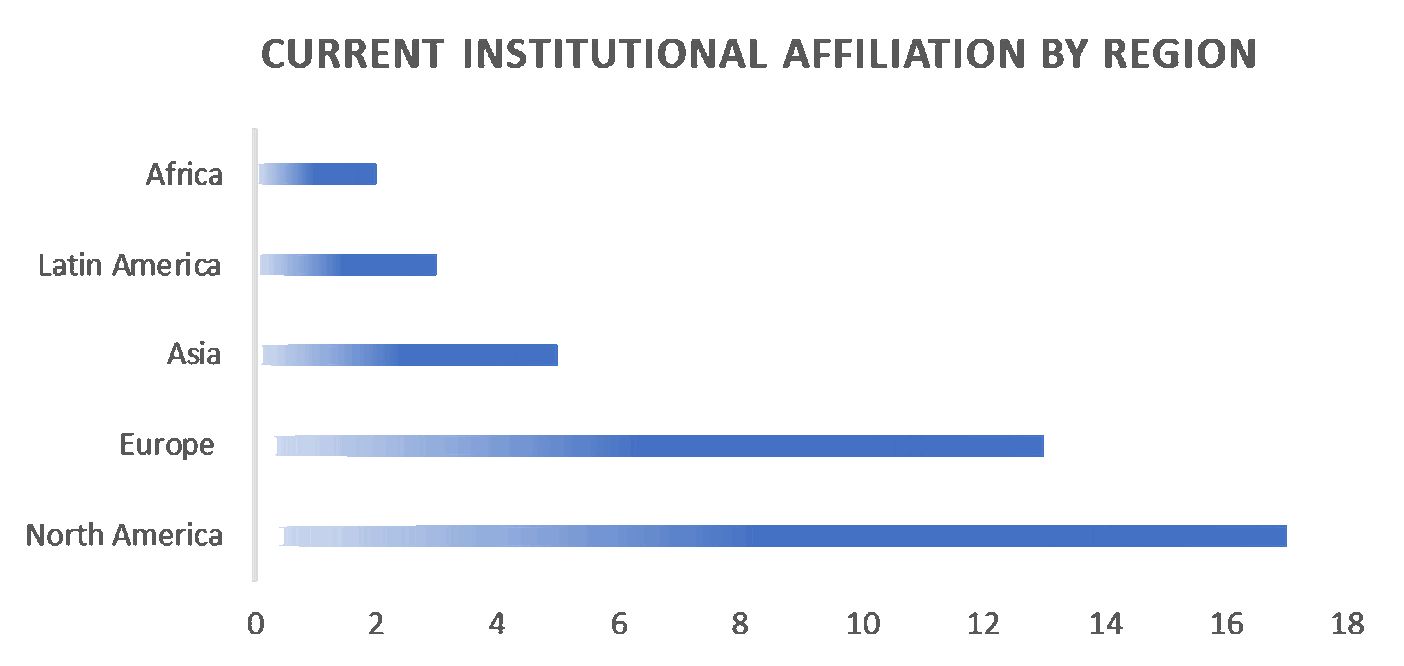
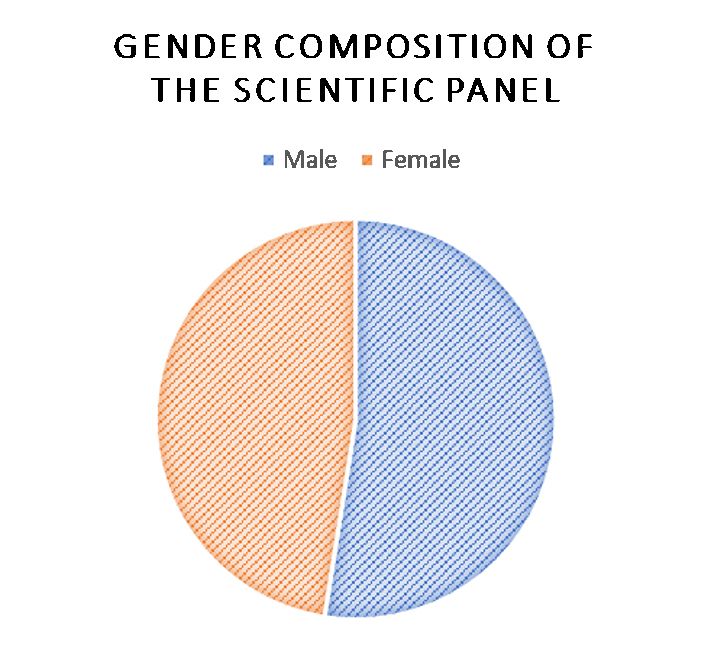
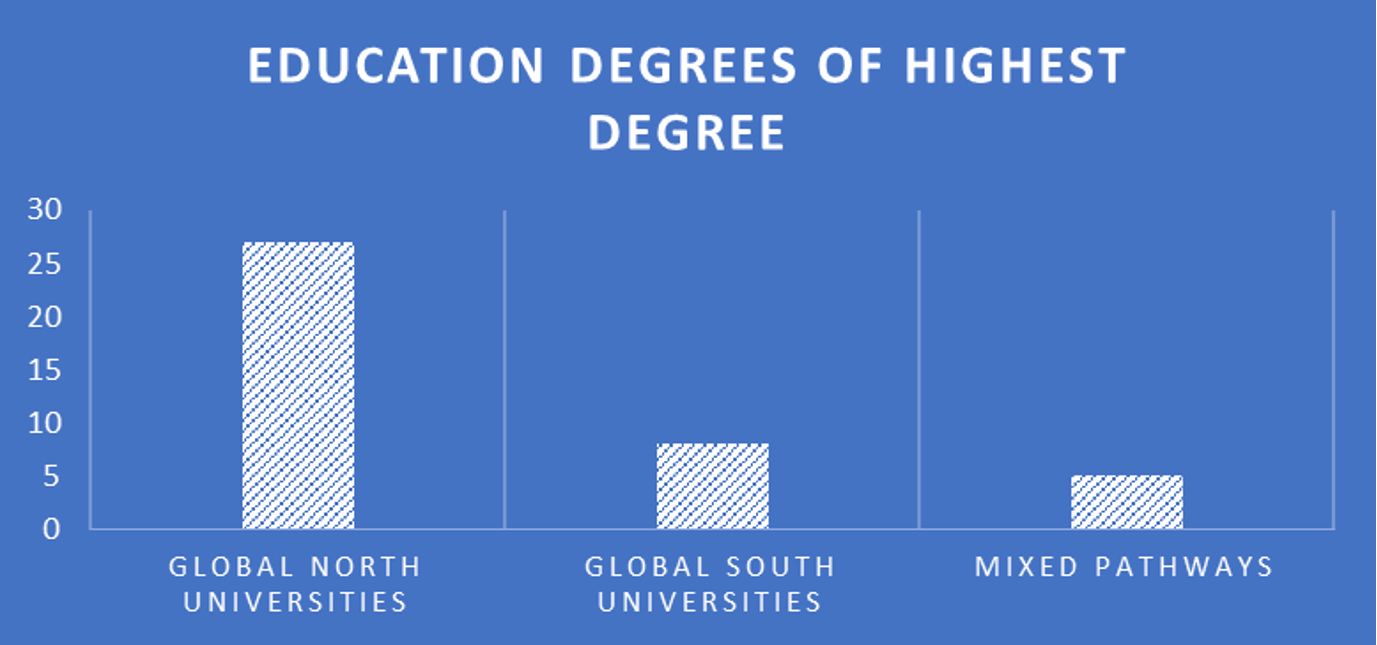
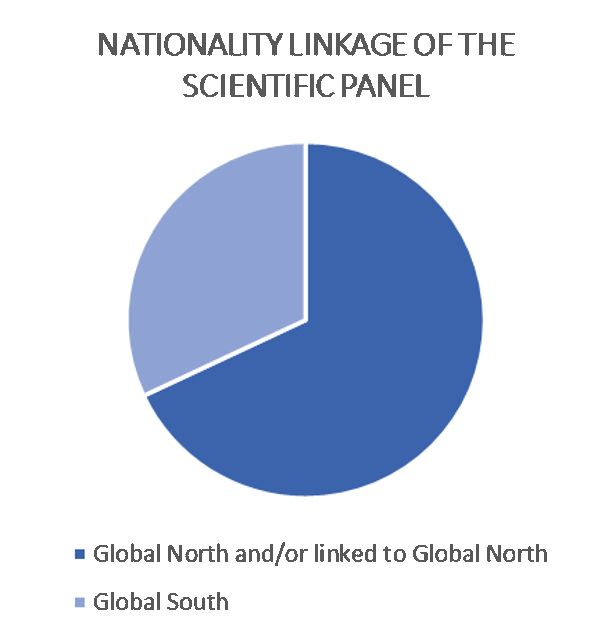
This pattern reappears in Artificial Intelligence (AI) governance. Weeks ago, the office of the UN Secretary-General presented the forty members of the Independent International Scientific Panel on AI, mandated under Resolution A/RES/79/325. While gender representation approaches parity, more than two thirds of panel members originate from the Global North or hold dual nationality linking them to it. Most were educated at elite universities in North America and Europe, and the majority are affiliated with Global North institutions or multinational technology corporations.
Inclusion here operates primarily through individual mobility rather than systemic capacity. Countries appear represented, but their institutions and domestic research ecosystems often are not.
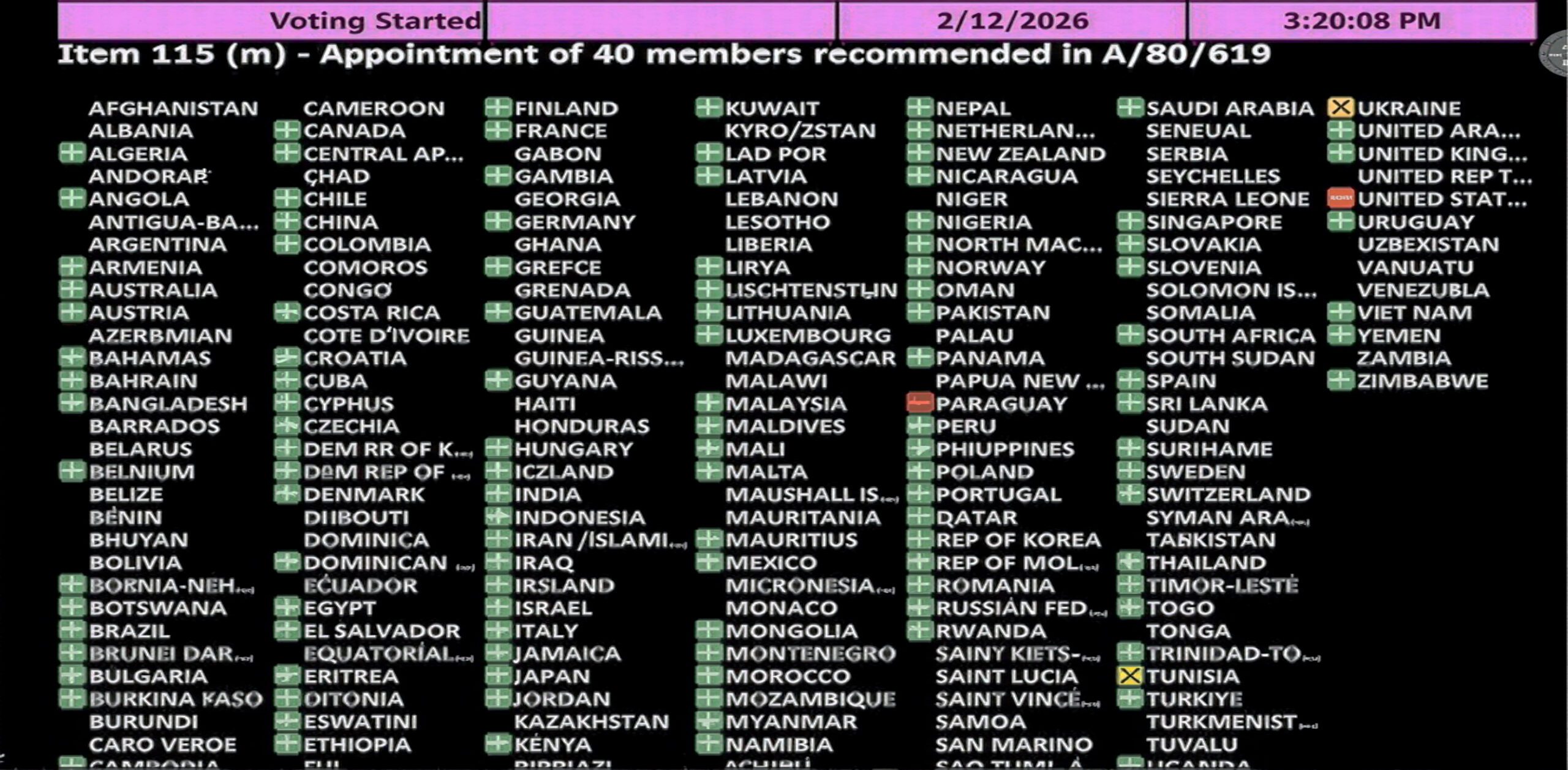
The General Assembly voting record further underscores this gap. Green indicated votes in favor, yellow abstentions, red opposition, and the absence of color signaled non participation. Absent delegations clearly outnumbered abstentions and negative votes combined. These absences were not random. Small Island Developing States and smaller African countries were disproportionately absent, while Europe, North America, and advanced Asian economies showed near universal participation. In diplomatic practice, absence is rarely accidental. It often signals quiet dissatisfaction without open confrontation.
As an expert in peaceful nuclear techniques for combating plastic contamination in the ocean, and as the founder of an AI company supporting aquaculture since 2019, I offer a cautious reflection on what follows. Recent developments, including the position taken by the United States against binding international AI governance during discussions hosted in India, suggest that global consensus will remain elusive.
The panel will likely produce a rigorous report on AI risks, an important contribution. The challenge lies in how governance frameworks are constructed afterward. If oversight mechanisms concentrate authority among a small group of corporations and research ecosystems, existing capacity gaps may widen further.
The central question is therefore not whether AI should be governed, but how governance is designed and by whom. Effective frameworks must reconcile safety with inclusion and innovation with equitable access to knowledge and infrastructure. As AI increasingly influences food production, water management, climate adaptation, and disaster preparedness, the stakes extend far beyond the technology sector itself. Ensuring that all regions can participate meaningfully in shaping these systems is not simply a question of representation. It is a prerequisite for resilient food systems, sustainable water resources, and effective climate responses in an increasingly interconnected world.
About The Author