A fast-moving strategic realignment is reshaping the Middle East as states diversify partnerships, pursue flexible coalitions, and reject dependence on any single power—creating a system where influence, not dominance, defines regional power.
The collapse of the Iran nuclear deal (JCPOA), the unexpected Israel-Hamas peace accord, Israeli strikes against Iranian-linked targets across the region, and the rise of a far more assertive Arab diplomacy have not merely altered the Middle East; they have propelled it into a profound, fast-moving realignment. What is unfolding today is not another contest for regional leadership but a competition for influence, shaped by states determined to avoid dependence on a single patron while preventing domination by any rival.
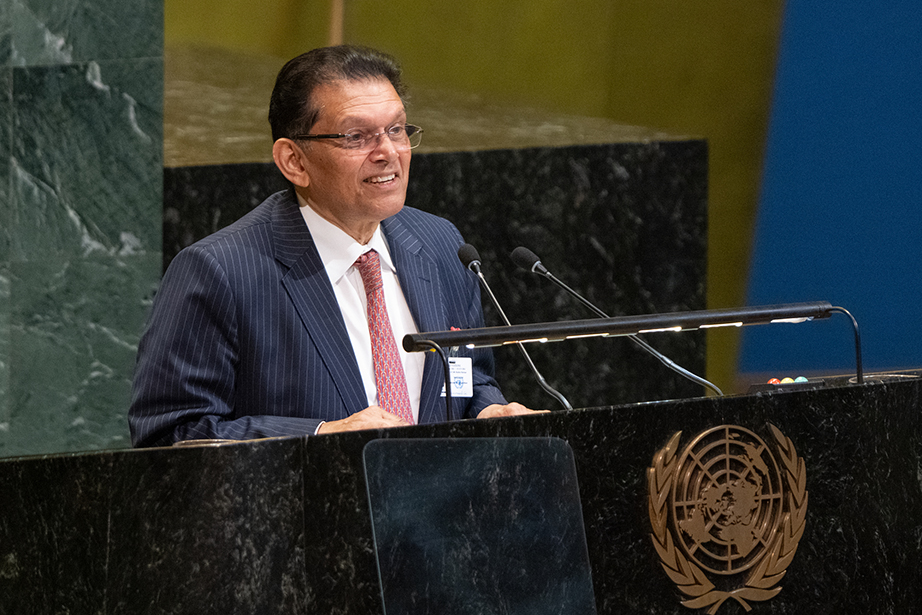
As Israeli U.N. Mission International Spokesperson John Harounoff observed, “the strategic dynamic of the Middle East has changed quite significantly and in large part due to the significant military achievements of Israel, followed also by the significant and limited but very precise military operations of the U.S. in Iran.” In this evolving environment, the balance of the early 2000s—anchored in uncontested U.S. supremacy—has given way to a softer, more fluid one.
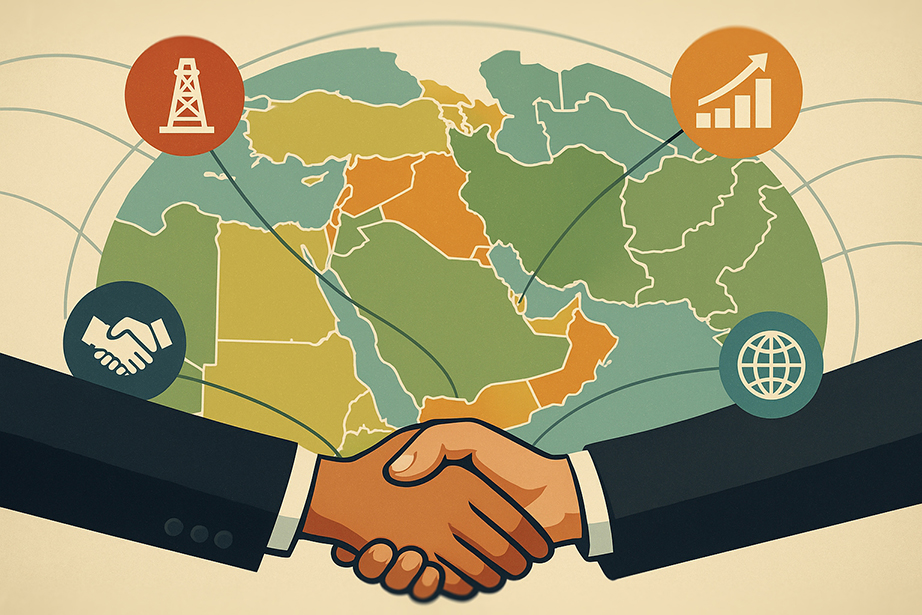
With U.S. attention increasingly shifting to the Far East, Middle Eastern powers are diversifying partnerships and hedging across competing power centers. The Saudi-Pakistani strategic defense pact exemplifies this trend: a move not to create a bloc, but to build security redundancy, reduce dependence on Washington, and strengthen Riyadh’s bargaining position regionally and globally. Similarly, Turkey and Egypt’s joint naval drills—their first in 13 years—signal a pragmatic convergence driven by shared interests in the stability of the Eastern Mediterranean, rather than ideological rapprochement.
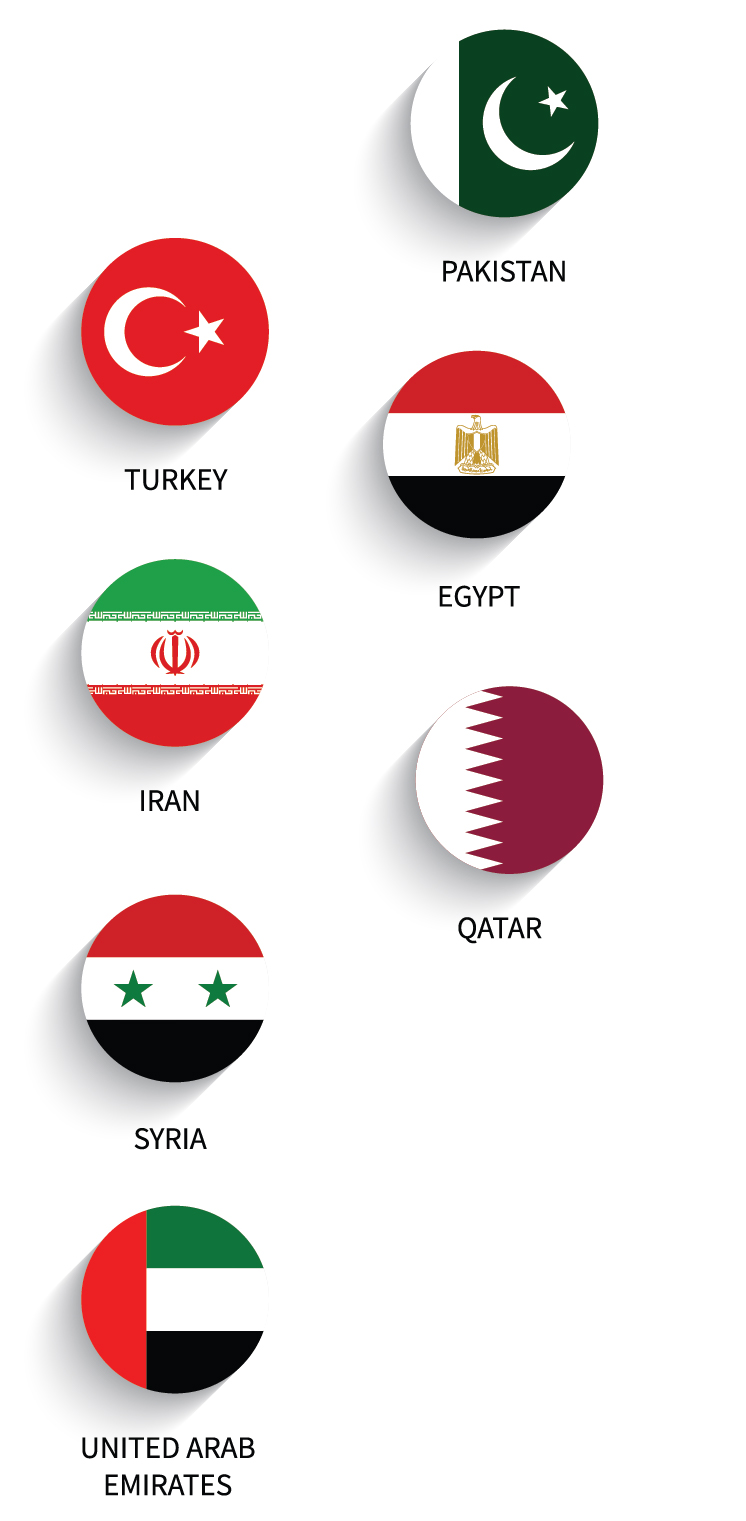
No single regional actor dominates this emerging system; instead, it features multiple, differently empowered actors. Saudi Arabia wields financial statecraft and global energy leverage, redirecting oil flows toward China and experimenting with yuan-based transactions that subtly challenge the petrodollar order. Turkey leverages its defense industry, NATO status, and geostrategic reach from the Black Sea to the Red Sea. Iran exerts asymmetric influence through proxies and advanced missile capabilities. Israel retains a technological and military edge reinforced by Western partnerships—an advantage that, as Harounoff argues, has reshaped the regional picture after “the significant weakening” of forces that sought to derail momentum. Egypt anchors stability in North Africa through demographic weight and Suez Canal diplomacy. Qatar and the United Arab Emirates convert wealth, media power, and diplomatic agility into international sway disproportionate to their size.
In this changing environment, Israel—a pillar itself of this regional system—views this diversification as interconnected with its own diplomatic trajectory. As Harounoff noted, the region is experiencing “a sort of strategic reshift where there are countries that perhaps may not have considered peace with Israel, but are considering it very seriously.” He pointed out that “now that hopefully war remains behind us and powers and forces that wanted to perpetuate conflict have been significantly weakened and defunct, we can focus more on building and deepening those existing alliances and having more nations join these Accords.”
In short, in this new multinodal regional system, influence is distributed across functional domains rather than being concentrated in a single hegemon. The new balance of power resembles the 19th-century post-Napoleonic European order—a system of comparable powers balancing each other to prevent regional domination.
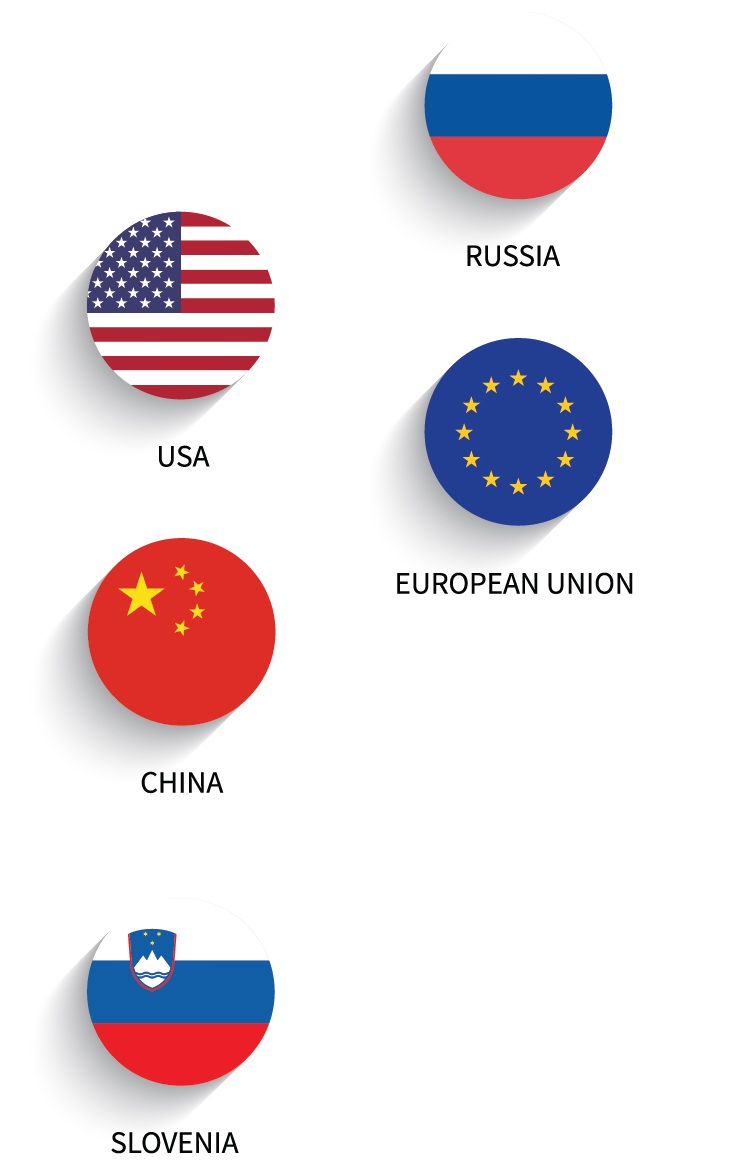
In this new environment, the influence of external powers too may or may not decrease, but it certainly changes in nature. They now seem to assume the role of the “offshore balancers,” much like Great Britain did during the 19th century. The U.S., still a decisive actor, has shifted toward selective engagement, supporting allies while avoiding large-scale interventions. China pursues influence through economic diplomacy, mediating regional détente and expanding energy partnerships. The European Union is still struggling to find a common voice. As Slovenia’s permanent representative to the U.N.—holding the rotating presidency of the Security Council at the time of this article’s writing—Ambassador Samuel Žbogar observed, “the EU is too timid. The problem is that, especially on the Middle East, we don’t have one voice and one position. We split in three ways in the U.N. and so it’s very difficult for the EU to exert real power.”
Russia—particularly before its retreat under global pressure in late 2024—exerted military and political influence through entrenchment in Syria and arms sales across the region. As Russia’s U.N. Mission attests, “Moscow does not view the recent intensification of diplomacy among Saudi Arabia, Iran, and Turkey, nor China’s constructive mediation efforts, as diminishing Russia’s influence.” Instead, the “broadening of regional diplomatic channels complements—rather than constrains—Russia’s ability to contribute to inclusive, region-led efforts.” Moscow, the Russian U.N. Mission stresses, “is not competing with anyone for the Middle East.” Instead, it seeks to ensure that regional diplomacy “contributes to stabilization rather than exacerbates tensions, undermines the sovereignty of regional states, and heightens the risks of escalation through unilateral actions and externally imposed approaches. The region needs peace and a just peace—both within states and among them.”
Unlike past decades, the U.N. is no longer the primary broker of Middle Eastern crises, yet it definitely retains its importance, mainly as a forum and a platform that lends legitimacy to mediating efforts. Moscow “continues to work through the Security Council, as well as bilaterally and in coordination with a broad range of partners, to promote de-escalation and durable political solutions,” the Russian U.N. Mission noted in response to ENVOY’s question on the matter.

According to Slovenia’s Ambassador Žbogar, “we are witnessing different countries, regional powers, who are engaging in mediating different conflicts which in the past were probably mediated by the U.N.” He noted that new regional assertiveness has “pushed away” the U.N. from crisis management, with major Gulf and regional powers “becoming more assertive in international relations to the point that they try to—and sometimes successfully—negotiate peace agreements.”
The arenas in which this new balance is tested mirror the 19th-century crises that strained the Concert of Europe. Syria, like the Greek 1821 Revolution or the mid-19th-century Italian unification, has become a proving ground for external interventions and coalition politics. Local rivalries, proxy warfare, and great-power involvement have produced a conflict whose outcomes shape regional alignments and determine the future balance of influence. The Gaza peace agreement reinforces these dynamics. Washington has remained central, but regional mediation demonstrated a multiplicity of influential brokers—none seeking hegemony, all seeking relevance. Consequently, its implementation depends not on a hegemon enforcing order but on coordinated influence by Egypt, Qatar, Turkey, Saudi Arabia, the UAE, and the U.S. This diffusion of diplomatic responsibility reflects the underlying structure of the system: multiple actors with the capacity to direct or obstruct, but not single-handedly impose, outcomes.
Speaking for Slovenia, an elected UNSC member, Ambassador Žbogar warned that the growing assertiveness of regional powers is “eroding the authority of the U.N., which in principle should be in all of our interest.” Smaller European states, he argued, must remain “principled and do the right things, to do the things, to take decisions, because that’s the right thing to do. Like we recognized Palestine, because that was the right thing to do. We were watching a nation who wanted to have a self-determination, who wanted to live in their own country, and we saw ourselves in them as well, because that’s how we became independent, and that’s how we were recognized. So, I think the role of the small countries is to remind the big ones that there are certain principles,” and we must push for adherence to “international humanitarian law and respect for the Charter.” He stressed that small states must be vocal because “the U.N. was created for the small ones to be protected, not for the big ones.”
Overall, today’s Middle East operates through flexible coalitions, pragmatic adjustments, and transactional partnerships, much like the Concert of Europe did. The China-brokered Saudi-Iranian rapprochement, the Saudi-Pakistani agreement, the Abraham Accords framework, and the Turkish-Egyptian reset all reflect this pattern, designed to preserve maneuverability in a fragmented environment.
The result is a regional order that oscillates between cooperation and managed rivalry. Whether this equilibrium stabilizes into a “Concert of the Middle East” or fragments into hardened blocs depends on how states navigate crises both in the core and the outskirts of the region. But what is clear is that the region is no longer a periphery of global competition nor an arena governed by a single external patron.
It has become a multipolar system in its own right—one in which, as Harounoff puts it, “there is significant momentum, significant buy-in, significant interest, and that counts for a lot.” It is a region shaped not by hegemonic ambition but by states ensuring they are never left without leverage within it. Influence—rather than leadership—has become the currency of power.
About The Author