Decades of asylum abuses, shifting harm-reduction efforts and competing federal priorities have left Brazil with a patchwork system struggling to meet the needs of people who use drugs.
I came to Brazil, and to a health clinic in this northern coastal city, to research how this vast and diverse country cares for people who use or abuse psychoactive substances. So far, every partial answer has generated more questions.
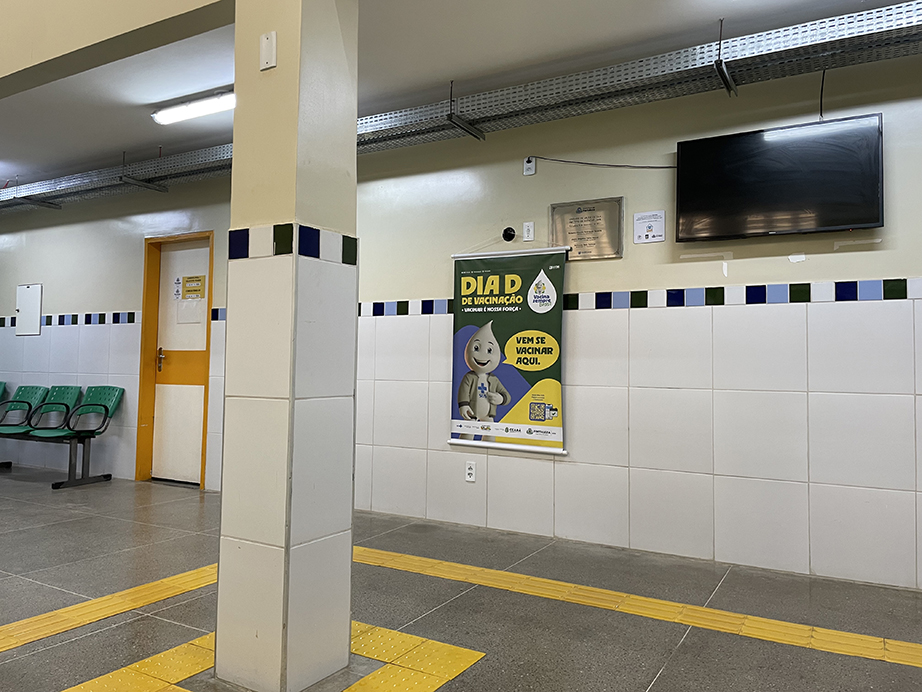
I was in Praia do Futuro, an 8-kilometer stretch of beach on Fortaleza’s eastern shore. Moments earlier, I had checked in at the reception desk, where a friendly attendant took down my information. It did not matter that I was a foreign citizen; he accepted my identification and, in the span of 15 minutes, registered me in Brazil’s national health care system.
I was here to get a yellow fever vaccine. While the health clinic — locally known as a posto de saude — was not the closest to my apartment, it happened to be the only one providing that vaccine on Fridays. Once registered, I retrieved my documents from under a glass window and was left to ponder the system in the waiting room.
Roughly the same size as the United States yet often overlooked by its large northern neighbor, Brazil makes up 47 percent of South America’s landmass and around a third of the region’s economy south of the U.S.–Mexico border. In many ways, Brazil and the United States are alike. With 212 million people, it is the world’s seventh-most populous country. Like the United States, it was a forced destination for African slaves during the transatlantic slave trade from the 1500s through the mid-1860s — 5.5 million, the largest number brought to any one country.
Additional voluntary waves of migration from Europe and Asia helped Brazil become one of the world’s most diverse societies, with 45 percent of citizens identifying themselves as mixed race in a 2022 census — more than those identifying as white for the first time.
Like its northern neighbor, Brazil also endures huge economic inequality, with the richest 10 percent earning more than 13 times what the poorest 40 percent bring in. Brazil’s Gini coefficient — a global standard for measuring income inequality — is 51.6, 10 points higher than the U.S. score of 41.8 and double the Netherlands’ 25.7.
On average, it is a much poorer country, with a GDP per capita of around $10,280 compared with America’s $85,810. Yet I had shown up without an appointment. I had not paid anything, as vaccines and health care services — from primary care to specialized drug treatment — for all citizens and noncitizens are fully covered by Brazil’s national health system, the Sistema Único de Saude, or simply SUS. How could that be?
To grasp the complexities in the history of drug policy in this gargantuan country, I spoke by phone with Dr. Fabio Mesquita at his home in the city of Santos near São Paulo, home to Brazil’s largest port, which saw a surge in injectable cocaine use in the 1980s. A professor at the Federal University of São Paulo and a consultant for the World Health Organization, Mesquita previously worked as a municipal public health official. He rose to national prominence combating the rising impact of cocaine use in the 1980s and chaired the Harm Reduction International Conference hosted by Brazil in 1998.
Mesquita explained that Brazil has never been a destination country for cocaine because of its citizens’ low purchasing power. However, it is often a transit country used by drug cartels producing cocaine in Colombia, Peru and Bolivia to reach lucrative European and North American markets through Brazil’s seaports. He estimated that some 80 percent of cocaine arriving in Santos is exported, around 10 percent is confiscated by authorities, and the remaining 10 percent is pushed into the local market. Cartels seek to create local buffer demand to compensate for obstacles in exporting the drug abroad.
The 1980s saw the arrival of HIV/AIDS, which began spreading at record rates partly because cocaine was primarily injected. That toxic combination made Santos home to the largest population of HIV-positive people in the country, with 50 percent of infections due to shared needles. In response, in 1989 the city opened the country’s first needle exchange. It was soon shut down by the state of São Paulo.

Needle exchanges were launched elsewhere in the 1990s but grew slowly, partly due to laws imposing harsh penalties — typically used against drug traffickers — on anyone deemed to be assisting drug consumption. Needle exchanges were only officially legalized in 1998, thanks to pressure from civil society and federal universities.
In an effort to reduce injection use and slow the spread of HIV/AIDS, public health officials ran campaigns urging people who use drugs to stop injecting. Drug traffickers reacted by selling smokable cocaine, known locally as basuco, marketed as a “safer” option. That opened its own Pandora’s box of problems and created a paradox: because smoking cocaine rarely transmits HIV/AIDS, Mesquita explained, it became harder for authorities to direct public health funds toward people who use cocaine and sought help.
Throughout the early 2000s, crack cocaine spread through Brazil’s major cities. Meanwhile, Cracolândia — the world’s largest open-air crack market, located in São Paulo — grabbed headlines. Nonetheless, drug use never reached epidemic levels comparable to the opioid crisis in the United States.
“To understand the Brazilian model for treating people with serious mental illness and substance use disorder, you must look at what was happening in England and France in the 19th century,” Marcio Camatta told me. Camatta is a nurse by training with a background in both research and clinical care. He treats people struggling with mental health and substance use disorders while also working as an associate professor at the Federal University of Rio Grande do Sul in Brazil’s south.
Before the “scientification” of mental health during the 19th century, popular belief held that illnesses such as bipolar disorder and schizophrenia were caused by demons or witchcraft.
While the 1800s brought greater medical care for patients with serious mental health issues, the pressures of the Industrial Revolution and its capitalist mindset meant many people were labeled “unproductive.” Treatment, therefore, should help patients become “full members” of society. That development, Camatta said, ushered in the golden age of asylums, with France opening its first in 1793.
By 1852, Brazilian Emperor Dom Pedro II inaugurated the “Lunatic Palace” in Rio de Janeiro, the first institution in South America focused solely on treating patients with mental disabilities.
As the new century began, the notorious Hospital Psiquiátrico do Juqueri in São Paulo opened in 1898. In its 118 years, the asylum recorded more than 120,000 admissions, including more than 15,000 forced internments during the dictatorship of the 1960s and 1970s. While many patients had diagnosed mental or substance use disorders, the dictatorship also interned people who were undiagnosed but considered “antisocial.” That included people living on the streets, single mothers, LGBTQ+ people, and occasional political prisoners.
Public momentum for deinstitutionalization grew as the horrors of asylum life became widely known. In the mid-1980s, community-based health care initiatives emerged as part of a broader push within Brazilian society to improve health care for all. As the country re-democratized after the fall of the dictatorship in 1985, a constitutional assembly voted in 1988 to include health care as a right, creating the contours of the universal health care system, SUS.
Today, doctors and harm-reduction advocates often refer to Brazil’s psychiatric reform of 2001, Law 10.216, which established greater protections for people with mental and behavioral disorders. Brazil’s goal has been to give people maximum freedom while being treated in their home communities. One reform, Ordinance 3088/2011, established the Psychosocial Care Network, known in Portuguese as the Rede de Atenção Psicossocial (RAPS).
In addition to medical treatment, the reforms emphasized psychosocial approaches such as social services, education, employment, income support, and rehabilitation, with the goal of helping people reintegrate into everyday life.
Adding further complexity to the issue, drug policy in Brazil is split at the federal level among the ministries of health, justice, and development and social assistance. The last subsidizes therapeutic communities, which some public health officials accuse of acting as modern-day asylums, often run by evangelical organizations operating without medical oversight.
To understand the current government’s approach, I spoke with Marta Rodriguez de Assis Machado, national secretary for drug policy under the Justice Ministry. A former professor at the Federal University of São Paulo, she was appointed by President Luiz Inácio Lula da Silva in 2022. Our conversation spanned her priorities — from prevention to human rights, from curbing the ecological damage caused by drug trafficking in the Amazon to Brazil’s recent Supreme Court decision to decriminalize the personal use of cannabis up to 40 grams.
Her office is overseeing the launch of the flagship CAIS initiative — the Centro de Acesso a Direitos e Inclusão Social, or Center for Access to Rights and Social Inclusion.
By partnering with local public universities and nonprofits across the country, the federal government plans to fund new or expanded low-threshold welcome centers staffed by psychologists, social workers, harm-reduction technicians, and lawyers who can clarify legal issues for communities historically affected by drug trafficking or anti-trafficking enforcement. The hope is that the centers will act as hubs to create better access to health care, social services and assistance navigating the justice system.
Rowland E. Robinson is the Andrew Weil Integrative Health Care Fellow at the Institute of Current World Affairs (ICWA), investigating public health approaches to recreational and problematic substance use in the Netherlands, Portugal and Brazil.
About The Author