How early can you see disease? Earlier than you think.
Imagine being able to step ahead of your own health—to see what’s happening deep inside your body before problems take root, before symptoms begin, and long before disease has a chance to steal momentum from your life. For decades, that kind of foresight belonged more to futuristic medicine than everyday reality. But today, thanks to breakthroughs in imaging, genetics, and early-detection science, we are entering a new era of preventive care. The whole-body wellness revolution is reshaping how we think about health—not as something we check only when something goes wrong, but as an ongoing, living portrait of the body’s inner workings. This new approach blends advanced MRI, low-dose CT, molecular testing, and intelligent analytics to create a wide-angle view of a person’s overall health. It’s a shift from reacting to illness to truly understanding the body, identifying risks earlier and getting ahead of potential problems before they grow.
A full-body view of your health
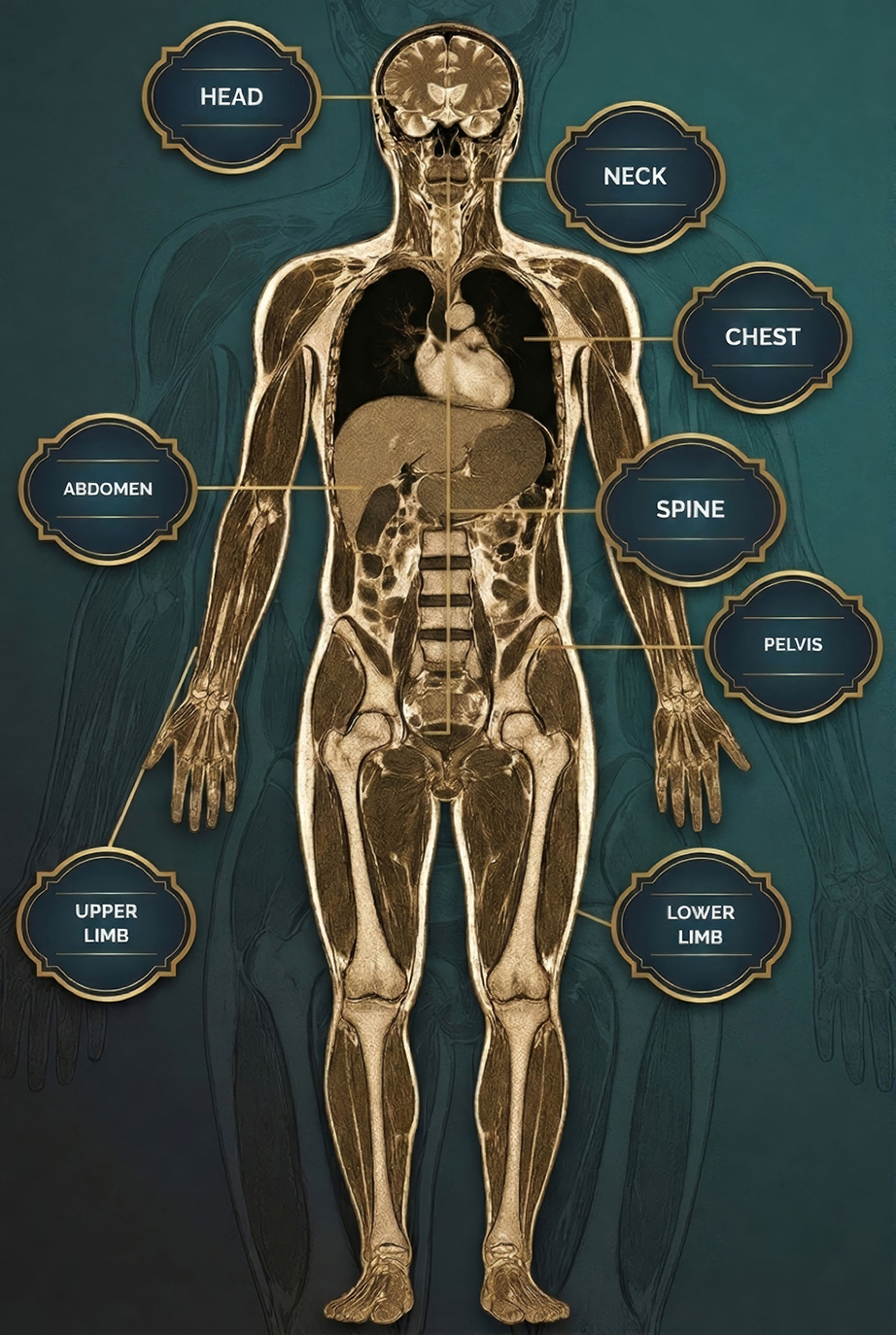
For most of modern medical history, healthcare has been built around symptoms. You feel something, then you investigate. But many of the conditions that shorten lives—cancer, heart disease, dementia, metabolic decline—begin quietly and progress long before anything feels wrong. A whole-body screening breaks out of that reactive mindset. Instead of looking at one organ at a time, it pieces together the larger constellation of what’s happening inside you. At the center of this approach is the whole-body MRI, a radiation-free exam that evaluates the brain, spine, chest, abdomen, pelvis, bones and soft tissues in striking detail.
Today’s MRI systems are quieter, faster and more comfortable than earlier generations. Just one comprehensive scan can reveal tiny tumors that haven’t yet caused symptoms, brain changes linked to aging or vascular disease, liver abnormalities, iron overload or early metabolic stress, as well as cysts, nodules and silent structural changes. It can also show bone-marrow or spine degeneration, inflammation or subtle infections. Beyond detecting problems, MRI also answers deeper questions: How much visceral fat are you carrying? How healthy is your liver? What is your muscle quality? How is your brain aging? This kind of whole-body insight gives people a level of self-awareness that was impossible just a few years ago.
Why lung screening is essential
Even with today’s advanced imaging technologies, low-dose CT (LDCT) remains the most effective tool for detecting early lung cancer. It uses a fraction of the radiation of a conventional CT scan but can find small nodules and early abnormalities long before they become dangerous. LDCT also reveals early emphysema, airway disease, scarring or fibrosis and unexpected findings near the heart or vessels. This makes it an essential companion to whole-body MRI and a cornerstone of early detection, especially as lung cancer often presents without symptoms until it is advanced.
A clearer look at heart health
Heart disease remains the leading cause of death worldwide, yet many people at risk feel completely fine. Calcium scoring once dominated preventive cardiology, but it has limits. It reveals calcified plaque only and misses inflammation or soft plaque—the types more likely to cause sudden events. Enter cardiac CT angiography (CCTA). This technology provides a high-resolution map of the coronary arteries, showing soft plaque buildup, narrowings or blockages, vessel inflammation and early remodeling of the arteries. Artificial intelligence can further analyze tissue around the arteries, detecting subtle inflammatory changes linked to risk—even when calcium scores appear normal. If arteries are heavily calcified, cardiac MRI or perfusion imaging can measure how well blood flows through the heart muscle. This creates a far more complete picture of cardiovascular health than any traditional test alone.
Blood testing opens a new frontier
One of the most exciting advances in modern preventive medicine has nothing to do with imaging—it’s happening inside small vials of blood. Genomic testing can uncover inherited tendencies for cancer, cardiac issues and certain metabolic disorders. Liquid biopsy platforms analyze tiny DNA or methylation fragments circulating in the bloodstream—biological hints of cancer activity that appear long before a tumor becomes visible. Multi-omics testing examines thousands of molecules connected to inflammation, metabolism, immune function, hormones and aging. These tests help estimate biological age and identify patterns that predict disease years before symptoms. Combined with imaging, these molecular insights create a uniquely powerful health blueprint—deeply personal, highly actionable and far more precise than anything available in traditional checkups.
The brain deserves earlier attention
Cognitive decline doesn’t begin the day someone misplaces their keys. Neurological changes frequently start quietly, sometimes decades before symptoms surface. Brain MRI provides a window into this hidden territory. It can identify microinfarcts (tiny strokes), microbleeds, white-matter changes, early demyelination, abnormal brain aging patterns and shrinkage of memory-related regions like the hippocampus. Paired with MRA, which evaluates the blood vessels and aneurysm risk, this becomes a comprehensive look at long-term brain health—essential for anyone committed to maintaining cognitive strength as they age.
Why this matters now
A whole-body screening is not meant to replace a doctor, a primary-care exam or standard screenings. Instead, it fills gaps—offering a panoramic view that traditional medicine simply cannot provide. A 360° wellness evaluation offers early detection of silent conditions, a unified view of the entire body, an individualized roadmap for prevention, a baseline to track changes over time and insight into biological aging and organ performance. Most importantly, it empowers people to act before problems emerge.
Where preventive medicine is headed
As imaging improves, molecular testing expands and AI becomes more advanced, preventive medicine will continue to shift from treatment to prediction. A whole-body noninvasive screening represents the next major leap in that evolution—a chance to see the whole picture, understand your risks and take control of your long-term health. This isn’t just about living longer. It’s about living better.
Omer Aras is a radiologist and physician–scientist specializing in advanced MRI at Innovative Body Scan
About The Author